Was Rallycross Born for Television in 1967?
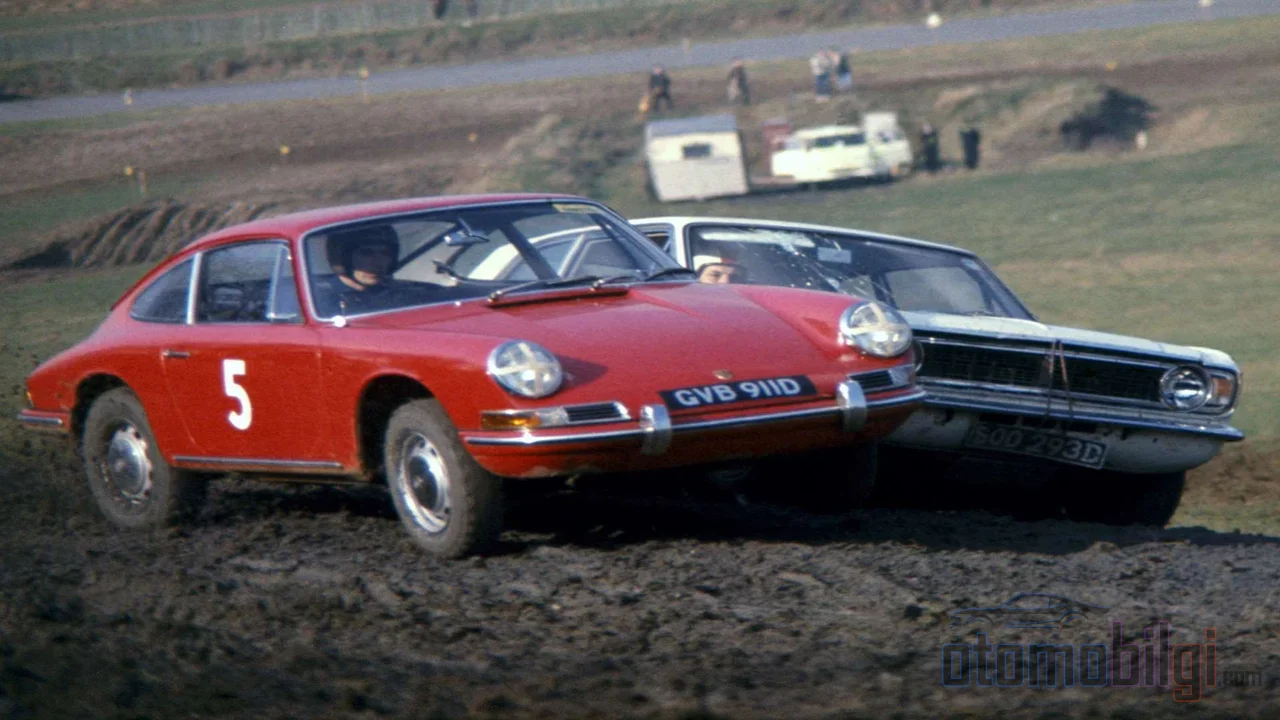
Think about it for a moment: On a dark winter day in 1967, four cameras are set up on a small hill near Dover, England. The goal is simple but crazy: to broadcast the entire race, from start to finish, from a single point on television. That day rallycross is born, and from the moment of its birth it has one single concern: the viewer must not get bored. So how does a motorsport still run on that founding philosophy a full 59 years later? Let's dive into this story, which stretches from the muddy corners of Lydden Hill to Jakarta's circuit in 2026.
A Discipline Born for Television: It All Started From a Single Point
Most motorsports begin their story with a race track; rallycross begins its story with a television studio. The birth of this discipline, first shown on 4 February 1967, bears the signature of a television production. The idea was this: take the excitement of rallying, drop the hours-long mountain roads, and finish everything before the viewer's eyes.
The first races were run at the Lydden Hill circuit in England. This circuit had a special advantage: it was laid out like a natural amphitheater with varied slopes and mixed surfaces. The result? Four cameras could continuously capture all the cars. Yes, just four cameras, and the entire race in frame. A coverage that even some circuit broadcasts would envy today, right?
The secret of rallycross being easy to watch was coded from that very first day: a format that combines asphalt and gravel on the same short circuit, blending rally and circuit racing. That's why Lydden Hill is considered the "home of rallycross". From that first event in 1967 to today, the philosophy hasn't changed: whatever the spectator cannot see does not exist in that race.
Highlights
- Rallycross was created for television on 4 February 1967; the first race was run at Lydden Hill.
- In the classic World RX format, qualifying heats last only 4 laps, and the semi-finals and final 6 laps.
- A mandatory Joker Lap adds an average of 2-3 seconds to lap time.
- In 2026, the World Championship gave way to the European Championship; the first Rallycross World Cup is in Jakarta on 5-6 December 2026.
Short Races, Loop Tracks: Designed for the Viewer's Brain
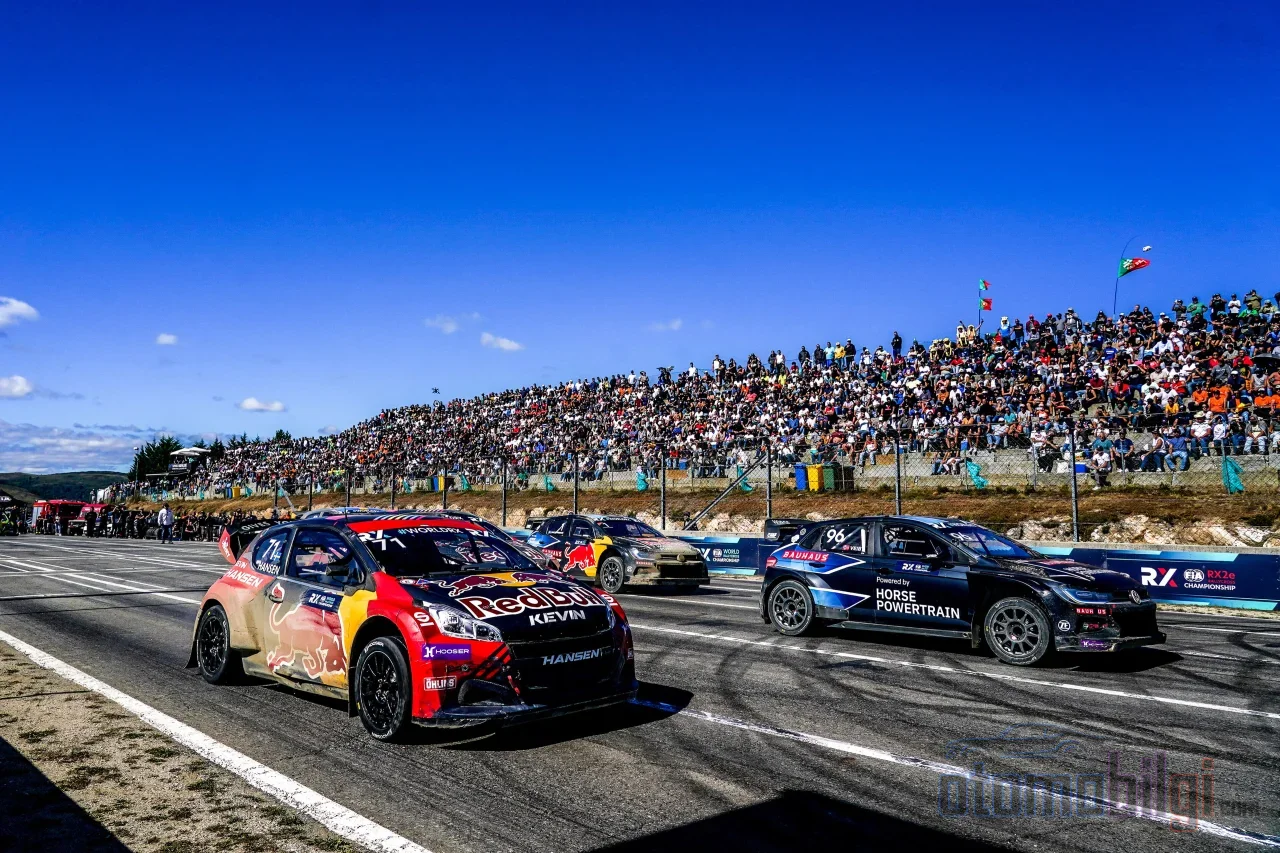
Now let me ask you a question: What irritates you the most while watching a race? In my view, the answer is "nothing happening". Rallycross is a sport that has completely banned that frustration. Why? Because the track is a loop: the cars go around laps, meaning they pass the same spot repeatedly. You sit in the grandstand, and almost the entire race is right before your eyes. You have no luxury of missing anything, no installments, no "next time".
Let me lay out the classic FIA World Rallycross Championship format, and you'll see what I mean. A two-day event works like this:
- 4 qualifying heats: A small number of cars per series, 4 laps (including one Joker Lap). Points are awarded based on the fastest total race time.
- 2 semi-finals: 6 cars in each, 6 laps. The top 3 from each semi-final advance to the final.
- Final: Again 6 cars, 6 laps. The winner of the final is the winner of the day.
Did you notice? A race heat is over in three to five minutes. So you go make a sandwich, come back and the race is already finished, but you don't feel bad, because five minutes later the next one starts. I call this the small packs of chocolate at the market: you don't have to finish the whole cake, but every bite is exactly as intense as you want.
The scoring carries this same philosophy. In the classic format, after the heats the top 16 drivers were given points counting down from 16, in the semi-finals from 6 down to 1, and in the final counting down from 8. There's a sweet detail here: the winner of the final is the winner of the day, but they may not be the one who has collected the most points in the championship. So each layer tells a separate story, and an addition sum keeps running in the viewer's head. In the 2025 season, final points were awarded on a 25-20-17-15 basis, with heat positioning points of 3-2-1. Even though the format has changed, the logic is the same: within the first 20 minutes a standings table forms in your head and you can't let go of it.
The Joker Lap: Dramaturgy Embedded in the Rules
And now, at last, for rallycross's cleverest idea. In every race, every driver must complete the Joker Lap once, an alternative and usually longer section of the track. In the FIA's definition, the joker is an alternative route that is longer than the main route in terms of distance and/or time. It adds 2-3 seconds to the average lap time. In a race lasting three to five minutes, 2-3 seconds is as decisive as a calculation mistake you notice in the last minute of a math exam.
Why does the joker exist? Because overtaking opportunities in rallycross are few; a good start is the key to everything. The joker turns this congestion into strategy. The leader usually saves the joker for the final lap and makes full use of the advantage of a clear track; a driver stuck among their rivals, on the other hand, takes it early and tries to catch those ahead. A spotter in the tower, seeing the track from a bird's-eye view, also radioes the driver at that moment. So while you're watching from the stands, on the screen you're watching two races at the same time: the duel on the asphalt and the chess match in the minds.
The rules aren't just hot air, either; they're full of real penalties. A driver who makes a false start is given a two-joker-lap penalty; a driver who jumps the start twice is disqualified. Skipping the joker in a heat means a penalty plus 30 seconds; skipping it in a semi-final or the final means dropping to the last position with zero points. So the joker looks like a choice, but it's actually an obligation; only when to do it is in the driver's hands. Think like a theater director: everyone on stage knows the same script, but whoever gets the timing right wins.
Rally or Rallycross? The Sport Where You Can't See the Start and Finish
When what I've told you so far is placed side by side with rally, the picture becomes clear. In a rally, each car competes on a closed public road, one by one, spending hours between the start and the finish. Stage rallying can last for days; it takes place on roads the spectator cannot see, which sometimes exist only on the map. The co-driver reads pace notes, and timing is accurate to a tenth of a second; meaning you can't take in the stage at a glance; you piece it together bit by bit.
Rallycross promises exactly the opposite: cars start at the same time, battle almost crashing into each other on a short circuit, and who is ahead and who is behind is readable from the start-finish straight. The tracks have mixed surfaces and are laid out so spectators can watch most of the fast-paced racing from a single spot. Against rallying's uncertain road adventure, rallycross offers a planned dramaturgy: short, sharp, repeatable. This format is so well suited to television, video and social media that it almost seems tailor-made for younger audiences.
A Short Comparison Table
| Feature | Rallying | Rallycross |
|---|---|---|
| Race format | Cars one at a time | Cars start at the same time |
| Track | Closed public roads | Short, looping, mixed-surface track |
| Duration | Stages can last for days | Race blocks of 3-5 minutes |
| Viewing | Start-finish not visible from one spot | The entire race watched at a glance |
| Strategy element | Pace notes, tire choice | Joker Lap timing, the start |
What Changed in 2026? World Cup and the New Format
Now let's turn to the current situation, because rallycross is at a complete crossroads. The FIA World Rallycross Championship was cancelled in 2025, and in the 2026 season it gave way to the FIA European Rallycross Championship. The top category returned to internal combustion engines, with a simplified format and increased content being promised. There is also a date on the horizon: the first FIA Rallycross World Cup will be held in Jakarta, Indonesia, on December 5-6, 2026. The layout of the Formula E circuit was transformed to create a track that is 60% asphalt and 40% gravel; a banked second corner and a jump on the back straight come as a bonus.
The new format carries the idea of spectator-friendly design even further:
- Superpole: Individual time trials instead of the classic qualifying draw; one out lap, one timed flying lap, one in lap.
- Double Joker Lap: Two mandatory jokers in every race, provided they are not done in two consecutive laps. Strategy options have doubled.
- 8-car semi-finals and finals: Fuller grids than the traditional lineups; deciding races are 6 laps.
On the other hand, not everyone is enthusiastic: some fans oppose the Jakarta track, saying that the best rallycross tracks are in Europe and that they want more gravel. So the format debate continues, which means the sport still has a pulse. There is good news on the viewing side: The FIA's World and European Rallycross Championship events are being streamed live and free on YouTube in 2025 and 2026. So the founding idea of "made for television" lives on with the tools of our era.
So Why Is Watching Rallycross So Easy? The Short Answer
Let's wrap it up, because we now have every piece of the answer in hand. Watching rallycross is easy because this sport was designed for spectators from day one: circuit tracks where the entire race can be watched from a single vantage point, three-to-five-minute race blocks, a simple points structure that clicks in your head within the first 20 minutes, and the planned dramaturgy of the Joker Lap. Nothing is left to chance; the excitement is built into the rules from the very start. For those accustomed to disciplines where you cannot see the start and finish from the same spot, rallycross is not just an easy sport to watch - quite the opposite, it is a contest enjoyed in peace.
And there is this too: behind the camera, the cars are talking. Supercars in the RX1 class produce around 570-600 hp of power and 840-920 Nm of torque with their 2.0-liter turbocharged engines; with launch control, they go from 0-97 km/h in under 2 seconds. The electric RX1e has two motors delivering 680 hp and 880 Nm of torque, doing 0-97 km/h in just 1.8 seconds. So every second of these short races is filled with some of the fastest cars in the world battling it out. If anyone thinks that something easy to watch is also slow, they should watch the fireworks on a joker exit just once.
Four cameras, one amphitheater, and a signature laid down in 1967. What makes rallycross easy to watch is not a marketing trick, but a DNA woven into the sport. At the next race weekend, keep an eye on the joker barrier: there, an invisible hand is writing the race's script line by line.