The Rallycross Millisecond War: The Secret of the Sequential Gearbox
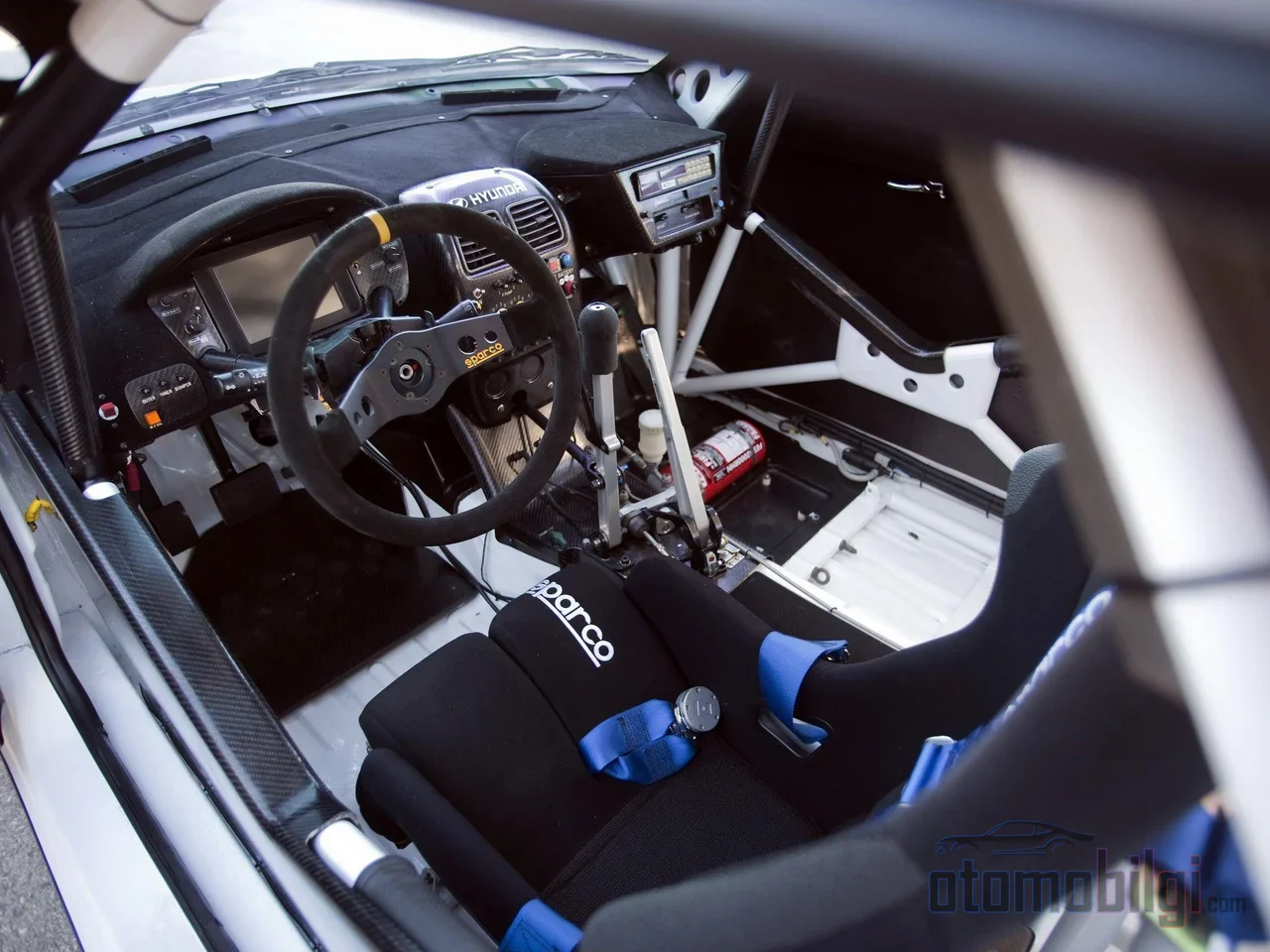
Say you're on the track, coming off the gravel onto asphalt, the steering wheel is still turned right, and there's a corner 50 meters ahead. At this point you need to downshift. In an ordinary car, you press the clutch, lift off the gas, move the lever into neutral, drop from sixth to fourth... you get the idea - a story longer than one second. In a Rallycross Supercar, though, the lever is pushed, the job is done within milliseconds, and the engine barely sits idle. So how do these boxes do it? The answer lies not in a single magic part; but in a chain extending from mechanics to electronics and durability. If you're ready, let's unwind the chain link by link.
The answer to the question is actually this: in rallycross, the race flows not from one corner to another, but from one gear tooth to another. How long the torque interruption lasts directly affects how many points the car takes home that week. That's why on this page we'll treat the sequential gearbox not as a "feature," but as the heartbeat of rallycross.
What Is a Sequential Gearbox, and How Does It Differ from the One in Our Car?
Let's give a brief definition: A sequential gearbox is a non-synchro manual box in which the gears can only be selected in order, one at a time. There's no jumping from fourth to second; every movement of the lever goes exactly one gear up or down. Although this limitation may seem like a disadvantage at first, it actually makes the driver's job incredibly easy: the chance of selecting the wrong gear drops to zero.
We can compare what spins inside to the key of a locker. The forward-backward movement of the gear lever rotates the curved channels on a shaft called the selector shaft. Each lever movement turns the shaft exactly one step; the forks disengage the old gear and engage the new one. Since the shaft can only turn one step at a time, skipping a gear is mechanically impossible. Whichever slot you move to on the lock, that's where you are - you can't jump to the one before or after.
Dog Ring, or the Gear Coupling: The Price of Speed Is Noise
So if there are no synchromesh, how does the gear engage while the gears are at different speeds? This is where the dog ring, or gear coupling, comes into play. These wide, square-toothed rings lock instantly without waiting for the speeds to match. The price is that famous metallic clatter: that's the source of the noise we hear in rally onboard recordings. Also, this system wears out far too fast for daily use; if it were in your own car, you'd have to rebuild the box within a month. On the race track, however, this price is a minor detail compared to speed.
Highlights
- A well-adjusted sequential box can change gear in about 5 milliseconds or less.
- World RX Supercars reach around 0-100 km/h in 1.9 seconds; that's faster than the Formula 1 cars of the era.
- RX2 cars use a Sadev-produced 6-speed sequential gearbox with a twin-plate clutch.
- The mandatory joker lap adds an average of 2-3 seconds to a race.
The Millisecond Battle: How Long Does a Gear Change Actually Take?
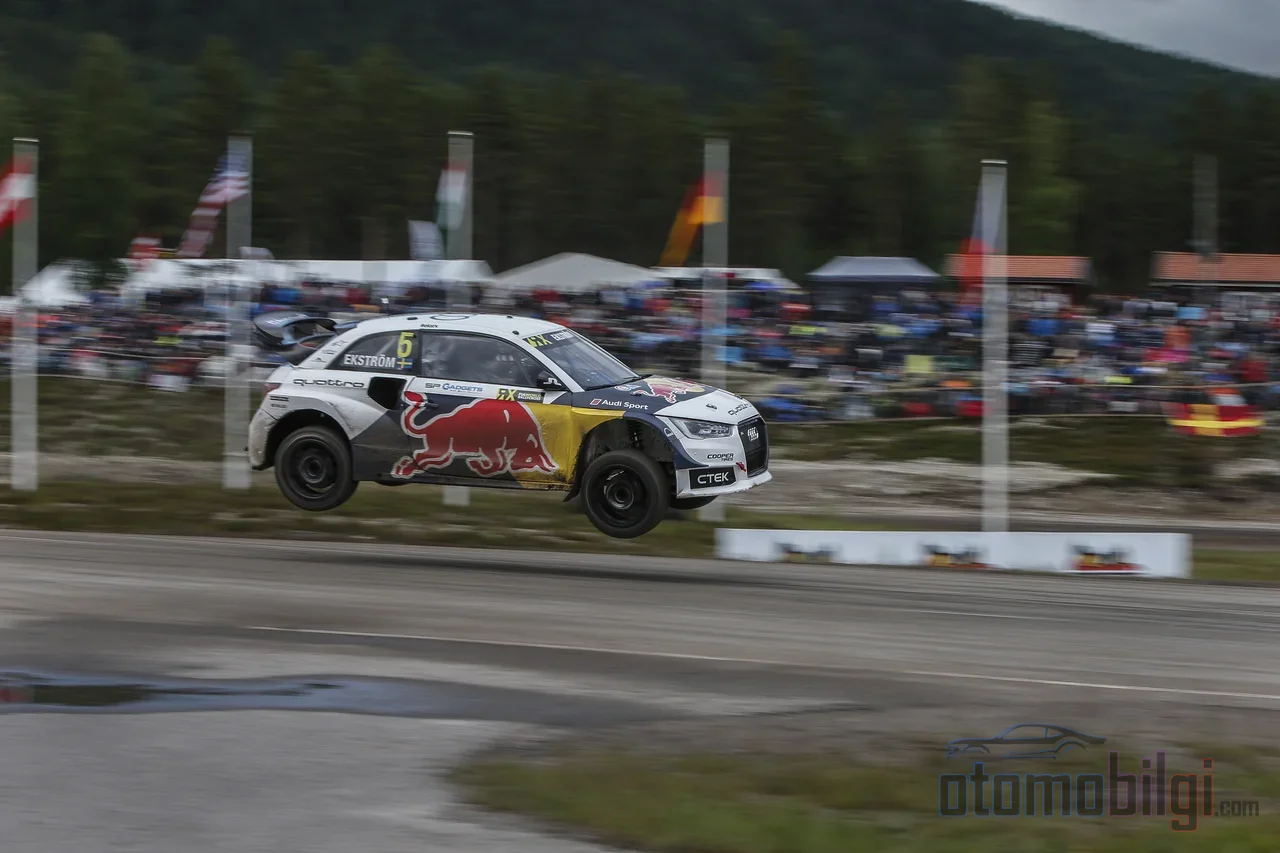
Here's the sweetest, yet equally debatable, part of the story. The figures vary significantly depending on the manufacturer and measurement conditions, because "shift time" is not measured the same way by everyone. Punching a shift with the box unloaded is one thing; measuring it at full throttle under racing load is quite another.
- In a well-adjusted sequential box, a shift can take around 5 milliseconds or less, an order of magnitude faster than a synchromesh system.
- One manufacturer compares its own sequential box at 40 milliseconds to a perfect synchromesh shift at roughly 200 milliseconds.
- Another actuator manufacturer speaks of 20-millisecond shifts when the box is not under load; under load, the time gets longer.
- Real-world measurements are more conservative: around 100 milliseconds under load is considered realistic, with an extra 50-100 milliseconds on downshifts.
The reason for this wide range is not trickery, but measurement differences: when the box is unloaded, the gears are already sitting ready; under racing load, everything has to happen at once. But this much is clear: even at its worst, a sequential box leaves the synchromesh system far behind while the H-pattern manual is still fumbling at the bottom of its travel. In rallycross, the critical threshold comes down to a simpler question: how much torque is being cut?
Why Does Torque Interruption Decide Your Fate?
Think about it: a Supercar with 600 horsepower and roughly 881 Nm of torque loses momentum the instant the throttle is cut. Rallycross tracks are short, with hardly any straights; between two corners there is sometimes just the moment of two shifts. If the engine sits unloaded even momentarily during a shift, the speed lost in that moment can never be recovered. In a box with dog rings, a torque interruption is mandatory for shifting; the way to achieve this in racing is to electronically cut ignition or fuel for a short time. The load disappears, and the gear engages without lifting off the throttle. On downshifts, the ECU makes the engine "blip" the throttle to match revs; it has taken over the job racers once had to do with heel-and-toe double-clutching.
Formula 1's pinnacle seamless-shift system takes this logic to the extreme: instead of one selector shaft, two separate ones are used, with odd gears connected to one and even gears to the other. For a few thousandths of a second during the shift, both gears stay engaged at once, producing effectively zero interruption in torque transfer. This requires hydraulic actuators operating above 10,000 rpm and a transmission ECU that "learns" the gear positions. Rallycross Supercars are not at this level, but they solve the same problem with a simplified version of the same principle: keeping the interruption as short as possible.
When Is the Clutch Used?
The answer may surprise you: almost never. In a modern rally or rallycross car, the clutch exists only for starting and stopping. The twin-plate Alcon clutch in the RX2 vehicles, for example, does exactly this job; the rest is entrusted to electronic rev matching. Inside the stage, the driver doesn't even touch the clutch; everything flows through throttle inputs and hand movements.
Sand, Jumps and Shocks: How Does the Box Survive?
A rallycross track is not a resort for the gearbox; there is a sand section, a rocky dirt section, and a jump right in the middle. When the car lands, an incredible shock load hits the drivetrain. Vehicle dynamics studies show that rear damper stiffness is critical in jump behavior, and that a generally stiffer rear setup gives better results. High-speed compression adjustment is also used to control sharp impacts such as rocks, wheel ruts, and aggressive bumps. Gearboxes built for rallycross-type disciplines are expected to absorb heavy shocks, have a robust casing, and feature wide-ratio gearing; that is not a preference, it is a requirement of the discipline.
Durability is the truly critical part: gear clutches wear out much faster than syncromesh cones, and racing dog rings are treated as service parts. So there is no such thing as annual periodic maintenance; gearboxes are rebuilt at intervals measured in race distance, or their parts are replaced. In-season rebuilds of rally cars include chassis disassembly and reinforcement, drivetrain and engine rebuilding, and the installation of safety equipment; the gearbox is one of the most exhausted workers in this cycle.
Why Is It Not In Road Cars?
So if it is this fast, why is it not in every car? Because wear is high, the gearing is harsh, and it is a complete torture for daily driving. Besides, in stop-and-go traffic the gearbox needs to shift smoothly; a gear-clutch design offers no possibility of that. And there is this too: the "sequential mode" or gear selection buttons on your steering wheel do not give you a sequential gearbox; underneath there is an automatic or dual-clutch gearbox that merely selects the gears in sequence. So mechanically, it is not a true sequential.
The World of Supercar and RX2 Gearboxes in Numbers
The numbers tell how serious machines rallycross Supercars are. With 2.0-liter turbocharged engines and four-wheel drive, Supercars complete 0-60 mph acceleration in 1.9 seconds; that is faster than even the Formula 1 cars of the day. On the electric side, cars like the FC1-X drop below 1.5 seconds to 0-100 km/h with over 1,000 horsepower. Below, we have gathered the available basic data of the two classes for comparison:
| Feature | World RX Supercar | RX2 |
|---|---|---|
| Engine | 2.0 L turbocharged | 2.4 L Ford Duratec (Mountune), naturally aspirated |
| Power | Around 600 hp | 310 hp |
| Torque | Approximately 881 Nm | 300 Nm |
| 0-100 km/h (approximate) | 1.9 s | Manufacturer data not shared |
| Gearbox | 4WD, racing sequential box | Sadev 6-speed sequential, mechanical differential |
| Clutch | Racing type, for standing starts | Twin-plate Alcon |
The RX2 class is actually a good example: it carries the same four-wheel-drive architecture, longitudinally mounted gearbox, and true sequential box, but keeps the power at roughly half that of a Supercar. So gearbox technology sees no class difference; everyone is fighting the same millisecond battle.
The Role of Gear Selection in the Joker Lap
So where does all this technical detail connect to the track? The answer: the joker lap. Every driver must complete one joker lap in every race, and this alternative route adds an average of 2-3 seconds. Since the joker lap is usually a slower and tighter section, which gear you enter it in and at what revs you exit back onto the asphalt directly affects your position. Missing one gear at the exit can put half a pickup-length distance between you and the car behind. Things get even more intense in the newly announced Rallycross World Cup format: on the agenda are an 8-car semifinal and final, two mandatory joker laps per race, and a new Superpole format. Two joker laps means the gear strategy gets recalculated twice within a race.
During practice, teams work on gearbox settings according to the layout of the track: a mix of a short gravel section and a long asphalt stretch determines which gear ratios are chosen. The same gearbox is not used with the same setup at every track; the track layout and joker lap tactic are rewritten from scratch on the sheet of paper on the setup table.
In summary: Why Is the Sequential Gearbox So Fast?
Since we asked in the title, you deserve a clear answer: a sequential gearbox is fast because the selector rail positions the gear in a single step, the dog clutch engages without waiting for rev matching, and electronic ignition-fuel cut reduces the torque gap to milliseconds. Instead of the silent but slow middle ground of the synchromesh, you get mechanical simplicity that is noisy but locks in instantly; the result is a flow to the next gear without the driver's attention ever being distracted. The price is wear and noise; in rallycross, this price shows up as a service bill paid anew every weekend. Next time you watch an onboard recording and hear that metallic gear sound, you will now know: that noise is the price tag of milliseconds.
Sources
- Sequential gearbox: what it is and how it works
- How Sequential Gearboxes Work: Racing's Millisecond Gear Changes
- Sequential manual transmission
- How a Racing Sequential Gearbox Works: Comparison vs Manual Synchro
- RX2 cars technology: The rallycross tech guide
- How Global Rallycross cars hit 60 mph in 1.9 seconds
- Exploding the myths regarding shift times