How Does AWD Power Distribution Work in Rallycross?
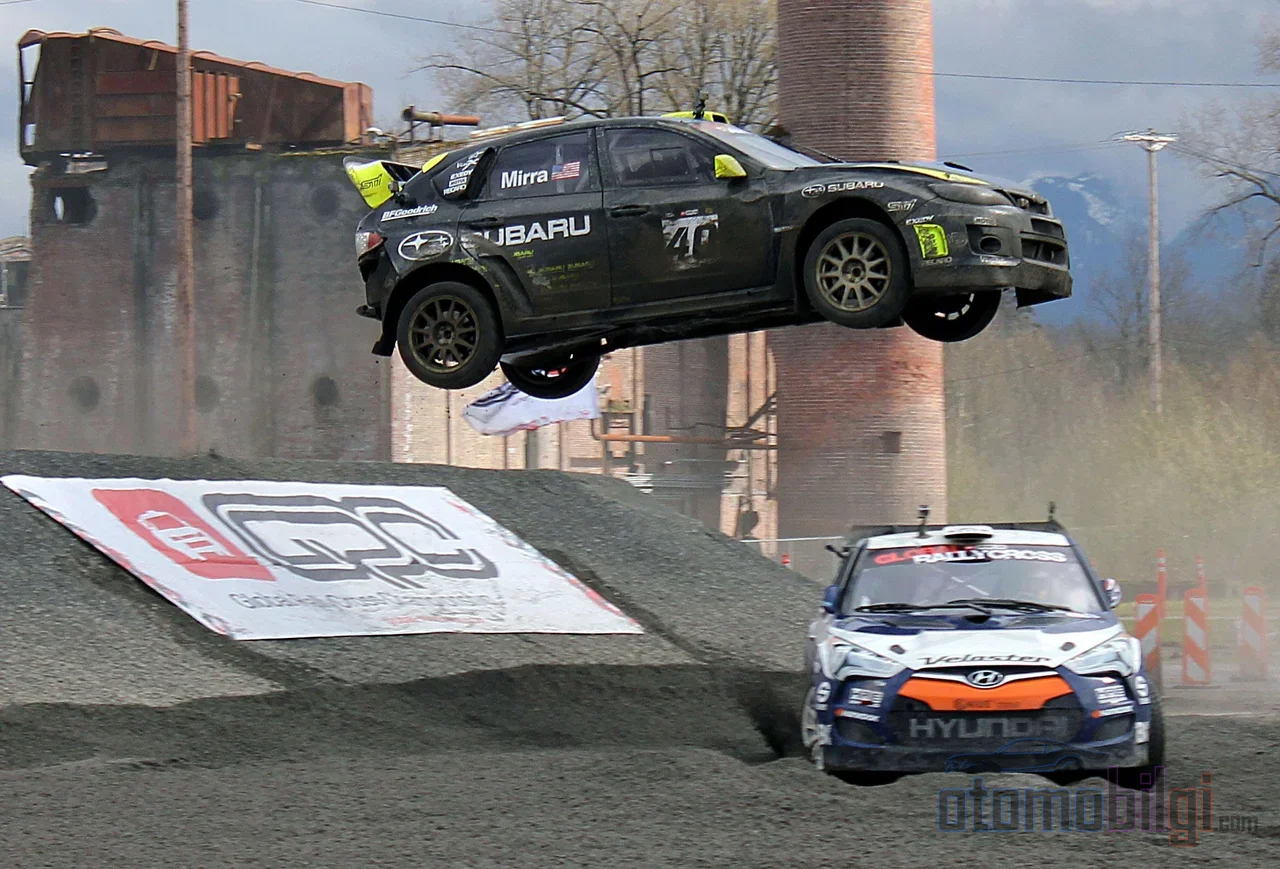
Four cars enter the first corner together, with a track ahead of them that is half asphalt and half dirt, and after five laps only one will win the final. In this chaotic world of rallycross, everything depends on how the power pressed onto four wheels is divided. So when you press that gas pedal, where does the engine's torque really go between the front and rear axles? The answer to this question is also the key to how the monsters called Supercars turn corners by drifting.
Unlike our tour on this page that explains vehicle anatomy in general terms, we dive deep into a single topic: four-wheel drive systems and how the driver's throttle-brake inputs are shared between the front and rear axles. If you're ready, let's begin.
How Does the Center Differential Divide Power Between the Front and Rear Axles?
In a four-wheel drive rally car, the heart of the matter is the center differential. The torque produced by the engine reaches here first, then it is shared between the front and rear axles. Why is such a thing needed? Because the front and rear wheels rotate at different radii in corners; if you connect the two with a rigid shaft, the car won't want to corner, and the tires declare war.
In WRC cars, the center differential works with computer input and maximizes performance by sending power to the wheels with the best grip. The Torsen differential at the heart of the legendary Audi quattro works on the same logic: torque going to the slipping wheel decreases, and it is transferred to the wheel that grips. Some quattro variants hit the road with a base torque distribution of 40% front, 60% rear - meaning it favors the rear as standard.
In the simplest solution, there is no center differential at all; the system permanently splits the torque 50/50. Simple but effective. When power is distributed to four wheels, wheel spin decreases, and traction and stability increase; rather than loading the massive torque of a turbocharged rally car onto a single axle, splitting it in two prevents wheelspin under heavy load and makes the car easier to hold.
Highlights
- The center differential is the heart of the system, capable of dividing torque between the front and rear axles even in asymmetric ratios like 40:60.
- The rally world prefers rear-biased four-wheel drive setups for rotation within corners.
- In the electric era, there was one motor on each axle; As of 2026, the top class of World RX returned to internal combustion engines.
- Dirt surfaces are less predictable than asphalt: an earlier braking point means more understeer.
Why Is Torque Distribution Never Fixed?
Here's the beautiful part: in modern systems, the distribution is not a fixed number, but a range. In the DCCD system of the WRX STI, the legend of Subaru's rally culture, the driver can adjust the lockup of the center differential themselves, and the torque distribution varies between 41% front, 59% rear and 50/50. In the VTD system, the distribution, normally 45% front and 55% rear, goes up to 50/50 when conditions deteriorate. So the same car changes its character on dirt and asphalt - just like a friend changing their shoes in the rain.
How to Set Up Power Delivery When Transitioning from Asphalt to Dirt?
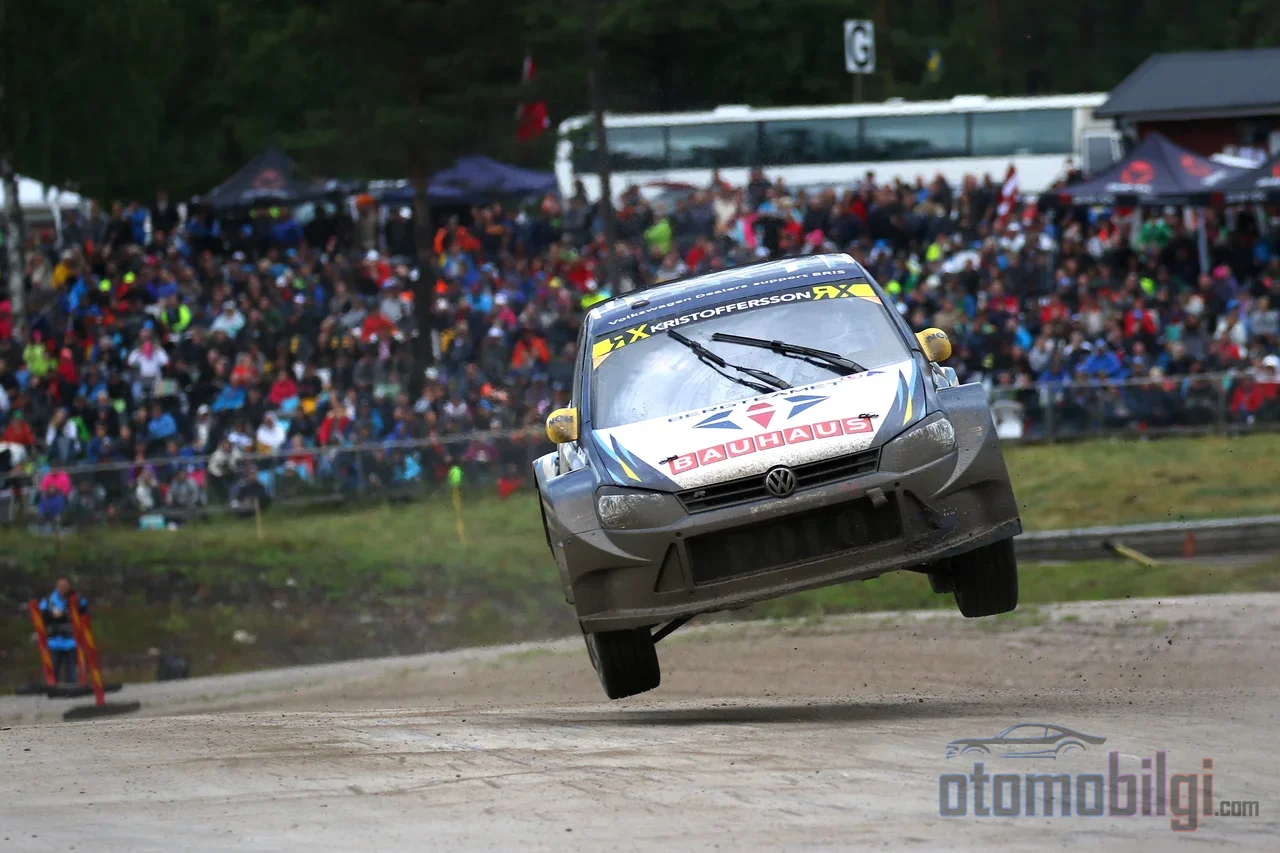
A rallycross track has a split personality: one moment you are gripping on asphalt, the next you are sliding on loose dirt. This transition is the true test of an all-wheel drive system.
Dirt surfaces are far less predictable than asphalt; they bring earlier braking points and more understeer. When the surface changes between sand and asphalt, the pilot uses the car's weight transfer to help the tires punch through the loose dirt and find grip on the hard surface beneath. So power delivery is not just a mechanical matter, but a dance that works together with the driver's weight management.
The soft suspension setup on World RX cars exists precisely for this reason: drivers need to feel the changing grip levels and adjust braking and acceleration accordingly. If the car is stiff, you won't hear anything the dirt is telling you. During qualifying laps, the pilot constantly reads this grip information between surface changes and meters throttle and brake inputs accordingly.
How Does the Joker Lap Strategy Combine with the Surface?
Every driver must use the joker lap, a longer alternative route, once per race. When to take this lap is a strategic decision; taking it early or late can both change the race result. In tight rallycross races, driver positions, track surface and joker lap strategy are recalculated at every corner. Power delivery plays an indirect role here: in dirt-heavy sections you need to preserve traction, in asphalt sections you need to convert torque into rotation - and the driver manages this through a single throttle pedal.
How Does the Driver Control the Drift Angle with the Throttle?
Now let's come to rallycross's most spectacular sight: the car sliding sideways, nose pointed into the corner, spraying dirt. Behind this image is again the all-wheel drive system.
Rally drivers often use all-wheel drive setups weighted toward the rear axle - and the reason is very clear: power sent to the rear encourages rotation within the corner. The torque loaded onto the throttle pulls the car into the corner, and the driver adjusts the drift angle with this "nose-pointing" technique. Sending power to the rear wheels makes turning in the corner easier but demands advanced car control; otherwise a spin is waiting for you.
AWD drift angles are shallower than in rear-wheel drive cars; because traction from all four wheels pulls the car outward without sliding. That's why smooth entries are needed in AWD. All-wheel drive drift cars manage the angle with torque vectoring or limited-slip differentials; balanced power delivery helps the driver balance speed and angle at drift entry and exit. In a rear-wheel drive car, you slide long and fluid with the throttle; in an all-wheel drive car, you prepare the car with techniques like weight transfer and trail braking, and hold the angle with the throttle.
How Has AWD Behavior Changed in Electric Powertrains?
The most radical transformation in all-wheel drive in the last decade has come from electrification. The Kreisel batteries in the electric World RX concept could deliver 500 kW (approximately 680 hp) to the four-wheel-drive motor system throughout the entire race. The system had a total of two motors, one on each axle - meaning each axle received its own power without the need for a mechanical splitter like a center differential. This setup produced 0-100 km/h acceleration that surpassed F1.
In the FIA RX2e car, the battery was positioned next to the driver, at the center of the vehicle, for an optimum 50/50 weight distribution; power was distributed equally. So in the electric era, torque distribution shifted from the mechanical differential to software and a motor per axle. So much so that even Formula E's GEN4 car moved to permanent/active four-wheel drive with dual motors, cutting 0-100 km/h acceleration down to 1.8 seconds.
However, in 2026 the FIA made a radical decision: the top tier of rallycross is once again being filled exclusively with internal combustion engines in order to simplify competition, and World RX returned to being a European championship, leaving electric vehicles behind. In contrast, electric all-wheel drive continues in series like RallyX Americas: in the FC1 class, AWD electric vehicles with 1,088 HP are making a comeback; the four-motor setup can produce 1,500 hp.
Why Is Rallycross's AWD Approach Different from WRC's?
Both compete with turbocharged all-wheel-drive monsters, but their formats make the use of these systems completely different. WRC is run as a time trial on closed roads with a co-driver and pacenotes; rallycross, on the other hand, consists of short races of a few minutes with group starts. That's why in rallycross, the all-wheel-drive system is used constantly in the thick of fierce competition, wrestling with constantly changing surfaces and lateral driving. On the WRC side, the center differential is computer-assisted and tuned with data from long kilometers.
In summary: How Does AWD Power Distribution Work in Rallycross?
The short and clear answer: in rallycross, all-wheel drive shares engine torque between the front and rear axles via a center differential (or, in the electric era, motors per axle); the split is mostly kept rear-biased, because power going to the rear encourages rotation in corners, and the driver controls the drift angle with the throttle pedal over this balance.
When transitioning from dirt to asphalt, the driver feels the difference in grip through the soft suspension, presses the tires into the hard surface with weight transfer, and readjusts the brake-acceleration dosage. Although the top tier has returned to internal combustion engines as of 2026, the electric era's motor-per-axle all-wheel-drive experience lives on in other series. The next time you watch a rallycross car sliding side by side inside a dust cloud, know that at that moment each of the four wheels is working on a different share of power, all under the command of a single throttle pedal.
Sources
- Glossary - Rally Türkiye | WRC
- Subaru Symmetrical AWD Explained
- FIA sets bold new course for rallycross from 2026 - FIA
- Will Electric Car Racing Be Better? World Rallycross Thinks So – Forbes
- Rallycross' next generation get to grips with FIA RX2e car – QEV
- Rallycross Explained | Peugeot Sport
- How to set up a rally car for gravel and asphalt – DirtFish
- Why Electric Rallycross makes sense – Racecar Engineering
- RallyX Americas Unveils 2026 Calendar, Classes – rallyx.se
- What Is Quattro? – Borusan Next