The Secret of Rallycross Brakes: Where Does the Heat Go?
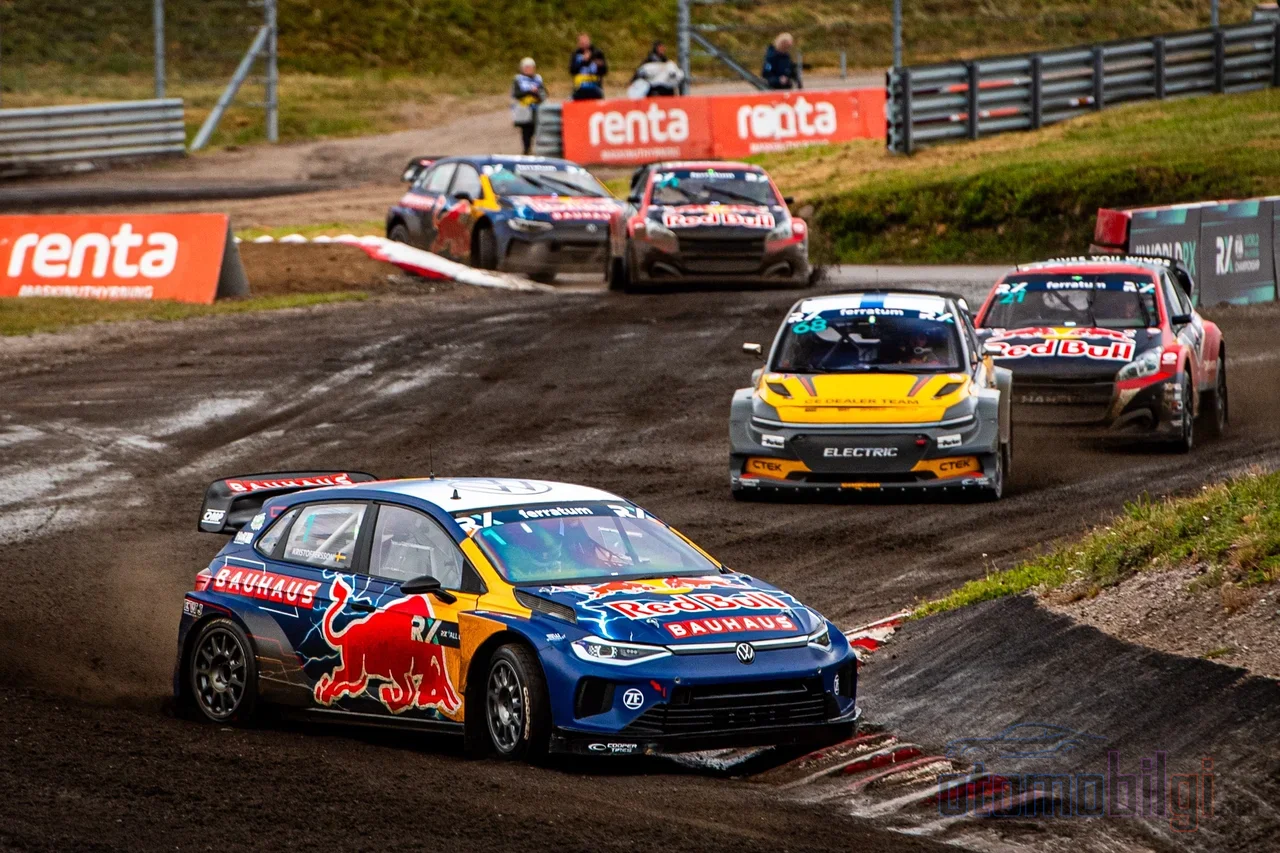
You do six full braking events in four laps, then one more lap over the disc you have just heated. The heart of rallycross beats exactly here: short tracks, massive acceleration, and using the brake to the very last centimeter before every corner. So are the carbon brakes of a rallycross Supercar enough to carry this 600-horsepower violence all the way to the end of a race day? The answer is both simpler and more complicated than you think; because the question is not how much power there is, but where the heat goes.
First, let's picture the numbers. A Supercar, with its 2.0-liter supercharged engine, produces about 600 horsepower and reaches 0 to 100 km/h in under 2 seconds; that means acceleration at the level of a Formula 1 car. Now put the same car on a short rallycross track with sharp corners and chicanes. At least once per lap, full throttle followed immediately by full braking. All day long: qualifying heats, semi-finals and the final... The day the braking system goes through is not much easier than the engine's.
Why Is Braking a Survival Component in Rallycross?
On the road, braking is the means of respecting speed limits. In rallycross, however, braking becomes a weapon that gains you time. The later you brake, the later you slow down; speed shed at the very last millimeter at the apex of the corner is a direct gain in lap time. On short tracks, lap times are so close together that a two-meter advantage gained in a single corner can decide whether you make it to the semi-final.
But this weapon has a price: during braking, the car's kinetic energy turns into heat on the friction surfaces. In rally cars, the brake's job is literally to convert speed into heat. Under intensive use, this heat can reduce braking effectiveness, that is, brake fade; in extreme cases, the problem can become even more serious. That is why in rallycross the brake is not just a performance component, but the carrier of the car's chance to finish the race.
Highlights
- Rallycross Supercars produce about 600 horsepower and go from 0-100 km/h in under 2 seconds.
- Carbon-ceramic discs are about 50% lighter than cast iron, with a friction coefficient 25% higher.
- Carbon-ceramic discs work up to about 1,400°C; for iron discs, the threshold is about 700°C.
- The production of a carbon-ceramic disc takes about 20 days.
Carbon-Carbon or Carbon Ceramic?
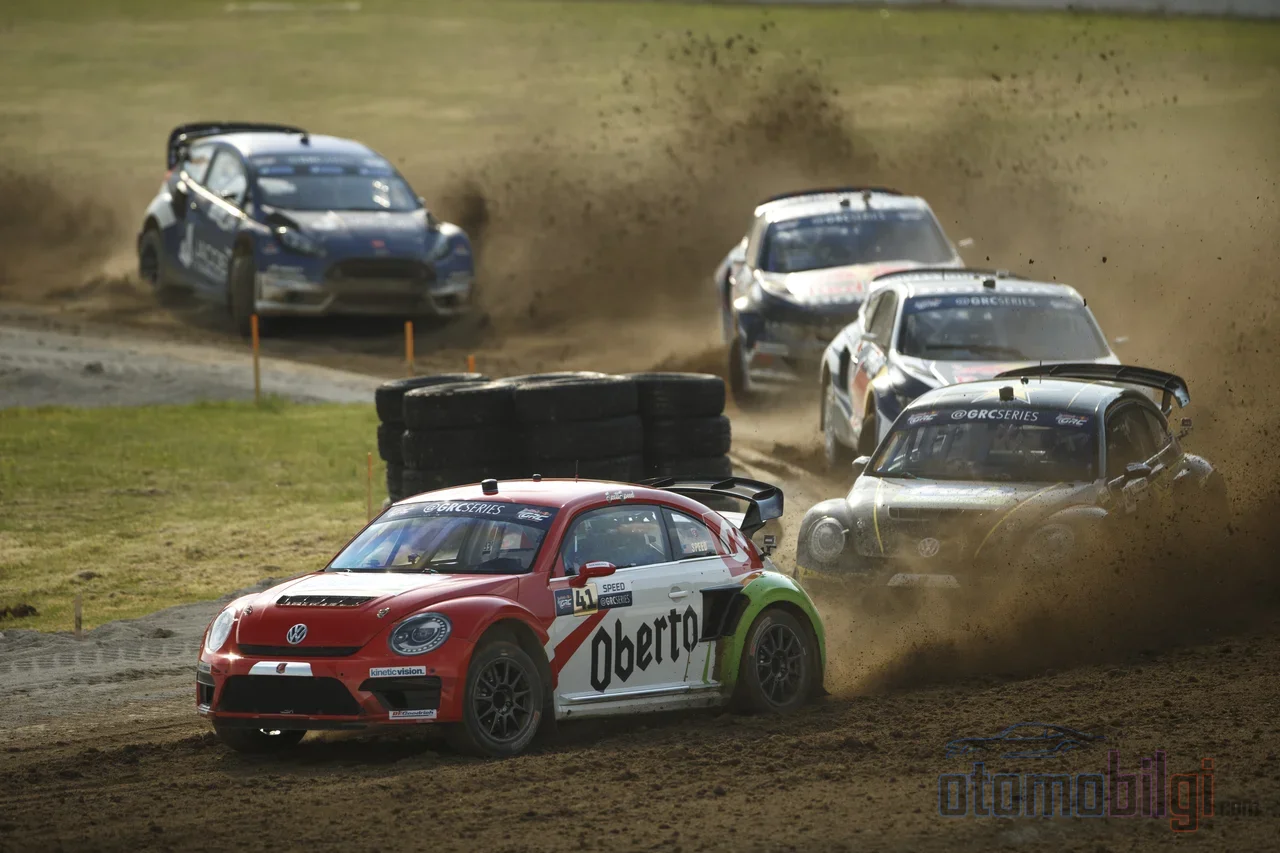
The two materials come from the same family, but their characters are completely different. The carbon-carbon discs used in Formula 1 are designed for short but extremely intense braking events; their priority is maximum deceleration power. These discs are developed to work from a few hundred degrees up to above 1,000°C. In return, they have high demands: they need to be hot in order to work truly efficiently. When cold, their friction coefficients are low and their wear accelerates; outside the race track, they are hardly a reliable companion for a trip to the grocery store.
Carbon ceramic (CCM) discs, on the other hand, are a material born to solve this problem. They contain carbon fibers as reinforcement and silicon carbide and metallic silicon as the matrix: silicon carbide provides the hardness, while carbon fibers provide the mechanical strength and fracture toughness. The result is a disc that is both stable at high temperatures and delivers predictable braking response when cold. Two different needs of the rally and track world, two different answers.
Why the Numbers Make Carbon So Appealing
The advantages of the carbon ceramic disc are clear enough to list one by one. It is roughly half the weight of a cast iron disc; this means unsprung mass you cannot lift away and rotational inertia per wheel - in other words, a car that both accelerates faster and holds corners better. Its friction coefficient is about 25% higher compared to conventional discs. The most critical one is thermal resistance: while carbon ceramic discs can withstand temperatures of around 1,400°C without significant degradation, this limit for conventional iron discs is around 700°C. And that is not to mention their resistance to brake fade under repeated heavy braking.
| Feature | Carbon Ceramic (CCM) | Cast Iron Disc |
|---|---|---|
| Weight | Approximately 50% lighter | Reference |
| Friction coefficient | Approximately 25% higher | Reference |
| Operating temperature limit | Approximately 1,400°C | Approximately 700°C |
| Brake fade resistance | Does not fade under repeated heavy braking | Risk of fading under intensive use |
| Production time | Approximately 20 days | Short |
A Disc Born in 20 Days
Why are these discs so expensive and special? The production process is a full showcase of ceramic engineering. The carbon fibers first receive a protective coating, are processed from raw material and pressed into a green body. Then comes carbonization at 900°C and siliconization under vacuum at 1,700°C. The cooling channels are opened by removing a core placed inside; and for the finishing work, you need diamond tools, not an ordinary lathe. This journey, which takes about 20 days, means that each disc is a piece of technology in its own right.
Thermal Cycles: What Does a Race Day Put the Brakes Through?
Now let us come to the real cruelty of rallycross: the thermal cycle. Throughout a race day, the car goes out on track repeatedly, from qualifying laps to the finals. On every outing, the discs start cold, shoot up to hundreds of degrees within a few corners, and cool down again in the parc. From the first lap of the morning to the final corner of the final, this heating-cooling cycle is repeated dozens of times. And this is exactly what materials hate the most; because heating-cooling cycles are an open invitation to metal fatigue and internal stresses in composite materials.
Here, the brake pad is also a critical part of the job. A pad that operates too cold actually wears out faster than you would think; and rotor wear, in large part, depends on the temperature at which the brake operates. In other words, a brake operating in the wrong temperature window speaks both to that lap and to the weekend after the race. Teams therefore monitor brake temperature just as closely as engine water temperature.
At racing series level, disc type selection is also an engineering decision. Carbon ceramic discs do not suffer the kind of deformation that iron discs can experience at extreme track temperatures, and they offer roughly 3-4 times the service life compared to iron discs; they can also be resurfaced a few times over their lifetime. In return, these discs work only with compatible pads and large racing calipers, typically 6-piston calipers or 4-piston designs that require distinctly thick discs. In other words, switching to carbon ceramic means rethinking the entire braking system.
How Does Braking Performance Leak Into Racing Strategy?
Here is the side most viewers never see: a brake problem is never a technical detail hanging in the air, it is carried straight onto the track. When the brakes get thoroughly hot and pedal feel starts to change, the driver may have to back off a few meters before the late braking points; the joker lap tactic is also part of this calculation, because taking an extra lap means subjecting the brakes to one more thermal cycle. When temperatures approach the limit, the question of whether to push for one more clean lap or preserve the brakes and reach the target enters among the decisions rallycross teams make all weekend long.
The 2026 season was full of fine examples of this tension. In the European Rallycross Championship, Johan Kristoffersson started the season with a 1-2 finish with his own team at the opener in Latvia and secured the championship at the dramatic season finale in Lousada, Portugal. On days ending like this, when every point is precious, a car whose brakes give out halfway straight upsets the championship calculation. Championship leader Andreas Bakkerud's early departure from racing on the second day of a qualifying session in Portugal was also proof of how a single technical problem can sweep away a season.
So What Is the Answer: Can Carbon Brakes Last a Race?
They can, and the reason is the material itself. Carbon-carbon discs are designed precisely with the short but extremely intense braking and rapid thermal cycles experienced in rallycross in mind; carbon ceramic discs, meanwhile, do not suffer brake fade under repeated heavy braking, operate up to 1,400°C, and offer a service life many times longer than iron discs. A Supercar brake fitted with either of these two materials is more than sufficient to carry the load of a single race day. The real limit is not in the material, but in management: the right pad choice, the right temperature window, and the team reading the brake data correctly. For a brake not to last a race, it takes not a failure of carbon, but going outside the window.
An Honest Footnote
This also needs to be said clearly: detailed, verified information on how rallycross Supercar teams monitor brake telemetry data on screens, or on a proven example of a car retiring from a race after reaching disc wear limits, is not widely available for now. The analysis above is based on the combination of the documented properties of brake materials and the known format of rallycross; the section on in-team telemetry practices should be read as a technical explanation of how the system works.
Next time you watch rallycross, fix your eyes on the braking points: every late brake you see is an unseen moment of an exam with hundreds of degrees at stake. Carbon discs are made to pass this exam; the rest is up to the driver's foot and the team's calculations.
Sources
- Carbon Ceramic Disc | Brembo
- CCM Disc: Carbon Ceramic for Sports Cars | BSCCB
- How Soft Carbon Fiber Donuts Become the Brake Discs | Brembo F1
- Carbon Ceramic Brakes | CTE Carbon
- What you need to know about rallycross | Red Bull TR
- The 600-horsepower EKS Audi S1 Supercar | LOG
- Brakes: When There's Need to Shed the Speed | Škoda Motorsport
- 5 Ways Temperature Helps Racing Experts Choose The Right Brake Pad | Pit Pad
- Kristoffersson fronts KMS 1-2 finish at 2026 FIA Euro RX season opener | FIA
- Kristoffersson crowned on dramatic final day of season | FIA Rallycross