Rallycross Anti-Lag: Why Does the Turbo Shoot Flames?
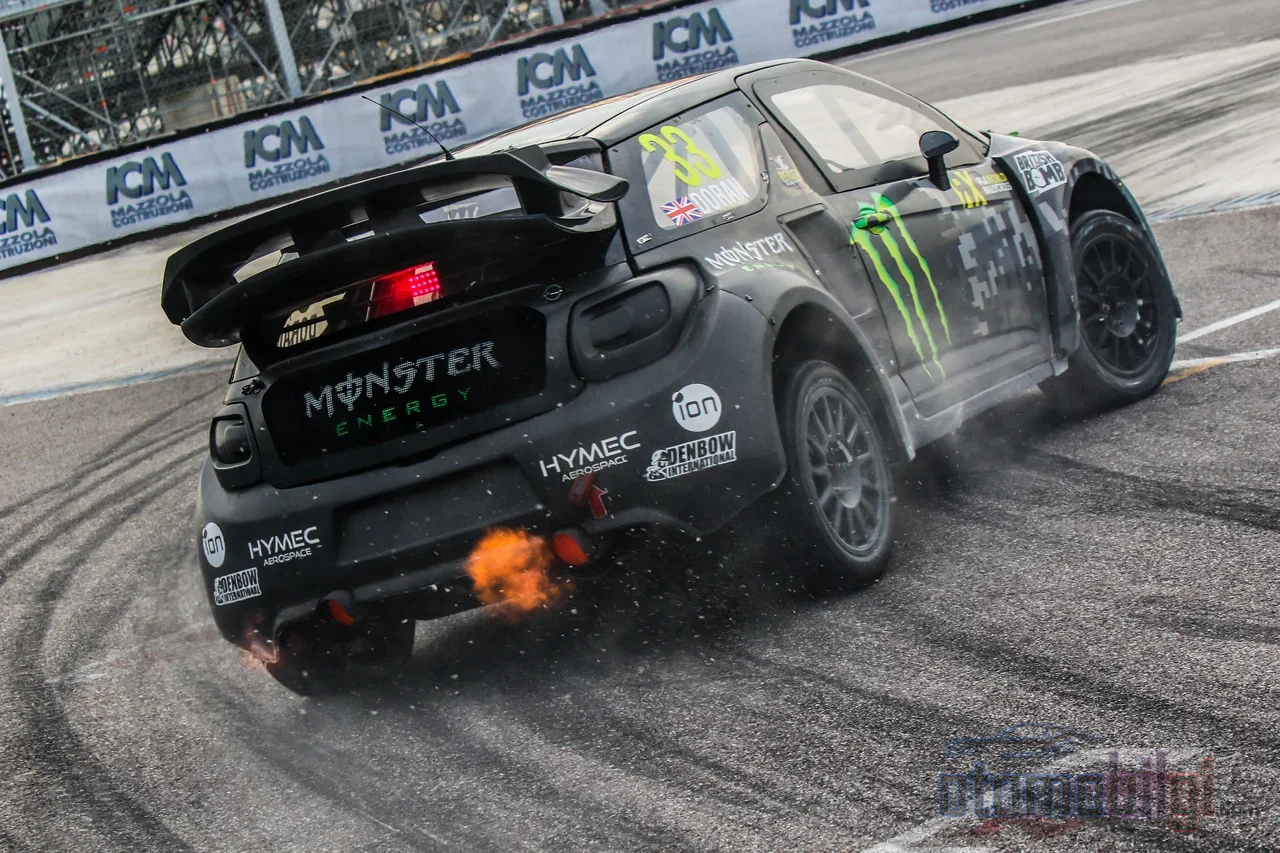
If you've ever stood at the edge of a rallycross track, you know: When a Supercar enters a corner and lifts off the throttle, you hear a sequence of gunshots-like bangs from its engine while flames spurt from its exhaust. Most people think it's just for show. It's not. That sound is the sign of a 600-horsepower engine being kept on a war footing even at the moment the throttle is closed. So how does the anti-lag system work - does it protect the turbo or slowly destroy it? Buckle up, because the answer is far more radical than you'd expect.
On this page we've covered many topics from suspension setup to brake discs, but we haven't yet delved into the engineering of the system that produces the signature sound of Supercar engines. Today we're filling that gap.
What Is Turbo Lag and Why Is It So Annoying?
First, let's clarify the problem itself. A turbocharger works with a turbine driven by exhaust gases; when the engine is at high revs and the throttle is open, exhaust pressure is high, the turbine spins rapidly and sends pressurized air to the engine. But the moment the driver lifts off the throttle, exhaust flow weakens, the turbine slows down, and the turbo loses its effect. When you press the throttle again, you have to wait for the turbine to get back up to speed. That waiting time is turbo lag.
In everyday life, this delay is felt as a half-second hesitation when overtaking on the highway. In rallying and rallycross, however, it's a different story: On a stage of roughly 20 kilometers, turbo lag can cost you 1-2 seconds per kilometer, adding up to as much as 20 seconds. And in rallycross's short, explosive format, there isn't a single second to lose in the first place. Power must be there instantly at the start, at corner exits, and during gear changes.
That's exactly where the anti-lag system (ALS for short) comes in: It ensures the turbocharger keeps spinning and producing boost even when the driver releases the throttle.
Highlights
- World RX Supercar engines produce 600 horsepower and 900 Nm of torque.
- 0-60 mph acceleration takes only 1.9 seconds.
- With anti-lag active, turbo temperature can climb from 800°C to over 1100°C.
- In race trim, up to 1.5 bar of boost can be maintained with the throttle closed.
How Does the Anti-Lag System Work?
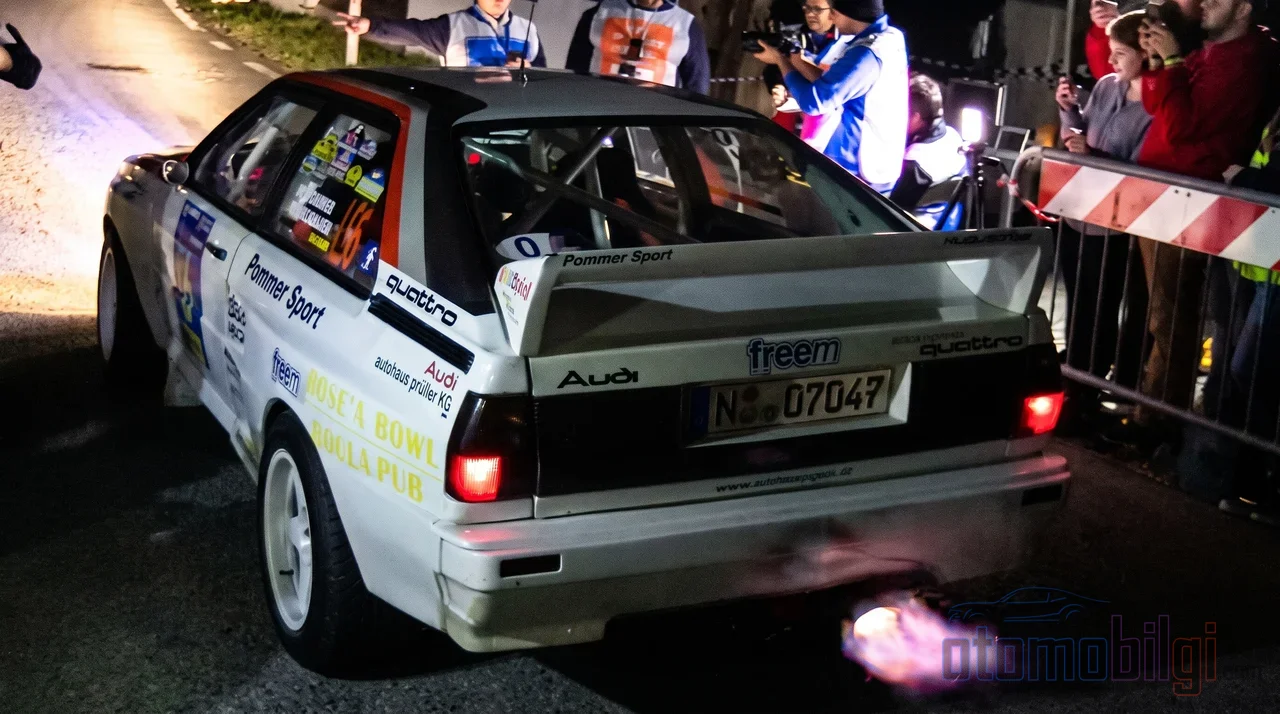
Now let's get to the engineering part, and let me explain it with a simple analogy. Think of the turbocharger as a pinwheel spun by exhaust gas. Normally, when the wind (i.e. the exhaust flow) stops, the pinwheel slows down. Anti-lag, on the other hand, deliberately places small explosions at the base of the pinwheel when the wind stops; the pressure waves from those explosions keep the pinwheel spinning.
Technically, the process works like this: When the throttle is closed, the engine management system delays the ignition timing severely, by 40 degrees or more. Such delayed ignition causes the mixture not to burn completely in the cylinder; the unburned fuel reaches the exhaust manifold and explodes in the high temperature there. And the explosion keeping the turbine spinning is just the cherry on top.
Also, the mixture is deliberately enriched and either the throttle is kept slightly open (in some systems it stays 15-20 percent open) or air is supplied to the engine with the help of an air injector or a bypass valve. The goal is to never lose the exhaust pressure wave that will spin the turbo.
When Does the System Kick In?
Anti-lag is not hardware that runs at all times; it is a map programmed inside the ECU. An example activation condition: When the throttle is closed and engine speed is above 4,000 RPM, the system starts working. So it is not a simple button for the driver, but a smart software that engages automatically depending on the engine's state that rules. That is why thinking of anti-lag as a box bolted onto the car afterwards is wrong; since the mid-1990s, this job has been done with maps written into the engine electronics.
Launch Spool: Its Role at the Start Line
Anti-lag also has a special use for the moment of launch. In launch, that is, launch mode, ignition is delayed much more than normal and much more fuel is injected so that the turbo spools at a lower speed than expected or with higher pressure, that is, it is made ready for operating speed. Behind a supercar lunging forward at the moment of launch lies this preparation.
Anti-Lag in Supercar Engines: A Panorama in Numbers
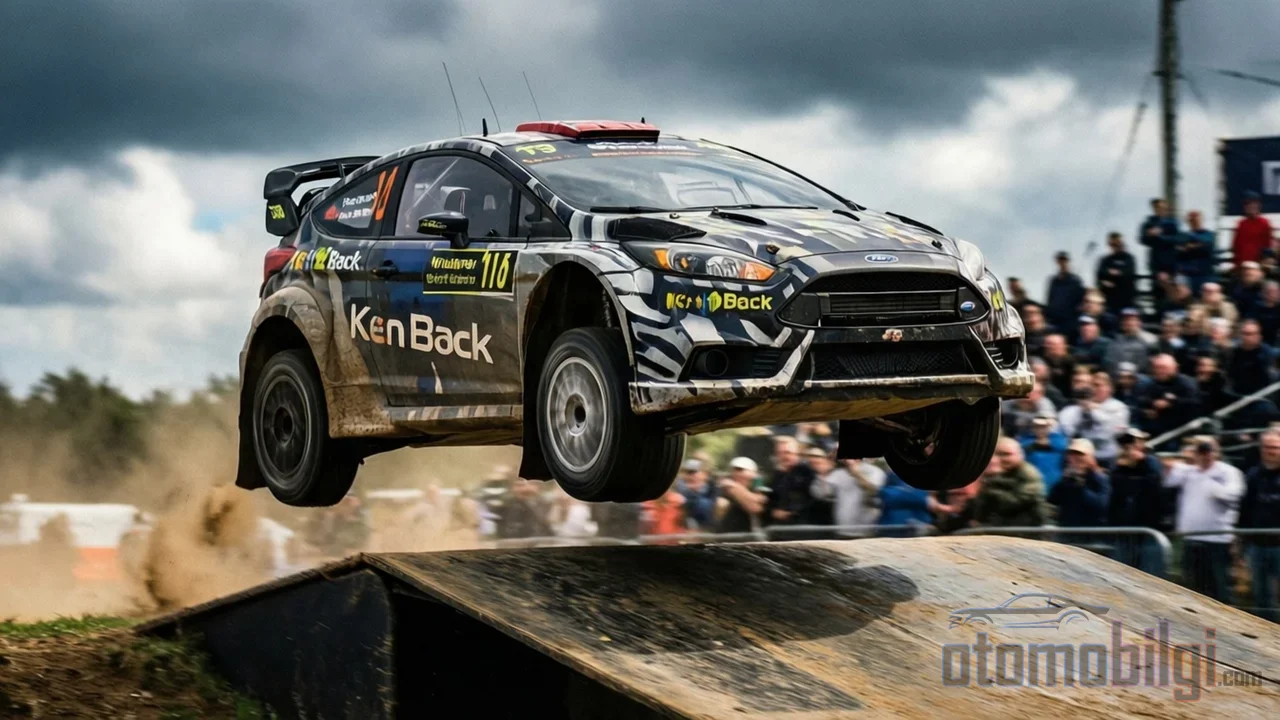
So what engine does this system deploy? The Supercar class in World RX races with 2.0-liter four-cylinder turbocharged engines. On the intake side there is a 45 mm restrictor, that is, a constriction that limits the air intake; yet the engines manage to produce around 600 horsepower and 900 Nm of torque. On the transmission side, the driver is offered no assistance at all: the six-speed sequential gearbox and four-wheel drive are entirely under the driver's control.
| Specification | Value |
|---|---|
| Engine | 2.0 L turbocharged, 4 cylinders |
| Power | 600 BHP |
| Torque | 900 Nm |
| Maximum revs | 8,000 RPM |
| 0-60 mph acceleration | 1.9 seconds |
| Drivetrain | Four-wheel drive (AWD) |
| Weight (RX1 class) | 1,300 kg |
The reason values like consumption are absent from this table is simple: There is no official figure published by either the series or the manufacturers, and we do not make one up. But the rest of the numbers are enough to explain why anti-lag is such a good match with these engines.
There is also a detail recounted by those who have taken a real World RX car to the track: Every time the throttle is lifted, that famous anti-lag sound, similar to a crackle, is heard from the exhaust. This sound, reminiscent of the late-1990s WRC Subaru Imprezas, is proof that the system barely sleeps at all throughout the race.
Why Is It So Well Suited to the Rallycross Format?
Now let us zoom out to the big picture. Rallycross races consist of several heats, and from the start line everyone battles on the same small mixed asphalt-dirt track. In this format, the fate of the race is decided within seconds, even fractions of a second.
Anti-lag perfectly complements this format at three points. First, the start: To reach a 1.9-second 0-60 mph time, the turbo needs to be waiting on the line with boost already pre-loaded. Second, corner exits: The moment the driver presses the throttle, the boost standing ready behind it kicks in instantly; no waiting for the turbo to spool up. Third, gear changes: On every shift, the throttle is cut and boost normally drops; with anti-lag, it doesn't.
The FIA's World RX glossary also describes anti-lag as if it were standard equipment. So in rallycross, this system is not an option but an absolute must.
Thermal Load: The Price of the Sound
Everything looks great so far, right? Now for the other side of the coin. Anti-lag's legendary sound is actually the echo of controlled explosions constantly detonating in the exhaust system. And these explosions come at a price.
In normal operation, turbo temperature is already around 800°C. When anti-lag kicks in, this temperature can soar above 1100°C. The turbo quickly takes on a glowing red-hot brilliance. The exhaust manifold and pipes are under great stress; engine braking decreases, the brake pedal stiffens (because vacuum is lost and brake boosters are usually disabled), and fuel consumption can double depending on the tune.
How Do Engineers Cope With This Heat?
Teams take a series of measures to manage this hell. Cooling, lubrication, and intercooler systems are reinforced to handle the extra heat; oil and spark plugs are changed frequently. Heat-resistant materials, such as Inconel alloy, are preferred on the exhaust side. That was the core logic of Subaru's Rocket Exhaust system from its rally history: using the fresh compressed air from the valve in a high-speed flow to spin the turbo more efficiently, both extending turbo life and aiding the drive.
There is one more safety mechanism: When coolant temperature reaches 110-115°C, anti-lag is automatically disabled in most applications. In other words, the system knows its own limit and silences itself to protect the engine. From 2002 onward, new techniques based on exhaust gas recirculation, gentler on mechanical parts, gradually left the classic method behind; anti-lag systems using fresh air, meanwhile, offer cooler and more efficient combustion.
Does Anti-Lag Protect or Destroy the Turbo?
Here is the short and clear answer to the question, in a form everyone can take away in one sentence: Anti-lag maintains turbo boost by delaying ignition and detonating fuel in the exhaust when the throttle is closed; it delivers instant power throughout the race, but by raising temperatures to 1100°C, it significantly shortens turbo life. In other words, it preserves the turbo for performance, at the cost of its lifespan.
This contradiction is the classic cost-benefit debate of the rally world. On one side, instant boost, ideal acceleration, and uninterrupted power on corner exits. On the other, the thermal load that shortens the life of the turbo, exhaust, valves, and catalytic converter. The system also holds one driving surprise: The engine producing torque even at a moment the driver doesn't want it, even when the throttle is cut, and the car creating an unwanted feeling of forward push means extra effort for the pilot whose steering is already getting harder.
As for those who want to fit it to a street car... you're not alone there, but the truth is: In a street car, this system can destroy the exhaust within 50-100 kilometers. On the track side, teams pay this price knowingly; because winning a race is worth more than a turbo's lifespan.
The Future of the Sound: Anti-Lag in the Electric Age
The story of anti-lag actually goes back to Formula 1 of the 1980s; it was used there until it became unsuitable due to fuel restrictions. Then in 1995, it left its mark on world rallying with the Mitsubishi Lancer Evolution III and Toyota Celica GT-Four in the WRC.
But the future is heading down a different path. The electric RX1e class cars of World RX offer a total of 680 hp and 880 Nm with two electric motors, each producing 340 hp and 440 Nm of torque. There is no turbo in an electric motor, so there is no turbo lag either; instant torque comes naturally by birth. So that famous bang sound is a legacy belonging only to the internal combustion Supercar era. On the other hand, increasing noise regulations are effectively limiting anti-lag in some organizations; some regional and national European championships even ban the system completely.
So the days when you could hear that gunshot sound in a stadium may be numbered. When you're at the trackside, open your ears - behind that sound there is fuel exploding in the exhaust, a turbo glowing red hot, and engineering defying all of thermodynamics.