Why Is There No Co-Pilot in Rallycross?

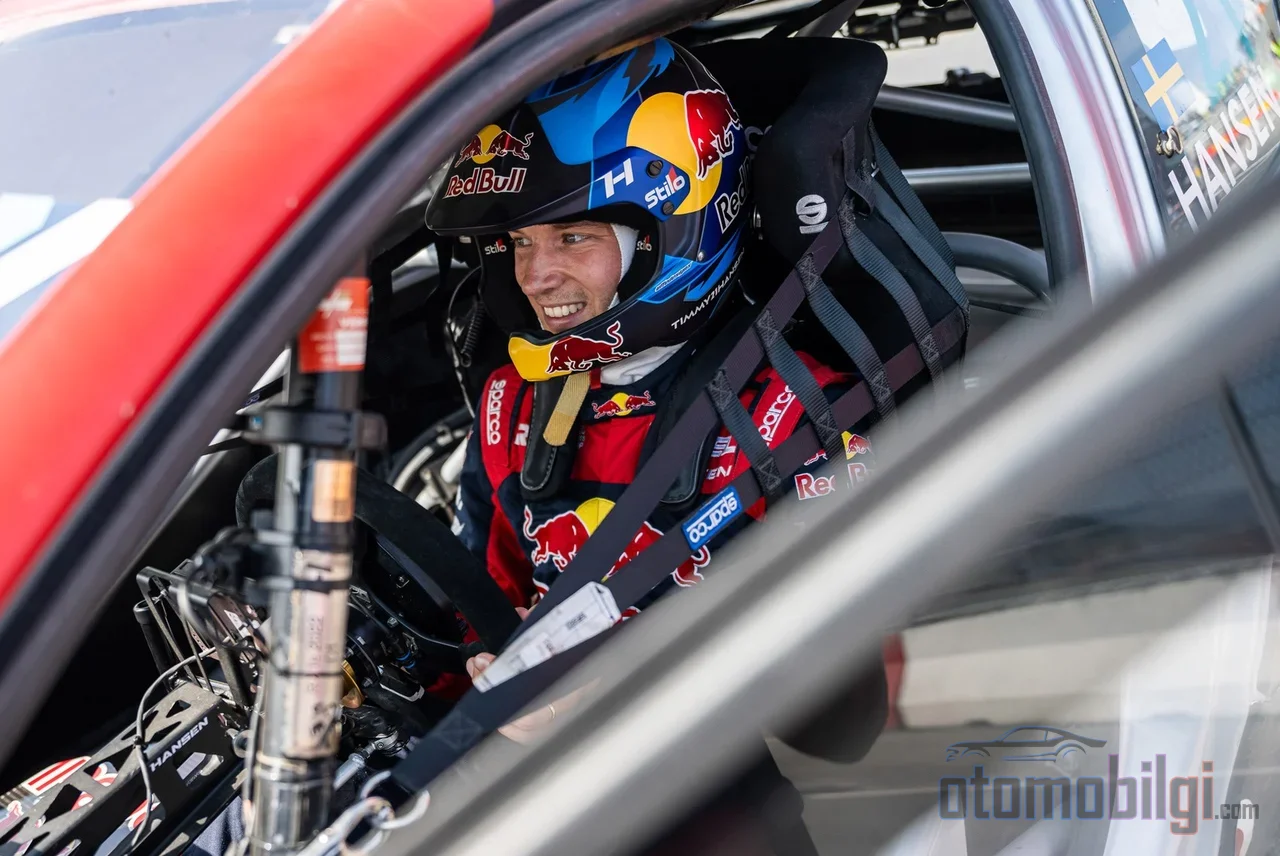
There's one question on everyone's mind when moving from the WRC screen to rallycross: where is the man at the other end of the seat? In rallying there's someone next to you reading notes, so why does a rallycross driver manage a whole race entirely alone? Don't rush, because the answer is more interesting than you think - and this single-seat cockpit changes everything, from the joker lap tactic to the battle for position. If you're curious too, you're in exactly the right place.
What Does a Co-Driver Actually Do in Rallying?
Rallying is one of the most demanding motorsports in the world, and the main reason is that the stages are unknown. Before a rally, the driver gets to try the route only twice: on the first pass they drive a fast lap and dictate the notes, and on the second pass the co-driver reads these notes back and takes the driver's corrections. And the rest? Studying the notes over and over in the hotel room with a camera above their heads.
These notes the co-driver reads are called pacenotes, and they encode the sharpness of every corner, the distance between corners, and the ideal line on the road. Even the order of reading carries meaning: is the crest before the corner, or after it? When the position of two words changes, the information the driver receives changes completely. Some teams use a numerical system, others prefer descriptive words - in other words, every team has its own unique language.
The scale of the job is also mind-boggling: a WRC season is 13 events, each roughly 350 kilometers long. Each kilometer means roughly one page of notes, so a navigator can write close to 4,500 pages of notes in a season. What's more, the co-driver holds the same license and training as the driver; they can drive the car if necessary, and also handle the team's organizational work. So the man in the rally seat isn't just reading notes - he's half the team.
So why doesn't this whole system exist in rallycross? The answer to the question is hidden in the track itself.
Why Is a Rallycross Track a Different World?
Rallycross tracks are relatively tiny: typically ranging from 1 to 1.5 kilometers in length, with various challenging obstacles built in. Think of a rally stage: dozens of kilometers, unfamiliar dirt, surfaces changing in an instant. In rallycross, it's always the same short track, always the same corners.
The format is also completely different: race weekends progress on an elimination basis. First qualifying heats, then semi-finals, and at the very end, the final. In each round you lap the same track again and again - which is tailor-made for memorization. In circuit racing, a race track has at most a few dozen corners, and the driver sees these corners hundreds of times through practice, qualifying and the race. Rallycross works very close to this logic: a short and fixed track, repeated practice laps. Memorization comes naturally.
On the WRC side, it's exactly the opposite: no repeated laps, no perfect racing line - everything is left to the driver's skill and adaptability. That's why rallycross is one of the few disciplines in the world that races without a co-driver.
Key Takeaways
- Rallycross tracks are typically 1-1.5 km long and raced in an elimination-based format.
- A WRC navigator can write up to 4,500 pages of pacenotes in a season.
- The joker lap is a longer alternative route that every competitor must take.
- Communication during the race is provided through the team radio in the single-seat cockpit.
How Is Track Memorization Built?
Let's return to that famous question: why can't rally drivers memorize the track? Because in rallying you can only try a stage twice, and at the next event you move on to a different route. On a known stage, pacenotes might make a difference of a few seconds, but on an unknown 20-kilometer stage the difference reaches the level of minutes. The co-driver is the one who saves those minutes.
In rallycross, this situation never arises. The track is short, fixed, and there are practice laps before every race. The driver takes the same corner perhaps dozens of times within the same day; the body memorizes where to hit on each corner, where to move from asphalt to gravel, and where to release the brakes. Let me make an analogy: rallying is like navigating through the unknown streets of a new city, while rallycross is like walking to the same school every morning. In a place whose route you know by heart, would you need someone reading the road to you? You wouldn't.
Of course, memorization doesn't solve everything on its own - the track surface can change between the qualifying heats, and racing side by side with rivals closes off corner options. But the critical information, the answer to the question "what's in the corner," is already in the driver's head. There is no information left for a person seated in the seat to carry.
How Is Communication Maintained During the Race?
There is no co-driver, but the driver is not completely cut off from the voices in the headset. In rallycross, the team radio is in operation: engineers and team bosses relay information such as the state of the standings, rivals' lap times, and strategic warnings to the driver. So the driver is not starved of information - he simply receives it from the single person inside the vehicle.
On the rally side, communication is a much more critical matter. It's known that shouting doesn't work if the intercom fails: because of the noise inside the helmet and from the engine, the co-driver may have to indicate the direction and sharpness of a corner with his hands. In rallycross, even such an emergency scenario isn't needed because there are no notes to read. The form of communication changes from series to series; while some teams use radio, others don't resort to direct communication at all, but rallycross's short format makes even a silent cockpit workable.
The Joker Lap: A Strategic Decision Made by a Single Person
Rallycross's signature rule is the joker lap: a longer alternative route that every competitor must take, which leaves the main track and rejoins the main line. Deciding when to take this lap is the biggest strategic move of the race - and in rallycross, this decision belongs entirely to the driver.
Why? Because if you take the joker early, you can break away from traffic and run clean laps, but toward the end of the race you'll be alongside your rivals. If you take the joker late, you keep your position, but you gamble with time in the final corners. In a series with a co-pilot, you would make this calculation with the second person in the seat; here there is one head, one decision, and that decision directly determines the outcome.
Two Swedish legends gave a vivid example of this: In a final played out between Johan Kristoffersson and Mattias Ekstrom, Ekstrom chose an early joker lap while Kristoffersson followed a different timing. Both traded fastest laps back and forth, and after constant pressure Kristoffersson's Volkswagen Polo overtook the Audi S1. Two different joker strategies in the same final - and what decided the winner was that split-second decision left to the driver in the single cockpit. Kristoffersson also showed just how much of a master he is in this format by winning the 2026 European Rallycross Championship; moreover, in one race there was even a moment when the stewards stepped in after Q2 and a car hit the inner barrier in the joker lap section. In a single-seat cockpit, every mistake is entirely yours.
Why Is a Co-Pilot Really Unnecessary in Rallycross?
Now let's put the pieces together, because the answer to the question rests on three pillars:
- The tracks are short and fixed, around 1-1.5 km; there are no long, unknown rally stages.
- Thanks to repeated practice laps, memorization happens naturally; there is no information gap requiring someone to read pacenotes.
- In-race communication is provided through team radio; strategy information reaches the driver.
In short, the co-pilot's basic job in rallying is to describe the road the driver cannot see. In rallycross there is no road the driver cannot see - putting someone in the seat to read notes to a person who has seen every corner hundreds of times is just filling an empty seat. Not having a co-pilot is not a deficiency; it is the very logic of the format.
What's more, this situation increases the drama of the race. Joker lap timing, position battles with rivals, the risk-taking calculation in the qualifying heats - all of it spins inside a single mind. There is no one beside you to debate "should I take it now, or later" with. The decision belongs to the owner of the hand on the wheel; both the victory and the mistake are credited to the same person. I think that's exactly why rallycross is so satisfying to watch: the winner is the person who truly manages everything alone.
Which format did you like more? A short-track chase ruled by memorization, or a two-person silent film on an unknown road? See you in the comments!
Sources
- Secrets of a Rally Navigator
- 5 beginner tips for rallycross racing in Dirt Rally 2.0
- FIA Rallycross World Cup track layout
- Mondello Park confirms Track Layout for Season Finale
- Mondello Park Track Guide with Patrick O'Donovan
- Why can't rally drivers memorize the circuit
- WRC investigating live team radio for broadcasts
- Kristoffersson vs Ekström rallycross final
- Johan Kristoffersson reacts to the Q2