Honda Prelude Becomes Super GT Champion in Its First Year
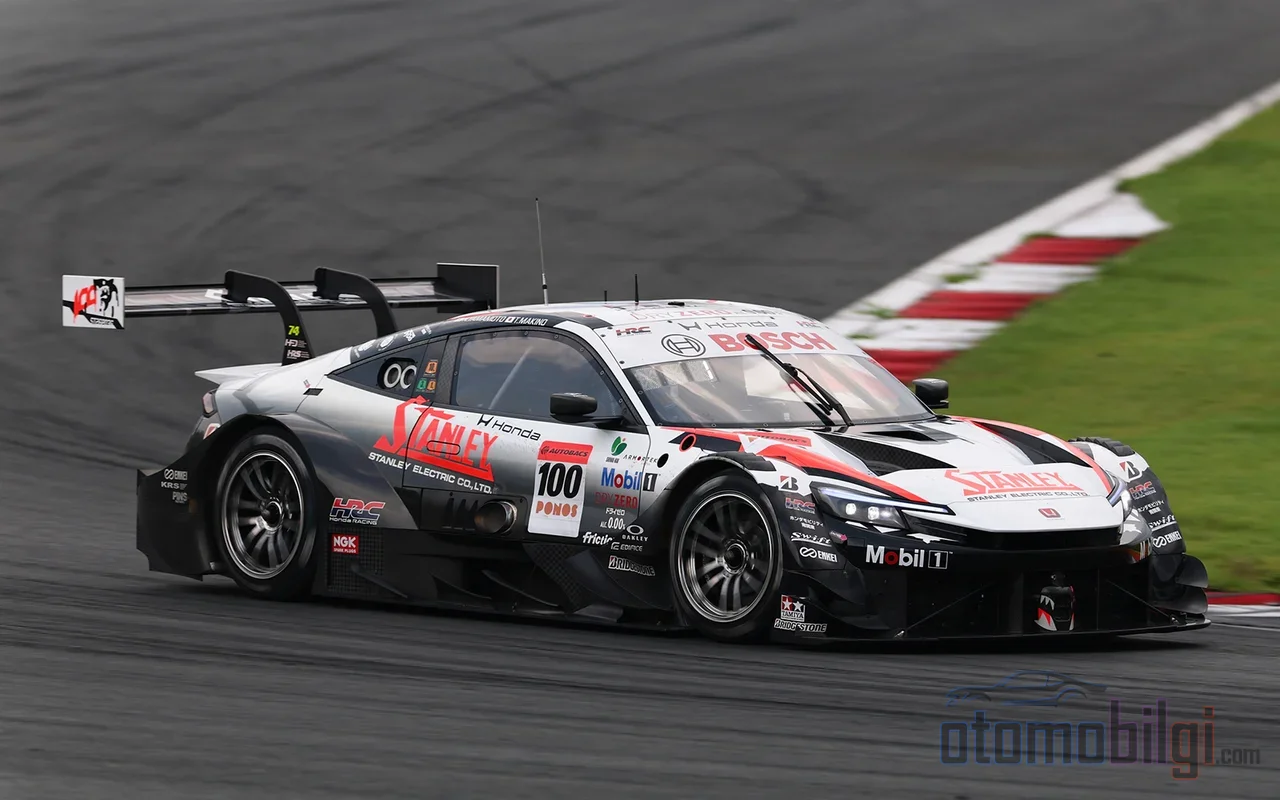
On the evening of November 8, 2026, Motegi hosted one of the rarest scenes in Super GT history: Naoki Yamamoto and Tadasuke Makino secured the GT500 championship after a season-defining finale in Team Kunimitsu's No. 100 Stanley Prelude-GT. What makes this more than an ordinary title is the story of a race car that reached the championship in its very first year: Honda carried the Prelude name onto the circuits as the successor to the Civic Type R-GT, which bid farewell to racing two seasons earlier, and claimed the crown on its very first attempt. So how did this title come about, and what happened in Motegi's double-header finale?
In the GT500 class of Super GT, a car reaching the championship in its debut season is an exceptional case, both in terms of engineering and strategy. Honda's success followed an up-and-down road stretching from Fuji to Autopolis over the course of a season. In this article, we cover the stops along that road, the points table going into the finale, and Makino's decisive qualifying laps at Motegi.
Prelude-GT: The Technical Identity of the New Car
Honda Racing Corporation entered the HRC Prelude-GT, introduced on September 30, 2025, in the GT500 class with five cars in the 2026 Super GT season. The car hit the track with a shakedown at Sportsland Sugo the following day, making a quick start to the pre-season testing program. After years without a Prelude, the name, which holds a special place in the brand's history, thus returned to the category.
On the technical side, the car with roughly 650 horsepower sends power to the rear wheels through a turbocharged 2.0-liter four-cylinder engine in a rear-wheel-drive layout. Abandoning the hybrid system, along with the mandatory fuel flow restrictor in the GT500 regulations, is one of the two fundamental elements defining the car's character. The road-going Prelude, on sale with a 2.0-liter Atkinson-cycle hybrid system producing around 207 horsepower and 232 lb-ft of torque, clarifies the difference between the race car and the road model: the machine developed for the track was designed with a completely different philosophy.
The removal of the aerodynamic development freeze in the 2026 season also makes the timing of this project significant. Honda launched the new car in an environment open to updates; meaning the rivals had strengthened their hands as well. Under these conditions, a first-year championship requires a web of success far too broad to be explained by the car's speed alone.
Highlights
- The Prelude-GT, with a turbocharged 2.0-liter engine producing 650 hp, replaced the Civic Type R-GT in GT500.
- Yamamoto and Makino won the GT500 championship with Team Kunimitsu in the car's first year.
- The first victory came at Fuji Speedway on August 2, 2026.
- They entered the finale 3 points behind; pole position was taken in Motegi Race 2 with a 1:36.135.
- The Motegi finale was run over 53 laps / 250 km.
Debut Season: From Okayama to Autopolis
First Half of the Season: A Road That Opened With Points
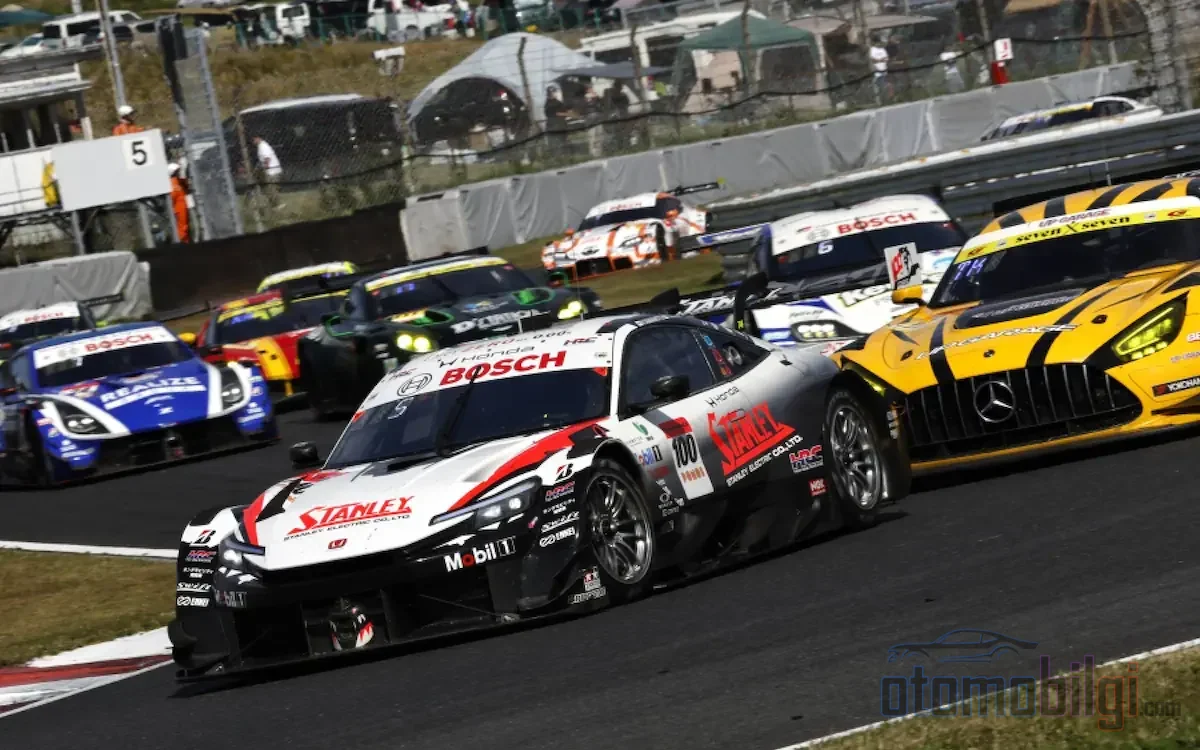
In the season opener at Okayama in April, three Prelude-GTs got on the scoreboard. Yamamoto and Makino's No. 100 car started eighth and finished seventh, while ARTA MUGEN came sixth and the Astemo team tenth. The start was considered calm; no one yet knew what kind of championship battle this season would turn into.
At the Fuji race in May, three Hondas again scored points; ARTA MUGEN's fifth place was the team's best result. At Motegi, the third round, the No. 64 Modulo HRC car reached pole position for the third consecutive time, but the development that really drew attention was the No. 100 car finishing fifth and rising to the championship lead. By mid-season, the picture had begun to change: although the Prelude-GT struggled in the early laps with a low aerodynamic configuration, it got faster and faster as the tracks sped up.
First Victory at Fuji and an Autumn Surprise
On August 2, 2026, at the fourth round in Fuji, the Prelude-GT took its first Super GT victory; the winning team was Yamamoto and Makino's Team Kunimitsu. This first victory of the debut season completely changed the championship calculations. In autumn at Sugo, Honda could not hold the lead and had problems, but Team Kunimitsu closed the gap on the Toyota team TOM'S with its second victory of the season. At the end of October at Autopolis, too, with a race built on strategy, Yamamoto moved ahead; this victory, won ahead of Nitta and Oyu, carried the team to the finale.
At this point, a small but honest note is needed: In season sources, the descriptions of which of the Sugo and Autopolis victories was which number on the calendar do not fully match each other; however, the first victory at Fuji and the Autopolis victory appear clearly in all records. What matters for the reader is this: Yamamoto and Makino caught a momentum heading into the finale with two race victories.
The Points Standing Entering the Motegi Final
The Motegi final came with a special format replacing Sepang, which had been dropped from the calendar: a double-race round, each 53 laps and 250 kilometers. By the time of the finale, in the GT500 standings, TOM'S GR Supra (Tsuboi / Yamashita) led with 61 points, while the Stanley Prelude-GT was two points behind with 58 points. The 42 points to be distributed kept the math open to four different scenarios.
This table created a pressure-filled environment. The defending champions Tsuboi and Yamashita were pursuing a record-tying fourth GT500 championship in 2025; season predictions on the Toyota side were mostly in TOM'S's favor as well. The Honda side, however, focused on a single fact: there were two points to be made up.
Two Races at Motegi: Nissan's Victory, Honda's Move
Race 1: The Evening the Table Changed
In the first race run on Saturday, November 7, Nissan was the winner: Team Impul signed a long-awaited victory, ending the brand's winning drought. The result that mattered most for the Honda side, however, was in the championship standings: After the race, Yamamoto and Makino moved two points ahead of Tsuboi and Yamashita to take the lead. The Tsukakoshi and Nomura duo was also third, 14 points back; the team battle had also been carried over to the final day.
Race 2 Results: Makino's Critical Pole Position
The qualifying sessions ahead of the championship race were among the most critical minutes of the season. Makino carried the No. 100 Stanley Prelude-GT to pole position for the Motegi Grand Final Race 2 with a 1:36.135 set on his final lap. Pole position was not only prestige, but also a valuable point that fed directly into the championship math. Makino's lap became the biggest insurance policy for the team holding a two-point lead heading into the finale.
How Was the Championship Won?
The answer became clear in the finale run on Sunday, November 8: Yamamoto and Makino claimed the Super GT championship with a dominant race extending from pole position to the seal of victory. In the official results, the No. 100 Stanley Team Kunimitsu car finished first and the No. 36 TGR car second. Yamamoto secured the title by withstanding intense pressure in the closing laps; Toyota's TOM'S dominance - or rather, that dynasty expectation sealed at Motegi in 2025 - was ended by a Prelude that became champion in its first year.
In short, the brief answer to the question is this: The Prelude-GT won the GT500 championship by converting the lead it seized after Race 1 in the two-race finale at Motegi into victory, thanks to Makino's pole position and Yamamoto's pressure-resistant finish. The first-year championship was the natural outcome of momentum built throughout the season with points from Okayama onward, recovery after Sugo and Fuji, and the strategic victory at Autopolis. The Yamamoto and Makino duo had finished runners-up in 2025 with Team Kunimitsu and remained the only unchanged lineup at Honda; this continuity was the most important factor reducing the risk of the transition to the new car.
The Meaning of a First-Year Championship
What a career spanning more than thirty years teaches is this: the first season with a new race car is usually a learning season. Gearbox failures in qualifying, fuel calculation mistakes, crash risks during the crawling phase... The Prelude-GT experienced none of these. A debut that collected points from Okayama onward, reached victory at Fuji and sealed the championship at Motegi was the joint product of both HRC's development processes and Team Kunimitsu's operational competence.
In the past, such starts would take years; now, in a season where the aerodynamic development freeze had been lifted, it became possible to reach the top on the first attempt among rivals who had strengthened their hand. The lesson to be drawn for the 2027 season is also here: GT500's new reference car is a machine that only hit the tracks for the first time a year ago. What will Toyota's response be? That question is one of the most eagerly anticipated topics in the series right now. The coming winter will be the period in which this answer takes shape.
Sources
- Three PRELUDE-GT cars score points on debut
- Honda Reveals 2026 Prelude-GT
- Honda HRC Prelude-GT takes first Super GT win at Fuji
- Makino and Team Kunimitsu take Super GT pole for Motegi Race 2
- 2026 Super GT GT500 driver lineups explained
- Why Makino's first Prelude run feels like a changing of the guard