If a Lien Is Placed on Your Vehicle: Insurance and Transfer Process

When a lien from the tax office or the enforcement office is placed on your vehicle one day, the rhythm of your life changes. The car is still in your garage, the engine still turns over; but the sale document sits on the notary's desk, and your insurance agent starts asking you different questions. What I have seen in this industry for thirty years is this: most vehicle owners confuse a lien with a seizure order, and precisely because of that, they knock on the wrong door. This guide explains the entire process, from the insurance of an impounded vehicle to its transfer, simplifying which office you should go to and with which document.
Lien or Seizure Order? The Distinction Where It All Begins
There are two different types of restrictions that can be recorded in the traffic registry, and the difference between them determines your vehicle's fate. When a lien annotation is placed on the vehicle registration record due to a tax debt or a creditor's pursuit, the vehicle can continue to be used; but it cannot be sold or transferred. In other words, your daily life largely continues to flow, but your capital movement freezes.
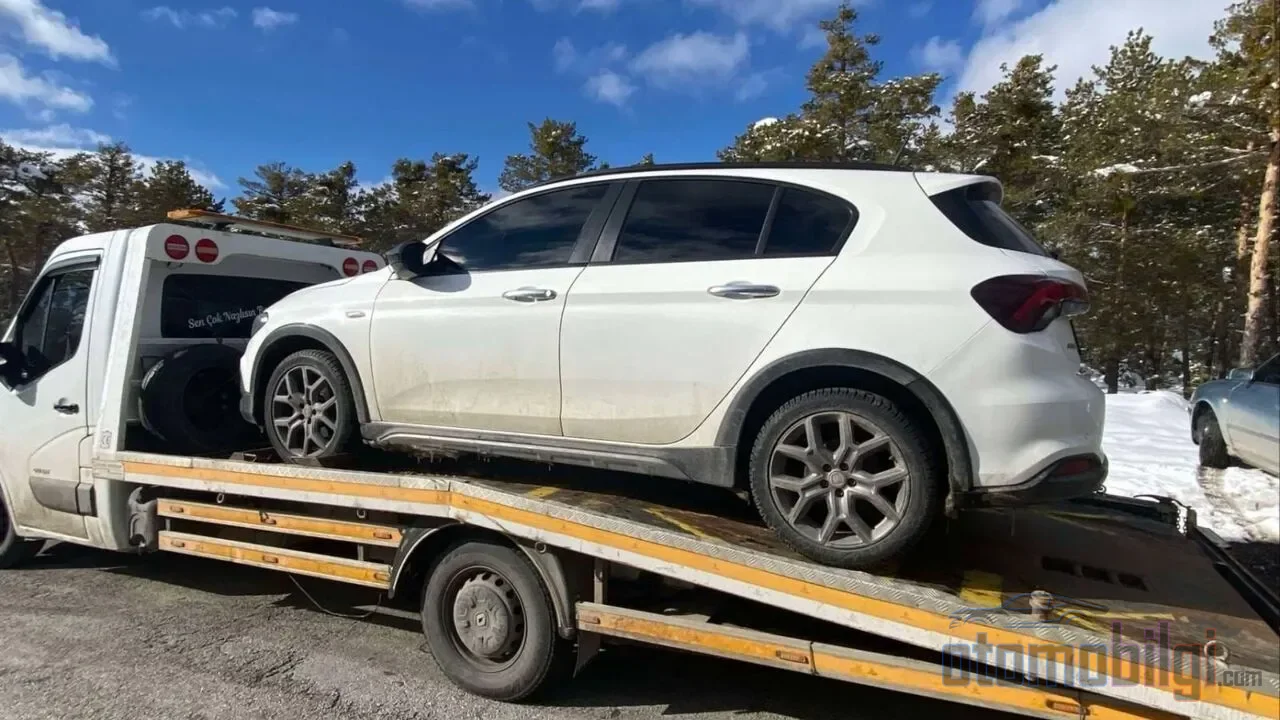
The second and harsher aspect of the matter is the seizure order. This order can be issued if the debt goes unpaid for a long time after notification and the lien is not lifted. A mandatory traffic insurance policy cannot be issued for a vehicle bearing a seizure annotation; the vehicle cannot take to the road, and if detected in traffic, it can be towed to a impound lot. Insurance and inspection procedures are also delayed because of this record. Additionally, the tax office may resort to obtaining a seizure order for vehicles with a tax lien annotation on their registration certificate.
In summary: a lien annotation ties up your sale, a seizure order ties up your wheels. If you ask someone who cannot distinguish between these two concepts, you will get an incomplete answer like "a vehicle with a lien cannot be insured"; in reality, a lien annotation alone does not prevent getting insurance, but when it comes to a seizure order, the situation changes.
Highlights
- A lien annotation does not stop vehicle use but prevents sale and transfer.
- A mandatory traffic insurance policy cannot be issued for a vehicle with a seizure order.
- For 2026, the property damage coverage of mandatory traffic insurance is 400 thousand liras; the exceeding amount comes out of the driver's pocket.
- Active traffic insurance is required for a notary sale; the old 15-day validity practice has been abolished.
- A lien inquiry can be made via e-Government through the e-lien Vehicle service.
Insurance on a Vehicle with a Lien: How Are the Traffic Policy and Comprehensive Coverage Affected?
First, let's recall the basics: traffic insurance and comprehensive coverage are legally two separate types and are not combined in a single policy. Traffic insurance is mandatory under the Highway Traffic Law No. 2918; comprehensive coverage is optional. Even if there is a lien annotation, if you are taking the vehicle onto the road, your obligation to obtain traffic insurance continues, and general practice does not consider the issuance of this policy an obstacle; comprehensive coverage can likewise be obtained. What becomes the obstacle is the seizure order I described above.
In the past, after a vehicle was sold, the previous owner's traffic policy remained valid for another 15 days; that practice was abolished. An active traffic insurance is required for a notary sale today. The administrative fine for driving without insurance is the least of your worries; on top of that, a surcharge is added depending on the delay, starting at 5 percent and increasing each month up to a maximum of 50 percent.
Since the coverage limit of mandatory traffic insurance is not the same for every vehicle, it is being debated that the limits may prove insufficient in 2026 as electric and luxury vehicles become widespread; for this reason, additional safeguards such as unlimited personal liability coverage are coming to the fore. Remember that the property damage coverage is 400 thousand lira for 2026; in a serious accident, damage exceeding this amount is covered out of the driver's own pocket.
If There Is Damage, To Whom Is the Compensation Paid?
The beneficiary of a damage payment on a seized vehicle is the policyholder; after the comprehensive insurance company pays the damage amount to the insured, it seeks recourse from the party at fault. It would not be right to state a definite and general rule that the seizure annotation directs the compensation payment directly to the creditor; at this point, whether the amount in question falls within the scope of the seizure, the actions of the enforcement office conducting the proceedings, and case-specific conditions are decisive. If you are expecting a significant damage payment, the surest way is to clarify this matter with your lawyer who is following the process. If a dispute arises, the competent court in a traffic accident compensation case is the civil court of first instance, while in a case filed against the insurance company it is the commercial court of first instance.
The Fate of the Policy in Case of Sale and Cancellation
When a vehicle is sold, the traffic insurance policy is cancelled for the insured; for the remaining period, a refund of the premium is made on a daily basis. Since traffic insurance is a policy specific to the license plate and chassis match, there is no such thing as a transfer; the new owner takes out their own policy. Writing in the sale contract that the insurance is transferred to the buyer does not by itself constitute a policy transfer. In the case of a seized vehicle, the debate over the refund or transfer of a policy that was cancelled long ago cannot be considered independently of the obstacle standing in the way of a notary sale to be carried out before the seizure annotation is removed.
How Is a Seizure or Detection Queried and How Is It Removed?
The most transparent step of the process is the query: you can find out whether a seizure has been placed on your vehicle via e-Government using the Revenue Administration's e-seizure Vehicle service. Do not panic when you see the record; the removal process is a bureaucracy with a defined, step-by-step procedure.
- Pay the debt or document that the reason for the seizure has been eliminated.
- Apply with a petition to the enforcement office conducting the proceedings and attach the document proving the payment.
- Wait for the seizure removal notice to be entered into the traffic registration system; the sale is only possible after this annotation is removed.
If the seizure was placed in error, an objection petition is written to the enforcement office; if the objection is rejected, the judicial route opens up. If the seizure was established unlawfully or by an unauthorized enforcement office, removal is also possible directly by court decision. In seizure or precautionary-removal procedures originating from public authorities, the traffic registration branch requests the seizure removal letter, a photocopy of the vehicle owner's or representative's ID, and a power of attorney if one exists.
There is another distinct restriction to be aware of: loss of rights. In this case, paying the debt alone is not enough; the vehicle is usually not handed over until the decision that caused the loss of rights is lifted. Having settled the debt for an impounded vehicle does not necessarily mean the keys will be returned to you.
Sale and Transfer of a Seized Vehicle: Which Counter, Which Document?
The rule is clear: a seized vehicle cannot be freely transferred through a regular notary sale before the seizure annotation is removed; any record blocking the sale is visible in the notary system. In a notary sale, obstacles such as seizure, traffic fines, and lack of inspection are automatically checked in the system; if any of them exists, the transaction is blocked.
In practice, the most common solution is to close the debt with a deposit from the buyer, have the seizure annotation removed, and then complete the sale. In 2026, notary sale costs are roughly in the 3,000-5,000 TL range; the amount the buyer will pay for a new traffic insurance policy starts at roughly 200-500 TL depending on the policy's features.
Selling a vehicle registered in traffic outside a notary, that is, privately, is the riskiest route: such a sale and transfer is invalid. Even after the registration certificate has been transferred, if the vehicle's actual use and insurance policies remain with the debtor, the creditor risks filing a lawsuit to annul the transaction. In other words, a transfer that looks clean on paper can be retroactively challenged.
If you are the creditor, the process works differently for you: you must request the sale within 1 year of the final seizure date and cover the sale costs within 15 days. The typical flow from finalization of the enforcement to the sale consists of five steps: finalization, imposition of seizure, sale request and actual seizure, vehicle valuation, and sale or auction. The period from application to sale is usually 30-45 days; it may be extended depending on document volume.
| Procedure | Authority to Apply To | Required Documents |
|---|---|---|
| Seizure inquiry | e-Devlet (GIB e-seizure Vehicles) | e-Devlet identity verification |
| Seizure removal (if the debt has been paid) | The enforcement office handling the case | Petition, payment receipt |
| Objection to wrongful seizure | Enforcement office, court if rejected | Objection petition, supporting documents |
| Removing the annotation at traffic registration | Police traffic registration branch | Seizure removal letter, ID, power of attorney if one exists |
| Notary sale | Notary | Registration certificate, active traffic insurance, IDs |
I Paid the Debt - When Is the Seizure Removed, When Is the Vehicle Sold?
Payment is the middle of the process, not the end. After the debt is closed, removal of the seizure is requested from the enforcement office with a petition and payment receipt; the removal of the annotation from the traffic registration record depends on the speed of correspondence between the institutions. The sale can be made as soon as the record blocking the sale has been entered into the system. An apprehension order works on the same logic: once the order is lifted, traffic insurance can be obtained immediately.
In summary: The Process Is Learned Once
The key point of all this is: a seized vehicle can be driven but not sold; an impounded vehicle can neither be sold nor insured. A seizure lien does not prevent your insurance but does prevent notary sales; an impound order, however, cuts off even your ability to drive on the road. The roadmap is short: query via e-Devlet, pay off the debt, submit a petition to the enforcement office, confirm the lien has been removed from the registration, then put the vehicle up for sale. At sale, the buyer must have their own traffic policy, and your policy ends with a pro-rata refund. Not settling for merely paying the debt but verifying that the records have truly been removed is the only thing that makes a difference in this bureaucracy; the rest is a matter of patience.
Sources
- Impound order prevents insurance - Insurance Agents Industry Council
- Can Insurance Be Issued Due to Vehicle Seizure? - İcra Forum
- What Happens If There Is a Lien on a Vehicle?
- Most Frequently Asked Questions About Casco and Traffic Insurance
- Questions and Answers About Casco and Traffic Insurance
- Türkiye Insurance Association FAQ
- Can traffic insurance be issued for a seized vehicle?
- Can a Seized Vehicle Be Insured?