What Is Vehicle Deregistration and How Is It Done?
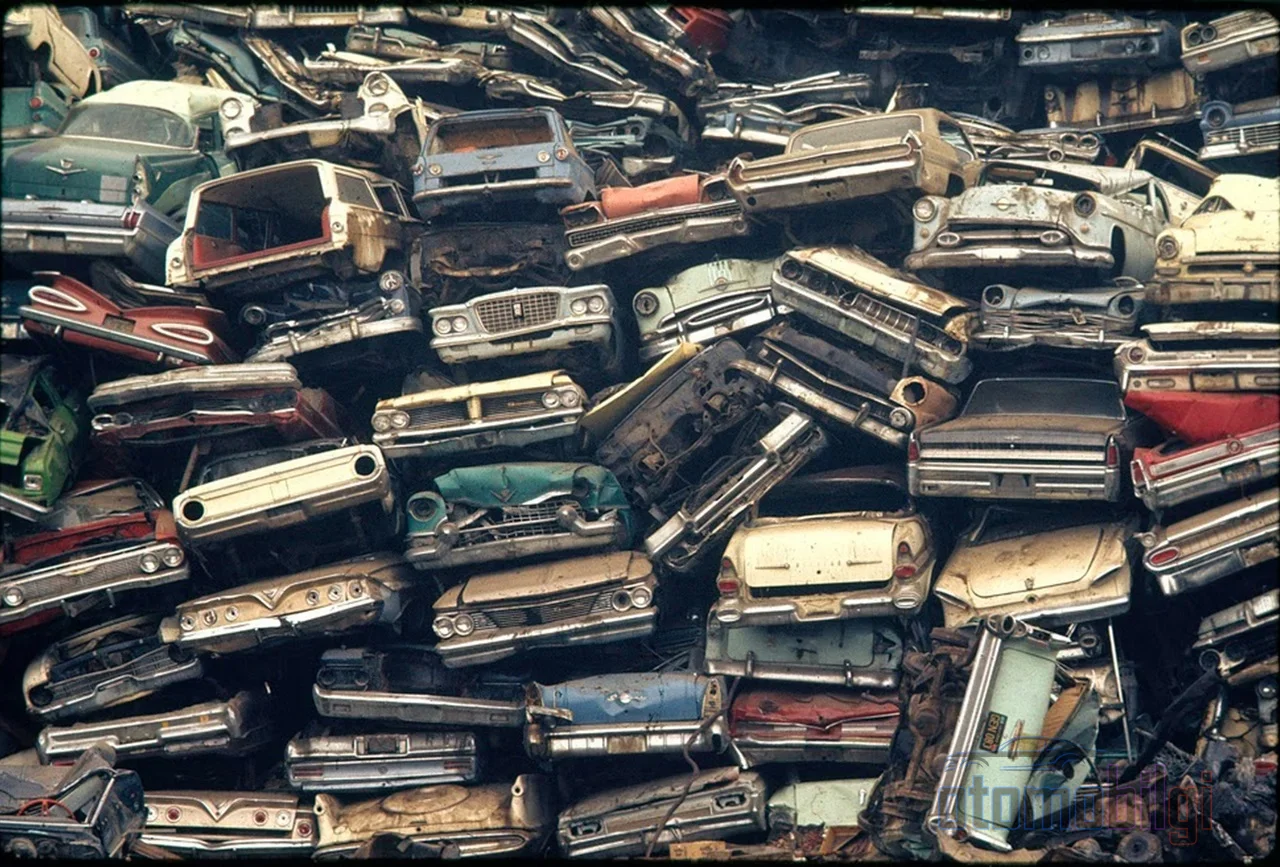
The final chapter of car ownership is not as straight a line as most people think it is. If you are selling the vehicle, your task is clear: you go to the notary, the transfer is made, and the registration certificate is handed over to the new owner. But if the vehicle is to be scrapped, permanently taken abroad, or will no longer be used at all, there is a completely different procedure on the table: deregistration. This term means the complete removal of the vehicle's record from the traffic registry, and when it must be done, how it is done, and even the penalty for delaying it are all regulated by legislation. If the procedure is done incorrectly, irreversible consequences may follow; therefore, knowing the difference between deregistration and a sale transfer is half the job.
In this guide, we take a step-by-step look at what deregistration means, when it needs to be applied for, the steps at the registration offices, the required documents, and what changes in traffic insurance and Motor Vehicles Tax (MVT) obligations after the procedure.
What Does Vehicle Deregistration Mean, and When Is It Required?
Deregistration, in its dictionary sense, means record deletion; in the automotive world, it means the removal of the vehicle from the traffic registration registry. When the record is deleted, the license plate is canceled, the vehicle can no longer be driven on the road, and tax and insurance obligations end according to certain rules. Deregistration is not tied to a single reason; it comes up mainly in three situations.
- Scrapping: The physical or administrative removal of the vehicle from use and the permanent deletion of its record.
- Withdrawal from traffic: The temporary closure of the registration record in order not to use the vehicle for a period of time; the record can be reopened upon request.
- Export and abandonment to customs: The permanent removal of the vehicle from the country or its abandonment to customs.
A common confusion needs to be sorted out here: scrapping incentives and scrapping are not the same thing. Scrapping is a registration procedure that can always be carried out, whether or not there is an incentive; the incentive, on the other hand, is a tax advantage that only applies when defined by law and for specific periods.
Key Highlights
- When a vehicle reaches scrap condition, the application period for deletion of the registration is 1 month; as of 2026, the penalty for violation is 2,719 TL.
- A driver who takes a scrapped vehicle onto the road is fined 46,000 TL in 2026, and ownership of the vehicle passes to the state.
- Withdrawal from traffic is temporary and reversible; scrapping is permanent, and a vehicle whose scrap record has been deleted cannot be re-registered.
- Even if the record is deleted in the second half of the year, that year's MVT is still paid; the obligation ends starting from the following year.
- Once the scrap document has been issued and the vehicle has been handed over, the procedure cannot be reversed by a change of mind.
How Is the Scrapping Procedure Done, Step by Step?

Scrapping is regulated in Article 44 of the Regulation on the Conduct of Vehicle Sale, Transfer and Registration Services. is regulated. The procedure is carried out at a notary or at traffic registration offices; the vehicle is not subjected to inspection for this procedure. Although content referring to the scrap provision of the Highway Traffic Regulation has been circulating for years, that provision was repealed by the Official Gazette dated November 4, 2025; the correct reference is now the Registration Regulation.
1. Debt and Encumbrance Check
A clean record is a precondition of the procedure. There must be no debt for MTV, late-payment interest, tax penalty, traffic administrative fine, or toll fees; moreover, there must be no seizure, lien, or precautionary annotation on the vehicle. Scrapping cannot be done while a debt exists; the debt must be settled first. A severance document from the tax office and a document showing the absence of seizure, lien, or precautionary annotations are submitted.
2. Delivery to a Licensed Facility and the Disposal Form
For M1 and N1 category vehicles and certain three-wheeled vehicles, the vehicle is delivered to a licensed facility under the End-of-Life Vehicles (ELV) Regulation. The Vehicle Deregistration and Disposal Form, issued free of charge by the facility, is drawn up in four copies. This form and the registration certificate received at the end of the procedure bearing the "Scrapped" annotation are two separate documents and are frequently confused with each other.
3. Application, Return of the Plate, and Annotation
An application is made to a notary or registration authority with the disposal form and registration certificate; the procedure is valid as of the application date. The plate is taken back and cancelled, and the registration certificate is annotated as scrapped. The information is reported electronically to the Revenue Administration Presidency; if electronic communication is not possible, it is reported in writing to the tax office within 15 business days at the latest.
The Difference Between Withdrawing from Traffic and Scrapping
Withdrawing from traffic, regulated in Article 43 of the Registration Regulation, is a procedure that remains in the shadow of scrapping but is the one most often confused in practice. In withdrawal, the registration record is temporarily closed; the vehicle can be returned to traffic whenever desired. In scrapping, however, the record is permanently deleted, the plate is cancelled, and the vehicle can never be registered again. There are other differences as well:
in withdrawal from traffic, a disposal form is not required; instead, an undertaking is obtained that the vehicle will be kept at the declared address. In both procedures, there must be no debt for MTV, traffic fines, or toll fees. The information of the withdrawn vehicle is likewise reported electronically to the tax office. Here an important new rule came into force in 2026:
according to the provision added to Article 21 of the Highway Traffic Law by Law No. 7574 dated February 12, 2026, if a vehicle withdrawn from traffic enters a highway, its registration record is reopened as of the withdrawal date - that is, retroactively - and the MTV obligation is revived retroactively. Under Law No. 7574 dated February 12, 2026, Article 21 of the Highway Traffic Law What to Do When Leaving the Country and Surrendering to Customs? For those who wish to leave a foreign-plated vehicle in the country and depart, there are two options:
to hand the vehicle over to the nearest customs authority or to complete the procedures envisaged by customs.
There are two options for those who want to leave a foreign-plated vehicle in the country and exit: delivering the vehicle to the nearest customs administration or completing the procedures envisaged by the customs. For vehicles brought under passenger baggage, in extension applications, one of the actions of taking abroad, transferring or abandoning must be carried out by applying to the customs administration within 30 days from the end of the granted period.
Complete customs abandonment of the vehicle is possible by petition; in this case, taxes and penalties that have accrued must be paid. For those leaving through the border gate with their own vehicle, the vehicle export declaration is filled out at the border gate; the green card fee is 47.25 €, and the exit fee is around 1,250 TL.
What Happens to Traffic Insurance and MTV After Abandonment?
Desk obligations do not end instantly just because the process is done; each has its own rule.
Cancellation of Traffic Insurance and Premium Refund
When an application is made to the insurance company with the scrapping or traffic withdrawal document, the traffic insurance policy is canceled and the premium corresponding to the remaining period is refunded on a daily basis. Cancellation is possible even one day after the policy is taken out; however, a certain percentage deduction may be made upon cancellation, and the refund amount depends on the policy type, reason for cancellation, remaining period and conditions; in any case, a refund is not guaranteed. In the case of a sale, the picture is different: traffic insurance ends automatically on the sale date, and the premium for the remaining days is refunded on a daily basis.
When Does the MTV Obligation End?
According to Article 8 of the Motor Vehicles Tax Law, if the registration is deleted in the first six months of the year, the tax liability ends from the beginning of the second six-month period; if deleted in the second six months, it ends from the beginning of the following year. In other words, for a vehicle scrapped in the second half of the year, that year's MTV is still paid. For 2026, the first installment MTV payment period began on January 1 and the deadline was February 2, 2026; an increase of 18.95 percent was applied to the 2026 amounts.
Is There a Way Back, and What About Penalties?
Clear lines define the framework of the scrapping process. If the disposal form has been issued and the vehicle has been delivered, the registration cannot be reopened; a properly carried-out process cannot be reversed due to a change of mind. Only an improperly or erroneously carried-out process can be reversed in accordance with paragraph 44/9 of the regulation. In the traffic withdrawal process, however, the door to return remains open even if the registration has been closed; if the vehicle is put back on the road, the registration authority notifies the tax office that the registration has been made.
Since the penalties are heavy, the deadline and procedure must be taken seriously. When a vehicle reaches scrap condition, application within 1 month is mandatory for the registration to be deleted; a penalty of 2,719 TL (2,039.25 TL for early payment) is applied for violating this obligation in 2026. Worse still, a driver who takes a scrapped vehicle onto the road in 2026 is issued a 46,000 TL administrative fine; the vehicle is banned from traffic, the local administrative authority seizes it, and the ownership of the vehicle passes to the public. The penalty for driving without a registration certificate or license plate has also been raised to the 46 thousand TL level.
As for the parts of a scrapped vehicle, they do not go to waste: A registration certificate bearing the "Scrapped" annotation is used as proof of ownership in scrap vehicle sales, and the usable engine and parts may be installed in other vehicles and entered into their records. There is no official tariff for the value of a scrap vehicle; the price is formed freely according to the scrap metal market. In addition, under a regulation that came into force in 2021, the diminution in value compensation of vehicles that have been withdrawn from traffic or scrapped due to damage is excluded from mandatory traffic insurance coverage; you need to know this when evaluating such vehicles on the second-hand market.
Deregistration or Sale Transfer? Choosing the Right Procedure
To give a short and clear answer: deregistration is the removal of the vehicle's record from the traffic registry and is not a transfer of ownership; in a sale transfer, ownership passes to another person and the record continues in the new owner's name. If you are selling your vehicle to someone, the procedure is a notary transfer; if the vehicle will no longer be used by anyone, will be scrapped, or will be permanently taken off the road, the procedure is deregistration or withdrawal from traffic.
Confusing these two procedures is not merely a problem on paper. If a vehicle is mistakenly scrapped instead of sold and a disposal form has been issued, there is practically no way back; a vehicle with value ends up as a pile of scrap when it could have been sold. Conversely, a vehicle that has been sold but not transferred remains in the former owner's name, so motor vehicle tax (MTV) and penalty notices continue to be sent to the former owner. Deciding which procedure applies to which situation comes before every step described in this guide.
Sources
- Scrap Incentive Law Latest Situation: Was It Repealed, What Are the Conditions?
- Motor Vehicle Tax (MTV) and Traffic Administrative Fines
- Revenue Administration (GİB) Ruling: Re-registration of Vehicles Withdrawn from Traffic
- Legislation for Traffic Safety
- Can You Leave the Vehicle You Brought to Türkiye and Travel Abroad?
- I Scrapped the Vehicle, Traffic Insurance Cancellation
- How to Obtain a Scrap Certificate?
- MTV Calculation and Payment 2026