Insurance and Inspection Procedures After a License Plate Change

In the eyes of the vehicle owner, a plate change is often seen as a formality that goes little beyond a notary procedure. In reality, the job does not end with printing the plate and mounting it on the vehicle. When the plate changes, the registration information in your policy no longer reflects reality, a mismatch between the plate and the registration appears in your inspection records, and the consequences surface at the worst possible moment - namely, after an accident. On this page, we have brought together in a single flow the official procedures that must be carried out after a plate change, the delicate points regarding notification to the insurer, and what is lost in terms of the no-claim discount and inspections when these are neglected.
When and How Is a Plate Change Done?
A plate change cannot be done whenever it is requested. In a standard sale, the plate changes only if the new owner's place of residence is in a different province from where the plate is registered. In addition, a change is also possible in cases such as the plate becoming worn or damaged, or when a special plate is allocated. The process starts at the notary: when the request is declared, if the province of residence and the plate's province differ, the system automatically grants permission, and the notary generates a 19-digit ASBIS reference number, that is, the Vehicle and Driver Information System, for the sale draft.
There is an important regulation in force here, effective since December 5, 2024: the 15-day right to drive under the previous owner's insurance after the sale has been completely abolished. The notary cannot approve the sale contract without seeing an active traffic insurance registered with the Insurance Information and Monitoring Center (SBM) in the buyer's name. The traffic insurance is issued against the old plate or the ASBIS number before the notary signature; the policy drops into the notaries' system within about 30-60 seconds after SBM approval.
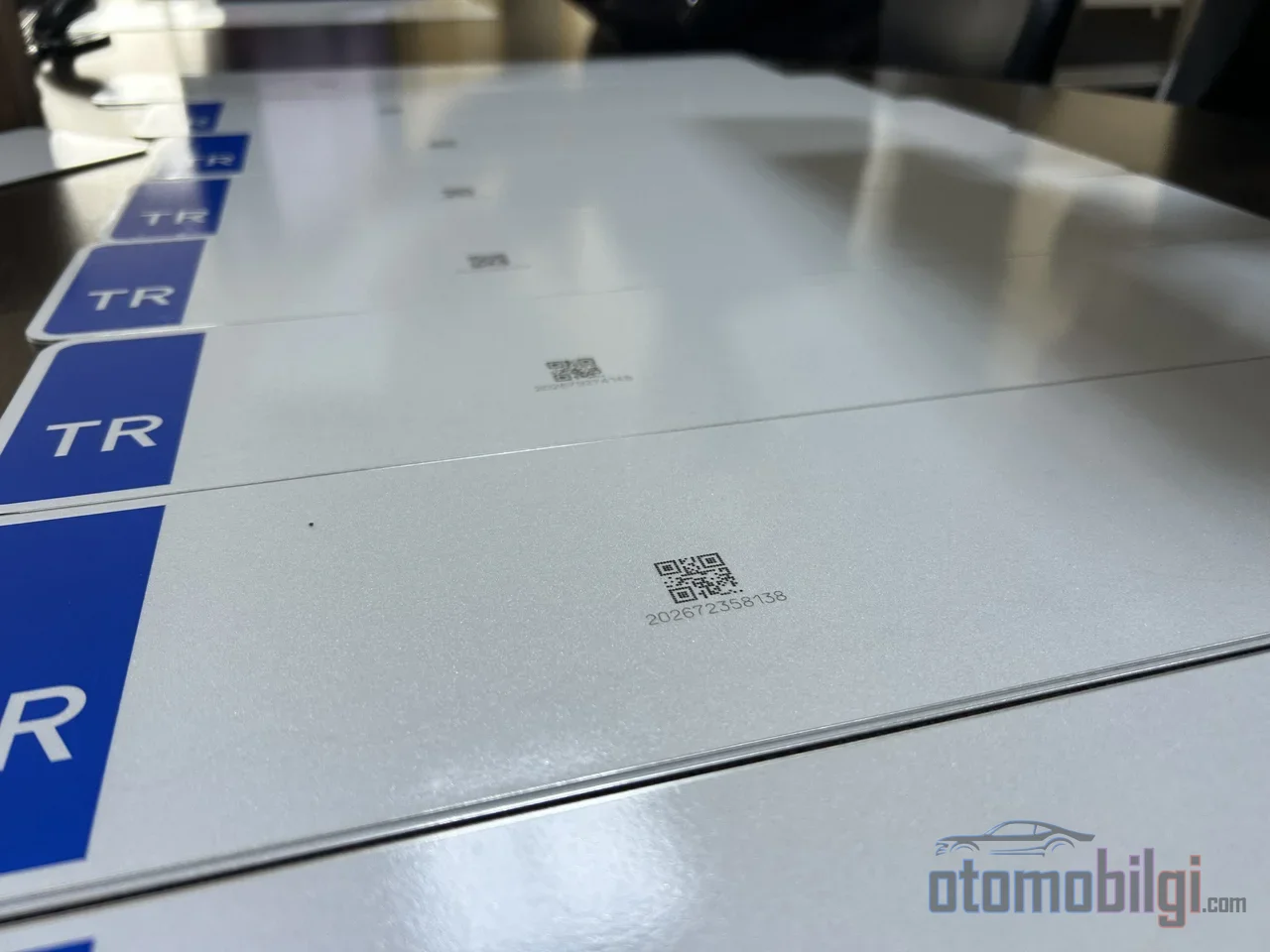
After the notary approves the sale and issues the new registration certificate, it is time for the plate. With the Plate Printing Request Form obtained from the notary, plates are printed and mounted at workshops authorized by the chamber of traveling traffic vendors. The plate change period is 30 days after the transfer; after this period, the change cannot be made. In the meantime, the notary issues a 1-month temporary registration document and the printing form, but printing and mounting the plates on the same day is a legal responsibility. The plate printing request document can now also be obtained via e-Devlet.
Highlights
- For a plate change, there is a 30-day period after the transfer.
- The policy is not cancelled; the plate information is updated with an endorsement.
- The no-claim discount is tied to the person, not the plate, and is not lost.
- An unauthorized printed plate counts as a serious defect at inspection.
- In 2026, the fee for printing both plates is at the level of 850 TL.
What Happens to Insurance in a Plate Change: Updating with an Endorsement
The most frequently asked question is this: does the traffic insurance get cancelled when the plate changes? No, as long as the vehicle and the owner remain the same. A plate change and a vehicle change are different things from an insurance standpoint; when a vehicle is sold, the policy does not, as a rule, pass to the new owner and terminates, whereas when only the plate changes, the policy generally continues. What needs to be done is to update the plate information on the policy so that it matches the current registration. This is done with an additional document called an endorsement, in which later changes made to the policy are recorded, and it is free of charge. For the procedure, the new registration certificate and policy number are usually requested.
The point where timing matters most is this. Sources state that there is no fixed or official deadline for notifying the insurer; it varies from company to company. Even so, the safest approach is clear: As soon as the new registration certificate is issued, notify the agency or the company on the very day it is issued. Especially in policies issued with temporary plates, some companies may cancel the policy if the permanent plate is not reported within a certain period. One distinction worth noting is this: the 30-day period is for the plate change application, not for the insurance notification.
The Cost of a Plate Change Not Reported to the Insurer
Thinking that the old policy still covers you on the road with the new plate is a common and serious mistake. The consequences of failing to report the change are concrete:
- At the time of a claim, a discrepancy arises between the plate and the registration; additional documents and investigations are requested, and the claim file can drag on for weeks.
- In comprehensive coverage, a misrepresentation issue arises: unreported changes affecting the risk can result in reduction or denial of compensation under the general terms.
- If the vehicle is later sold, the pro-rata premium refund is forfeited; a notarized sales document must be submitted to the company for the refund.
- If the new vehicle is left uninsured, an administrative fine, exclusion from traffic, and paying for the other party's damages out of your own pocket come into play.
- The no-claims discount is reflected incorrectly on the policy, and higher-than-necessary premiums are paid.
The cost of going uninsured also grows with delayed renewal: According to the Tariff Application Principles Regulation, for every 30 days of delay after the expiration date, a 5% additional premium is applied to the subsequent policy, capped at 50%. Under Highway Traffic Law No. 2918, vehicles without mandatory financial liability insurance are also excluded from traffic.
How Is the No-Claims Discount Transferred to the New Plate?
This is the most feared part of the process and, in fact, the most unnecessary worry. In traffic insurance, the no-claims step is tied not to the plate but to the person, that is, to the Turkish Identity Number or Tax Number. Even if the plate changes from 34 to 06, the SBM records recognize the driving history, and the discount step carries over to the new policy. The situation is similar for comprehensive coverage: the discount depends on the person's history, not the vehicle's, and it can be continued on the new vehicle; for this, the policy must be renewed on time and the claim-free period closed.
To transfer it, it is enough to contact the agency or insurance company and share the old policy number along with copies of the sales contract and registration certificate. Two limitations should be known: transfer of no-claims history between spouses is only possible with comprehensive coverage; if the new vehicle is registered to someone other than a spouse, the transfer of the no-claims discount does not apply. For example, the step you earned does not carry over to a vehicle you register in your son's name.
Why Does a Plate-Registration Dispute Cause Problems at Inspection?
On the inspection side, the matter rests on the defect table. Non-standard plates printed outside authorized places, or modified with paint or screws, are now counted directly as a major defect in vehicle inspection. The major defect list includes the absence of the plate, it being unreadable, use of a fake plate, non-compliance with the qualities and dimensions in the regulation, mismatch with registration details, and discrepancies between the registration certificate and vehicle information. In other words, a plate you got from a carpenter instead of an authorized workshop sends the vehicle back from inspection with a major defect.
In practice, the discrepancy is sometimes caught at the appointment stage: when the registration serial number does not match the plate, the transaction may not be accepted. To correct an information error on the registration certificate, go to the notary with a stamped and signed technical data letter from the authorized service, and an updated registration certificate is issued. One item on the to-do list after a plate change is HGS: a plate update or reset request can be submitted via e-Devlet through the PTT channel.
Procedures After a Plate Change: Complete Checklist
To summarize the entire process at a glance, the flow is as follows: notary declaration, ASBIS number, cancellation of insurance before the notary signature, notary approval and new registration certificate, plate printing and fitting at an authorized workshop, notification to the insurance agent and endorsement, transfer of the no-claims step to the new policy, HGS update, and reviewing inspection records if needed. Most transactions can be completed on the same day.
On the cost side, for 2026 the dual plate printing fee has been set at 850 TL by the Turkish National Police; a single plate is 279 TL. Total transaction cost is around 1,050-1,800 TL in most cases. On the payment side, a new regulation is in effect as of February 2, 2026: payment is made by entering the reference number and province of printing from the printing receipt issued by the notary.
In short, the answer is: a plate change does not cancel your policy and does not cost you your no-claims discount; but if you do not notify your insurer on the day the registration certificate is issued, do not have the plate printed at an authorized workshop, and do not update your HGS and inspection records, you will pay the penalty even without any accident.
Sources
- What Happens to Traffic Insurance When Changing Plates?
- What Happens If a Plate or Vehicle Change Is Not Reported to the Insurer?
- How Is Traffic Insurance Handled When Changing Plates When Buying a Vehicle?
- What Happens If the Traffic Insurance Renewal Period and Date Pass?
- How to Change Plates? 2026 Notary and Plate Fees
- Plate Change Fee
- HGS Plate Update / Reset Application
- TÜVTÜRK Plate Rules