What Is Subrogation? Situations Where the Insurer Can Come After You

After the accident, the other party's damage is paid by the insurance company, the file is closed, and everyone breathes a sigh of relief. That is, until the enforcement notice arrives by mail. If the conditions are met, the insurance company can demand back the compensation it paid from the vehicle owner or the driver themselves; this mechanism is called recourse, and its essence is the principle of subrogation. As someone who has been following this industry for more than thirty years, let me say this: learning about recourse before an accident, not after, is far cheaper.
What Is Recourse, and What Is Its Legal Basis?
Recourse is the insurance company's claim to recover the compensation it paid to the injured party or directly to the insured from the person who bears legal liability. At its core lies the principle of subrogation: the moment the insurer pays the compensation in full, it steps into the insured's shoes and takes over their rights. In other words, in return for the money it paid, the company takes over the claim the injured party holds against the responsible party.
For the right of recourse to arise, four conditions must exist together: the damage must have actually been paid, the party primarily responsible must have been identified, the policy must be valid, and the responsible party's fault must be documented. Not every payment automatically gives rise to a right of recourse; in cases where the responsible party cannot be identified, for example in a carelessly abandoned fire or theft file, the insurer has no one to turn to either.
Let's clarify one point from the start: recourse is not exclusive to the world of traffic and comprehensive insurance. The same mechanism can also operate in health, fire, cargo, homeowners, personal accident, and liability insurance. But the place it touches everyday life most often is, of course, road accidents.
Key Highlights
- The mere fact that the driver was drunk does not give the insurer a right of recourse; a causal link between the alcohol and the accident is sought.
- Driving without a license is grounds for recourse; arbitration board practice is firm on this point.
- If the accident stems from a technical defect such as brake failure, recourse comes into play regardless of the inspection status.
- In Guaranty Fund payments, the statute of limitations for recourse is 2 years from the date of payment.
- Recourse does not necessarily happen through a lawsuit; mediation and settlement are also possible.
Risky Behaviors That Trigger the Insurer's Recourse
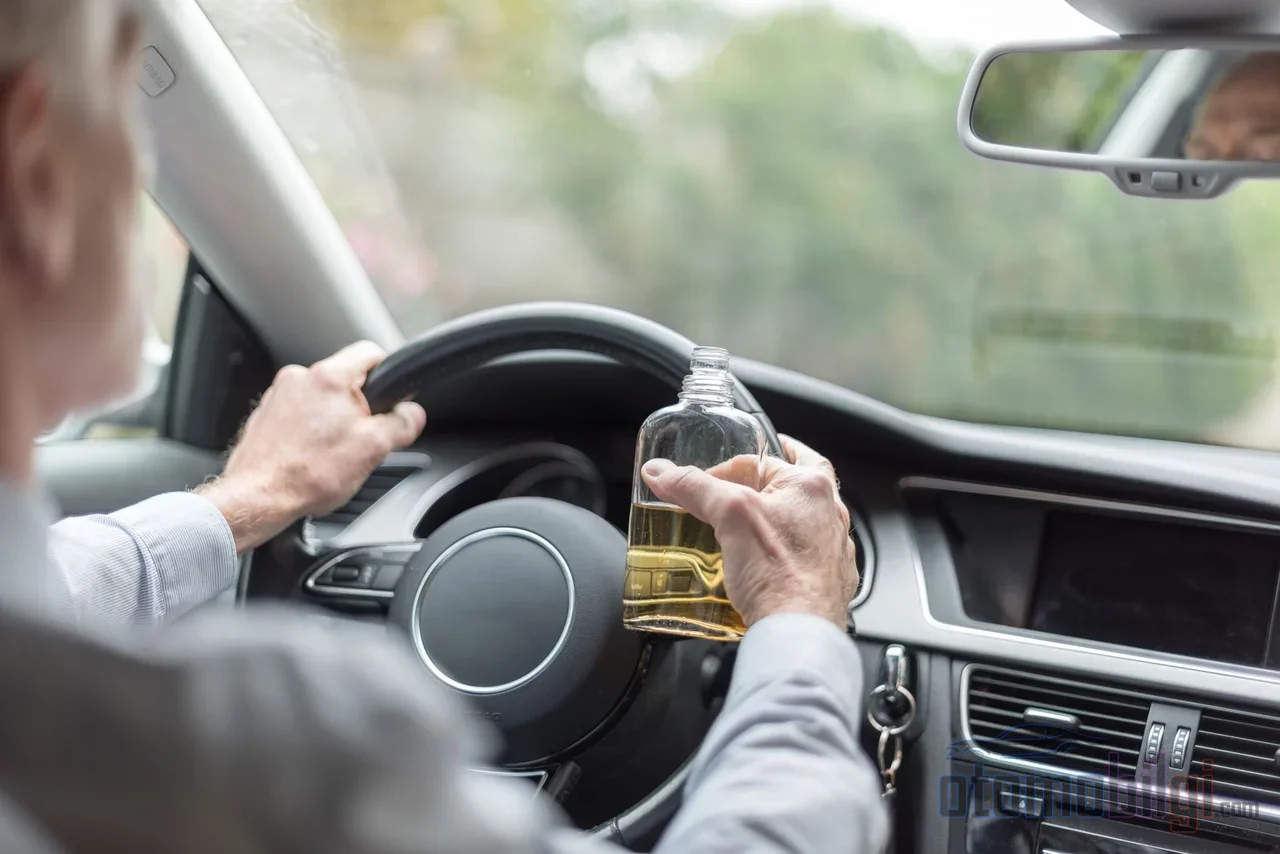
The general conditions of mandatory traffic insurance define the situations in which the insurer can have recourse against the insured by listing them. This list draws the line between what the policy protects you from and what it does not, and it looks for that line not in the accident itself but in the behavior that led to it.
- Driving without a license: Driving a vehicle without a document or operating a vehicle class not covered by the license results in recourse in almost every case.
- Alcohol and drugs: Driving under the influence of alcohol or drugs, where the ability to drive safely is lost, is considered a recourse situation under the general conditions; however, there is an important correction in practice, which I will mention shortly.
- Intentional or grossly negligent behavior: 100% fault alone does not count as gross negligence; intent must be present. No recourse can be made under this heading against a driver who runs a red light completely at fault.
- Unauthorized passengers and cargo: Carrying passengers without a license, exceeding passenger capacity, and transporting unauthorized dangerous or explosive materials are among the grounds for recourse.
- Theft of the vehicle: In incidents involving a stolen vehicle, if the policyholder is at fault in the theft, the compensation paid can be reclaimed from them.
The correction regarding alcohol is as follows: although the law and general conditions count alcohol as a ground for recourse, judicial practice interprets this situation narrowly. There must be a causal link, that is, a relationship of causation, between the accident and alcohol consumption, and this link must be proven by the insurer. In a file with no concrete evidence, for example no alcohol report issued by law enforcement, the driver cannot be assumed to have been under the influence. In the past, once the insurance document was issued, the job was done; now a document issued without examining the evidence file may not hold up in court.
On the other hand, alcohol and lack of a license cannot be invoked against the injured party. The victim's compensation is paid first; the recovery is then made against the at-fault vehicle operator. Moreover, there is a remarkable subtlety in judicial practice: there are rulings stating that recourse cannot be made directly against a driver who is not a party to the insurance contract; as a rule, the company's counterparty is the policyholder, that is, the contracting party.
Does Recourse Work the Same Way in Traffic Insurance and Comprehensive Coverage?
The two policies protect different things, and recourse also works differently. Mandatory traffic insurance covers third parties' damages within statutory coverage limits; comprehensive coverage, on the other hand, secures the policyholder's own vehicle against collision, theft, fire, and natural disaster damage. Traffic insurance is mandatory by law, while comprehensive coverage is optional.
On the comprehensive side, the system works as follows: the company covers the damage caused by a third party's fault against the insured, then turns to the person who caused the damage. For this reason, comprehensive coverage is one of the branches with the highest recourse rate. According to the general conditions, the comprehensive insurance company directs its recourse claim, within the insurance limits, first to the insurance company that provided coverage for the relevant risk; that is, the insurance world settles accounts among itself first, and going after the individual is the last resort.
Inspection, Vehicle Transfer, and Exceeding Coverage: Insidious Grounds for Recourse
An accident with an uninspected vehicle
A missed inspection payment alone does not kill the damage file; the insurance makes the payment, and an administrative fine is issued to the vehicle owner. However, if the cause of the accident stems from a technical defect of the vehicle, for example brake failure, the picture changes: the company can reclaim the compensation it paid from the vehicle owner. An uninspected vehicle can also be banned from traffic and complicates the damage process; in material damages caused by technical deficiencies, the company makes payment taking the fault ratio into account.
Insurance after vehicle transfer
The rules for second-hand sales changed as of December 5, 2024. The regulation regarding the former owner's traffic insurance 15-day validity rule has been completely renewed: the new owner must obtain a new policy within 15 days, during which the existing coverage continues temporarily. Since traffic insurance is not automatically transferred to the new buyer, the premium corresponding to the unused period is, as a rule, refunded to the policyholder after the sale; cancellation premiums are usually paid within 3-5 days. Leaving the policy to its fate after the sale means both a loss of premium and the risk of recourse.
Damage exceeding the coverage limit
The coverage limits of mandatory traffic insurance are updated every year. For bodily injuries, 3,375,000 TL per person and 16,875,000 TL per accident; for material damages, the limit is 375,000 TL per vehicle and 750,000 TL per accident. Bodily injury limits vary depending on the type of vehicle; for motorcycles the level is 10,125,000 TL per accident, and for trucks and vans it is 33,750,000 TL. For the amount exceeding the limit, it is not the insurer but the vehicle owner and the at-fault driver who are held accountable: when damage of 50,000 TL occurs under a policy with a limit of 41,000 TL, the remaining 9,000 TL comes directly out of the responsible party's pocket. Loss of value is assessed under material damages and is covered by traffic insurance.
What Happens If the Guarantee Fund Steps In?
In events where there is no mandatory insurance or no possibility of applying to the insurer, the Guarantee Fund makes payments to those who suffer bodily injury in cases of disability and death. These payments are not a gift: in some cases, the Fund recovers the amount it has paid from the at-fault party. The legal basis is the relevant articles of the Highway Motor Vehicles Mandatory Financial Liability Law and the Guarantee Fund Regulation.
It is necessary to be clear about the time limits. The right to reclaim the amount paid by the Fund becomes time-barred within 2 years from the date of payment. The victim's time limit for applying to the Fund is 2 years from the date of learning of the damage and the party liable for compensation, and in any case 10 years from the accident. Even in an accident where the identity of the at-fault driver is unknown, liability does not disappear; only the address of the creditor changes.
Recourse Statute of Limitations: Why Is There No Single Answer?
The statute of limitations in recourse cases is not a single figure as many people assume; which legal regime the case is filed under determines the time limit. In general, a dual structure prevails: 2 years from the date of learning of the damage and the responsible party, and in all cases 10 years from the date of the incident. Under the law of obligations, a recourse claim becomes time-barred within 2 years from the date the compensation was paid in full and the jointly liable person was learned of, and in any case within 10 years from the date the act was committed; compensation claims arising from insurance contracts are also subject to the same 2/10-year dual structure.
However, different time limits can be seen in practice: in some traffic-related cases a 5-year period concerning the offense punishable by law may be taken as the basis, a 2-year period from the date of payment is applied by analogy to Guarantee Fund payments, and there are rulings in which a 1-year tort period has been applied to the recourse claims of the social security institution. Court decisions have also accepted that a lawsuit filed before the expiry of the 10-year period from the payment date is not time-barred. The practical result is this: which period applies varies depending on the nature of the file, and when the insurer knocks on your door with a notification, you should not estimate the period based on your own assumptions.
Checklist to Avoid Losing the Compensation
The essence of recourse is a single sentence: The compensation paid by the insurer may be recovered, from the payment date onward, through litigation or enforcement proceedings, from the person who legally caused the accident and whose liability has been documented. Preventing this is in your hands, and the precautions to take are surprisingly ordinary:
- Do not drive vehicles outside the vehicle class covered by your license.
- Never get behind the wheel under the influence of alcohol or drugs; even if causation is debated, do not count on no report being written into your file.
- Have your periodic inspection done on time; do not hit the road without fixing technical deficiencies such as brakes, tires, and lighting.
- When you sell your vehicle, clarify the status of your policy within 15 days and do not pay unnecessary premiums.
- After an accident, find out the fault distribution and the limit within which the compensation was covered; any excess over the limit falls on you.
- When a recourse notice arrives, evaluate the period and the counterparty with your legal advisor; mediation and settlement avenues are also open.
Recourse is not a bad-faith step backward by the insurer; it is the balance of the system: it quickly gets the victim back on their feet, while billing the cost to the one who caused the accident. Compliant driving is the shortest route to preventing that bill from being issued to you.
Sources
- What Is Recourse? The Right of Recourse, Its Compensation, and Conditions
- What Is the Right of Recourse and Its Scope?
- The Insurance Company's Right of Recourse in Traffic Accidents 2026
- The Driver's Mere Intoxication Does Not Grant the Insurance Company a Right of Recourse
- Court of Cassation General Assembly on Legal Affairs, Case No. 2017/17-1713
- General Conditions of Motor Vehicle Own Damage Insurance
- Recourse Procedures - Guarantee Fund
- Article 73 - Turkish Code of Obligations
- What Does Insurance Do If an Accident Occurs with a Vehicle Whose Inspection Has Expired
- What Happens to Traffic Insurance After the Sale of a Vehicle?