What to Check Before Vehicle Inspection
Share This Page
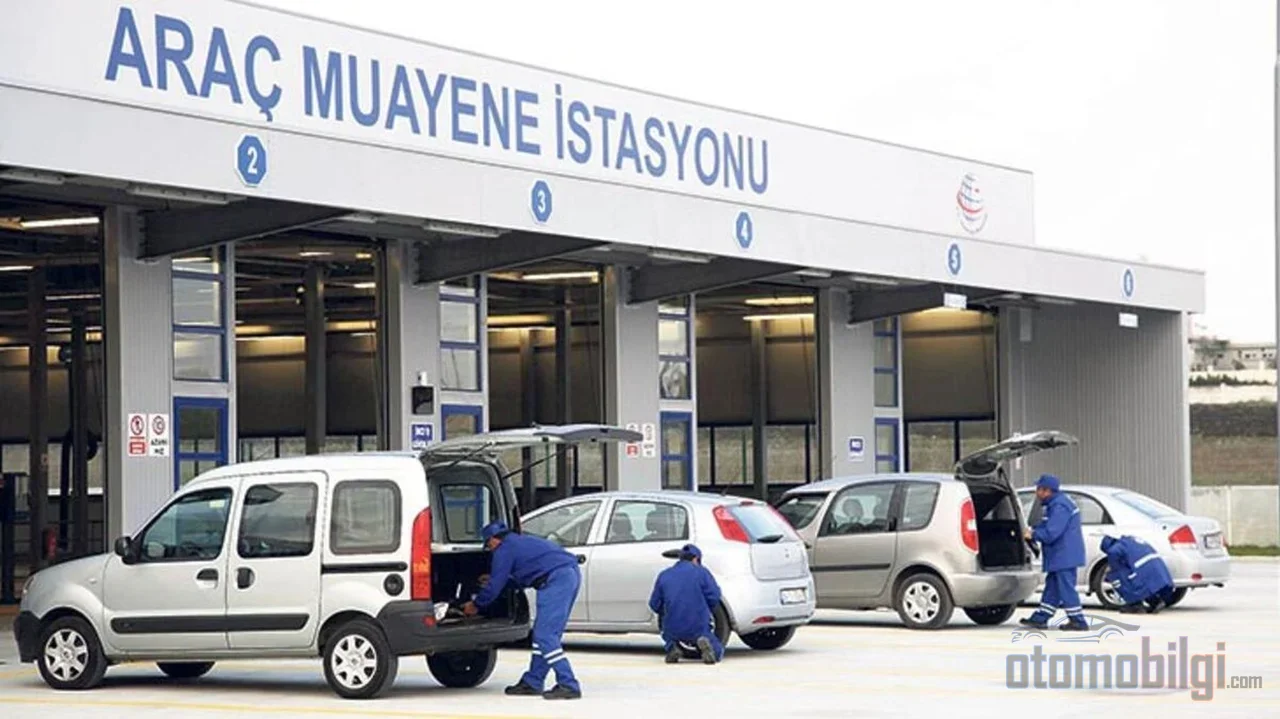
Before going to the inspection station, a vehicle owner who checks tire tread depth, brakes, headlight adjustment, exhaust emission readiness, glass and mirror integrity, and the required paperwork eliminates most of the risk of failing right from the start. This page explains, step by step, how to verify the criteria measured at the station at home or at your service shop; the goal is to pass the inspection without errors on the first try.
Highlights
- The legal limit for tire tread depth is 1.6 mm; at least 3 mm is recommended for safe driving
- A significant portion of the remaining failures stem solely from headlight adjustment, lighting, and brake imbalance
- After failing, there is one free re-inspection right per inspection payment, valid within 30 days
- A vehicle with an MTV (motor vehicle tax) debt will not be accepted for inspection; traffic fines and HGS/OGS toll debts must also be settled
- For each month of delay, a late fee of 5% of the inspection charge accrues
Why Should You Do Your Own Pre-Inspection Check?
I have been in this business for more than thirty years; the way inspection stations operate has changed quite a bit, but the reasons for failing have barely changed at all. In the past, the only reason for failing was headlights that could never be adjusted properly; now the list has grown, but the story is the same: small faults that go unnoticed while driving get caught by the measuring equipment at the station. Yet most of these faults could be spotted within an hour before ever setting out for the station.
Fourteen main categories are checked at the station: headlight adjustment and all lighting lamps, brake force balance, parking brake holding, tire tread depth, suspension and shock absorbers, front-end play, exhaust emissions, windshield cracks, wipers and washers, seat belts, horn, dashboard warning lights, body-chassis corrosion, and completeness of paperwork. You can check most of these items yourself at home or at a trusted service shop, in the same order. The following sections address the most common reasons for failing one by one.
Let me add a note: the estimates that a significant portion of failures stem solely from headlight adjustment, lighting faults, and brake imbalance are based on service companies' observations; they are not official statistics. Still, my experience points in the same direction: the items most often failed are the ones that can be seen with the eye and checked by hand.
How Deep Should Tire Tread Be, and How Is It Measured?
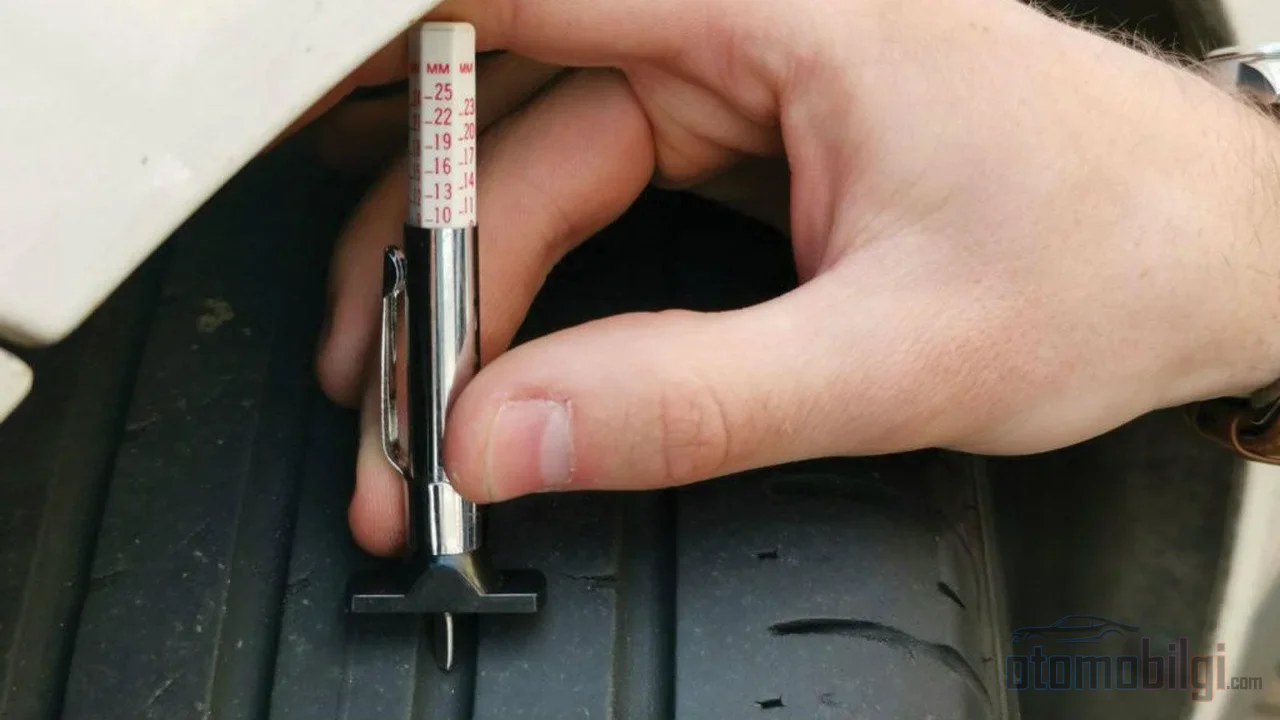
The legal minimum tread depth for passenger cars is 1.6 mm; for motorcycles, this limit is 1 mm. Tires below this value will cause you to fail the inspection with a serious defect record. However, the legal limit and the safety limit are not the same thing: tire manufacturers recommend at least 3 mm on summer tires and even greater depth on winter tires for wet-road grip. Passing the inspection and being able to stop safely are different criteria; I say go with the latter.
For measuring, a tread depth gauge is the best option; failing that, it can be roughly checked with simple tools such as a 1 lira coin inserted into the tread grooves. Measure all four tires and the spare separately, and check at several points of the tread. Besides tread depth, the following are also recorded as defects:
- Use of tires with different sizes, patterns, or types (mixed summer and winter) on the same axle
- Cuts, bulges, or visible cords on the sidewall; these can be considered unsafe
- Excessive and uneven wear - usually also a sign of suspension or front-end geometry issues
My old tire shop buddy's saying still holds true: the tire is the only part of the vehicle that touches the ground. Take a look before the inspection; you'll keep both the report and the evening drive safe.
How to Check the Brake System and Headlight Adjustment at Home
Braking force balance and the handbrake
In the brake test at the station, braking is measured wheel by wheel, and the deviation rate during braking must not exceed 30%. You cannot take exact measurements at home, but you can feel the clues: when you brake lightly on a straight road at a safe speed, does the vehicle pull to one side, is the brake pedal vibrating, does the handbrake hold on a hill? If the answer to any of these questions is troubling, don't go to the station without brake service. It's also worth making a habit of having the brake pad and disc thickness checked during a tire change.
Headlight adjustment and lighting check
Misaligned or non-functioning headlights are among the most common reasons for failing. A rough check at home works like this: park the vehicle on level ground, remove any unnecessary weight from the trunk, and project the light onto a flat wall a few meters ahead. Mark the center of the light beams with tape and compare them against horizontal and vertical reference lines; the right and left beams should be symmetrical. An improperly seated bulb, a suspension height difference, and a fault in the headlight leveling system are among the causes that disrupt the adjustment; an exact measurement requires the headlight alignment device available at service centers.
It's not just the adjustment that matters, the choice matters too: the color, intensity, and type of the right and left lamps should be the same. Having a white LED on one side and a yellow halogen on the other is recorded as a defect. Turn on all the lamps one by one and check them: including low beam, high beam, brake, reverse, turn signals, license plate light, and fog lamps.
What Should Be Done Before the Inspection for Exhaust Emissions?
For gasoline vehicles, CO, HC, and lambda values are measured; for diesels, smoke density, that is opacity, is measured. The most practical preparation is to bring the engine to operating temperature before the test: a cold engine produces dirtier exhaust gases. Driving the vehicle at high rpm for about 20 minutes before the inspection, or timing the measurement right after a long journey, works well.
The exhaust emission measurement is a separate procedure; some drivers have it done separately before the inspection and bring the report with them. If there is a hole or crack in the exhaust system, it should be repaired before the measurement, because a leaking system invalidates the measurement. If the check engine light is flashing or stays on continuously, know that this will also be recorded as a defect; tampering with the code and erasing the light is not a solution, and unready readiness monitors raise suspicion at the station.
Glass, Mirrors, and Indicator Lamps: Small Defects That Look Minor
A crack within the windshield's wiper sweep area, in the driver's view, is a defect; small stone chips outside this area usually cause no problems. If there is a crack on the driver's side, planning a replacement is the right thing to do, because the crack grows over time and you end up with no choice but a replacement. Window tinting that violates regulations is also grounds for a defect; if it is installed, don't count on having it removed as a favor.
- The absence or malfunction of the left side mirror is on the list of major defects
- Broken or faulty wipers, as well as a lack of washer fluid, are also recorded as major defects
- The continuous illumination of the check engine, ABS, airbag, and brake warning lights is a defect
- Lights that never illuminate are also considered a defect; suspicion that a bulb has been removed is not well received at the station
Your vehicle should have a first aid kit, two warning triangles, a fire extinguisher of the appropriate kilogram rating, and a spare tire or tire repair kit; shortcomings in these items usually count as minor defects, but nobody wants unnecessary red marks.
Additional Checks for LPG Vehicles
If you are taking an LPG vehicle to inspection, the document list grows by one item: a valid leak-proofness report is mandatory; an LPG vehicle without one is not accepted at the station. Tank life is generally 10 years; if the cylinder's production date has passed, replacement is required. The conversion record entered in the registration certificate is also requested during the document check. There is one detail most drivers miss: having LPG installed requires a new inspection without waiting for the current inspection period to expire, and the new period counts as the starting point.
What Documents Do You Need and How Do You Book an Appointment for the Inspection?
You can book an appointment through TÜVTÜRK's website, mobile app, call center, or via e-Devlet. The appointment registration requires the license plate, vehicle type, and the Registration Series and Number from the registration certificate; the series number consists of two letters and six digits, and if entered incorrectly you will face a matching problem at the station. The person who brings the vehicle matters too: for private vehicles, you may bring only one vehicle in a calendar month without additional documents; for multiple vehicles, a notarized power of attorney is required, and for company vehicles, a signature circular or authorization letter is needed.
The documents you should have with you are as follows:
- Registration certificate (vehicle registration document)
- Valid identity document (T.C. identity card, driver's license, or passport)
- Valid mandatory traffic insurance policy
- Exhaust emission measurement report
- Installation verification and leak-proofness report for LPG/CNG vehicles
Also check for debts: Vehicles with motor vehicle tax debt are not accepted for inspection; traffic fines and HGS and OGS debts must also be paid. This is the most commonly overlooked and most easily preventable obstacle. Since inspection fees are updated every year, I recommend confirming the current amount through the station's channels; I should also add that a late fee of 5% of the inspection fee accrues for each month of delay.
What If I Still Fail?
Despite every preventive measure, failure is possible; there are no guarantees in this business. In the final report, defects are divided into three classes. Minor defects do not prevent you from passing; they are recorded in the report. In the case of a major defect, the vehicle is held and you must have it re-inspected within a specific period; on a repeat within that period, only the defective items are examined and a discounted fee applies; if the period is exceeded, the inspection is done from scratch at full fee. A vehicle found to be unsafe cannot be driven in traffic and is towed away. After passing, you have one free re-inspection right per inspection payment within 30 days; other fixed stations within the same province are also covered by this right.
Driving around in traffic before the inspection is a separate risk: taking to the road with a vehicle that has not passed inspection results in an administrative fine and being barred from traffic, plus a monthly 5% late surcharge is added. In the event of an accident, you may also face problems with insurance processes; a vehicle that has not passed inspection becomes a matter of dispute on both the traffic insurance and the comprehensive insurance side. Let me also remind you that you can check your inspection validity with your license plate number and inspection report number; maybe you forgot, and a quick look won't take more than five minutes of your time.
One final piece of advice: With the updated defect groups table in effect as of June 1, 2026, some additional defects have entered the list, for example the auxiliary braking system reporting a fault through its warning system. In other words, stations are now looking in more detail than before; a one-hour pre-check is, for exactly this reason, more valuable today than yesterday.
Sources
- How to Pass Vehicle Inspection? 14 Pre-Inspection Checks
- What Is Checked in Vehicle Inspection? Detailed Guide
- Required Documents for Vehicle Inspection
- June 1, 2026 Defect Groups Directive, Appendix Defects Table
- How to Check Tire Tread Depth?
- What Is a Tire Defect in Vehicle Inspection?
- How to Adjust Headlights for Safe Driving?
- Exhaust Emission Values
- Pre-Inspection Check
- Frequently Asked Questions