Suspected Car Issue in Verstappen's Brazil Show
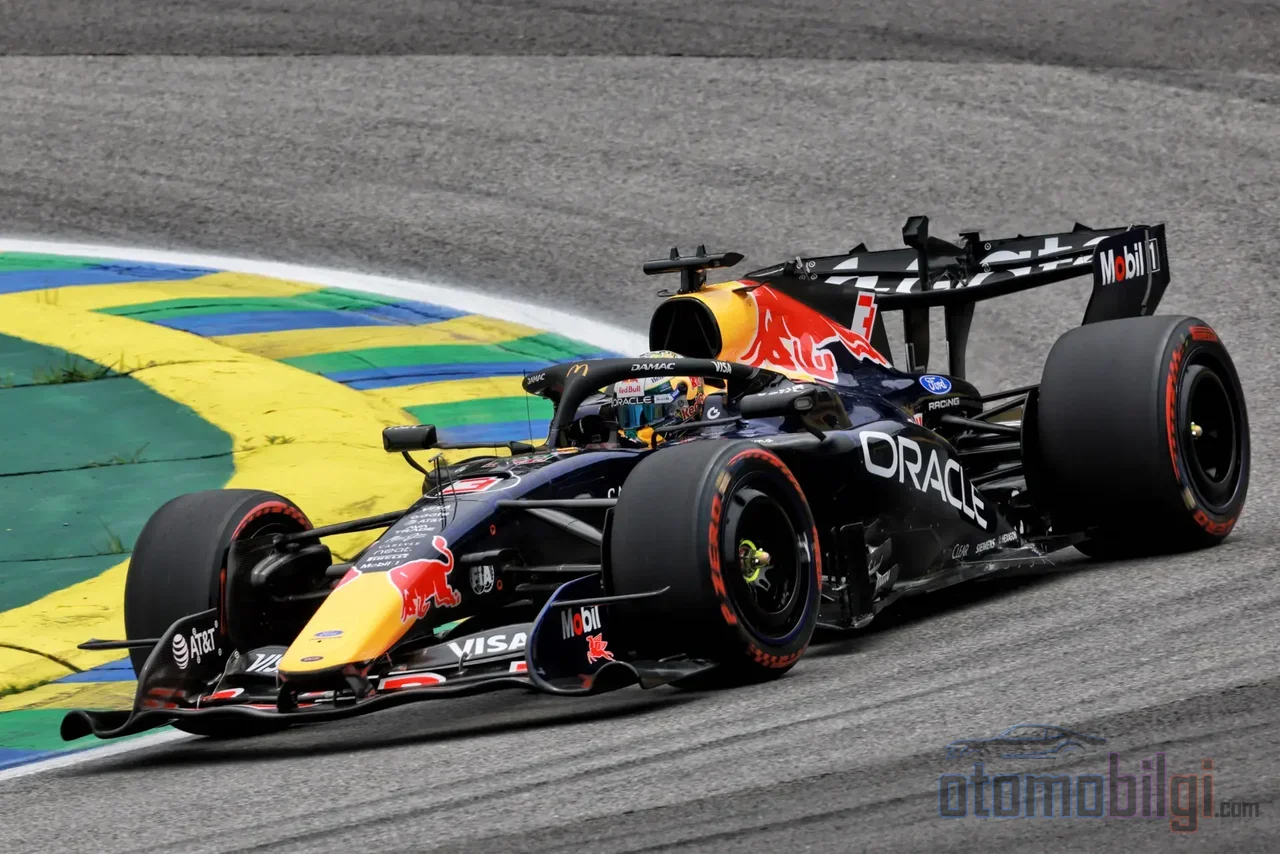
When the Brazilian Grand Prix held at Interlagos on November 8, 2026 ended, the picture was clear. Lando Norris won and Max Verstappen climbed to 2nd place from 21st, while Mercedes mathematically secured the constructors' championship. However, the real question in Red Bull's garage was raised the very next day after the race. Verstappen's car changed behavior unexpectedly after the tire change, and the team admitted that its own simulator data was insufficient to explain this result. So is a podium from 21st place really a success story, or is it the first clue of a malfunction puzzle yet to be diagnosed?
How the Race Unfolded: From the Pit Lane to the Podium
Verstappen was pushed to the very back of the grid at the end of qualifying due to a 30-place power unit penalty and started the race from the pit lane. The Dutch driver, opening on intermediate tires in Interlagos's mixed conditions, managed to enter the points-scoring zone within five laps. Isack Hadjar yielded to his teammate on team orders, and Red Bull thus secured one of the notable double podiums of the season. Norris, meanwhile, carried McLaren from pole position to victory, finishing the race about 15 seconds ahead of Verstappen at the checkered flag.
Highlights
- Verstappen started from the pit lane with a 30-place power unit penalty and climbed to P2
- The finishing gap was about 15 seconds in Norris's favor
- Red Bull's data detected a downforce loss in the rear wing area
- The team's simulators could not predict Verstappen's P2 result
- The constructors' battle for third continues with McLaren on 339 points and Red Bull on 332 points
The Abnormality That Began With the Tire Change
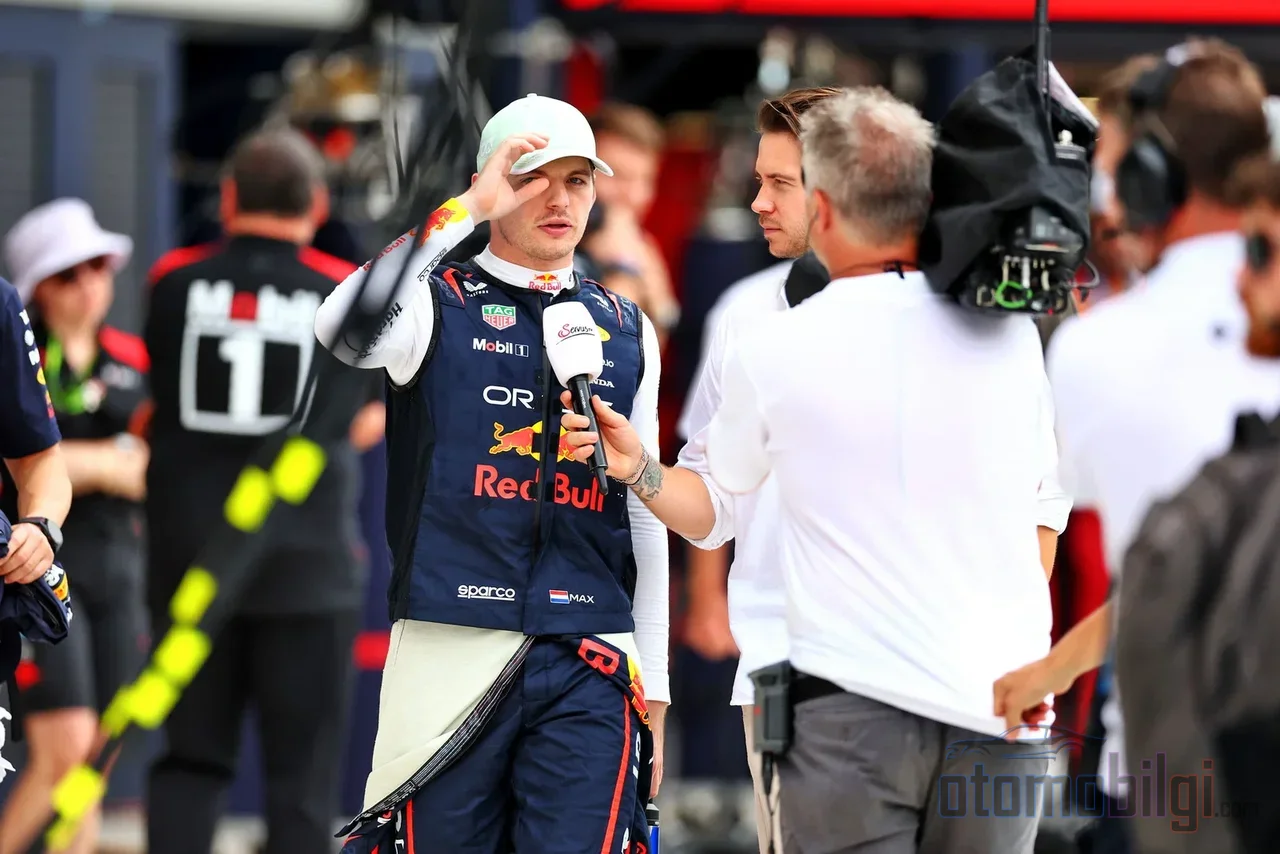
The technical leg of the story opened with the switch to slick tires. Verstappen explained that he spent most of the race in a car that did not satisfy him, and that especially after switching to dry tires, he felt the rear of the car breaking away excessively in high-speed corners. The driver's assessment was clear: this was not a normal balance shift, and there was a serious possibility that something in the car might have broken or an aerodynamic loss had occurred.
When Red Bull engineering examined the data after the radio conversations, they encountered signals pointing to a downforce loss at the rear of the car. This loss, not visible on the track, had been reflected in the telemetry. For now, two scenarios are on the table: one is mechanical damage caused by contact or an unknown reason, and the other is a car that naturally lost its balance after passing through three different tire and weather phases in a single afternoon. The team aims to clarify which scenario is correct before Las Vegas.
Why the Simulator Could Not See This Result
Perhaps the most striking detail came from Red Bull team principal Laurent Mekies: the team's own simulator could not predict the result Verstappen produced at Interlagos in any scenario. A climb from 21st place to second did not look possible in the simulation data. This confession shows two things at once: there is unmatched performance in terms of driving skill, but the car itself is also still an unresolved variable in the equation. This gap between simulation and the real track is unsettling for a team, because if you do not know what to fix, you cannot fix it.
Mekies' Reading: The Pace Gap and Responsibility
Without dismissing any car issues, Mekies framed the situation in calm language: Red Bull was behind McLaren in terms of pace at Interlagos, and Norris was already a tick faster that day - meaning the problem cannot be explained entirely by the car. On the other hand, Verstappen believes that even with a car that is not in good shape, more is possible. The two readings do not exclude each other: on one side a real pace gap, on the other car behavior that suddenly changes during a race.
There was also tension on the strategy front: Verstappen openly said that the decision to switch to the soft compound tire in the second stint was not made with him. Mekies, for his part, stated that as a team they took responsibility for the decisions and had taken a conscious risk before the race starts. The assessment that the pit switch was largely a desperate move in response to tire wear much higher than expected also came up. Such disagreements would have stayed behind the wall generations ago - this is not the old F1; now every word is broadcast and everyone can debate the decision-making mechanisms within the team.
The Problem May Not Be Solved Until 2027
The scope of Red Bull's review is broader than assumed: according to Mekies' admission, the irregularity in tire wear, one of the RB22's structural problems, cannot be fully resolved within the 2026 season - the full solution of the root cause may slip to beyond the 2027 car regulations. How much of which problem a team can fix within a development budget limited to the current car is each season's quiet but decisive battle, and Red Bull is doing that math right now.
Looking at the season as a whole, Verstappen being in P2 is a story in itself. The driver only managed to reach his first podium in the first five races of the season, his first win came after 16 events, and with the consistency he found after the summer break he settled into second place in the championship standings. Leaving Brazil with 18 points and reaching 279 points, Verstappen stands ahead of George Russell's 262 and Lewis Hamilton's 261 points in the standings. As for the Drivers' Championship, Andrea Kimi Antonelli has already secured it. Verstappen's describing being in this position as a big surprise even to himself is not for nothing - the car has not been where he wanted since the start of the season.
Signals That Lasted All Weekend
The Interlagos suspicion did not fall from the sky. Verstappen had said in the first practice session that he found the downshifts unacceptable, comparing the steering wheel to a strength training session. In the second practice session the car was also released early, and the driver could only finish that session third, 0.259 seconds behind leader Antonelli. Just a week earlier in Austin, he had also experienced a sudden loss of grip and balance in Q3, having to settle for starting second on the grid, 0.179 seconds behind Antonelli. Within this chain, the balance change in Brazil can be read not as a single incident but as the most visible instance of a recurring pattern, and Red Bull's investigation is aimed precisely at revealing that.
Third Place in the Constructors' Championship on the Standings Table
Mercedes's 9. constructors' championship was secured at Interlagos, ending the uncertainty at the top and leaving only the fight for third, which is a razor-thin McLaren contest: McLaren collected 33 points to reach 339 in total, while Red Bull managed to stay on 332, and with the gap having shrunk to 7 points it was stretched back out not to 7 but 17 points. Over the last three race weekends Red Bull collected 102 points while McLaren produced just 33, meaning the trend was working in Red Bull's favor, and Brazil slowed that flow. The remaining races on the calendar will be spent on a points calculation between these two teams.
Short Answer: Damage or Setup
The reader's question is not a clear-cut diagnosis: is the source of the downforce loss at the rear of the car a hidden contact-related damage, or the natural behavior of a car that has switched to dry tires? That is the question Red Bull must clarify before Las Vegas, and the answer may not be fully resolved within 2026. When an outcome the simulator could not predict and the anomaly indicated by the data converge in the same picture, there are two realities: Verstappen drove exceptionally, and the car was probably slower than it should have been. Both of these being true at the same time is simply the nature of this business.
Sources
- Norris beats Verstappen in wet Sao Paulo GP thriller as Mercedes win Constructors' Championship
- Verstappen suspects damage after Brazil balance suddenly changes
- Mekies explains how Verstappen outperformed Red Bull's own simulations in Brazil
- Red Bull admits Max Verstappen's mysterious car issue cannot be fully fixed until 2027
- Red Bull confirms initial Max Verstappen findings in RB22 investigation
- Verstappen admits it's a 'big surprise to be second in the standings'
- Mekies responds to Verstappen's 'not agreed' claim
- Sao Paulo GP: Lando Norris wins wet race for McLaren as Mercedes seal 2026 F1 constructors' championship