Three Routes and Their Taxes for Importing Vehicles from Abroad
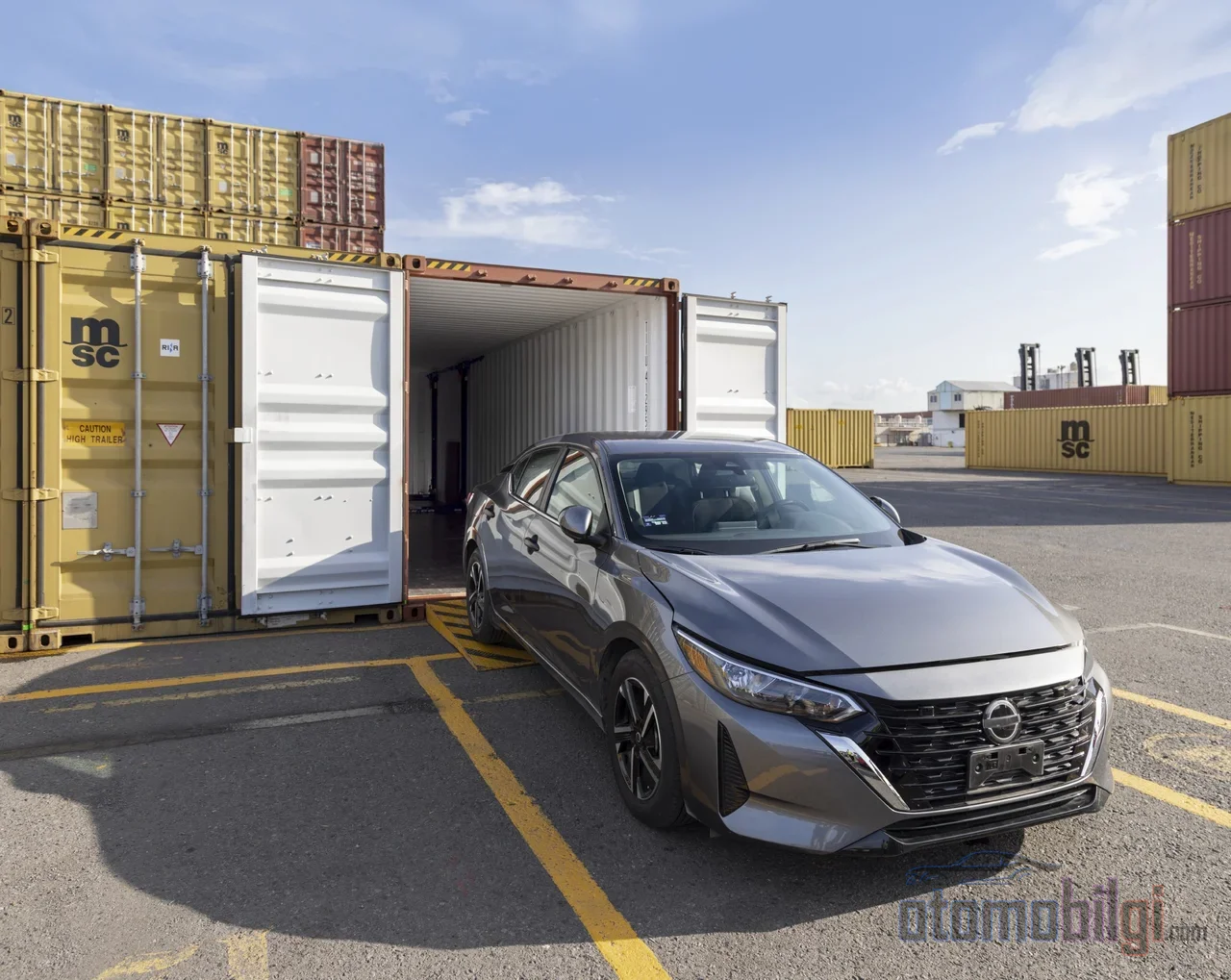
The same car can sell in two different countries at times with a one and a half times price difference. Faced with this picture, many people ask the same question: is importing a car from abroad really cheaper than buying a new or used one in the Turkiye market? Contrary to what is assumed, the answer is not a short yes or no. There are three separate routes for import, each with a different tax regime, and most of them are not open at all to an ordinary buyer residing in Turkiye. In this article, we will lay out the channels, taxes, cost items, and risks one by one; and in the end we will clarify which route makes sense for which budget and situation.
Three Ways of Importing a Car from Abroad: Temporary, Duty-Free, Permanent
When we talk about importing a car from abroad, we are actually talking about three separate legal arrangements, and confusing them is the most expensive mistake in the decision process. The first is temporary import: customs duty, SCT, and VAT are all three suspended, but the vehicle remains on foreign plates or MA/MZ guest plates. To benefit from this route, you must have resided abroad for at least 185 days within the last year; it is checked against passport entry-exit records. If the vehicle is not taken out within the granted period, the taxes are collected along with a penalty. According to the explicit regulation of the Ministry of Foreign Affairs, residents of Turkiye have no right to bring a vehicle from abroad; foreigners with residence permits, however, can keep their vehicles for a period not exceeding 730 days.
The second is duty-free import, that is, the permanent return regime. Contrary to popular belief, this route is not entirely tax-free: only the customs duty is exempt; SCT and VAT are still paid according to engine displacement and the tax base. The conditions set by the Ministry of Trade are also strict: at least 24 months of residence abroad, definitive relocation of the place of residence, and the vehicle must be registered in the person's name at least 6 months before the first entry following the residence transfer document. Vehicles older than three years, including the registration and model year, cannot be brought in. For civil servants returning from a permanent posting, those who have acquired Turkish citizenship, and heirs who inherit a vehicle, the 24-month condition does not apply; for a vehicle transferred by inheritance, SCT and VAT are also exempt alongside customs duty. There is a limit of one motorized and one non-motorized vehicle per family unit, the entitlement can be used once every five years, and the vehicle cannot be sold, transferred, or rented out before one year has passed.
The third is permanent import, which no one talks about being exempt from: normal import in which all three taxes, namely customs duty, SCT, and VAT, are paid in full. Importing used vehicles for the purpose of buying and selling is prohibited as a general rule; the exceptions are those making a permanent return, civil servants posted abroad, those who have acquired citizenship, and those who inherit a vehicle. In other words, a person living in Turkiye who sees a cheap price for a car on a foreign website and makes an ordinary purchase is blocked right at the gate of the legislation.
Highlights
- Residents of Turkiye have no right to import a car from abroad; Import is subject to special conditions.
- Duty-free import only exempts the customs duty; SCT and VAT are still paid.
- For temporary import, a condition of 185 days of residence abroad within the last year applies.
- Sea freight from the USA to Istanbul starts at 2,450 USD and can reach up to 5,100 USD depending on the route.
- As of July 2025, SCT rates are applied progressively according to the tax base bracket.
How Does the Tax Math Work?
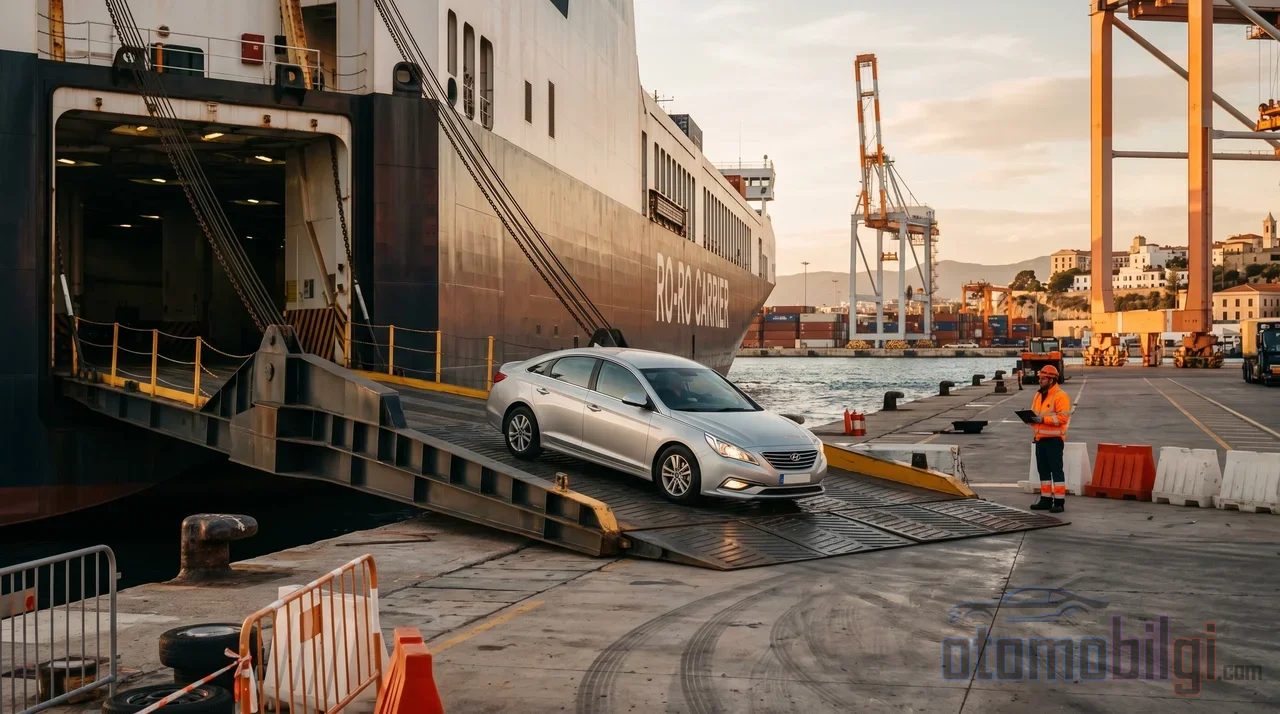
In a definitive import, the calculation consists of three layers. First, the tax base is determined: the total of the sale price, freight, and insurance, i.e. the customs value of the vehicle. On top of that, customs duty is added. Then comes the SCT; the rate is determined jointly by engine displacement and tax base bracket. There is an important recent change: as of July 24, 2025, even within the same engine displacement band, the SCT rate is now tiered by tax base bracket, and the bracket limits can be changed by up to threefold by presidential decree. For electric vehicles, motor power in kW, rather than engine displacement, and the tax base bracket are the determining factors. At the very end there is VAT: 20 percent for passenger cars, calculated on the total of the tax base and SCT. In other words, tax is stacked on top of tax; as the tax base grows, the total increases exponentially.
Since rates change frequently, it is essential to confirm current brackets with the Revenue Administration at the time of the transaction. An increase in the additional customs duty on imports is also on the agenda for July 11, 2026; a development expected to be reflected in car and spare parts prices. In short, the sticker price abroad is only the starting item of the total amount you will pay in Turkiye.
There is also an age discount: for vehicles brought in as used, i.e. second-hand, depreciation is applied to the taxable value. A one-year-old vehicle gets a 20 percent discount, and between two and six years 10 percent is deducted per year; for vehicles between seven and nine years old, the taxable value drops to the 20 percent level. This can significantly reduce costs for those who can bring in a second-hand vehicle under certain conditions.
Total Cost: Shipping, Documents, and Surprise Items
Logistics must be added alongside the tax calculation. Door-to-door... rather, port-to-port sea freight from the USA to Istanbul starts at 2,450 USD departing from New Jersey; it takes about 25 days at sea. Florida is at 2,700 USD, Texas at 4,000 USD, and California at 5,100 USD. For vehicles brought by road from Europe, shipping is more reasonable, but items such as paperwork, insurance, and power of attorney are added. The list of documents required for temporary import is long: passport, vehicle registration, driver's license, valid mandatory traffic insurance in Turkiye, proof of residence abroad, and power of attorney when needed. The most common problem at border crossings is a missing proof of residence or an expired insurance policy; in case of a deficiency, the vehicle may be held in the customs area. Duty-free import applications are made at specific customs offices: Ankara Gar, Istanbul Yesilkoy, Izmir Passenger Terminal, and Gebze. In most categories, the application is required within six months of the first entry, and in cases of inheritance, within 24 months of the certificate of inheritance.
At the other end of the comparison stands the Turkiye market. To give an example of new prices in early 2026: Dacia Sandero Essential with its supercharged engine version is among the cheapest on the list at 1,295,000 TL, Fiat Egea at 1,449,900 TL, Kia Picanto at 1,460,000 TL, Hyundai i20 at 1,575,000 TL, and Renault Clio at around 1,830,000 TL. These prices look high; however, when the total cost of import is calculated, it turns out that the foreign channel is often more expensive for a buyer who pays the tax in full. My view is this: importing an ordinary car through definitive import is preferable only for its sentimental value, if a model not available in Turkiye and of special interest is involved; not with the expectation of a price advantage.
Who It Is Really Advantageous For: Special Cases
There are exceptions to the general picture as well. Those who retire abroad and return permanently can benefit from the exemption allowing them to use the imported vehicle under certain conditions for up to 4 years. The most concrete advantage is in disabled vehicle imports: for 2026, the customs value limit is 2,873,900 TL. A car up to 1600 cc or an electric vehicle not exceeding 160 kW can be imported for personal use; the vehicle cannot be older than three years, and the special equipment, lift or ramp, must be installed abroad before the vehicle arrives. A "not for sale, not transferable" annotation is placed on the registration; in case of unauthorized sale, customs duties are collected and legal proceedings begin. Sources mention both three-year and five-year limits regarding sale to a non-disabled person; since the legislation is not clear on this point, obtaining written confirmation from the customs administration before the transaction is the safest course.
On the other hand, the domestic market in Turkiye offers credit facilities that import cannot match. For a new vehicle, a guarantor is usually not required; in the used market, loans can be obtained based on the comprehensive insurance value, with the sum of vehicle age and term at most 144 months. When buying used, the damage history can be checked via a Tramer query by plate, as well as e-Devlet and chassis number lookups. In other words, the tax disadvantage of the domestic channel is somewhat balanced by the ease of financing and inspection.
Warranty, Service and Parts Risk
How the warranty works on an imported vehicle is a matter in itself. Although it is debated whether maintenance performed outside authorized service in Turkiye voids the warranty, it is known that the warranty can be preserved at TSE-certified private service centers under the block exemption. With an imported vehicle, the problem is more fundamental: the Turkiye distributor's warranty usually does not cover it, and access to spare parts and service depends on whether the model is sold in the market. With a vehicle purchased new from Turkiye, the factory warranty, authorized service network, and campaign benefits are guaranteed from the start. What keeps a car on the road in the long run is not the purchase price, but the cost of maintenance and access to service; by that measure, the risk of the import route can outweigh even the taxes.
Should You Buy From Abroad or From Turkiye? The Clear Answer
The short and clear answer is this: for an ordinary buyer residing in Turkiye, importing a car from abroad is in practice a closed door; and even when it is open, that is, in special cases such as permanent return or inheritance, the definitive import route, which incurs all three taxes at once, is often more expensive than buying from the Turkiye market. Importation is only a sensible option for those who have lived abroad for 24 months and are returning, those who inherit a vehicle, those who will benefit from the disability exemption, or those chasing an original model not available in Turkiye. For everyone else, the right question is: new or used, dealership or gallery, private seller or not; and the answers to these questions are given through expert inspection, damage record checks, and budget discipline.
Pre-Decision Checklist
- Verify your period of residence abroad with your passport records; check the 185-day and 24-month thresholds.
- Establish the tax base as sale price + freight + insurance; calculate your SCT bracket and VAT on this tax base.
- Add shipping, insurance, documentation, and power of attorney costs on top of the taxes, and compare the total with new car prices in Turkiye.
- Find out the vehicle's age and registration date; do not violate the three-year rule and the six-month registration requirement.
- Research the warranty coverage, spare parts, and service access before buying.
- Include sales and transfer restrictions and the one-year holding period in your plan.
- If you are buying used in Turkiye, do not skip the Tramer query, mileage, and damage record checks.
Buying a car has been built on the same simple arithmetic for thirty years: the total money you pay is always more than the figure written on the sticker. Importing from abroad is the toughest exam of this arithmetic. For those who meet the conditions, it is a real opportunity; for those who do not, it is a car waiting at the customs zone and a file growing with unpaid taxes. When making the decision, look not at the sticker, but at the total balance.
Sources
- Transfer-Free Vehicle Import - Ministry of Trade
- Matters Concerning Vehicles - Republic of Türkiye Ministry of Foreign Affairs
- Bringing a Car From Abroad: Tax Calculation (2026)
- Guide to Bringing a Car From Abroad to Türkiye
- Disabled Vehicle Import Guide 2026
- Bringing a Car From the USA: Istanbul Shipping and Taxes
- Additional Customs Tax on Imports Increased: Impact on Automobiles 2026
- The 10 Cheapest New Cars in Türkiye in 2026