When Is the Best Time to Buy a Car?

Share This Page
The best time to buy a car is November–December on the used market, while for new vehicles it is the period toward the end of the year when stock-clearance campaigns begin. Early summer and the weeks before holidays are the toughest windows, when demand climbs and prices curve upward. That said, in Türkiye exchange rates, interest rates, and tax regulations override this calendar; the soundest decision is made by weighing seasonal advantages together with personal needs and market conditions.
Highlights
- The period when used car prices are at their lowest: November–December
- The worst times to buy: the beginning of summer and the weeks before holidays
- During the model year transition, dealers sell previous-year models at a discount: November-December
- As of October 2026 199 new car sales campaigns were counted as currently active
- In the first quarter of 2026, new car sales fell compared to the previous quarter by 32%
Is There Really an Ideal Time to Buy a Car?
As someone who has been watching this market for more than thirty years, I can say this comfortably: the calendar really works, but not as much as everyone thinks. In the past, it was enough for dealers to meet their targets; today, exchange rates, auto loan interest rates, and tax expectations are also among the factors that determine the timing of a purchase. Still, at certain times of the year, price movement is visibly directional.
It should not be forgotten that the used car market is many times larger than the new car market. Used car prices are re-priced based on new car prices and the exchange rate: when new car prices drop, used prices follow; when the currency fluctuates, both sides update their listings the same day. Therefore, the answer to the question "which month of the year" depends on the question "what is happening in the new car market that day."
On the other hand, a mature caution is also in place: seasonality is partly true. The market establishes its own balance in every period; a sound, reliable, and reasonably priced car can be found no matter which page of the calendar you open. Use the seasonal calendar as a compass, not as a working clock.
Why Year-End Is Advantageous: The November and December Calculation
The year-end advantage stems from simple arithmetic. Large distributors and dealers must meet their year-end targets; the moment they realize they cannot reach their goals, they dispose of their excess stock by lowering prices. Car manufacturers, for the same reason, clear stock and launch campaigns. Used car prices immediately recede when new car prices fall; this is why November–December stands out as the window when used car prices are at nearly their lowest levels.
Another factor comes into play on the new car side: the model year transition. Someone who buys a new car in November or December skips the next model year; dealers, in turn, want to sell their previous-year models more cheaply. This is a trade in which the car loses nothing mechanically, only the year in its registration is one behind. No wayfarer on the highway reads the year on the plate; the three-digit difference at the checkout, however, is quite visible.
Let's also add a note about the start of the year: In January and February, campaigns continue under new conditions and the market slows down a bit. Those who miss the end of the year make up for it at the start of the new one. March, April, and May are the most active periods for the market; prices also become tense accordingly.
Why Are Winter Months More Advantageous on the Used Car Market?
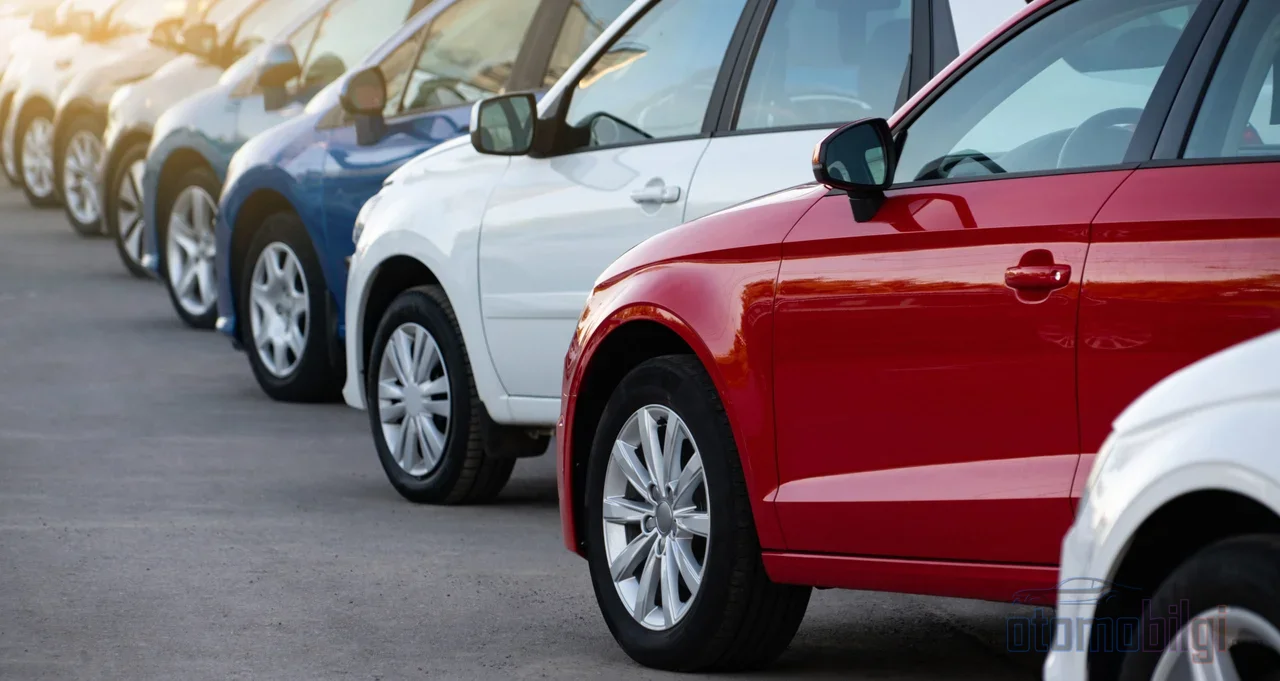
Winter is one of the most suitable periods for buying a used car. The reason is again psychological and practical: in the cold months, the need for vehicles decreases, and nobody is eager to do a test drive and sit down at the negotiating table in the snow. Dealerships and companies offer various discounts during this slowdown. In summer or spring, the variety of vehicles on the market increases; but so do prices.
On the side of individual sellers, winter hides a separate opportunity. Sellers who urgently need money are forced to sell during the winter months; with tough negotiation, a good price can be obtained. If the same car is left until spring, the seller is in a stronger "well-off" position and lists it with a profit margin. Knowing who holds the trump cards is half the negotiation.
Which Periods Are Better to Avoid Buying?
Just as every calendar has its lower and upper limits, the vehicle market also has its bad times. The beginning of the summer months and the weeks before holidays are, with years of experience, the intervals best avoided. The reason is one sentence long: everyone wants to buy a car, and when demand increases, prices rise. During this period, sellers of both new and used cars can maintain their prices on paper without giving anything.
The general course of summer must also be added to this. While vehicle sales increase in the summer months, a decline is seen in the winter months; the work of those seeking affordable prices falls to winter. This is an old observation and it still holds true today: no purchase is made in the season when demand booms, and negotiation is done in the season when demand is sluggish.
The 2026 Market: How Do Campaigns, Interest Rates, and Exchange Rates Influence Decisions?
2026 is poised to be a year of normalization and balance for the Turkish used car market. The three determining factors are clear: exchange rates, possible SCT (ÖTV) regulations, and vehicle loan conditions. The common emphasis of industry representatives is in this direction: the key of the year is credit and interest. Expectations of price increases due to exchange rates and taxes, along with incentives for electric and hybrid vehicles, support demand, while limited financing acts as a brake.
The tension on the demand side is visible in a concrete figure: in the first quarter of 2026, new car sales fell by 32% compared to the previous quarter. At the beginning of the year, new car prices were also updated; price hikes started from 30 thousand liras. The moderate view in this picture is this: an expectation of a sharp decline across the market is not realistic. On the other hand, inflated listing prices are a common problem; the difference between the real price and the sticker price is the subject of negotiation.
The Campaign Economy: The Outlook for October 2026
As the end of the year approaches, the volume of campaigns is growing noticeably. In September, 20 brands announced campaign packages; as of October 2026, there are currently 199 zero-kilometer vehicle sales campaigns on offer. A few examples are enough to show the scale of the campaigns: under one brand loyalty program, existing owners who trade in are being offered a 1% discount; another is offering a 2026 model price starting from 2,194,000 TL with trade-in support. At authorized dealers, there are packages with a 0% monthly campaign interest rate for individuals, and for light commercial vehicles there are up to 6 months of 0% interest options on loans between 750,000 TL and 1,000,000 TL. For urban electric vehicles, for loans in the 250,000-300,000 TL range, there are 12-month 0%-0.99% interest options or cash discounts of up to 50,000 TL listed. As for Togg prices, as of October 2026 they range between 1,886,000 TL and 3,218,137 TL.
There is also a warning to this picture: at the start of the year, when interest rates had not yet fallen and the market was calm, buying was presented by some experts as the last opportunity window. It should not be forgotten that those waiting with the expectation that "prices will fall further" may also lose their purchasing power while waiting. Waiting can be a strategy; ensuring that the purchasing power of the money on hand does not erode during the waiting period is also part of the strategy.
Loan or Cash: The Deciding Ground of Term and Interest
The financing side is the most technical yet most decisive leg of the timing question. Today, loans with terms longer than 12 months are not available for almost any gasoline or diesel car being sold; on electric vehicles, the term chances are comparatively wider. On the second-hand market, 12-month credit card installments or 11-month upfront-payment loan campaigns are seen; interest rates hover around 0.99%.
The debate over whether a long-term loan could create a payment advantage in inflation has been circulating on forums for years; and it is not in vain that someone seeing around 3.5% interest asks "should I buy now or wait?". The point that must not be skipped here is this: if interest rates fall, buying with a loan becomes cheaper; but the same decline also pulls demand, and therefore vehicle prices, upward. What the loan gains, the seller can take. The balance of these two forces is reflected in second-hand prices through the trajectory of zero-kilometer vehicle prices and the exchange rate. In short, the loan decision is too dependent on the market to be made independently of the calendar.
Concrete Criteria for the Question "Should I Buy Now or Wait?"
I find it professionally wrong to give a single answer to this question; but the right set of questions is clear. Before the calendar, the following criteria determine the decision:
- Is the need urgent? If there is a real need for the vehicle to be used, waiting is a luxury paid for with transportation fares and alternative transport costs. When both the money and the need exist, waiting is often indefensible.
- Which side of the calendar are you on? If you are in November-December and the winter months, the buying window is open; if it is early summer or before religious holidays, unless there is an urgent necessity, waiting makes sense in terms of price.
- Is the model year transition approaching? If you are approaching the end of the year, previous-year model zero-kilometer vehicles are discounted at the dealer; second-hand prices also follow this decline.
- What are the financing conditions? Is the down payment suitable, and the interest safe? Promotional rates like 0% or 0.99% can sometimes earn you more than haggling over the car's base price.
- Is the purchasing power of the money on hand being preserved? In an environment of exchange rates and inflation, waiting itself carries a cost. Aphorisms that have become stock phrases in everyday speech, such as "the best time is whenever you have the money," may be ironic, but they allude to a genuine economic fact.
Then there is haste to factor in; this is the part that deserves to be written from thirty years of field observation, independent of sources. The cost of a car bought in haste is not written on the price tag. Skipping the inspection, signing without questioning damage and insurance claim records, believing the odometer, and rushing the negotiation - each of these bills you invisibly many times more than the visible discount you gained. Even on a day when the market appears to be at its lowest, the purchase checklist is applied in full: mileage inquiry, damage record, inspection report, test drive, and payment security. The right time can never substitute for the right car.
Conclusion: Use the Calendar, Don't Be Its Slave
Let's summarize. The most favorable times on the second-hand market are November-December and the winter months; for new cars, year-end campaigns and model year transitions; the worst times are the beginning of summer and the period before holidays. This calendar is a cycle verified again and again over many years. But in Türkiye, what really governs prices is the exchange rate, interest, and taxes; during periods when this trio accelerates, seasonal advantages become secondary. Those with a genuine need will calculate their financing and buy on the calendar's favorable side; those caught on the calendar's unfavorable side will either toughen up their negotiation or accept waiting a few months. The decision should be made not on a single date, but at the point where the triangle of need, budget, and market intersect.
Sources
- What Is the Best Time to Buy a Used Car?
- Which Is the Most Ideal Period to Buy a Used Car
- The Ideal Time of Year to Buy a Car
- Is It the Right Time to Buy a Car?
- Which Months Are Best for Buying a Car?
- The best time to buy a car
- New Car Campaigns October 2026
- New Vehicle Campaigns - Cars on Sale
- New Vehicle Campaigns - Passenger and Commercial - October 2026
- October 2026 New Vehicle Campaigns - 199 Deals
- The market turned against the wind! New car sales crashed
- What Will Used Car Prices Be in 2026?
- The Used Car Market Entering 2026: Will Prices Rise
- Vehicle Loan Conditions 2026