Is It Wiser to Trade In Your Car or Sell It Privately and Buy a New One?
Share This Page
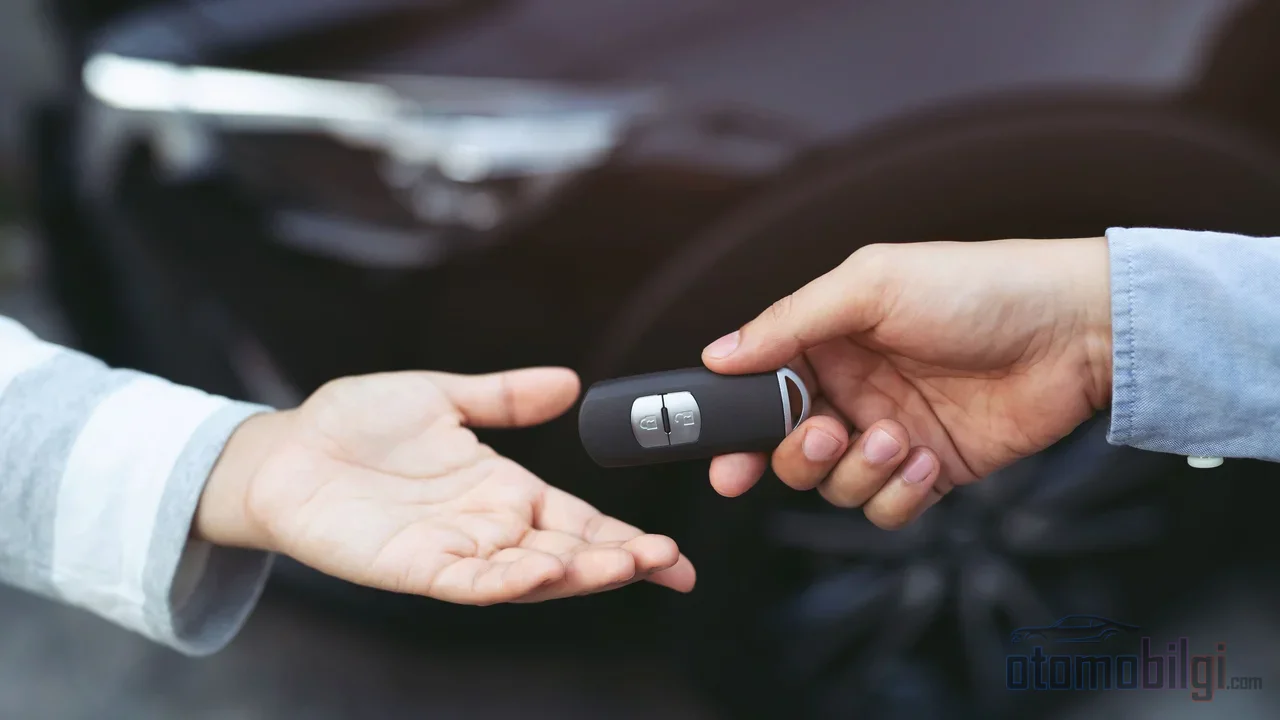
Trade-in or sell and buy new? A trade-in lets you hand over your current vehicle to a dealer or gallery and pay the difference to get a new car; the process is fast, safe and practical, but the trade-in value is usually below market value. Direct sale, on the other hand, takes time and effort, but when managed properly it offers higher returns and negotiating power. Which one makes sense depends on your vehicle's sellability, your time, and your priorities.
Highlights
- Dealers may offer a trade-in value up to 10-15% below market value.
- Trade-in is the practical solution for readers who have no time for listings and buyer searches.
- In 2026 campaigns, 75,000 TL in trade-in support has been seen.
- The sale of a vehicle for personal use is generally not subject to income tax.
- The Notary Secure Payment System eliminates payment risk.
What Does Trading In Your Vehicle Mean?
Trade-in is a method that has been part of how galleries and dealers operate for thirty years: you deliver your current vehicle to the point of sale, add money on top, and get another car. In the past, this was done only with used cars on gallery lots; now authorized dealers have turned trade-in into an official campaign tool. Trade-in support is the extra advantage offered on a new vehicle purchase in exchange for delivering your current vehicle, and it can be applied as a discount, an additional trade-in contribution, or financing support. It varies by brand, model, and campaign period.
In a dealer or gallery trade-in, the transfer, insurance, and registration procedures are handled by authorized persons, so the process is completed from a single point. Official procedures carried out through notary transfer minimize the risk of fraud; the old vehicle can be delivered and the new one picked up the same day, meaning there is no risk of being left without a car.
The Price Cost of Trade-In: What Is the Price of Convenience?
The most serious drawback of trade-in shows up in the price. Dealers and galleries must protect their own profit margins; therefore, the trade-in value offered is often below the vehicle's market value. Industry practice accepts that a dealer can price at least 10-15% below market value. The room for negotiation is also limited, because dealers build offers using standard methods; the vehicle's model, mileage, maintenance condition, accident record, and paint/repair history directly affect the offer.
A second issue concerns transparency. Since the negotiation of two vehicles happens at the same time, it is hard to see whether the advantage offered under the name of a trade-in discount is sometimes hidden in the price. That is why my professional advice is clear: write out the difference to be paid, item by item, in writing. Do not confuse your own vehicle's value with the price of the other party's vehicle.
Decision Formula: Calculate the Difference Upfront, Compare with Trade-In
The most reliable way to approach this is a simple comparison. First, calculate your current car's cash sale value separately, and the cash purchase price of the car you plan to buy separately. Then look at the difference demanded in the trade-in. A trade-in is advantageous only if the difference to be paid is genuinely lower than in the cash scenario. If the difference is the same, you are paying below market value merely for convenience. Whoever appraises incorrectly loses out in both cases: pricing too high in a cash sale and failing to sell, or letting go at too low a price in a trade-in.
Direct Sale: Takes Time, Delivers Higher Returns
If you sell your car yourself, you pay no commission since there is no intermediary, and the potential for maximum income increases. You also become a cash buyer; when purchasing a new vehicle, this concretely strengthens your bargaining power. Moreover, your vehicle choice is not limited to trade-in-eligible cars - being able to freely choose a model the dealership does not have in stock from another source.
But there is a price to pay: listing, finding a buyer, showing the car, negotiating and notary processes can take months. During this time, the car loses value; listing density, age, mileage and price extend the selling time. Since you will negotiate directly with the buyer, you must also manage payment security yourself. If we put the two methods side by side, the picture looks like this:
| Criterion | Trade-in | Direct Sale |
|---|---|---|
| Time | Can be completed the same day | Can take weeks, sometimes months |
| Income | May fall below market value | Higher potential for maximum income |
| Official procedures | Handled by the dealer at a single point | Listing, showing, notary transfer are your responsibility |
| Risk of being left without a car | None | Risk arises between sale and purchase if there is a gap |
| Bargaining power | Limited | Strong as a cash buyer |
Which Option Makes Sense in Which Situation?

There is no single right answer; expectations, time and process management are decisive. Reading it through the lens of many years: trade-in is the price of speed and comfort; direct sale is the reward of time and effort.
- Trade-in makes sense: if you have no time for listings and buyer searches, if the transition needs to be quick, if your car is in a difficult segment to sell (a very niche model, very high mileage, a serious damage history), and if you do not want to be left without a car.
- Direct sale makes sense: if your car is a fast-selling model, if you have time on your hands, if maximum income is the goal, and if you are not in a rush for the new vehicle.
- Urgent cash need and quick transition favor trade-in; when the best price is the goal, private sale comes to the fore.
The healthiest approach is to first learn the trade-in price and plan accordingly. Make sure to research your car's value before the trade-in; know its condition and do not accept an offer that is clearly below its real value.
Transfer Procedures and Secure Payment
In private swaps, a notary transfer is unavoidable and the required documents are clear: the ID card or passport of both parties, the registration certificate of both vehicles, and current mandatory traffic insurance. To eliminate the risk of carrying cash, the Secure Payment System can be used at the notary; this system also rules out the possibility of counterfeit money. The Vehicle Swap System developed for private swaps ensures the sale price changes hands simultaneously, eliminating fraud risk, and works in three steps.
The pre-swap checklist is long: damage records other than the transfer, expert inspection, mileage, periodic inspection, debts, and lien-seizure checks must be carried out. Expert inspection is not legally mandatory for every transaction, but it is a critical step both for a safe sale and for the right price; a 111-point inspection reports paint-bodywork and technical condition. The same rule applies to cash sales: do not sign at the notary before you see the money in your account.
Tax and Cost Implications
A private seller who sells their personal vehicle generally does not pay income tax; however, selling more than one vehicle within a year may be considered commercial. The tax authority tracks vehicle purchases and sales through notary records, and how many sales count as trade is an ongoing legal debate; therefore, those considering frequent vehicle sales should consult a legal expert. For second-hand passenger cars, 1% VAT applies, and in corporate purchases, unlike zero-rated vehicles, this tax cannot be recorded as an expense. A final reminder: if ownership costs such as insurance, taxes, fuel, maintenance, and tires are not included in budget planning, the annual cost may surprise you no matter how well-founded the swap or sale decision is.
How Do Swap Campaigns Work in 2026?
Swaps take on a special meaning during campaign periods. Examples in effect in October 2026 illustrate the picture well: Ford's campaign offers a 3% swap advantage on passenger cars, and on the Transit and Tourneo Courier this rate rises to 3+2%; alongside it there is a sample loan of 1,000,000 TL / 6-month installment at 0% interest. Renault, meanwhile, defines a 75,000 TL swap support for the 2026 Boreal evolution Turbo TCe EDC. Dealers are not empty-handed either: there are examples of swap support of up to 120,000 TL, free expert inspection, and a 6-month 10,000 km engine-mechanical warranty. In March 2026, 200,000 TL loans with 12-month installments at 1.99% interest and swap-supported models were listed; in July, zero-interest loans and swap supports were compiled brand by brand.
The conditions for benefiting from swap support are generally as follows: the vehicle's legal eligibility for sale, completion of the expert inspection, applying within the campaign period, and choosing a model included in the campaign. Damaged vehicles can be evaluated based on the inspection result; in most cases, swap support can be used together with a loan. Some authorized sellers offer free vehicle valuation within minutes and provide a purchase or swap option - a practical starting point for getting a quick price idea.
Frequently Asked Questions
Can a damaged vehicle be given in a swap?
Yes, but it is evaluated based on the inspection report. Damage history is already among the top factors that pull the trade-in price down; in this case, a low offer is normal.
Does the trade-in support apply to everyone?
Individual and corporate customers who meet the campaign conditions can benefit. Clarifying the conditions in writing before applying prevents surprises that may arise later.
I sold my car and bought a new one; do I pay tax?
The sale of a personal-use vehicle generally does not generate income tax. However, repeated sales within a year may acquire a commercial character; this threshold is a legal debate evaluated through notary records.
Final Word: Make the Decision with Numbers
This entire article is based on a single habit: calculate both paths on paper. Put the cash sale value of your own car, the cash price of the car you will buy, and the difference requested in the trade side by side; have your inspection report, insurance claim history, and mileage records ready. If the difference is genuinely low, trading in saves both time and money; if the difference offers no advantage, enduring the effort to sell your car yourself is the money that stays in your pocket at the end of the year. Trading in does not always result in loss or profit; it depends on the situation. The best approach is to learn the numbers and act accordingly.
Sources
- Should I Sell My Car via Trade-In or for Cash Upfront? - ViaCars
- Decision Points in Vehicle Sales - Oto Sec
- Is Buying a Car via Trade-In or Selling for Cash More Advantageous? - Oto Point
- What Is Trade-In Support? - Acamar
- How to Do a Vehicle Trade-In? Vehicle Exchange System - Borusan Next
- Secure Payment System - Union of Turkish Notaries
- Step-by-Step Guide to the Vehicle Trade-In Process (2026)
- Taxes and Legal Obligations in Vehicle Sales - Trinkoto
- Taxes in Second-Hand Vehicle Sales - Hukukcular Evi
- Things to Pay Attention to When Trading In Your Car - Arabam.com
- New Car Campaigns October 2026 - Arabam.com
- Current Renault Campaigns (October 2026)
- Second-Hand Vehicle Campaigns 2026 - Barem Cars
- March 2026 New Car Campaigns - Haberturk
- Second-Hand Car 111-Point Inspection - Otoshops
- How to Trade In a Car? - Trampala
- How Much Is My Car Worth? XNakit - Toyota Türkiye