How to Determine the Right Price in a Used Car

Share This Page
The right price for a used car is the figure the market says, not the listing hour: when you compare about fifteen listings of the same model, year, and mileage range and eliminate the outliers, and when you factor in the effect of age, mileage, and accident history on value, you arrive at the correct range. This range is not a single point; it is a compass that lets you measure the gap between the seller's expectation and the actual sale price. Let me say this as someone who has been watching this market for over thirty years: knowing that the asking price is generally 5-15% higher than the actual sale means you have already won half the negotiation.
Key Takeaways
- Asking prices are what the seller wants; they are generally 5-15% above the actual sale price.
- In the first half of 2026, real values in the used car market declined; the index fell from 103.4 to 102.1 .
- Annual 15,000-20,000 km of use is considered normal; outside this band, the price is affected.
- Minor accident damage typically lowers value by 2-5%, while heavy damage 15% or more .
- For accurate results, use valuation methods in layers, not one by one.
How to value a car: five methods and the correct order of use
In the old days, "valuation" meant the guy walking around a few dealerships with pen and paper; now dozens of online tools have entered the picture. This has made the job easier but also increased the confusion. Because each method has a level of reliability and a specific purpose. Online valuation sites give you a free range within minutes; moderately reliable. Listing site research takes an hour or two and shows the market's true face. Dealership offers take one to three days but are a concrete figure. Professional inspection costs money and is the most reliable method on its own; it also catches damage not visible in the accident record. Data-backed platforms offer a highly accurate range based on current transaction data.
The real question is not which one is "the best" but the order in which to use them. My recommendation is this layering: first get the general range from a data-backed platform; then gather at least 10-15 listings of the same model-year-mileage range and confirm that range by eliminating the outliers; then get quotes from two or three dealerships; finally verify the technical condition with an inspection. And don't forget this: valuation is not a table you check once during the sales process; it needs to be updated every two to several weeks. The market moves even within a month.
Why is the "days on listing" information critical in listing research?
The most overlooked column in listing pages is the information on how many days the car has been listed. Yet this is the most honest indicator of whether the price is in line with the market. A car that has not sold for three months says in a thousand words that the seller's price is above what the market dictates. The owner of a car that has been listed for a long time is the seller most open to negotiation; because the waiting has worn them down too.
How much do age, mileage, and accident history affect the price?
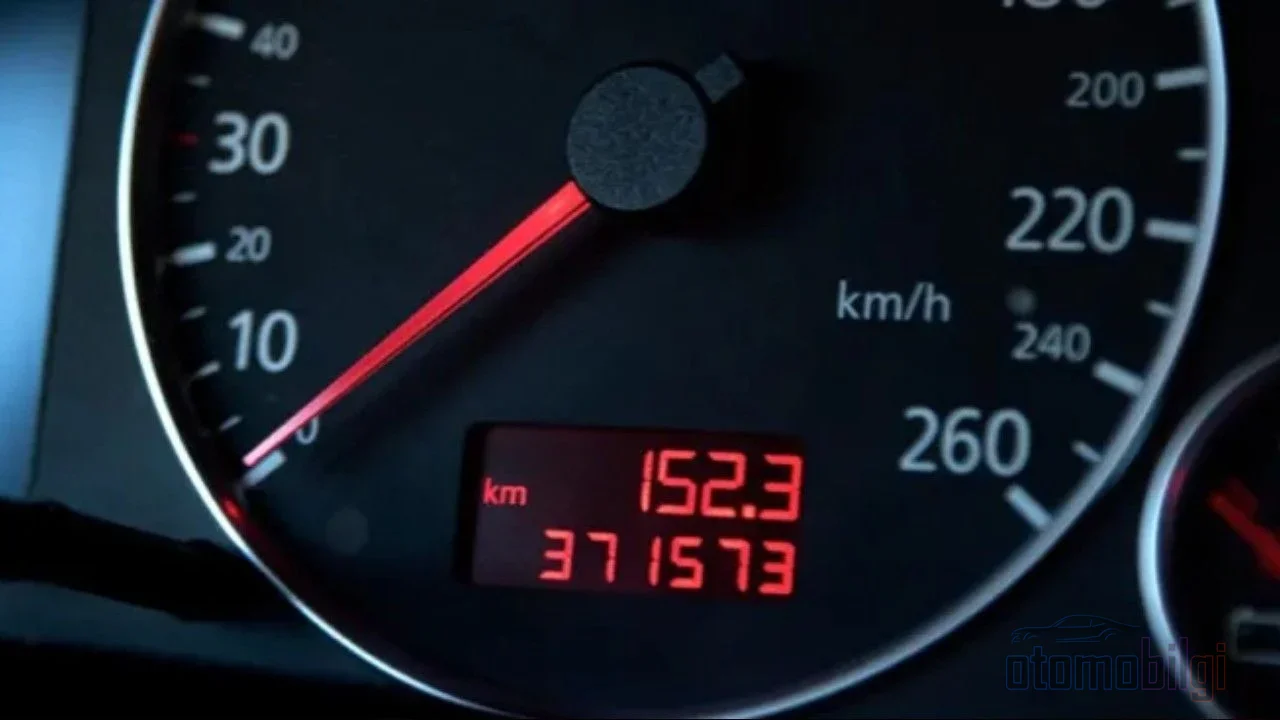
The valuation equation has three main variables, and none of them alone is decisive. Annual average 15,000-20,000 km of use is considered normal; significantly below that earns a premium, while above it becomes a matter of negotiation. But low mileage is not always an advantage: in a vehicle that has sat in a garage for a long time, tires, belts, and fluids age even if the odometer doesn't show it. Always read the mileage together with the maintenance history. A vehicle with 148,000 km is not in the same band as one with 120,000 km; rounding the km when entering valuation tools is one of the most common mistakes.
On the age side, the picture is clear: the sharpest depreciation occurs in the first few years, which is why vehicles aged 3-5 years sit in the most sensible range in terms of price/performance. For vehicles over 8-10 years old, however, mileage and maintenance history take precedence over age. Equipment level also makes a significant difference; between the entry-level and top trim of the same model, there can be a 15-25% difference in new price, and this difference is largely preserved on the used market. Factory-installed features such as automatic transmission and sunroof push the value up; aftermarket accessories often fail to deliver the expected return. Color does not directly change the price but affects the speed of sale; white, gray, and black sell easily.
How much does an insurance damage record affect value?
The insurance claim amount means nothing on its own; the ratio of the amount to the vehicle's value, the number of claims, and their location are interpreted together. A 30,000 TL record on a 2-million-TL vehicle seems minor, while the same amount on a 500,000 TL vehicle is a serious signal. The general industry approaches can be summarized as follows:
| Damage level | Typical value loss |
|---|---|
| Minor damage | 2-5% |
| Moderate damage | 5-12% |
| Severe damage | 15% and above |
| Severe damage / total loss record | Up to 30-50% |
These figures are approximations drawn from companies' blogs, not official statistics; still, they serve as a concrete framework at the negotiation table. Paint and replaced parts work by the same logic: each painted panel lowers the value somewhat, a replaced panel lowers it more; if there is work in the structural area, the effect compounds. You can check the damage record yourself through e-Devlet; don't rely on the seller's story, look at the record.
How do market conditions move the price?
The right price is not a fixed number; it breathes with the market. In the first half of 2026, real values of used vehicles declined: while the price index stood at 103.4 in December 2025, it fell to 102.1 by June 2026. As of July 2026, the average used vehicle price is around 1.17 million TL; when adjusted for inflation, the annual real price change is around; when adjusted for inflation, the annual real price change -8.6%. This picture shows that bargaining power currently favors the buyer. Experts describe 2026 as a year of "normalization and balance" in the market; the exchange rate, potential SCT (ÖTV) regulations, and vehicle loan terms will determine what comes next. Whether you are a seller or a buyer, the message is the same: negotiate according to this month's picture, not last year's numbers.
How to get a price discount with concrete data in negotiation?
There is no place for emotional arguments in negotiation; data takes their place. The first rule is simple: never accept the first offer, because every seller leaves room for bargaining in their price. Second, let the seller state the first figure; when you give a number, always explain your reasoning. Third and most importantly, come to the table with concrete evidence.
- The price range shown by current valuation platforms
- Expertise inspection report: list of repainted and replaced parts
- Tramer (insurance) damage record and amount
- Prices of similar listings in the same model-year-mileage band
- A discount argument based on the range, citing shortcomings such as high mileage or damage history
The role of the expertise inspection report in negotiation also deserves special emphasis: it establishes the vehicle's true condition with an independent document and elevates your discount request from the level of "I didn't like it" to the level of "three parts are repainted according to the report." The fee you spend to obtain the report usually pays for itself in one go.
The five most common valuation mistakes
- Choosing the wrong trim level
- Rounding the mileage
- Marking a repainted part as "original"
- Forgetting to enter the Tramer (insurance) damage amount
- Relying on a single source
Let's also add a note for the seller side: use valuation not for the listing price, but for the "acceptable floor price." A floor you set without accounting for costs such as listing fees and minor repairs will not put you in a difficult position at the end of the negotiation. Don't make a steep cut at the start; open the way with symbolic discounts. Count any additional drop realized after the agreement as a gain, not as a planned discount.
Why does the online valuation differ from the expertise inspection result?
We get this question a lot; the answer is actually simple. Online valuation is based on the information you declare, while the expertise inspection looks at the vehicle's physical state. If you entered the information correctly, the two results converge; if there is something you couldn't enter, the difference arises from there. Always treat online tool results as a range; simple tools that only ask for make-model-year miss the nuances created by trim and damage history. Bottom line: use the online range as a compass and the expertise inspection as a watch. The compass shows direction, the watch gives the exact figure; when the two work together, you know what you're saying at the negotiation table.
Conclusion: calculating the fair price is half of winning the negotiation
The summary of this is: the listing price is a demand, while the market value is a finding. A buyer who knows how to separate the two turns every piece of concrete data-such as damage history, high mileage, and the market's real decline-on top of the 5-15% listing inflation into bargaining power. Gather the data, layer the methods, prepare your report; the rest is a composed conversation.
Sources
- Vehicle Valuation Methods and Websites (2026 Guide)
- How to Value a Used Vehicle? Step-by-Step Guide 2026
- 7 Factors Affecting Used Vehicle Prices in 2026
- Will used car prices drop? (Cardata Index)
- Used Car Price Index July 2026
- How Much Does an Insurance Damage Record Reduce Vehicle Value?
- How Does an Insurance Damage Record Affect Vehicle Value?
- What Is an Insurance Damage Record?
- How to Negotiate a Used Vehicle Purchase?
- Golden Rules of Car Negotiation
- Negotiation and Correct Pricing in Used Vehicle Sales
- What Will Used Vehicle Prices Be in 2026?