Paint and Replaced Parts on a Vehicle: How to Read an Expertise Report Correctly
Share This Page
In the inspection report, painted, partial repaint, replaced, and original are condition labels that summarize a part's history in a single word: a painted part is still in place but has been repainted, a replaced part has been removed and swapped with a new one, while original means a factory-fresh, untouched part. Reading these labels correctly forms the basis of both price negotiation and safety assessment when buying a used vehicle.
Highlights
- Partial repaint is a sign of cosmetic repair; its effect on price is limited.
- A replaced part is a significantly stronger bargaining point than a painted part.
- Repair traces on the chassis and roof pillars are the most critical indicator of severe damage.
- In 2026, inspection package prices average 1,500-8,000 TL .
- With an SEDDK circular, insurance adjuster reports are bound to a standard template as of July 1, 2026.
How to Read an Inspection Report: Terms and Abbreviations
The body-paint section of the report you hold actually contains a single condition letter or abbreviation for each part of the vehicle. This set of abbreviations has worked with similar logic at nearly every company for years, but the formats can vary from firm to firm. The most common equivalents are as follows:
- O (Original): A factory-fresh part that has never been worked on.
- N (Normal): A part in expected condition with no visible issues.
- B / Painted: The part is in place but its surface has been repainted afterwards.
- LB (Partial Repaint): Not the entire part, only the damaged area has been painted.
- R (Replaced): The part has been removed and replaced with a new one.
- S (Scratch), D (Dent), P (Indentation), B (Broken): Notes on surface damage.
- ID (Impact Damage Present): Indicates the presence of impact marks on the part.
The Istanbul Chamber of Commerce's sample report format also includes the STRAIGHTENED term: it means the part has undergone straightening and/or filler work. The same format explicitly states that bumpers are plastic components and are therefore not included in the paint-replacement assessment. The abbreviations P and PP are also used for plastic part notes. So you should account for the possibility that the letter sets may not be exactly identical when two different inspection companies report the same vehicle; the meanings are largely shared, while the notation styles are company-specific.
The difference between partial repaint, full repaint, and replaced
Partial repaint means painting only the affected area, not the entire vehicle - such as a small dent or parking damage. The part has not been removed; only the damaged area has been worked on. A full repaint indicates that the entire surface of the part has been repainted. Replaced is a step further: the part is no longer the vehicle's original part. If you see the phrase salvage part in the report, it means the installed part was removed from a crashed or scrap vehicle. In the past, these distinctions relied on information from the seller's mouth; today, paint measurement in microns has largely ended that debate.
How a Report Is Produced: From Micron Measurement to Structural Damage
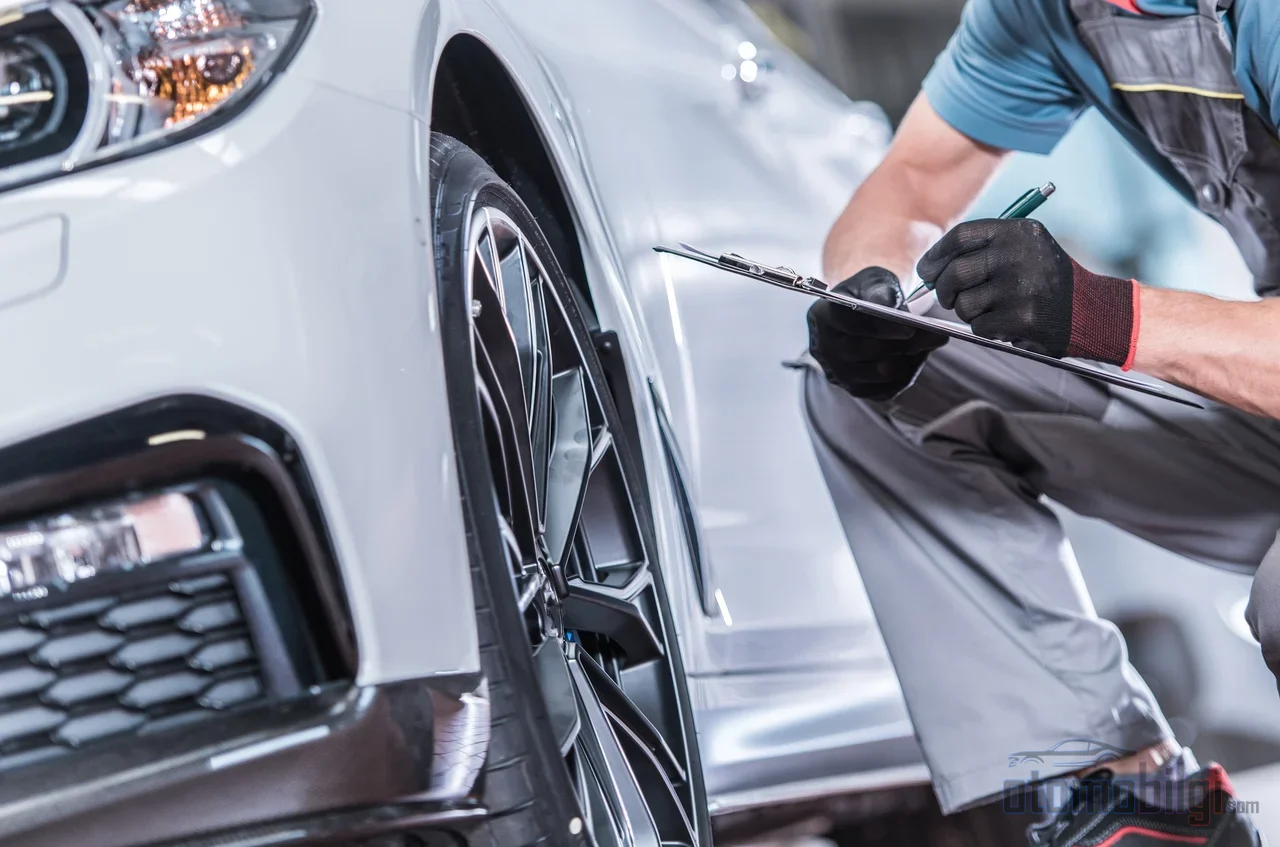
The technical basis of paint detection is the paint micron gauge. The device measures paint thickness on each panel and compares it with factory data; factory paint is more resistant to corrosion, i.e. rust, than paint applied later. That's why original paint is a genuine advantage on the used car market. Body measurement alone isn't enough: weld, putty or filler marks are looked for at the chassis ends and roof pillars. Work in these areas is the most critical indicator of whether the vehicle has suffered heavy damage.
Reading a full report follows this same logic: first identification details, then body-paint, followed by structural damage, engine-transmission and the mechanical section. A good report also includes an OBD, i.e. brain test; airbag, ABS and ESP fault codes are read at this stage. Brake and suspension tests complete the report. The inspection is usually completed the same day; comprehensive packages may take a bit longer. As of 2026, expert inspection package prices range between an average of 1,500-8,000 TL. One thing to note: some packages do not include total loss, heavy damage and accident queries. When choosing a package, ask about coverage as much as price.
Which Finding Is a Bargaining Point, Which Is a Safety Risk?
Not every finding in the report carries the same weight. It helps to think of them in two separate columns: one concerns your wallet, the other your personal safety.
| Finding | Price and bargaining impact | Safety assessment |
|---|---|---|
| Local paint | Very limited; small touch-ups are usually considered negligible | Poses no risk |
| Repainted part | Varies depending on the reason for painting; creates room for bargaining | Not a risk on its own |
| Replaced part | Noticeably more of a bargaining point than a repainted one | Depends on which part it is |
| Salvaged part | Reduces value | Not recommended for critical parts such as brakes, suspension and airbags |
| Chassis/pillar work | Seriously reduces value | Sign of heavy damage; serious risk |
There has long been debate around local paintwork. One view holds that local paint has a limited effect on price and presents the buyer with an honest repair history. On the other hand, there are court rulings awarding buyers compensation for loss of value on vehicles with paintwork; that is, from a legal standpoint, painting can also carry a price. Part replacement gives rise to a loss-of-value claim, and which part was replaced determines not whether the claim exists but the amount to be calculated. There is also an interesting dynamic on the market side: when purchasing power falls, vehicles with replaced parts and paintwork become suitable for price drops. So these findings do not mean a defect under all circumstances; with the right price and the right part, they are a reasonable point of compromise.
Where is a salvaged part reasonable, and where is it dangerous?
Second-hand parts are considered a reasonable option for non-safety-critical components and on a limited budget. Using second-hand body panels is largely an economic choice. However, safety equipment with an unclear history, such as brake discs and pads, suspension components, and airbags, is an entirely different category: with suspension parts there is a fatigue risk, and with airbags there is no way of knowing whether they will deploy. Let us also note the legal side: a vehicle cannot be repaired with second-hand parts without the consent of the policyholder or the victim, and the implementation of the regulation allowing second-hand parts under mandatory traffic insurance has been suspended.
An extreme example demonstrating the scale of the risk has also been recorded: an expert inspection revealed that an apparently trouble-free vehicle had been assembled from parts of 11 different vehicles and that its safety systems had been manipulated. Another detail requiring maximum attention is this: even brand-new vehicles can have replaced parts. That is why a holistic examination of connection points and structural details is essential.
What Should You Do If the Report Conflicts with the Tramer Record?
Always check the expert inspection report and the damage record together. Official channels are sufficient for querying the damage record: SMS 5664 A significant change occurred in the industry this year. SEDDK's Circular No. 2026/11 tied insurance expert reports in motor vehicle insurance to standard templates, and the circular
So what if the two records do not match? If the report says clean but the record shows an accident history, ask the seller for an explanation of this discrepancy; a comprehensive inspection usually clarifies the source of the discrepancy in the structural damage section. An expert inspection report is not the same document as a depreciation appraisal report; the scopes of the two should not be confused. The basic rule is this: no report on its own gives you the authority to buy with your eyes closed. Carry out Tramer, paint, mileage, registration encumbrance, and pre-notary checks together. One more practical warning: an inspection is not performed on a vehicle without its registration document, or is halted midway; never approach a vehicle whose registration document you have not seen.
Are Report Formats Becoming Standardized? The New Situation in 2026
This year, a significant change took place in the industry. The SEDDK Circular No. 2026/11 tied insurance adjuster reports in motor vehicle insurance to standard templates, and the circular entered into force on July 1, 2026. A new template was also defined for comprehensive insurance inspection reports. With standardization, moving reports to digital is on the agenda; good inspections are expected to be clearly distinguished from poor ones. entered into force on July 1, 2026. A new template was also defined for comprehensive insurance inspection reports. With standardization, moving reports to digital is on the agenda; good inspections are expected to be clearly distinguished from poor ones.
That said, the report formats of independent vehicle inspection companies are not yet standardized; the abbreviation sets of Bosch, Pilot Garage, and local chains vary from company to company. In an environment where the same letter can mean different things in two different reports, the safest habit is to check the report's abbreviation table before reading it. Let us also note that an insurance adjuster's report and an independent inspection report are different documents: the former is prepared for the damage claim file, the latter informs the buyer.
Pre-Purchase Report Reading Checklist
For those who have been in this business for over twenty years, the order they follow before reading the report has not changed. To summarize:
- Inspect the vehicle in daylight; paint differences are hard to detect in an enclosed space.
- Do not trust the report without verifying the identity information and the vehicle registration certificate.
- Read the bodywork and paint section together with the abbreviation table.
- In the structural damage section, focus on the chassis ends and roof pillars.
- Check the package scope: does it include total loss, severe damage, and accident queries?
- Independently verify the damage record via SMS 5664, e-Devlet, or SBM.
- If the report contradicts the record, ask the seller for a written explanation.
An honest seller usually reports the problems themselves and may expect a price reduction; this works in your favor at the negotiation table. A report is not a guarantee of a bargain; it is a set of information. When read correctly, it both protects you from unnecessary risks and saves you from unnecessary payments - the summary of this business is actually that simple.
Sources
- SEDDK Circular No. 2026/11 - Insurance Adjuster Reports
- Traffic and Comprehensive Insurance Adjuster Report Query - e-Devlet
- What is Tramer? Vehicle Damage Record Query - Ak Sigorta
- Second-hand vehicle inspection report - Istanbul Chamber of Commerce
- Abbreviations in Vehicle Inspection Reports - Otorapor
- How to Read an Inspection Report? Painted, Locally Painted, Replaced Panels - Otokonfor
- What Is Local Paint? - Otokoç Blog
- What Is a Vehicle Exterior Inspection? - Autobond Türkiye
- What Is Checked in a Vehicle Inspection Report - Oto Ekspertiz Sultanbeyli
- How to Read an Inspection Report? - mobile.tr
- Why do paintwork and replaced parts lower the price on the used car market? - Milliyet
- Seemingly problem-free, actually dangerous - Bigpara/Hürriyet
- Part Replacement and Vehicle Value Loss - Handa Sayan Özgül (Attorney)
- Repairs With Used Parts Cannot Be Done Without Insurer Approval - Altınöz
- When Are Used Parts a Sensible Choice? - Konsey Özel Servis
- How Do Painted and Replaced Parts Affect the Price? - Vitcars
- Vehicle Inspection Prices 2026 - Pilot Garage
- Checklist for Buying a Used Car 2026 - Otomerkezi
- Comprehensive Insurance Inspection Report 2026 | New Template - Sigortaworld