How to Verify a Vehicle's Service and Maintenance History?

Share This Page
A vehicle's service and maintenance history is the complete set of records showing on which dates, at what mileage, and where the vehicle has previously been serviced; it is verified through authorized service centers using the chassis number, and at private service shops through invoices and the maintenance booklet. When buying a used vehicle, tracing this record is as important as - and in some respects even more important than - checking the damage record. Having been in this business for over thirty years, I can say this: in the past, the patched-up maintenance booklet from the seller's pocket was the only reference; now most of the process runs on digital records - but while this makes checking easier, it also makes negligence more visible.
Highlights
- Authorized service records are entered into a digital database; retroactive deletion is not possible.
- A damage inquiry does not show the maintenance history; the two records are not alternatives to each other.
- Most brands after the year 2000 keep records of all service operations.
- Odometer tampering is a crime under the Turkish Penal Code.
- Vehicles with unreliable service history carry a 15-30% value loss risk.
Is a Service Record the Same Thing as a Damage Record?
No, and this distinction must be clarified from the start. A damage record covers accidents and material damage that have been reported to the insurance company; in Türkiye, this inquiry is made through the Insurance Information and Monitoring Center. A service record, on the other hand, documents the vehicle's maintenance and repair history - periodic maintenance dates, engine oil and filter changes, brake system work, transmission oil and timing belt replacement, software updates, warranty-covered work, and recall campaigns - with date, mileage, and operation details.
The critical point is this: a vehicle that comes out clean in a damage inquiry may have undergone a costly engine or transmission repair; because such repairs are not always reported to the insurance company. A vehicle with no damage record is not the same as a vehicle that has been regularly maintained. The two records are not alternatives to each other, but complements.
How Are Authorized Service Records Checked?
The most reliable method is the brand's own digital service database. Operations performed at authorized service centers are entered into these systems, and retroactive deletion is not possible. A chassis number (VIN) is usually required for the inquiry; the vehicle owner's approval is requested and identity verification is performed. Contacting the authorized service with the license plate or chassis number is also a common practice; with some brands, you may need to go to the service center with the vehicle registration certificate to obtain information. Most brands keep records of all operations after the year 2000; manufacturers like Ford also display past maintenance operations and the contents and prices of upcoming periodic maintenance through a customer account.
The reason the chassis number is a stronger reference than the license plate is simple: the plate can change hands and be changed, the VIN cannot. However, since the records contain personal and commercial data, there are access restrictions; the owner's approval is therefore not a formality, but a necessity.
What Steps Are Needed to Verify an Authorized Service?
- Find the vehicle's chassis number (VIN) from the registration certificate.
- Request written confirmation from the seller for the inquiry; their reluctance to share it is a red flag in itself.
- Contact the brand's authorized service with the VIN and request the complete maintenance history.
- Evaluate the records together with the test drive and inspection findings.
To protect consumers from problems caused by unauthorized services, the Ministry of Trade made the Service Information System (SERBIS) available as of July 1, 2020. The system can be accessed through the e-Government Gateway with identity verification and allows you to query the authorized service station information of the manufacturer or importer. It is a practical starting point for determining which services have handled your vehicle's brand as authorized operations.
Can Maintenance History Be Viewed Through e-Government?
No, it cannot; this is a common misconception. e-Government does not show authorized service maintenance details. However, it is not empty either: the mileage information in TUV TURK inspection records and the vehicle ownership history can be queried, and the inspection record query is free. While this data alone is not sufficient, when compared with service records, it provides strong clues about mileage consistency and maintenance intervals.
For example, if a vehicle that was recorded at 110,000 km at the inspection station three years ago shows 80,000 km on the odometer today, the discussion is closed: reducing mileage is a crime under the Turkish Penal Code, and this inconsistency alone can be reason enough to stay away from the vehicle.
What Is Checked on a Vehicle Serviced at an Independent Garage?
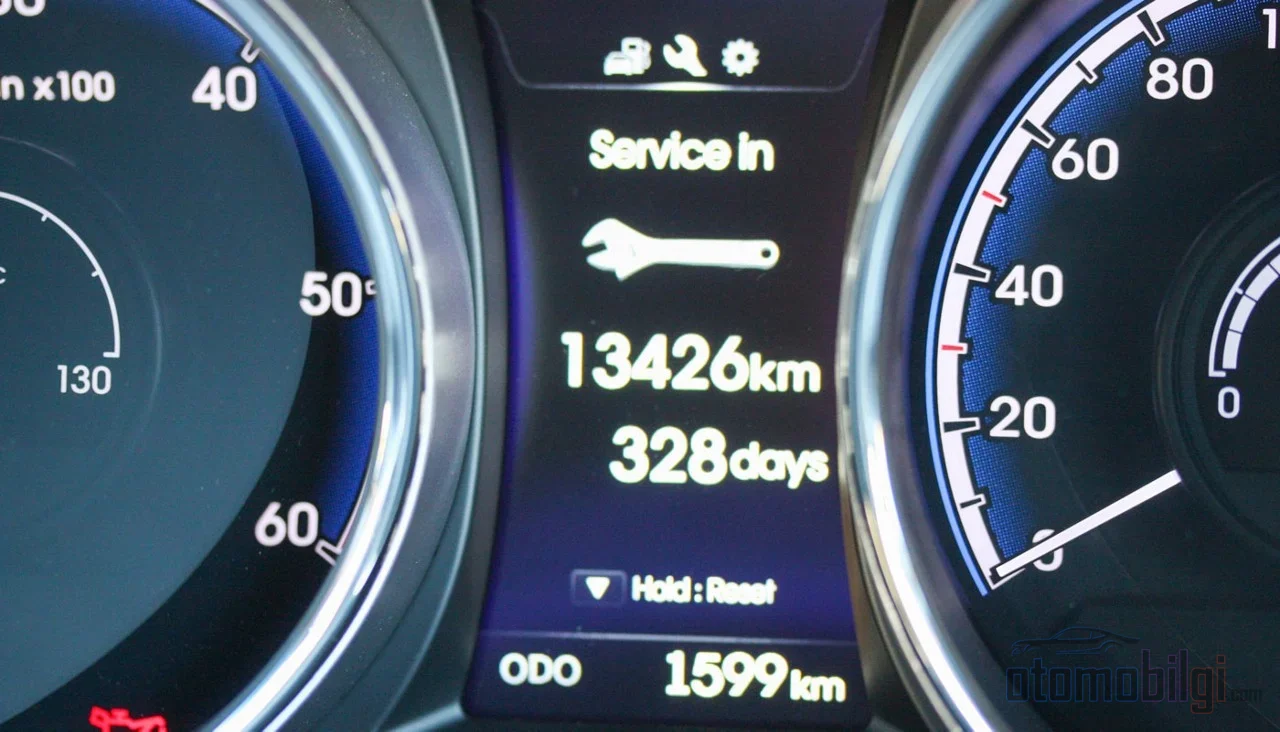
Here the matter shifts from digital database to paper. At independent garages, records are usually kept through invoices, work orders, service forms, and part replacement documents. Request these documents from the seller; follow the date and mileage sequence of the stamps in the maintenance booklet. Maintenance work without invoices is open to risk - if there is no documentation for a job, that job is considered not done.
Whether vehicles serviced at independent garages lose resale value is a debated topic. What is certain is this: independent garage maintenance done at correct intervals with proper invoices is many times better than having no maintenance records at all. Whether maintenance performed at TSE-certified independent garages voids the warranty remains a subject of legal debate; if the vehicle's warranty period is still ongoing, I recommend clarifying this issue with the seller and the brand's authorized service.
How Is Mileage Consistency Verified?
One of the most valuable aspects of maintenance records is that they allow cross-checking the mileage over time. The mileage in records from different dates is expected to increase logically over time. If a vehicle serviced at 80,000 km in 2021 shows 65,000 km in a 2023 record, that is an inconsistency that needs explaining - a decrease in the opposite direction should be the first thing that raises a red flag.
Let us also say this: a vehicle whose odometer reads 120,000 km while its last service record shows 70,000 km does not, by itself, mean the vehicle is problematic. Where and how the intervening period was spent should be investigated; perhaps the vehicle went to an independent shop during that period. The following steps are followed for verification:
- The date-mileage consistency in the records is reviewed.
- TÜVTÜRK inspection mileage figures are compared with service records.
- Whether maintenance intervals comply with manufacturer recommendations is checked.
- An ECU mileage check is requested during the appraisal.
| Checkpoint | What It Shows | Where to Access It |
|---|---|---|
| Authorized service records | Maintenance and repair history, recalls | Brand service center, using the VIN |
| Inspection mileage figures | Mileage consistency | e-Devlet / TÜVTÜRK |
| Damage record | Accidents reported to the insurance company | SBM inquiry |
| Invoices and work orders | Documentation of independent shop maintenance | Requested from the seller |
| Appraisal ECU check | Current mechanical condition, mileage verification | Professional appraisal |
What Does the Maintenance Pattern Say About the Vehicle's Usage Habits?
Service records are a document that speaks more the more carefully you read them. If the vehicle has been taken to service multiple times for the same fault, the problem may be chronic; when you see repeated engine, turbo, transmission, cooling, or electronics work, always verify the current technical condition with an appraisal. A one-time transmission oil change is normal; a transmission procedure coming up three times in two years tells a story.
Whether maintenance intervals comply with manufacturer recommendations is also a distinguishing factor. For most vehicles, periodic maintenance at 10,000 km or once a year; manufacturer recommendations are found in the owner's manual. Long gaps in the past are not necessarily negative on their own - the vehicle may have been parked in a garage for several months - but if the documentation for that period cannot be verified, it is wise to broaden the scope of the appraisal. A seller's willingness to share service records is a positive behavioral signal; resistance deserves questioning.
What Costs Can Skipped Maintenance Lead To?
The bill for neglected periodic maintenance always arrives with a delay. A delayed engine oil change can lead to serious mechanical failures; dirty filters and poor oil quality cause the engine to expend more power, and therefore increase fuel consumption. The nature of this business is this: small problems grow and turn into big expenses. Regular maintenance extends engine life, protects transmission health, and reduces the risk of major failures.
Let us add the value aspect: vehicles with service records sell faster, find buyers at higher prices, and build trust in buyers. It is stated that the depreciation risk in vehicles with unreliable service histories is at the 15-30% level; since this figure comes from a single checklist, it should be read cautiously, but in terms of direction it is not misleading.
Does Service History Replace an Appraisal?
It does not pass, and it should not pass. Service records evaluate a car's history, while an inspection assesses its current condition. Even with a car that comes with an informed set of records, no decision should be made without a compression test, a transmission check, and an internal engine leak test; whatever the car has been through in the six months after the last service record, the record will not tell you. A car without service records is not automatically eliminated either: if there is a price advantage, the risk-price balance is analyzed through a professional inspection, and in the end an undocumented car is often a bargaining chip - whether the risk is worth taking is your calculation.
The practical sequence that ties all this together is as follows: learn the chassis number; ask the seller for maintenance invoices, work orders, and digital service records; query the history from the authorized service center with the owner's consent; compare inspection mileage through e-Devlet; check the damage record via SBM and have a professional inspection done. These six steps, as far as I can say with thirty years of experience in this business, correct the most common mistake made with used cars - looking not at what is visible but failing to look at documentation.
Sources
- How to Check a Vehicle's Service Record? Does It Matter in Second-Hand Sales?
- Service Information System (SERBİS)
- Service Information System (SERBİS) - e-Government Gateway
- How to Check a Vehicle's Service History?
- What Is Periodic Maintenance?
- My Ford Account
- Can I Find Out Where and When the Vehicle's Maintenance Was Done?
- Vehicle Mileage Check Methods
- Second-Hand Car Buying Checklist 2026
- Does Independent Service Maintenance Void the Warranty?
- Does Maintenance at an Independent Service Reduce Second-Hand Value?
- What Is Vehicle Periodic Maintenance?
- Basic Vehicle Maintenance and Checks for New Drivers