From Tramer Query to Mileage Inconsistency: Reading the Damage Record

Share This Page
A Tramer inquiry is a system that shows a vehicle's damage history as reported to insurance companies through a central record, while a mileage query reveals the vehicle's mileage trail through inspections and official channels. When buying a used vehicle, your safety, your wallet, and your negotiating power depend on correctly reading these two queries together.
Highlights
- Tramer records are not deleted; they remain in the system for life along with the vehicle.
- The damage summary via e-Government is free of charge, while SMS and web detailed reports are paid.
- Even if the license plate changes, the record is matched via the chassis number.
- Mileage inconsistency is caught most clearly by comparing consecutive inspection records. is caught by comparing them.
If you have spent long years in this business, the most important thing you learn is this: in buying a vehicle, what really matters is not how it looks today, but whether its history is honestly told. This inquiry work, which once only knowledgeable people dealt with, can today be done in a few minutes. But getting the report and reading the report are different things. Below, I will first explain the inquiry step by step, then the report line by line, and finally what to do when a mileage inconsistency is caught.
How to Perform a Tramer Inquiry? Three Methods Step by Step
Tramer, today operating under the umbrella of the Insurance Information and Monitoring Center, is an archive that gathers the damage data of all insurance companies in Türkiye in a single center. There are three common ways to inquire; each has a different depth and cost.
- e-Government: The "Traffic Policy and Damage Information Inquiry" service via turkiye.gov.tr. It is free of charge, queried by license plate, and provides summary information such as the number of damages and the total amount. Logging in requires a Turkish ID number and password, mobile signature, e-signature, or internet banking.
- SMS (5664): A message is sent in the format "DAMAGE space PLATE". Even if the plate has changed, the system matches via the chassis number; nevertheless, for the most reliable result, the query should be made with the chassis number. For replaced part information in accidents with an expert report, the format "PART space Plate space Damage Date (dd/mm/yyyy)" is used. These messages are paid; it is worth confirming the current fee from an official source before sending, since the figures can change.
- TRAMER360 web report: The insurance center's own report; it combines general damage, comprehensive insurance, and ownership status in a single report. It is a paid service and is completed in 4 steps: information entry, query type selection, SMS verification, and invoice and contract approval.
Let me say one warning upfront: querying by plate gives you a limited summary. Detailed data such as dates, damage types, replaced parts, and expert references require additional verification because they carry personal and financial information. It is perfectly normal to ask the owner of the vehicle you are going to buy for this approval; a seller who refuses is already an answer in itself.
Reading the Damage Record Report Line by Line
When the report is in your hands, four headings need to be examined together; none of them alone tells the whole story.
Replaced parts and repair type
Hood, fender, door, bumper... The critical distinction among these is whether the replaced part is attached to the chassis. There is a significant value difference between a replaced door and a painted fender; intervention in the load-bearing structure, however, is a safety matter. The type of repair speaks just as loudly: local paint, part repair, full replacement, complete overhaul. Two vehicles that appear identical in damage total may have been damaged at completely different levels. Airbag deployment or chassis straightening are the heaviest intervention signs you can see in the report.
Damage amount and time distribution
The amount may include labor, parts, paint, mechanical intervention, towing, and appraiser expenses. A one-time high amount points to a serious accident; low but frequently recurring damages, on the other hand, constitute a cumulative risk over time. That is why you should look not only at the size of the figure but also at the time distribution of the records. Damages occurring back to back within the same year are a silent statement that the vehicle was used recklessly. There is a common scale that compares the damage amount to the vehicle's market value: below fifteen percent of market value is minor, between fifteen and thirty percent is moderate, and above that counts as heavy damage. Let me add this: these thresholds are not an official criterion but a practical classification circulating in the industry. Moreover, some records that look heavy arise from a tiny damage being written off as a total loss to collect insurance money; the size of a record is not always proportional to the actual damage.
What the Damage Record Cannot See
In the past, saying "I checked the damage record, it's clean" was considered sufficient; now it is not enough. Every damage repaired outside of insurance is invisible in this system - a bumper replacement paid for at a garage leaves no trace in the records. That is why the damage record result must always be read together with an independent inspection report. The inspection process usually takes between 30 minutes and 1.5 hours and largely reveals odometer tampering. In sales done at a notary, an inspection report is not mandatory; meaning the channel through which you buy the vehicle can shift the burden of checking onto you. Also, not all fields of the report are filled in for every damage record; an empty line does not mean a harmless history.
Mileage Query: One Query Is Not Enough
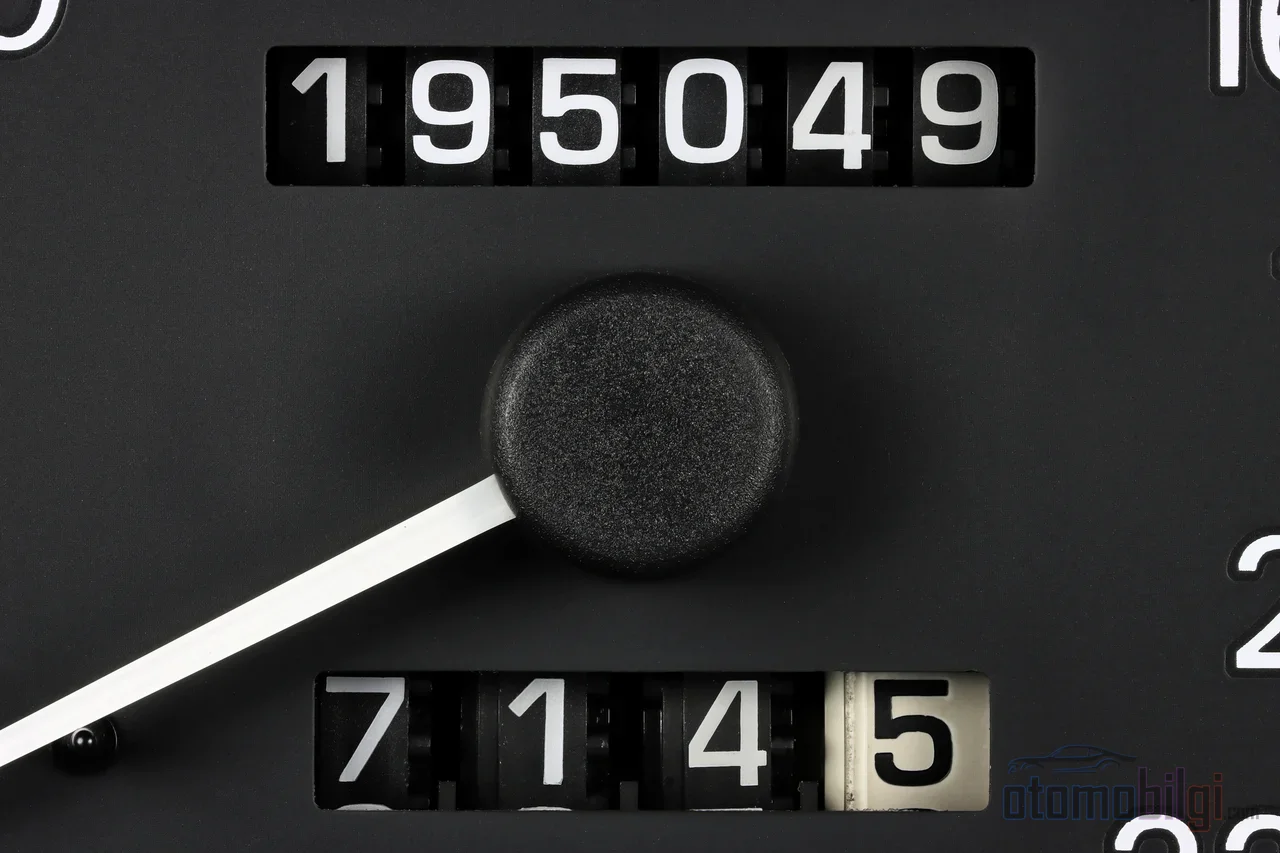
Mileage inquiry is a separate task from the damage record query. Using the license plate or chassis, queries can be made through TÜVTÜRK inspection records, PTT branches, PttBank internet banking, and e-Devlet. PTT's Aracım360 platform shows past mileage records and changes; TÜVTÜRK inspection records are considered one of the most reliable data sources in this field.
The real issue is this: a single mileage figure tells you nothing. A gauge reading seventy thousand kilometers may belong to a vehicle that read one hundred thirty thousand kilometers at an inspection four years ago. What catches the inconsistency is the sequence of consecutive inspection mileage readings. In a real vehicle, the mileage increases with every inspection; if a record shows a figure lower than the previous one, there is a rolled-back odometer involved. Let me remind you of a legendary case: while the odometer read 155,185 kilometers, an expert inspection revealed the vehicle's actual mileage was approximately 260,000 kilometers higher. In other words, the figure you see with your own eyes is merely a screen display.
Therefore, a mileage check alone should not be considered sufficient. Alongside the expert inspection report, the odometer itself, the ECU and other electronic modules should also be checked; it is known that modules are tampered with to hide a reduced mileage. And evaluate the report's result together with the vehicle's overall condition - steering wheel, seats, pedals, mechanical wear. A car with 260,000 kilometers does not resemble one with 80,000 kilometers.
If an Inconsistency or Major Damage Is Detected: The Buyer's Options
First, the practical side: a mileage inconsistency or major damage record is your strongest card at the negotiating table. A vehicle with a major damage record can lose between 20% and 50% of its value compared to an undamaged equivalent. While some banks do not grant loans for damaged vehicles, some insurers refuse comprehensive coverage or demand high premiums. It is also worth knowing that a major damage record does not eliminate the depreciation claim.
On the legal side, the buyer has defective goods rights within the framework of sales contracts. If the vehicle carries a defect you were not aware of at the time of sale, your optional rights are as follows:
- Requesting a reduction in the sale price
- Rescinding the contract - returning the vehicle and getting the payment back
- Requesting compensation for your loss
Odometer rollback falls under the deliberate concealment of a hidden defect and legally works in the buyer's favor. The moment you learn of the defect, it is recommended to immediately contact both the seller and the inspection service; delay can lead to loss of rights. If a faulty inspection report is involved, the inspector's liability also comes into question. One note: there are reports that an inspection report is mandatory for vehicles under 8 years old or below a certain mileage; however, since I could not see the legislation text this claim is based on, do not use it as a legal basis without verifying it.
Frequently Asked Questions
Is the damage record query paid?
The summary query made via e-Devlet is free; the SMS query and the TRAMER360 detailed report are paid.
Is a damage record deleted or reset?
No. The record lives with the vehicle based on the archive logic of the insurance event; a repaired damage remains in the system as a completed transaction.
If the license plate has been changed, is the damage history visible?
Yes. Since the system matches via the chassis number, a plate change does not hide the records. Still, querying by chassis number is the most reliable way.
Should you buy a vehicle with a damage record?
It depends on the nature of the record. A bumper replacement is not the same as an airbag deployment. An expert inspection is essential; the record is also an argument for negotiating the right price.
Is a damage record the same thing as a major damage record?
Partially. Tramer shows records reflected to the insurance; a vehicle whose owner paid for repairs out of pocket may appear clean despite a damage history.
Final Word
In thirty years of shopping traffic I saw this clearly: the person who buys a good car is not the lucky one, but the one who asks the right questions. Get the damage inquiry via e-Government or SMS, read the report piece by piece, compare the mileage sequence with inspection records, and always let an independent appraisal have the final say. If this order changes or a step is skipped, the price that smiles at you today may not smile at you a few years later.
Sources
- Tramer Query - Insurance Information and Monitoring Center (SBM)
- Query via SMS - Insurance Information and Monitoring Center (SBM)
- Traffic Policy and Damage Information Query - e-Government
- How to Query Tramer Records? Step-by-Step Guide (2026) - Oto Sec
- Tramer and Damage Record Query by License Plate (2026 Guide) - Tenax
- How to Read a Tramer Record? - Otomerkezi.net
- How to Identify a Damaged Vehicle with No Tramer Record? - Dynobil
- How to Query Vehicle Mileage? - Oto Sec
- Vehicle Mileage Query | Aracim360 - PTT Avm
- Vehicle Mileage Query via PttBank Internet Banking Account - e-Government
- How to Identify a Vehicle with Reduced Mileage? - Otoshops
- How Long Is an Inspection Report Valid? - Pilot Garage
- Should You Buy a Vehicle with a Major Damage Record? - Bosch Car Service
- Defective Vehicle Sales Lawsuit - Arikan Law