At What Age Is a Car Economical? The Effect of Age on Cost

In the used-car market, the price tag doesn't tell the whole story. Two cars in the same segment; one is three years old, the other is ten. Their purchase prices differ, but the real difference emerges in the money that leaves your wallet every year after the keys change hands. There is no single answer to the question of what age of car is most economical; because age pushes every item of ownership cost in a different direction: it pulls the tax down, maintenance up, and comprehensive insurance first down and then back up. The purpose of this article is not to give you an age, but to enable you to build that equation yourself for your own vehicle.
Total Cost of Ownership: The Equation Beyond the Price Tag
In automotive terms, total cost of ownership, or TCO, is the sum of a vehicle's purchase price and all the operating expenses paid over the years. Most buyers look only at the sale price; yet in the long run, what matters is the vehicle with the lower total cost of ownership. If there is a ten-thousand-lira price difference between two vehicles and the more expensive one has lower annual expenses, that gap can reverse within a few years.
The items that go into the TCO calculation are numerous in themselves: financing costs, registration and transfer fees, periodic maintenance, breakdowns and repairs, the motor vehicle tax, traffic insurance, comprehensive insurance, vehicle inspection, winter tires, substitute vehicle and roadside assistance needs, preparation costs incurred when selling to a second owner, and the tax burden arising from the sale. In corporate accounting, these items are already tracked separately; the purchase price is recorded as a capital expenditure, while operating and maintenance costs are recorded as separate line items. If an individual user makes the same distinction, the effect of age on cost becomes clear to see.
Key Takeaways
- In the motor vehicle tax calculation, vehicle age is a direct variable; the tax decreases as age increases.
- The comprehensive insurance premium does not always fall with age; in very old vehicles, spare parts problems can push premiums back up.
- Among cars over 21 years old, the rate of comprehensive insurance coverage is only around 1%.
- For passenger cars, the first inspection is done after 3 years, and then every 2 years.
- The depreciation curve is steepest in the early years; going from new to used is a loss item in its own right.
The Age Factor in the Motor Vehicle Tax: A Tax That Decreases with Age
The Motor Vehicles Tax is the item in the Turkish context where the effect of age on cost is most clearly seen. Three basic variables are used to calculate the tax amount: vehicle type, vehicle age, and engine displacement. In the tax office's official calculation tools, age brackets are divided as 1-3 years, 4-6 years, 7-11 years, 12-15 years, and 16 years and over; in addition, a registration year distinction and a vehicle value threshold also come into play. In other words, two cars of the same model pay different taxes depending on their registration date, even if engine displacement and equipment are identical.
The practical result is simple: as the vehicle ages, the tax amount drops, and this decline provides a noticeable relief in the annual budget. The tax is paid in two installments per year and can be queried and paid via e-Devlet and the Digital Tax Office. In addition to the SCT exemption for disabled vehicle owners, there is also an exemption from the Motor Vehicles Tax. Knowing which bracket you fall into is the most reliable way to calculate the tax side of your purchase decision in advance; just enter your vehicle's type, age, and engine displacement into the official calculation tools.
Comprehensive Insurance and No-Claims Bonus: The Reality Behind the Age-Cheaper Premium Assumption
The perception that comprehensive insurance gets cheaper as a vehicle ages is widespread, but the industry itself says this effect is not linear. Since the likelihood of breakdown and the rate of wear increase as a vehicle gets older, insurance companies take a cautious approach to older vehicles; even if the market value drops, the premium does not automatically decrease every year. Moreover, in very old vehicles, premiums may rise again because spare parts become harder to find. In other words, the age curve for comprehensive insurance premiums may first show a decline and then rise again.
A second variable on the comprehensive insurance side is the policyholder's own policy history. The no-claims discount is applied not to the vehicle but to the history of the person who takes out the insurance, and in some cases it can be transferred to another vehicle. The discount, which begins after the first claim-free year, starts at a range of 10% to 30% depending on the insurance company and rises gradually in subsequent years; there are examples reaching the 40-50% band around the third year. However, if a claim is reported and the no-claims record is broken, the discount is either lost or a premium increase comes according to the level you are at. For a driver with many claim-free years, this discount in hand means a low net policy cost even with an older vehicle's high premium.
A quick but striking indicator of this is the take-up rate: while comprehensive insurance coverage stands at 26% across the general car fleet, it reaches 29% in the 11-15 year age group; it drops to 11% at 16-20 years, and to only 1% at 21 years and above. This picture shows that older vehicle owners withdraw from insurance in consideration of premiums and value, leaving ownership risk largely uninsured. Since traffic insurance is mandatory, collision liability is still covered; but damage to your own vehicle is left without any coverage.
Depreciation: The Steep Drop of the First Years
The least visible but most expensive item of ownership cost is depreciation. A brand-new vehicle enters into a loss in its own right the moment it acquires second-hand status, and this drop is steepest in the first years. As age progresses, the curve flattens; the value a seven- or eight-year-old vehicle will lose in the following year is far too small to compare with that of a three-year-old. This is why the answer to the question of economic age is sought in the band between zero and seven: let someone else absorb the steep drop and join the vehicle in the flattening zone.
Accident-related vehicle value loss is a separate item: the drop in the market value of a repaired vehicle can be claimed from the insurance when the conditions are met. The calculation takes into account the market value, model year, mileage, nature of the damage, replaced and repaired parts, and fault status; the coefficient can be applied between 2% and 25% depending on the extent of the damage. The claim period is 2 years from learning of the accident and the responsible party, and at most 10 years from the date of the accident.
In second-hand valuation, the weight of age and mileage also varies with age: in new vehicles (0-5 years old), mileage is more decisive, while in older vehicles, model age comes to the fore. Below 50,000 km is considered low, 50,000-150,000 km average, and above that high mileage. Most buyers prioritize low mileage over a newer model. The rule experience shows is right here: a well-maintained high-mileage vehicle is worth more than an abused young one.
Maintenance, Inspection, and the Repair Bill That Rises with Age
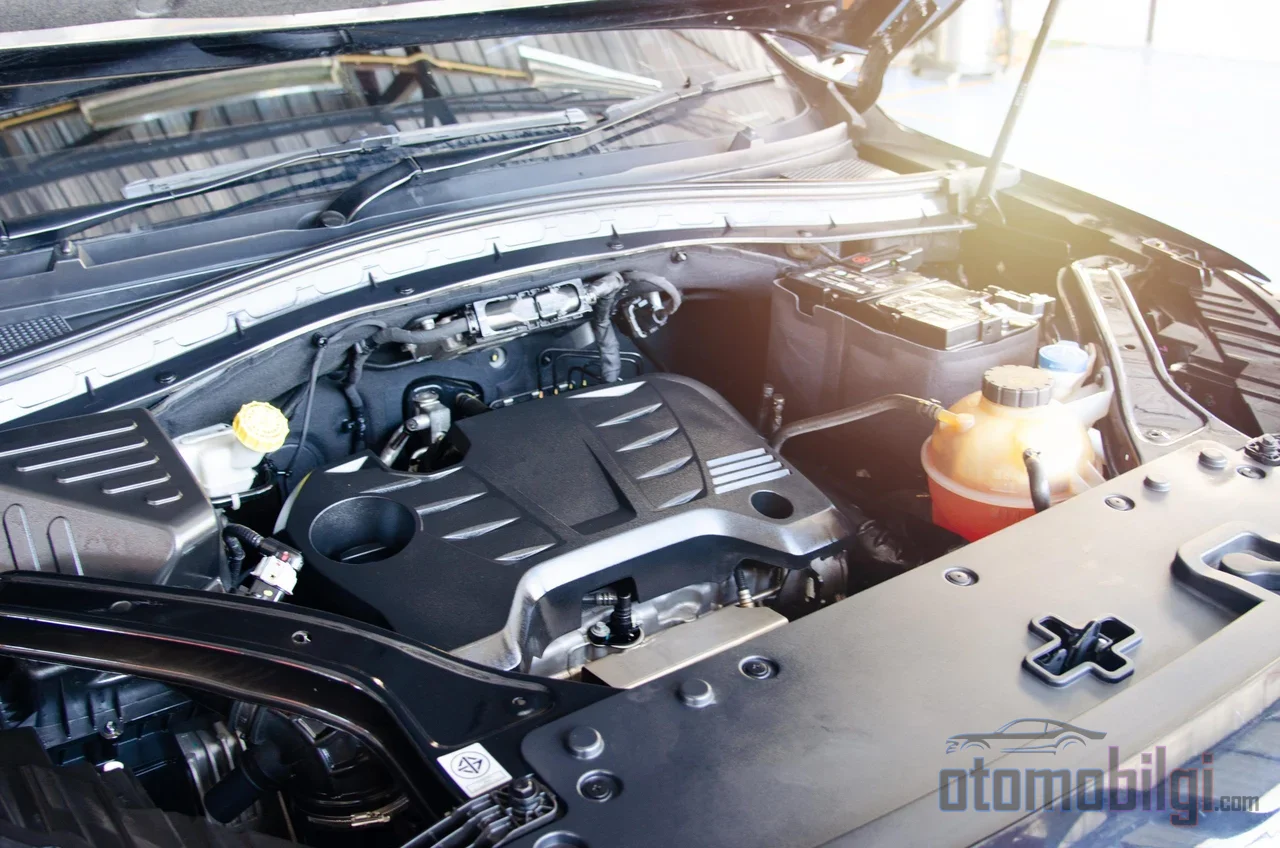
While taxes and premiums fall with age, the item moving in the opposite direction is maintenance and repair. As the warranty ends and parts wear out, the budget for worn parts and repairs swells. On a European scale, the budget for maintenance, wear parts, and repairs for a standard segment vehicle is projected at between 400 and 1,200 Euros per year; Turkiye, on the other hand, at roughly 28 Euros per month, is the country with the lowest maintenance and repair costs in Europe. This is an advantage that makes older vehicle ownership a bit more feasible in Turkiye than in other countries.
The method for calculating routine expenses is simple: add up maintenance, tire, brake, and repair expenses, then divide by the year and the annual mileage. For someone driving 15,000 km a year, the cost per kilometer compared with the previous year's kilometer cost is the most honest measure. When this ratio starts to rise, it means the vehicle is approaching the point of leaving its economic zone.
The inspection schedule also sets an age-dependent expense rhythm. For passenger cars, the first inspection is done after 3 years, after which the vehicle is inspected every 2 years. For load-carrying and commercial vehicles, the first inspection is after one year, followed by annual inspections. On the inspection side, a major change is also on the agenda for the coming period: vehicle inspection services will be taken over by a new organization across all 81 provinces as of August 15, 2027; AI-assisted checks and regulations affecting approximately 34 million vehicle owners are foreseen in the system. Even if the timing changes, since the expense item remains the same, it keeps its place in the ownership budget.
How Is Ownership Cost Calculated by Age Range?
There is no single formula that gives a definitive result; mandatory and variable items must be evaluated separately. Still, the character of each age range is clear, and the budget must be structured accordingly. The table below summarizes the prominent tendencies of the three bands:
| Item | 0-3 years | 4-7 years | 8 years and over |
|---|---|---|---|
| Depreciation | The steepest drop is in this band | The curve flattens | Very low |
| Motor vehicle tax | Highest bracket | Drops | Lowest brackets |
| Comprehensive insurance premium | High | Gradually declines | May rise again with parts problems |
| Maintenance and repair | Predictable under warranty | Wear parts come into play | Breakdown risk rises |
| Inspection rhythm | First inspection at 3 years of age | Once every 2 years | Once every 2 years |
The calculation method can be summarized in three steps. First, add up the mandatory items: MTV (based on the official vehicle value for your age bracket), traffic insurance, inspection fee, and the inspection share falling in this band. Second, estimate the variable items: the average of your past years' maintenance, tire and brake expenses, and the expected comprehensive insurance premium as the net amount after your no-claims discount is deducted. Third, add in depreciation: the difference between the vehicle's current market value and its expected market value one year later is recorded in your ledger like an annual expense. The total of these three blocks describes the effect of age on cost more honestly than any price list.
A few reference points for a sense of scale: for a small or mid-segment gasoline vehicle, the combined total of fuel, maintenance, insurance and taxes exceeded 80 thousand TL annually in 2026; it is calculated that the annual expenses of an average vehicle exceed 3 times the minimum wage. These figures vary by region, segment and usage, but they are enough to show the seriousness of the budget.
So, At What Age Does a Car Become Economical?
Let us keep the promise we made at the beginning of this article. There is no single age; but when the curves of the items are combined, the most balanced zone for most uses is the 4-7 year band: the steepest depreciation has been paid by someone else, MTV has dropped to a lower bracket, the no-claims discount has accumulated, and maintenance has not yet turned into a breakdown economy. A brand-new vehicle is the most expensive ownership experience due to its depreciation curve; a vehicle over 8 years old becomes cheaper in taxes and purchase price, but shifts the maintenance and repair risk onto the buyer and is largely deprived of comprehensive insurance coverage.
This does not mean you should not buy a vehicle over 8 years old. An older vehicle with regular service records, honest mileage and consistent maintenance will tear your pocket less in the long run than a young but abused one. What matters is not the age itself, but where the age intersects with your cost curves. When you do the three-step calculation above with your own figures, the number on paper will already give you the most economical answer.
Sources
- Motor Vehicles Tax Calculation - GIB Digital Tax Office
- MTV Calculation - TURMOB
- Total Cost of Ownership Before Buying a Vehicle - Bay Filo
- Factors Determining Comprehensive Insurance Price - Sigortam.net
- Comprehensive Insurance No-Claims Discount - Ak Sigorta
- No-Claims Discount Steps - VDF Sigorta
- Vehicle Depreciation - Ak Sigorta
- Mileage or Age: Which Is More Effective in Vehicle Valuation? - Büyük Bay Cars
- Frequently Asked Questions - TÜVTÜRK
- New Era in Vehicle Inspection Services - Ministry of Transport and Infrastructure