Diesel or Petrol? A Comparison of Long-Term Ownership Costs

Share This Page
The correct answer to the diesel or petrol question lies not in the vehicle itself but in how you use it: the only thing that determines the fuel type is how many kilometers you drive per year and where you drive those kilometers. For a driver who stays under 18,000–20,000 km per year and drives mostly in the city, petrol is usually more economical; in long-distance, high-mileage use, on the other hand, diesel pays back the premium paid at purchase through fuel savings. This page does not give you a ready-made answer, but the calculation method that lets you work out your own answer.
Highlights
- Diesel versions are generally sold for 50,000–150,000 TL more than petrol ones
- A diesel engine in the same segment consumes 25–35% less fuel
- The annual maintenance cost of a diesel is around 30–40% higher than petrol
- The break-even point appears at roughly 18,000–20,000 km per year
- With more than 70% city driving, the diesel's particulate filter risk grows significantly
Total Cost of Ownership: Why Deciding Based on Fuel Prices Is Misleading
Let us repeat the most common warning from those who have long been in this business: a vehicle's true cost is not the figure you pay when leaving the dealership, but all the expenses it piles up until you dispose of it. This is called the total cost of ownership, and it consists of five main items: purchase price, fuel, tax, insurance and maintenance, and depreciation - the most overlooked of all. Each of these items must be read in total, not separately; because an engine that wins on fuel can swallow that gain in purchase price and maintenance.
There is also a method for a fair comparison: placing differently engined versions of the same model side by side. When you fix the brand, segment, and trim level, only the fuel type remains, and the comparison gains real meaning. Comparing two different brands, one diesel and one petrol, is the same as weighing an apple against a pear.
How Is Fuel Cost Calculated? The Method for Finding Your Own Threshold
Fortunately, the fuel side of the calculation is not complicated. Regardless of fuel type, the formula is the same: distance to be traveled times average consumption divided by one hundred, times the price per liter. To find your annual fuel budget, simply plug your own average consumption, your city's current pump price, and your actual annual mileage into this formula. Then, if you want to see the cost per kilometer, divide the total fuel expense by the kilometers you have driven.
What you really need to know is where the two engine types diverge in this formula. In the same segment, a diesel engine typically burns 25–35% less fuel. For example, while a petrol turbo engine consumes about 9.5 liters per 100 kilometers in real-world use, its diesel counterpart can make do with about 6.5 liters. Since diesel is somewhat more expensive per liter than petrol, the saving comes from the arithmetic of these two differences; but in high-mileage use, the difference becomes overwhelming. For a driver covering 20,000 km per year, diesel's fuel savings can reach around 10,000–12,000 TL annually. Pay attention to these figures: since pump prices constantly fluctuate with the season, the city, and tax regulations, we prefer to teach you a method so you can do the calculation yourself rather than provide price lists with a short shelf life on this page.
Are modern gasoline cars closing the gap?
Partially yes. Turbocharged modern gasoline engines can drop to as low as the 5.5–6.5 liter band on the highway at a constant speed; this shows that the gap with diesel is not as wide as it is in city driving. So a user who mostly drives on the highway but does not have very high mileage can find a fairly competitive picture with a gasoline car's highway consumption. In stop-and-go city traffic, however, gasoline consumption rises quickly, and diesel's advantage becomes clear here - but as we will see shortly, city use carries a different kind of risk for diesel through another door.
Maintenance and Extra Expenses: Diesel's Cost Is Not Just at the Time of Purchase
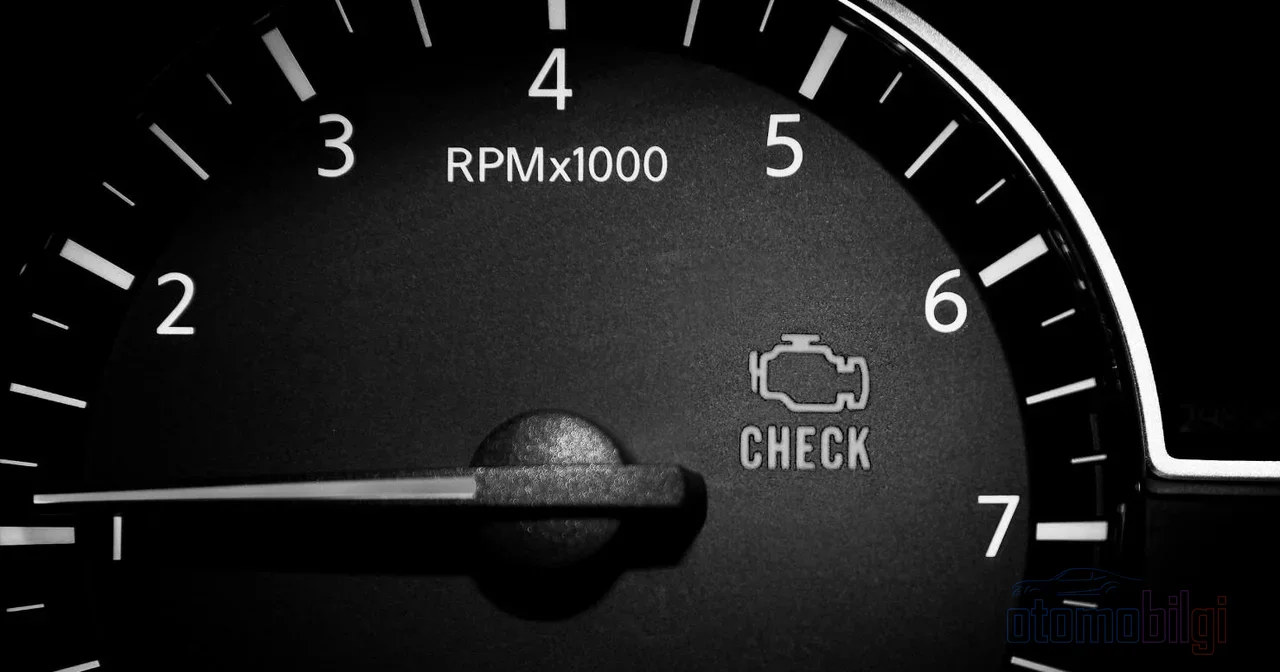
Facing diesel's fuel advantage, the difference in maintenance costs stands still. For the annual maintenance item, a range of 12,000–25,000 TL for diesel vehicles and 6,000–15,000 TL for gasoline cars offers a reasonable frame; in other words, diesel maintenance is roughly 30–40% more expensive. The source of this difference is no secret: modern diesels that came with Euro 6 standards were equipped with extra systems such as the particulate filter (DPF), EGR, and AdBlue, and each brings its own cost.
- AdBlue refills add about 1,000 TL per year.
- DPF cleaning is an expense of 3,000–5,000 TL every two years.
- Injectors are replaced at around 150,000–200,000 kilometers, and this single item can cost 15,000–30,000 TL.
It must also be added honestly: the maintenance difference is a debate that varies by terrain. The old saying "diesel is hard to maintain" was almost treated like an urban legend; if you look at the long-lasting components side, the picture is not that bleak - in some diesels, parts like the steel timing chain are replaced at much longer intervals than in gasoline cars, and periodic maintenance costs can be nearly equal up to 180,000 km. The real difference emerges in the big component items that come up at certain mileage thresholds. That is why you need to base your calculation not only on annual periodic maintenance, but on the total kilometers you will keep the vehicle.
MTV and Insurance Differences: How Much Does Engine Type Matter?
There are no surprises on the tax side in Türkiye: MTV is calculated based on engine displacement, not emissions. The tax advantages granted in Europe to hybrid and low-emission vehicles do not exist here; a gasoline and a hybrid car with the same engine displacement pay the same MTV. The real tax advantage is seen only in fully electric vehicles. It should also be taken into account that the MTV base changes according to vehicle value even within the same engine displacement; it is safest to confirm current amounts from GİB's official calculation tool. As a reminder: A 18.95% increase had been applied to 2026 MTV, so it makes sense to plan the tax item not as a fixed figure but as one that swells year over year.
On the insurance side, traffic insurance is barely affected by engine type; the real difference appears in comprehensive insurance (kasko). Since the kasko premium is calculated based on the vehicle's value, the diesel version, which sits higher on the price list, naturally pays a higher kasko premium. In a sample calculation, the annual total of kasko and traffic insurance for a vehicle worth about 3.5 million TL falls in the 45,000-55,000 TL range. Add this item to your calculation as another factor that widens the purchase price gap.
Resale Value and Depreciation: The Quietest Item in the Calculation
Depreciation is the largest yet least discussed part of the total cost of ownership. Recall the price difference at the time of purchase: diesel is usually sold 50,000-150,000 TL more expensive, and this gap narrows on the used market. So what remains in your hands on the day you sell the diesel? Honestly, it is hard to say the picture is clear here. On one side, there is the view that the post-2020 used diesel market has shrunk, that the rise of hybrid and electric is pressuring diesel's future value, and that diesel therefore loses value 5-10% faster; on the other, it is said there is still a large used-car audience seeking diesel specifically for long-distance driving, and that this protects diesel's value. Both views have a basis, and the outcome partly depends on the vehicle's class, mileage, and the region where you sell it. In Türkiye, where inflation runs high, it is also necessary to think in terms of real loss rather than nominal loss: even if the price you get three years later appears higher than the purchase price, what you want to calculate is your loss in terms of purchasing power.
Which One Makes Sense for Which Use? Finding the Break-Even Point
When we bring all these items together, the question boils down to a single figure: after how many kilometers does diesel begin to recoup its purchase price gap and its extra maintenance burden through fuel savings? In practice, this threshold is drawn at around 18,000-20,000 km per year. Below this level, gasoline is ahead in most scenarios; above it, diesel's annual saving of 8,000-12,000 TL begins to exceed the maintenance and insurance difference. The debate over where to draw the threshold is also legitimate: some users argue that what matters is not annual kilometers but the total kilometers over the vehicle's lifetime - an approach that is especially accurate for those not planning to part with the car for many years.
| Usage Profile | More Suitable Option | Why |
|---|---|---|
| Under 15,000 km per year, mostly urban | Gasoline | Diesel's gap never closes, DPF risk grows |
| Around 18-20 thousand km per year, mixed use | Uncertain zone | Break-even point; do the math with your own figures |
| Over 20,000 km per year, long-distance heavy | Diesel | Fuel savings can reach 10,000-12,000 TL per year |
| Over 70% city driving, stop-and-go traffic | Gasoline | Low speeds prevent the DPF burn-off cycle |
I would like to highlight the city driving warning separately, because this is the most common mistake. A diesel engine completes the regeneration cycle of its self-cleaning particulate filter at high exhaust temperatures. In low-speed, stop-and-go city traffic, this cycle is blocked, the filter clogs, and eventually an expensive repair comes knocking at the door. In other words, when a diesel falls into the wrong hands, it can give back its fuel savings in a single repair.
Calculate Your Own Ownership Cost in Five Steps
- Determine your real annual mileage; not an estimate - look at last year's fuel and insurance records.
- Note the purchase price difference between the two engine versions and how this difference is reflected in comprehensive insurance.
- Calculate the annual fuel cost of both scenarios using the fuel formula: (km x consumption ÷ 100) x fuel price per liter.
- Add the annual maintenance difference and, as an estimate, the major part items at the 150,000-200,000 km threshold.
- Consider the estimated depreciation at the end of your ownership period and add it to the total TCO.
When you fill in these five lines, your personalized answer sits right on the page. What should not be forgotten is that ready-made judgments such as "diesel is always more economical" or "diesel engines are more durable" no longer hold any ground; since the Euro 6 generation, diesel carries more complex emissions equipment than gasoline, and the engine type alone says nothing. The matter comes down to budget more than the vehicle: the right engine is not the cheap version of the wrong one, but the engine that matches your mileage.
Sources
- Should You Buy a Gasoline or Diesel Car? - Otomerkezi
- Gasoline, Diesel or Hybrid? 3-Year Cost - Araclo
- Diesel or Gasoline? - Otokoc Second Hand
- 2026 MTV prices - Sigortam.net
- MTV Calculation - GIB Digital Tax Office
- How Is Fuel Consumption Calculated? - Otokoc
- Petrol or Diesel for 20000 a Year? - Toyota Club TR