Is the Cost of Electric Car Ownership Lower Than Gasoline Cars?
Share This Page
The ownership cost of an electric car is generally lower than a gasoline car for drivers who can charge at home and drive a moderate number of kilometers per year; however, this advantage narrows significantly as fast charging usage increases and battery-related depreciation comes into play. In other words, there is no single answer to the question; the answer lies in your usage profile. On this page, we will go through fuel, maintenance, insurance, and depreciation items one by one and explain how to do the math yourself.
Highlights
- Per-km cost of an EV when charging at home 0.48 TL range, while for a gasoline car this figure hovers around 5.5 TL .
- When fast DC charging tariffs rise, the per-km cost of an EV can climb to 3-4 TL .
- In an EV, oil, spark plug, and exhaust maintenance disappear entirely.
- Home charging unit installation 20,000-40,000 TL requires an initial investment in this range.
- Battery condition directly determines the second-hand price.
Fuel or Electricity: Per-Kilometer Cost Comparison
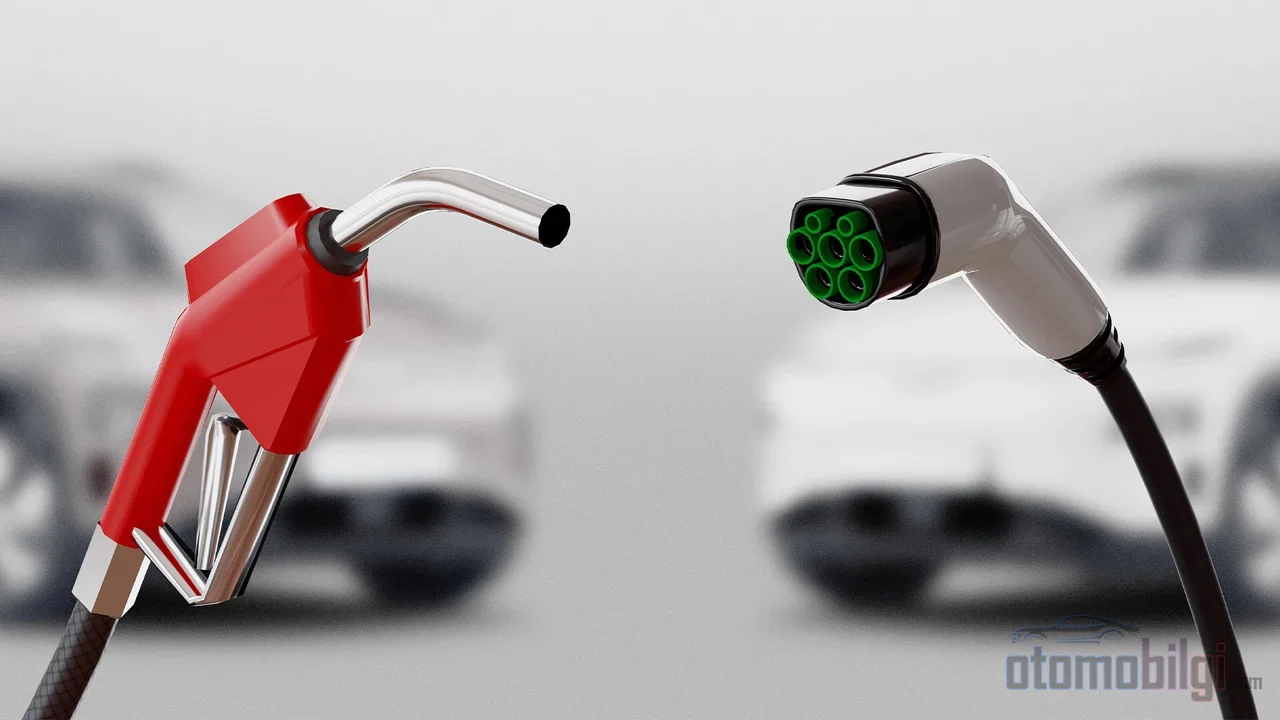
The biggest trump card in the ownership equation of an electric vehicle is, as everyone can guess, the energy cost. But it is not possible to state how advantageous this item is with a single figure; because where you charge changes the number fundamentally. In my thirty-year professional career, I have seen very few items tied to such a strict rule: if you charge at home, the EV wins; if you depend on public fast charging, the advantage erodes.
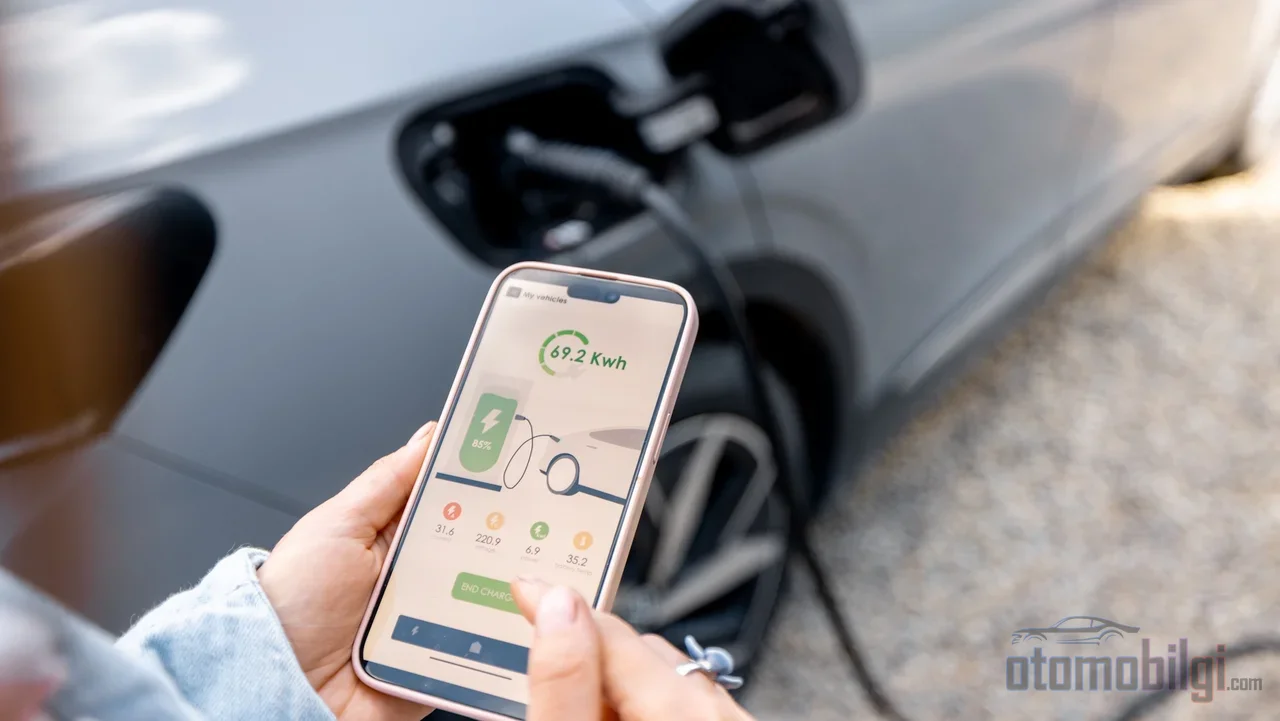
A user charging on a home tariff, with an average consumption of 17 kWh/100 km, can generate an energy cost of approximately 0.48 TL per kilometer. This calculation, using the unit price applied to consumption below 4,000 kWh, holds for most of the year for those charging from home. In detached houses with a solar energy system (GES), the charging cost approaches nearly zero; in this scenario, a gasoline car has no chance of catching up.
The public charging side is a completely different story. After the charging prices announced at the beginning of 2026, AC charging (22 kW and below) moved to 9.95 TL/kWh, DC charging up to 150 kW to 13.78 TL/kWh, and above that to 15.36 TL/kWh levels. The per-km cost of a driver using fast DC can reach the 3-4 TL band, and can exceed 4 TL in winter when efficiency drops and range falls to 300-350 km. In this scenario, parity with diesel is not out of the question. The sentence "EVs used to travel cheaply" was once true unconditionally; now a condition needs to be added to the end of the sentence: if you charge at home.
On the gasoline side, the picture is more predictable. With an average consumption of 8.7 liters/100 km, the cost is around 5.55 TL per kilometer. A comparative calculation based on April 2026 data shows 5.76 TL per km for gasoline, 4.42 TL for diesel, 2.56 TL for hybrid, and 1.20 TL for electric. It should be remembered that the last figure reflects a home-charging-weighted average.
| Charging/fuel scenario | Approximate per-km cost |
|---|---|
| Home charging (low tariff, 17 kWh/100 km) | 0.48 TL |
| Public AC charging (below 22 kW) | 9.95 TL/kWh tariff |
| DC fast charging (above 150 kW) | 3-4 TL band |
| Petrol (8.7 L/100 km) | 5.55 TL |
| Diesel | 4.42 TL |
| Hybrid | 2.56 TL |
Maintenance Costs: What Difference Does an Oil-Change-Free Car Make?
Here the electric car's advantage is undeniable. An electric motor has no such thing as oil changes, spark plug replacement, or exhaust maintenance. The engine oil and oil filter changes that come every 5,000-15,000 km in a petrol car disappear entirely in an electric one. Users who keep records of their annual maintenance expenses share examples of spending up to 16,000 TL per year on just oil and filter changes in a petrol vehicle. This figure varies from car to car, but it is a fact that this item simply does not exist in an electric car.
Regenerative braking also slows down brake pad wear; in city use, pad replacement intervals are noticeably extended. Still, not everything is rosy: shared items like brakes, tires, filters, and air conditioning also exist in electric cars. Moreover, because of the weight of their batteries, electric vehicles can wear out their tires faster than petrol cars; anyone who doesn't factor in a tire budget is mistaken.
The major risk looming in the shadow of the maintenance calculation is the battery. Battery replacement is an expense that varies considerably depending on the brand, model, and the battery's technical specifications, and it can often overshadow the entire maintenance savings in one stroke. Battery warranties of up to ten years reduce this risk somewhat, but failures outside the warranty coverage can reverse the cost picture. It is neither right to ignore this item entirely, nor to treat it as a threat hanging over our heads at all times; there is a heavy expense that builds up over years, but is severe when it occurs.
Insurance, Comprehensive Coverage, and Motor Vehicle Tax: Who Comes Out Ahead in Tax Items?
When it comes to insurance, the difference is not as sharp as most drivers think. Electric car comprehensive coverage includes all the protections found in internal combustion vehicles; on top of that, electric-specific risks such as a wall-mounted charging unit can also be covered. Considering that the main factors determining the comprehensive insurance premium are the vehicle's value and damage history, an electric car's comprehensive insurance is not significantly more expensive than a petrol car's at the premium level; however, authorized service and parts costs for body repairs can push premiums upward for some models. Here it is necessary to look at each car individually; generalizing would be wrong.
On the tax side, the picture is clearer. MTV payments for electric vehicles are far more advantageous than for gasoline ones; the structure calculated based on electric motor power instead of engine displacement gives low-powered electric vehicles a privileged position. As for the SCT (ÖTV), the legislation changes from time to time: a lower rate is mentioned for electric vehicles under 160 kW, while for vehicles above 160 kW the tax is calculated on a high base. Since SCT rates can change with regulations, we recommend verifying the current official legislation before purchase; the purpose of this page is not to give you a price anyway, but to teach you how to set up the calculation correctly. Still, let's add one certain fact: when buying a used electric vehicle, no new SCT is paid; SCT is collected only at first registration. This is a serious advantage for the used market.
Depreciation and Battery Perception: What Comes Out of Your Pocket on the Used Market?
The least talked about but most costly item in total cost of ownership is depreciation. Every vehicle loses a large portion of its value within 8-10 years; this applies to gasoline cars too. What makes it harder for electric vehicles is the uncertainty underlying the loss: battery condition directly determines the used price. Doubt about battery health can cause a price drop as severe as a major damage record. In other words, even battery perception, more than the battery itself, converts into money in the market.
That's why the battery health report comes first when buying a used electric vehicle. Since the difference between the purchase amount and the used value constitutes depreciation, the difference between a vehicle with a documented healthy battery and a questionable one can mean more money over the years than energy savings. It should also be added that long battery warranties build trust on the used market; when evaluating an electric vehicle whose warranty has expired, you need to factor in that this period has ended.
How to Do Your Own Calculation: Method and Example Scenarios
Instead of giving you a current price list, let's give you the framework of the calculation; because electricity tariffs, gasoline prices, and SCT legislation shift every year. The basic formula is simple: multiply your vehicle's consumption per 100 km by your tariff, add charging efficiency losses, and multiply by your annual mileage. For home AC charging, 8-12% and for DC charging 3-5% efficiency losses need to be accounted for; most people forget these losses and are surprised by the bill the following year.
Let's make it concrete. An electric vehicle user driving 20,000 km annually and charging from home spends between 8,000-12,000 TL per year on charging according to common estimates, while an equivalent gasoline car pays 35,000-45,000 TL for fuel. This difference exceeds 20,000 TL per year; by the end of five years, that's savings large enough to close the purchase price gap most electric vehicles have compared to gasoline ones. Calculators also show that with annual usage above 15,000 km, the price gap can be closed through fuel and maintenance savings.
Now for the other side of the coin. Someone without home charging has to meet their entire energy needs from public stations. While a vehicle consuming 225 kWh per month costs about 776 TL on a home tariff, the bill for a fast-charging user paying 13 TL/kWh rises to around 2,925 TL. In this scenario, fuel savings melt away, and maintenance savings alone cannot carry the decision. Let us not forget the initial investment either: installing a wall-mounted charging unit costs on average 20,000-40,000 TL within this range. Including this amount in the payback period is part of an honest calculation.
- If you drive more than 15,000 km a year and can charge at home: electric is clearly ahead in total cost.
- If you have no home charging and mostly use fast charging: the advantage narrows, diesel stays borderline; it is the scenario where gasoline can still be reasonable.
- If you take long trips on routes with limited charging infrastructure: gasoline retains its practicality for now.
- If you live in a detached house with solar power (GES): the EV's energy cost approaches zero, and the debate is closed.
The entire summary calculation is a function of three variables: annual mileage, home charging availability, and the consumption of the vehicle you own. If you know these three, you can work out your own cost per kilometer on a single sheet of paper using the tariffs and loss rates above. Ready-made calculation tools also make this job easier; when you enter your own consumption data, the result belongs to your conditions, not to averages.
Which Option Makes Sense for Which User?
Looking through the filter of my thirty years in the automotive field, here is how I summarize the picture: the electric vehicle is the car of those who can bring the cost home. If you have a garage or parking space, charge at night at the low tariff, and drive a reasonable distance annually, the difference in fuel and maintenance items turns the calculation in your favor. On the other hand, a user living in an apartment in the city center who gets energy from fast-charging stations must calculate with the reality that the "I travel very cheaply" era is now over. Battery risk also needs to be systematically added to the purchase decision; warranty period and battery health report are as decisive as fuel savings.
The final word is this: total cost of ownership is not a matter of perception, it is the sum of four items - energy, maintenance, insurance-tax, and depreciation. The first two favor the electric car, the fourth is catching up from behind, and the third is nearly break-even. Who should do the calculation? You do it most accurately, with your own mileage. The method on this page gives you enough of a framework to set up that calculation.
Sources
- Fuel Cost Comparison Between Electric Cars and Gasoline Cars - AVEC Rent a Car
- How Much Is Fuel (Electricity) Consumption in Electric Cars? - Bridgestone Türkiye
- Electric Car vs Gasoline and Diesel Fuel Comparison - e-soket
- fuel costs of electric cars vs diesel cars - Ekşi Sözlük
- Fuel cost comparison per km (April 6, 2026) - Instagram
- Electric Car Charging Cost - sigortam.net
- Electric Vehicle Cost of Ownership - 2026 Detailed Analysis - otomerkezi.net
- 2026 Electric Car Charging Cost Calculation - Bolt Energy Solutions
- Fuel Cost Calculation 2026 - furkanarici.com
- Is maintenance of electric cars even cheaper? - Kia Türkiye
- Maintenance Cost in Electric Cars - Otopratik
- Electric Car Maintenance - Bosch Car Service
- Electric Car Maintenance - Volkswagen Passenger Cars
- Maintenance Costs of Electric Cars - arabalar.com.tr
- Electric Car Comprehensive Insurance - AXA Sigorta
- Electric Car Insurance - İnci Sigorta
- Electric Car Motor Vehicle Tax Calculation and Tax Guide - Autoking
- Electric Car Motor Vehicle Tax and Special Consumption Tax Rates - BYD Türkiye
- How Is the Special Consumption Tax Determined for Electric Cars - Cetas
- Is There a Special Consumption Tax Discount for Electric Cars? - Sigortaladım
- Taxes on Electric Cars - Otokoç İkinci El
- Here is the state of electric cars in the second-hand market - Euronews Turkish
- Battery Condition in Electric Cars Also Determines Second-Hand Prices - Businessweek Türkiye
- Battery Replacement and Value Loss in Electric Cars - alperpinarbasi.com
- Electric Car Charging Cost: Home or Fast Charging - Acamar
- 2026 Electric Car Charging Station Prices - Atak Market
- Increase in Electricity Bill for a Home Charging Station - Elaris
- Electric Car or Gasoline? - e-aracsarj