Why Does the Same Vehicle Depreciate Less for Some Owners?
Share This Page
Two examples of the same make and model, even if they go on sale at the same age and in the same city, can fetch different prices on the used market. The reason is not mysterious: the market reads the traces in a car's history - its accident record, maintenance routine, mileage, and even its color - as signals of trust, and sets the price according to the sum of these signals. In this article, we take a conceptual look at the extent to which factors under the owner's control preserve value, and the logic behind used-car pricing.
Highlights
- Vehicles with a complete service history can sell for 10-25% higher prices than undocumented equivalents.
- With the Constitutional Court's annulment decision in 2022, mileage and age limits were removed; diminished value is now calculated based on the principle of actual loss.
- In diminished value, the location of the damage is decisive: a bolt-on headlight or bumper does not seriously affect value; chassis and structural damage seriously reduces it.
- According to international market research, color can affect used-car value after 3 years by more than $5,000 .
- Minor Tramer damages can have an estimated impact of 2-5%on value, while severe damages over 15% can create an effect.
What Is Diminished Value and Why Does the Market Punish It?
Let's first clarify the definition. Vehicle diminished value is the failure of a vehicle to reach its pre-accident market value even after being repaired following an accident. A repaired vehicle sells for a price below an accident-free equivalent of the same make, model, and mileage. The mechanism here is based more on psychology than economics: the moment a buyer sees damage in the Tramer record, they become cautious. As long as the accident remains on record, this caution does not fade and the price difference becomes inevitable. In severe cases, a damage record can lead not only to a vehicle selling cheap, but sometimes to it finding no buyer at all.
As someone who has been following this market for more than thirty years, I can say this with confidence: diminished value used to be seen merely as "an accident-damaged car selling for cheap"; today, it is a traceable data set that determines pricing. The Tramer record, service history, and inspection report are each signals; both buyer and seller read these signals.
Which Damage Reduces Value, and Which Doesn't?
The fundamental factor determining diminished value is where the damage is located - its position matters more than its magnitude. As a rule, bolt-on components do not enter the diminished value calculation on their own: headlights, wiper arms, wheels, tail lights, glass, and plastic bumpers fall into this group. In contrast, damage to the chassis, pillars, floor, roof, side skirts, and metal body panels, as well as paintwork that compromises originality, significantly increases the loss.
Repair quality is equally important. A repair done at an authorized service with original parts harms market perception less than a repair with aftermarket parts. Part replacement creates a greater loss than pulling and straightening; a full panel respray yields a higher rate than a local touch-up. In other words, the same accident can lead to very different outcomes with two different repair choices.
Service Record: The Owner's Strongest Card
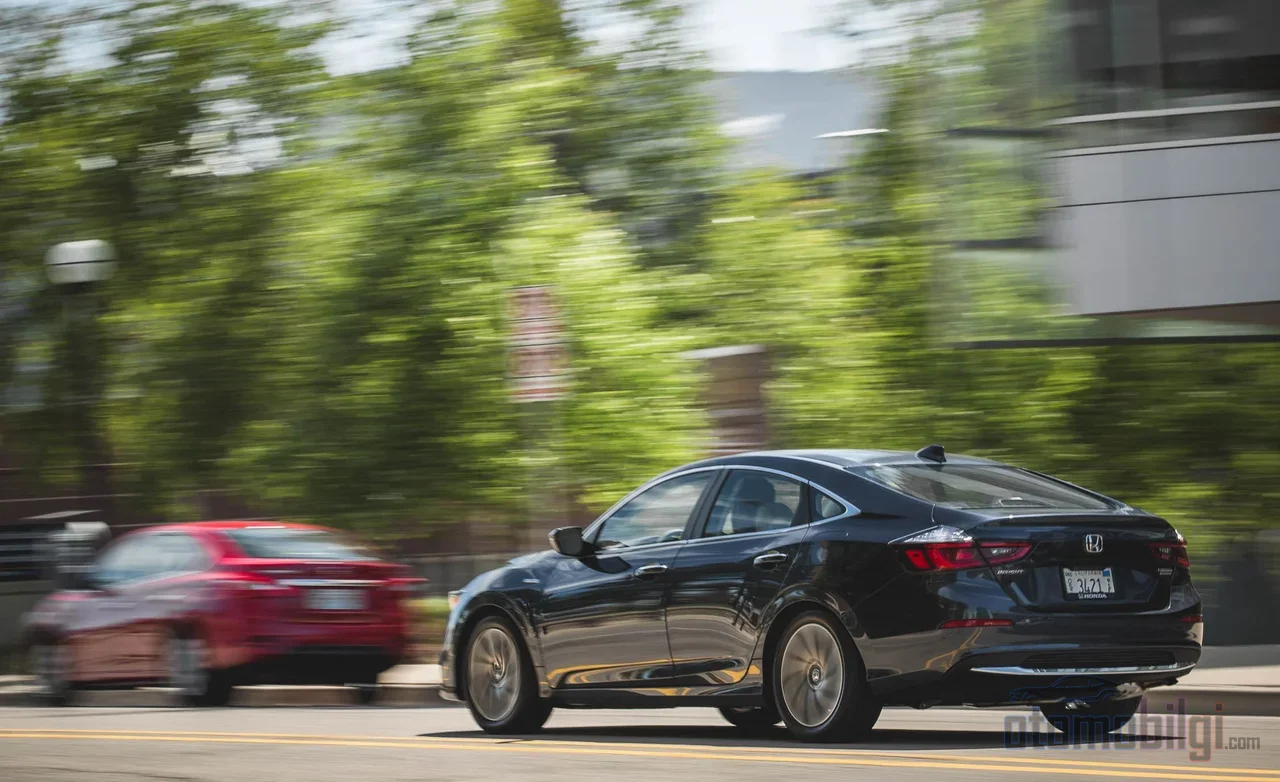
Preserving value starts with not having accidents, but continues with a maintenance routine. Vehicles that have been regularly maintained, have an accident-free history, and had consumables replaced on time receive a higher market value in expert appraisal reports. The same logic applies in the second-hand market: vehicles with a complete service history sell faster and can command 10-25% higher prices than undocumented equivalents. Documented periodic maintenance translates into tangible money because it eliminates the unknown in the buyer's eyes.
As someone who has been through the grind of this business, let me add this: keeping the service record book like a file is the lowest-cost, most predictable-return investment in today's second-hand market. In the past, a buyer would settle for the phrase "its mechanic was reliable"; now everyone demands records - and whoever has records outperforms those who don't at the bargaining table.
Is Mileage Alone a Sufficient Criterion?
Mileage is directly related to value; as usage increases, wear increases and the lifespan of mechanical parts shortens. However, it cannot be the sole criterion. An instructive example: a vehicle that has done 40,000 km but is poorly maintained may receive a lower value than one with higher mileage but regular maintenance. When the market reads mileage, it also looks for the maintenance story behind the mileage.
It is also necessary to pay attention to the vehicle's origin. In vehicles coming from fleet or commercial use, mileage affects the sale value far more seriously than in individual use; the buyer interprets the same figure through a different lens. Detection of odometer tampering is possible through inspection and record review; while its illegality is a separate matter, a discovered mileage trap makes the vehicle almost impossible to sell.
Color and Equipment: The Most Ambiguous Signals
Color is an overlooked but real price factor. According to a study on foreign markets, color can affect the second-hand value by more than 5,000 dollars after 3 years. The colors that lose the most value in passenger cars are ranked as gold, green, and brown. In Türkiye, the picture works differently: white, black, and gray are the fastest-selling colors, and these three colors account for approximately 70% of buyers . It should be noted that this data is based on foreign market research and may not directly apply to Türkiye; but its general principle is universal - a poorly selling color means a listing that waits longer and a wider room for negotiation.
The equipment issue, contrary to popular belief, is even more ambiguous. The assumption that a long equipment list "preserves value" is widespread; however, in an academic study on second-hand prices, no significant effect of additional equipment information on prices was found. In other words, a sunroof and leather upholstery may not pay off on the day you sell. Equipment makes the car appealing; but it is an even weaker signal than color in pricing.
How Does Second-Hand Pricing Work in Türkiye?
Second-hand prices are directly affected by new vehicle prices; price increases on new cars are reflected one-to-one on the used market. Within this framework, the signals under the owner's control determine the price position: the estimated impact of a Tramer (damage) record on value is 2-5%for minor damage, 5-12%for moderate damage, and above 15% for severe damage, and multiple minor damages can create a cumulative effect. Cosmetic condition, information on replaced parts, and engine condition are also counted among pricing factors.
Mispricing has two faces: a price above the market prolongs the selling time and reduces buyer confidence; a price below the market is a direct loss for the seller. In the 2026 outlook, it is predicted that not every vehicle will gain value at the same rate; fuel and maintenance costs are shaping consumer preferences, and low-consumption and hybrid models are coming to the fore. Among value retention examples, compact-class hatchbacks stand out for reasons of low fuel consumption, cheap parts, and a widespread service network.
| Factor | Impact on Value | Owner's Control |
|---|---|---|
| Chassis/structural damage record | Serious drop | Partial (driving and repair preference) |
| Bolt-on part damage (headlight, bumper, etc.) | As a rule, ineffective on its own | Repair quality |
| Service record discipline | Up to a 10-25% price difference | Entirely with the owner |
| Mileage | Direct, but read together with maintenance | Partial |
| Color | Varies by market | At the time of purchase |
| Additional equipment | No significant effect in academic findings | At the time of purchase |
If You Had an Accident: How Does the Diminished Value Claim Work Today?
The legal side of this framework changed at the end of 2022. With the Constitutional Court's annulment decision, the old restrictive formulas - the 165,000 km limit, the 12-year limit, the "no second diminished value claim for the same part" rule - lost their validity. Today, regardless of age or mileage, a claim is possible if the real market loss is proven, and the calculation is made according to the principle of actual loss.
The conditions for the claim are: the fault lying with the other party (or the victim being less at fault), the vehicle having been repaired, and it not being a total loss. The entirely at-fault party cannot claim. The path is also specific: an application must first be made to the other party's traffic insurance; 15 business days if no response is received within, it is considered an implied rejection and the Insurance Arbitration Commission can be applied to - arbitration applications are concluded on average in 4-6 months . The statute of limitations is 2 years from the date of learning, and in any case 10 years from the accident. Comprehensive (kasko) insurance does not cover diminished value with most insurers; the payment is made by the other party's traffic insurance against the faultless party. It should be known that insurance companies tend to pay less than the actual loss using their internal models; hence arises the necessity of relying on an independent expert or appraisal report.
How Should You Evaluate Your Own Vehicle's Value Retention Potential?
In this article, instead of giving current prices, we offer a framework; because prices change on paper, while signals are permanent. When evaluating your own vehicle, you can follow this order:
- Query your Tramer record and note the location of any damage, if present: is it bolted parts or structural components?
- Compile the documentation of your service history; if incomplete, have the authorized service records completed.
- Consider your mileage together with your usage profile: is it individually owned or commercially registered?
- Keep in mind the demand for your car's color in the Türkiye market.
- If the vehicle has been repaired, keep the documentation of the repair showing original parts and authorized service.
Ultimately, diminished value is not destiny. No one plans an accident; but how the record is formed, the quality of the repair, and what traces it leaves over the vehicle's lifetime are largely in the owner's hands. The market reads these honestly - and rewards those who keep regular documentation with a better price.
Sources
- Vehicle Diminished Value Lawsuit: Conditions, Documents and Compensation
- What Is Vehicle Diminished Value and How Is It Calculated? A Step-by-Step Guide
- Factors Affecting Used Car Prices in Türkiye (F. Dayı)
- How Is Vehicle Value Calculated? A Comprehensive Guide
- How Does Mileage Affect Vehicle Value?
- How Does Vehicle Mileage Affect Diminished Value Calculations?
- How to Check a Vehicle's Service Record? Does It Matter in Used Car Sales?
- Buying a Used Car Without a Service History
- Does Regular Maintenance Affect a Car's Resale Value?
- Car Colors That Lose the Most Value on the Used Market
- Which Car Color Sells Best on the Used Market?
- How Much Does an Accident Record Lower a Car's Value?
- Data-Driven Pricing in Used Car Sales
- What Will Used Car Prices Be in 2026?
- Guide to Cars That Hold Their Value Best in 2026 - Türkiye
- How Are Used Car Prices Determined?
- What Is Vehicle Depreciation and How Is It Calculated?
- Used Car Valuation Guide
- In a Vehicle Valuation Report, Is Mileage or Age More Influential?
- How to Detect Odometer Fraud in a Car?