How to Calculate a Car's True Cost Per Kilometer?
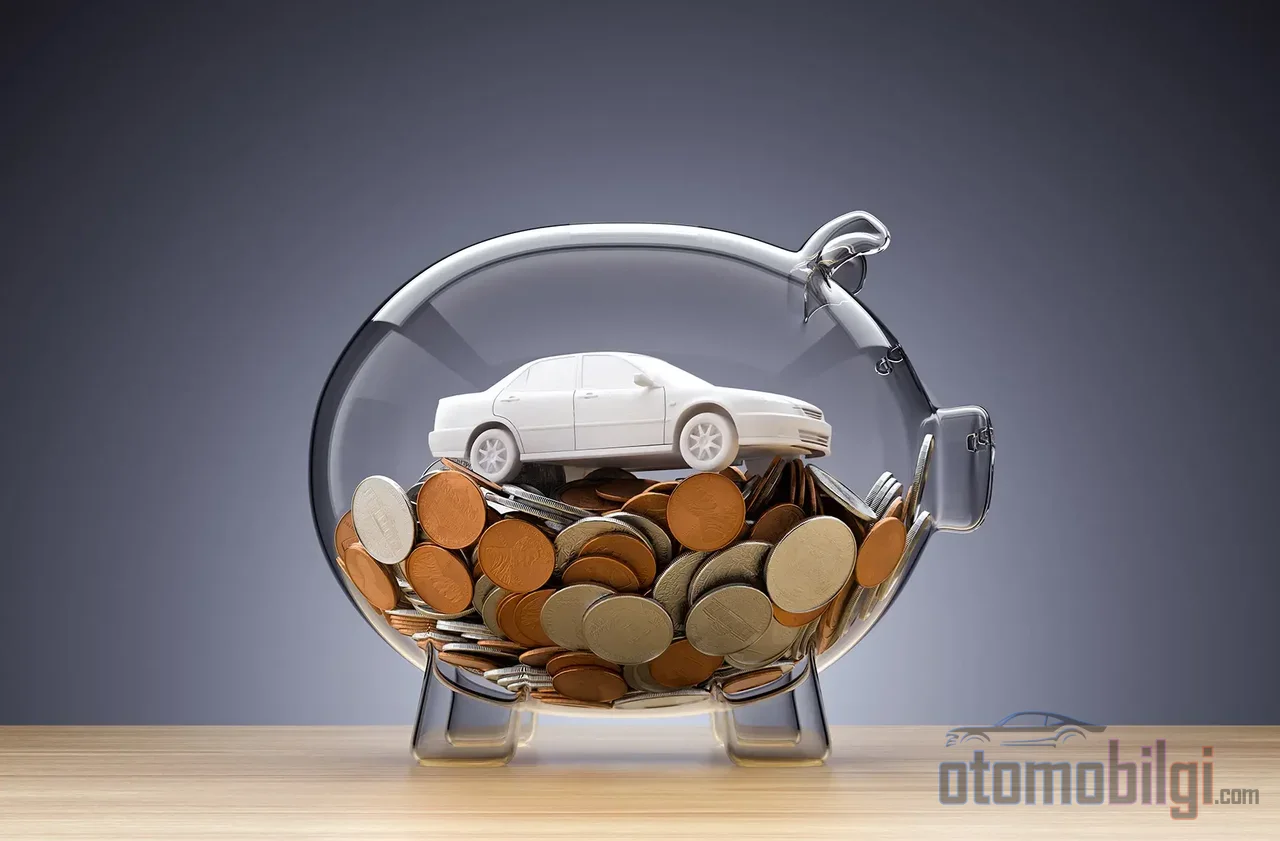
When a driver asks about the true cost of running a car, the answer usually starts with fuel prices: the tank costs this much, so many pennies per kilometer. Yet I have been following this business for more than thirty years, both in my own cars and at my editor's desk; fuel is only the visible part of the running cost. The real weight lies in the items that keep working even while the car sits in the garage: insurance, taxes, inspection and - the quietest but often the most expensive of all - depreciation. Calculating the cost per kilometer correctly requires gathering these four items in the same pool as fuel and maintenance, then dividing by the kilometers traveled. The aim of this page is to teach a calculation method that will remain valid for years, instead of the current-price reflex.
Why Does a Fuel-Only Calculation Mislead?
A driver who only adds up fuel expenses and divides by kilometers assumes the car's true cost is far lower than it really is. The reason is simple: fuel is just one of the variable expenses that increase with use. Fixed costs that must be paid even if the car never runs, and the vehicle value that erodes every year, are left out of the calculation. The result turns into a picture you never expected when selling day arrives and the ledger is opened.
The right approach is to see vehicle expenses separately in three groups:
- Fixed costs: Traffic insurance, comprehensive insurance, motor vehicle tax (MTV), inspection and similar items. They are paid even if the vehicle is not used.
- Variable costs: Fuel, periodic maintenance, tires, parking, highway tolls, washing. They increase as usage increases.
- Depreciation: The vehicle's annual loss of value. It does not take money out of your pocket every month, but it shows up as a bill at the time of sale.
Highlights
- Cost per kilometer = total cost of the period ÷ distance traveled in the same period.
- For an average driver, 70-75% of annual running costs come from fixed items.
- Use the same period as the basis: a maintenance or tire month appears exaggerated compared to the annual average.
- In low-mileage use, the fixed costs' share per kilometer grows heavier; using the car less does not always make it cheaper.
How Is the Cost-per-Kilometer Formula Built?
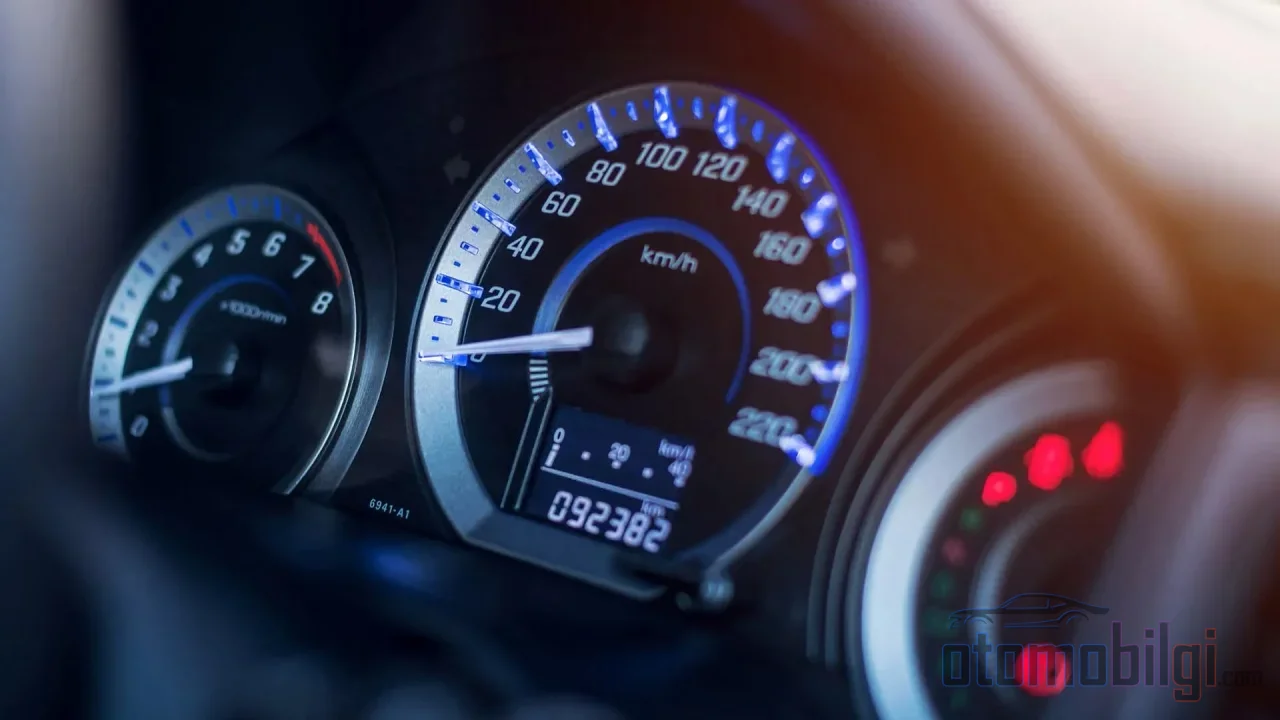
The skeleton of the calculation can be summarized in a single sentence: add up all vehicle expenses for a period, then divide by the kilometers you traveled in that same period. This general rule needs to be turned into a compound formula that works on an annual basis. Working on an annual basis eliminates seasonal fluctuations and the swelling that installment payments load onto the first month. For payments such as a loan installment or an insurance premium paid in installments, spreading the total amount across the months of the term is the way to avoid making the first month look more expensive than it is.
The compound formula is built as follows:
Total cost per kilometer = (annual fixed costs + annual fuel cost + annual maintenance and tire cost + annual depreciation) ÷ annual kilometers
The critical point here is that all items must belong to the same period. A driver who pays the first installment of MTV in January, the major service in May and a tire change in September will reach a wrong conclusion if they look at a single month's breakdown. A twelve-month window smooths out these waves and gives the true average.
Spreading fixed costs over kilometers
The main items in the fixed cost group are traffic insurance, comprehensive insurance, MTV (motor vehicle tax) and the periodic inspection. Their annual total is taken and divided by the kilometers covered during the year. Even if a driver covering 10,000 km a year and one covering 30,000 km pay the same policy, the per-kilometer impact of the fixed cost differs threefold. This is the most overlooked fact in the per-kilometer cost calculation. MTV is assessed at the beginning of January each year by the tax office responsible for the vehicle's registration location, and is paid in two equal installments in January and July; the payment deadlines are January 31 and July 31. MTV can be calculated on the tax office's digital platform based on the vehicle's age, engine cylinder displacement and first registration year. Traffic insurance is a legal requirement and protects the other party; comprehensive insurance is optional and covers damage to your own vehicle. The comprehensive insurance premium is significantly affected by your no-claims history, driver age, model year, registered province and usage pattern.
Estimating Fuel and Maintenance Costs with Average Consumption
The per-kilometer equivalent of fuel cost is found in two ways. The first is to divide the amount paid for fuel by the distance traveled: for example, if 450 km were driven with 150 TL of fuel, the fuel cost is 0.33 TL per kilometer, i.e. 33 kuruş. The second is to first determine the average consumption and multiply it by the fuel price. Average consumption is obtained by dividing the fuel consumed by the kilometers covered and multiplying by 100; in a vehicle traveling 700 km with a 50-liter tank, this value is approximately 7.1 L/100 km. Annual fuel cost is estimated as follows: annual kilometers × consumption in liters ÷ 100 × fuel price per liter. A vehicle consuming 7 L/100 km burns 35 liters over 500 km.
The right way to measure real consumption
Factory consumption figures are obtained in a measurement cycle; real life works differently, with stop-and-go traffic, air conditioning and load. The most reliable method is measurement between two full tanks: fill the tank, reset the trip meter, and at the second full fill-up divide the liters taken by the kilometers driven and multiply by 100. The trip computer generally gives results close to factory data; manual measurement reflects reality better. A few reference conclusions may also be useful: an average gasoline vehicle consumes 8-10 liters per 100 km in the city and 6-7 liters out of town; a 1.5-liter diesel can manage on about 4.4 liters in the city. With LPG, the cost per liter is low but consumption per kilometer is high; therefore comparisons should always be made on a per-km basis.
Maintenance and tire costs are also tied to kilometers using the same logic. The annual total of tire sets and periodic maintenance is divided by the annual kilometers. The trip cost calculation that the freight sector has used for years is a mature form of this logic: the cost of a journey consists of fuel, toll fees, the per-km share of tires and maintenance, and the vehicle's per-km depreciation share. Applying the same discipline to your own car turns the calculation from a guess into something measurable.
Amortizing Depreciation on a Per-Kilometer Basis
Depreciation is the most debated item in the calculation. One view argues that depreciation in a car's monthly cost can be even larger than fuel; the opposing view says it should be kept separate because no money leaves your pocket for it each month. The correct practice is this: if you want to calculate the per-km cost holistically, include depreciation as well, but if you are tracking your wallet's monthly cash flow, keep it in a separate column.
The calculation is done using the depreciation logic in accounting. Depreciation is the systematic recording of an asset's loss of value over its economic life. In the straight-line method, the annual rate is a fraction of the useful life; assuming a five-year life, this rate is 20 percent. In the declining balance method, twice the normal rate is applied, meaning the loss proceeds quickly in the early years and slowly in later years. The practical method for a car is this: the difference between the market value at the start of the year and the estimated value at the end of the year is the annual depreciation; this amount is divided by the annual mileage to find the per-km depreciation share. A note: depreciation ceilings in tax legislation and compensation arising from the drop in market value after an accident are different concepts from the economic calculation; they are not included in the everyday user's calculation.
Sample Calculation Table Logic
To make the method concrete, let's work through an imaginary year. Prices change, the logic does not; it is enough to place your own figures into the same patterns. Let's consider a car that does 15,000 km per year and consumes an average of 7 L/100 km.
| Item | Annual amount (example) | Per-km share |
|---|---|---|
| Fixed costs (MTV + insurance + inspection) | 45,000 TL | 3.00 TL |
| Fuel (15,000 km, 7 L/100 km) | 50,000 TL | 3.33 TL |
| Maintenance and tires | 15,000 TL | 1.00 TL |
| Depreciation | 90,000 TL | 6.00 TL |
| Total | 200,000 TL | 13.33 TL |
The lesson from the table is striking: the fuel item is less than a quarter of the total. A driver who does not factor depreciation and fixed costs into the calculation is not seeing half of the car's real per-km cost. The amounts in the table are for illustrative purposes; using your own invoices and consumption measurements for each item makes the result specific to you.
Why Doesn't Low Mileage Always Make It Cheaper?
Here is the most vital truth of the calculation: for an average driver, 70-75 percent of annual operating costs consist of fixed items. This ratio means that as usage increases, the per-km cost will fall, and as it decreases, it will rise. A driver doing 5,000 km per year pays the same insurance, the same MTV, and similar depreciation as a driver doing 20,000 km; but spreads this cost over a quarter of the mileage. That is why the per-km cost balloons. A 10 percent increase in usage, on the other hand, affects the total cost disproportionately little; the fixed costs are already paid.
This table also serves as a compass for drivers deciding whether or not to own a car. Comparing public transportation, ride-hailing, or short-term rental alternatives for someone who drives few kilometers can yield different results than for someone who drives many. This shows that a single indicator is not enough and a vehicle-based, period-based analysis is required.
Short Answer: How Is the Cost Per Kilometer of a Car Calculated?
The real cost per kilometer of a car is found by dividing the sum of annual fixed expenses (motor vehicle tax, traffic insurance, comprehensive insurance, inspection), annual fuel expenses, maintenance and tire expenses, and annual depreciation by the kilometers traveled in the same year. Derive the fuel item from your actual consumption measurement, and depreciation from the difference between market values at the start and end of the year; place all items in the same twelve-month period. Once you have set up the calculation correctly, repeating it each year takes only minutes and gives you a solid figure for every decision about car ownership. In the past, this calculation was kept as a ledger entry and no one bothered; now nothing stands in the way of the driver who wants to know the numbers. The rest is up to the will to set up the calculation.
Sources
- Monthly Cost of Owning a Car: Calculator
- Fuel Calculation: How Much Does My Car Consume?
- Km Fuel Calculation - Distance-Based Fuel and Cost
- Motor Vehicles Tax (MTV) - GİB
- MTV Calculation - GİB Digital Tax Office
- Trip Cost Calculator - Cost Per Km
- Depreciation Calculation
- Cost Per Kilometer Calculator