Deposit Rates and Refund Rules in Vehicle Sales (2026)
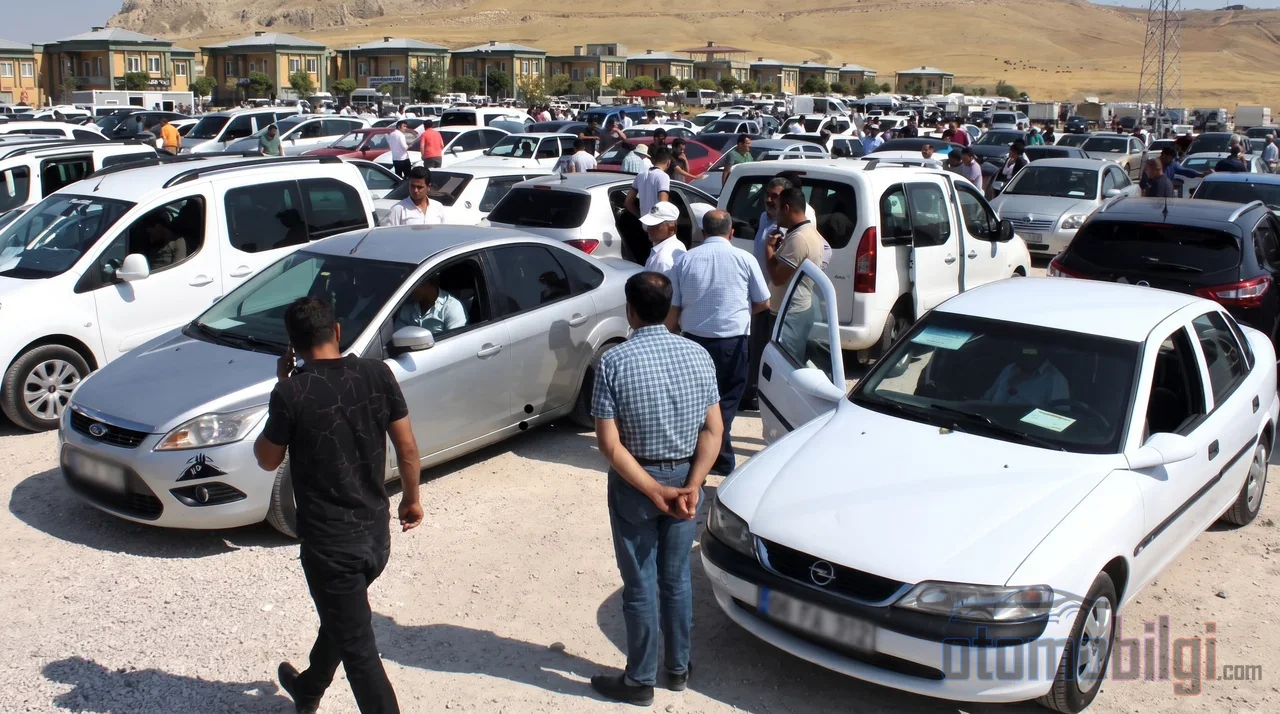
Your listing has started getting clicks, your phone won't stop ringing, and there are now three separate serious buyers in your inbox. This is the best-case scenario in the market; it is also the easiest scenario to achieve. Because a sales process run with multiple buyers is not merely a crowded version of the process run with a single buyer: sequence management, appointment planning, deposit and final offer decisions all come into play at once. In this article, we walk through that entire process step by step.
First, let's clarify one fact: the corporate equivalent of this business actually exists. Instant sale platforms put the many offers received for a single vehicle into open competition through an auction method; the seller sets a minimum amount and receives the highest bid when the time is up. As an individual seller, you don't have that machinery at your disposal, but you can apply the same logic on a smaller scale, in your own listing. How? Keep reading.
Why is having multiple buyers not an advantage but a responsibility?
Most sellers think the job is done once a second serious buyer appears on their listing. But that is exactly when the real work begins. Multiple buyers increase your bargaining power over the price; but if you use that power without control, you lose both buyers. If you tell the three people you're messaging by phone and text to come at the same time, the resulting scene tires out the buyers, not you. Likewise, keeping one buyer hanging after promising them without taking a deposit undermines your credibility and prolongs the sales process with your own hands.
The fundamental principle here is this: in a multi-buyer sale, order and transparency matter as much as the price. Buyers know they are unaware of each other; your job is to manage that information honestly and turn the process into a sales stage, not a bidding race.
Highlights
- In practice in Turkiye, a deposit is usually 2-5% of the vehicle price.
- Second-hand listing prices are commonly inflated by 10-15%.
- As of January 1, 2026, the pre-notary process and Secure Payment System are in effect for vehicle sales.
- A deposit is a binding payment that must be refunded unless agreed in writing (TBK art. 177).
- 2026 notary fee: 2 per thousand of the sale price in stamp duty + approximately 1,870-1,970 TL transfer service fee.
How do you order appointments fairly and safely?

The first rule is simple: first to write, first to be seen. This rule is both ethically right and practically effective; because the promise of order you give a buyer determines their trust in you. Tell the second and third buyer that there is someone who will be seen before them, but that you will notify them immediately if the first buyer backs out. This transparency creates a waiting list you can manage without pressure.
And never stack appointment times on top of each other. Meeting two buyers at the door at once may seem like turning the car into an auction table, but in practice it drives both parties away; nobody wants to make a decision under pressure. Leave at least one or two hours between buyers, and keep the car clean, well-maintained and the paperwork ready before every appointment. Having routine maintenance such as oil, filter and brake work done before the sale significantly builds buyer confidence; this earns you points at the negotiating table.
The safety side
Hold appointments in daylight, preferably at a busy and familiar location. Accompany the test drive and only hand over the vehicle's documents (a copy, not the original registration certificate) when the buyer appears serious. Come to a location you designate, not one suggested by the buyer; this is one of the easiest ways to keep control of the process.
Do you negotiate at the car or over the phone?

This question is one of the oldest debates in the used car market. According to one view, the buyer should clarify the price over the phone before setting out; according to the opposing view, the negotiation should happen after the car has been seen in person, because a price given remotely is the price of someone who has not seen the car. Both are partly right, and as a seller, what works in your favor is this: never give your absolute bottom price over the phone. A seller who reveals a fixed price in the first contact has given up the negotiation card right from the start against a buyer who comes to see the car.
Market practice supports this too: listing prices are usually inflated by 10-15%, and buyers know it. So when inflating your listing price, don't overdo it; a listing with the right price both increases buyer interest and speeds up the sale. On the phone call, it is enough to say this: that there is some flexibility on the price, and that the exact figure will be discussed after the car has been seen. This sentence both gets the buyer to set out and preserves your negotiating margin.
Counteroffer discipline
When negotiating at the car, the rule is to be clear. Ask the buyer for a firm offer; do not accept vague statements like "could you come down a bit." Give your own counteroffer as a single, clear figure as well. Stay polite and respectful but don't rush; the hasty seller is the first loser of every negotiation. If you reach an agreement, get the agreed figure and terms in writing; a verbal agreement carries no binding force in this process.
Testing seriousness with a deposit: the right and legally sound method
A deposit is the most critical tool in a sale with multiple buyers; because a promise without a deposit is nothing more than a message given in the morning and forgotten by evening. In practice in Turkiye, a deposit is usually 2-5% of the vehicle's price; for a 200,000 TL vehicle, this means roughly a range of 4,000-10,000 TL. This range is heavy enough to keep the buyer away from unserious offers, but not so much that it blocks the sale.
As for the legal side: Under Article 177 of the Turkish Code of Obligations, money given at the time a contract is made counts as earnest money unless otherwise agreed. What this means is: even if the buyer backs out, they cannot get this money back. However, if the written contract explicitly states that the payment will remain with the seller if the buyer withdraws, this payment becomes a withdrawal fee; and a payment in the nature of a withdrawal fee can be refunded regardless of whether the withdrawal is justified or not. In other words, you must know very well what you are accepting when taking a deposit.
Our practical recommendation is this: issue a short, dated deposit receipt in two copies; it should include the vehicle details, the agreed price, the deposit amount, the date the deposit was received, and what will happen if the sale is abandoned after the deposit. And never forget: vehicle ownership is transferred only through a written sales contract drawn up in the presence of a notary. If a seller who has taken a deposit fails to complete the sale, they may be considered to have committed qualified fraud; therefore, accepting a deposit means finalizing your decision to sell.
How do you maintain control while getting buyers to compete?
Openly pitting buyers against each other looks attractive in the short term but loses both parties in the long run. The right approach is more elegant: tell each buyer that there is interest in the vehicle but that it is their turn. On its own, this information makes the buyer's offer more serious. A seller's leverage with a deposit in hand is solidified not by words but by this document; informing the second and third buyers that someone else has left a deposit is legitimate and effective.
The fine line here is this: don't break the order, but don't leave waiting buyers in uncertainty either. Give the first buyer in line a clear deadline; the sentence "if you don't place a deposit by this date, your turn will pass to the next buyer" provides both fairness and speed. This is the individual-scale equivalent of the minimum sale amount + time logic of auction platforms.
How is the final offer taken and when is the sale closed?
The final offer stage is the most sensitive moment of the process. The fundamental question here is this: at what point should you accept the highest offer? The answer relates to transaction costs. As of January 1, 2026, the vehicle buying and selling process has changed: pre-notary checks, mandatory traffic insurance before the sale, and the Secure Payment System are in effect. This system was established in cooperation with the Ministry of Trade and the Union of Turkish Notaries, and it secures the vehicle sale price through cash channels such as wire transfer, EFT, and FAST; in some banks, when the 2 million TL upper limit is exceeded, split payment with the same reference can be made.
This picture shows that the sale now requires speed. When the negotiable amount drops below 5%, your chance of waiting another week and perhaps getting 2% more can easily evaporate against transfer costs, insurance, and time loss. The 2026 notary fees alone summarize this picture: a fee of 0.2% of the sale price (minimum 1,000 TL), plus an additional 1,870-1,970 TL transfer service fee; for a 500,000 TL vehicle, a total of approximately 2,870-2,970 TL. The notary process: includes vehicle inquiry, TSE-certified inspection, Secure Payment record, and relative notary stages in order.
Payment security: beware of the deposit trap
When trying to speed up a sale, never fall for urgent money transfer requests. Recently, scams have spread that promise to send a "secure down payment" to a notary's IBAN; since the old practice persists in vehicle sales, a request to send a down payment to a foreign IBAN is almost always a sign of fraud. A down payment is received face to face and against a receipt; the remainder of the payment is completed via the Secure Payment System, simultaneously with the notary transfer.
In short: queue, down payment, and final offer
We can sum up this entire process in a single sentence: give priority to whoever writes first, don't reveal your bottom price on the phone, measure seriousness with a receipted down payment of 2-5%, and without keeping the highest bidder who comes in below your negotiable figure waiting, accept it and close the sale through the notary via the Secure Payment System. These five steps turn the stress that selling to multiple buyers brings into a proper process that lets you clearly see the best offer at hand.
In the past, this business was done by phone, a handshake, and trust; now every step is tied to documentation, systems, and records. This change doesn't wear the seller down - on the contrary, it protects them. All that's needed is not to break the order and to get every step in writing.
Sources
- Down Payment Refund: What Happens If the Buyer Backs Out? 2026 - Ayboğa Law Firm
- How Much Should a Vehicle Down Payment Be? - sahibinden.com Oto360
- Secure Payment System - Union of Turkish Notaries
- Notary Fees 2026 - Ayboğa Law Firm
- How Are Second-Hand Vehicle Purchase and Sale Transactions Carried Out? (2026) - Autoverse
- Home and car creditors beware! The 'secure down payment' scam in the name of notaries - Yeni Akit
- Sell Your Car Instantly - ikinciyeni
- How to negotiate for a second-hand vehicle? - DonanımHaber Forum
- Down Payment Refund - Kadim Law
- negotiation is done at the car - Ekşi Sözlük