Currency Risk and Secure Payment in Vehicle Sales in Foreign Currency
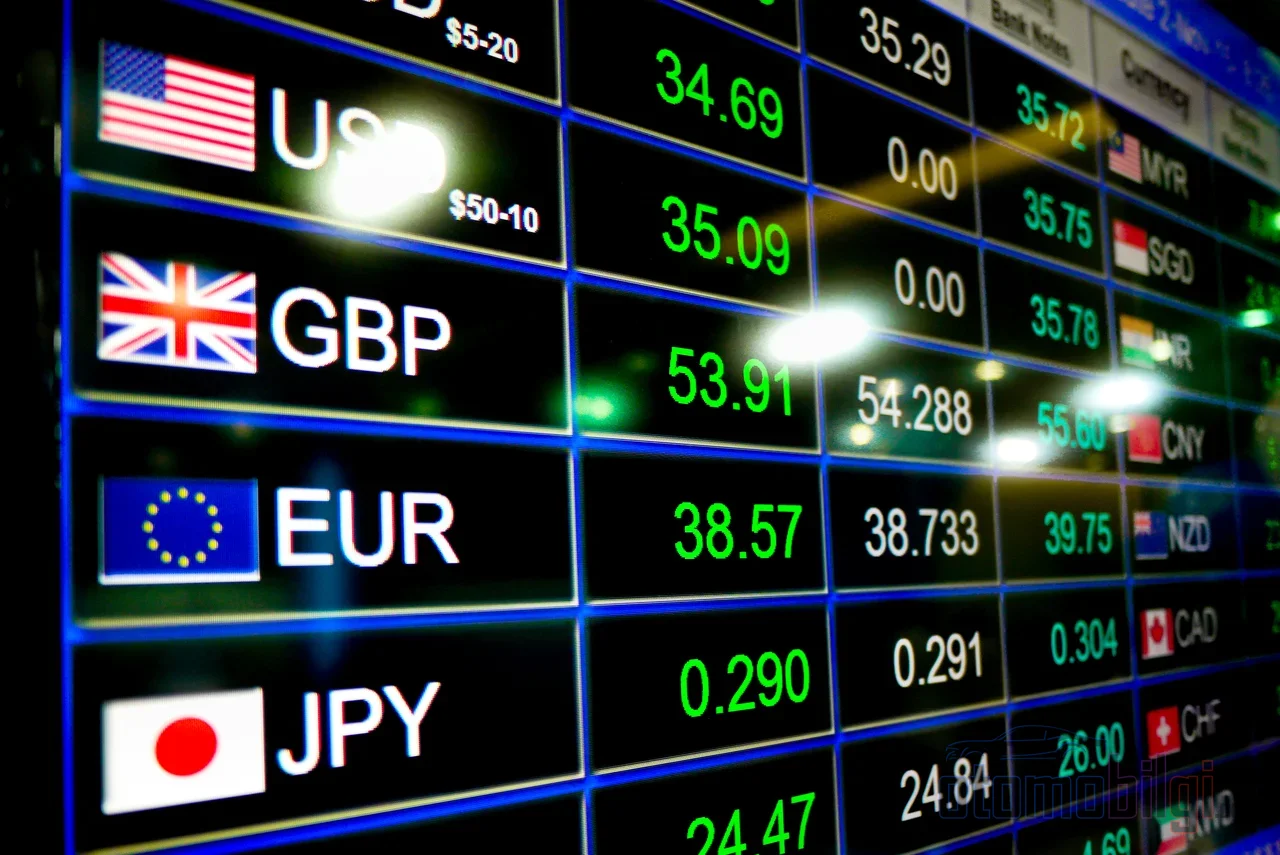
You have listed your car for sale, and the phone keeps ringing; until one caller makes an offer unlike the others: "I'll pay in euros." At that moment, the situation changes for the seller. Sometimes buyers want to purchase a car without converting the foreign currency sitting in their wallet, and present their offers by quoting a rate. From the seller's perspective, this offer can be reduced to a single question: When the transfer is completed at the notary, does the amount I will receive match the value we agreed on today? This page addresses the exchange rate risk in selling a vehicle for foreign currency, the legal framework, the tax dimension, and the methods of securing payment, solely from the seller's point of view.
Is Selling a Vehicle for Foreign Currency Prohibited or Not?
The question is legally layered enough that it cannot be answered in a single sentence. The primary basis is Law No. 1567 on the Protection of the Value of the Turkish Currency, Decree No. 32, and the Presidential Decrees and communiques issued within this framework. The communiqué amendment published in the Official Gazette dated March 6, 2025 introduced significant flexibility regarding foreign currency in securities sale contracts; however, the regulation explicitly excluded vehicle sale contracts. In other words, the prohibition on setting the price in foreign currency or indexed to foreign currency in vehicle sale contracts remains in force.
So, is it possible for the buyer to make the payment in foreign currency? The assessment in legal practice is as follows: If the price is set in TL in the contract, according to the communiqué there is no obstacle to paying this amount in foreign currency. Correctly establishing the distinction between contract and payment is the seller's most fundamental line of defense. Set up the contract in TL, and make the payment in foreign currency by mutual agreement of the parties.
There is a price to pay for acting contrary to the rule: invalidity, monetary fines, additional obligations, the possibility of re-adjustment or termination. The authority to inspect lies with the Ministry of Treasury and Finance. There are exceptions such as exports, contracts with persons residing abroad, and free zones; but these do not concern an ordinary individual vehicle sale.
Highlights
- In a vehicle sale contract, the price cannot be set in foreign currency; making the payment in foreign currency is possible.
- The 2026 occasional income exemption: 350,000 TL.
- The Secure Payment System is mandatory as of September 27 but is based on TL transfers.
- For a 500,000 TL vehicle, the 2024 usage fee is 194.31 TL; the transfer service fee is 1,870-1,970 TL.
Where Does Exchange Rate Risk Hit the Seller?

Exchange rate risk is the possibility that the value of an asset or receivable changes unexpectedly due to currency fluctuations. In a vehicle sale, its most concrete form is transaction risk: if the exchange rate moves against the seller in the period between the buyer's foreign currency offer and the day of transfer, the TL equivalent the seller receives erodes. Even a one-week gap between the offer and the transfer can make a difference; a seller who negotiated at today's rate may not receive the same amount on the day of transfer.
The TL-based loss on a receivable that has not been converted to foreign currency directly affects a seller whose expenses are in TL. There are three well-known protection methods: diversification, forward contracts, and natural hedging. In an individual vehicle sale, a futures contract is an exaggerated tool; the practical solution is to shorten the payment date and fix the amount with documentation.
How Is a Foreign Currency Offer Converted to TRY?
When the buyer says 5,000 euros, the TRY equivalent of that figure depends on the instant exchange rate. The currency converter tools of banks and finance portals convert the amount to TRY by multiplying it by the rate; for euro and dollar, due to the buy-sell spread, the amount each side sees differs slightly from one another. What the seller must do is conduct the negotiation in TRY: set the TL price of the vehicle, convert the foreign currency amount at that day's rate, and write the TL price into the contract. This way, the exchange rate risk inevitably passes to the buyer on the day of transfer.
Notary Transfer and the Secure Payment System
In a second-hand vehicle sale, payment security is built on payment simultaneous with the notary transfer. The Secure Payment System, operated in cooperation between the Union of Turkish Notaries and banks, ensures that the sale price is transferred to the seller via wire transfer, EFT, or FAST at the same time as the notary transaction. The system became mandatory as of September 27; in sales exceeding the specified limit, multiple transfers can be made with the same Secure Payment Reference. For a sale of 500,000 TL, the 2024 usage fee was around 194.31 TL; in the transfer, a stamp duty of 0.2 percent of the sale price (minimum 1,000 TL) and a fixed transfer service fee of between 1,870-1,970 TL are also paid. Making the appointment through the notary union portal or e-Devlet is the easiest way to avoid long waiting during the day.
The System's Currency Gap
Here is the critical detail awaiting the seller: The Secure Payment System is built on TRY transfers; it does not offer a payment column for foreign currency or a foreign currency-TLR mix. You cannot put the buyer's euros directly into the system. Therefore, parties who want to pay in foreign currency will either convert the currency to TRY first and pass it through the system, or secure the payment outside the system with traceable alternatives. This gap between legal freedom and a practical tool is the weakest link of foreign currency sales.
Wire Transfer or Cash in Foreign Currency?
In practice, the seller's comparison is clear. A bank wire transfer leaves a traceable trail: the receipt, date, amount, and sender identity stand in a single document. With foreign currency handed over in cash, this chain of proof does not exist; if the payment becomes a matter of dispute, the seller has almost nothing to present. Never making the payment without notary approval, preferring traceable methods, and keeping the receipt is the consistent recommendation of the legal community as well. Receiving the foreign currency into a bank account by transfer provides both proof and a record of the exchange conversion.
Documents That Fix the Amount at the Moment of Transfer
In a foreign currency payment, the focus of the dispute is usually the amount and the exchange conversion. On the day of transfer, the following points must become clear:
- The price having been agreed in TL in the sale contract,
- The currency type and amount of the payment, the rate used, and the conversion date also being fixed in writing,
- The receipt or proof of payment remaining with the seller,
- Payment being made simultaneously with the transfer of ownership; transfer of the vehicle keys only after the payment is finalized.
There are also alternative assurance tools: blocked money transfer and blocked check protect both parties by conditionally locking the payment. In foreign-currency scenarios, these tools are the most practical bridge compensating for the system's TL limitation.
Tax and Declaration: A Dimension the Seller Should Not Ignore
The gain obtained from the sale of a vehicle may be taxed as incidental gain; but taxation depends on the existence of a real element of gain. For someone who bought a vehicle for one thousand liras and sold it for three thousand five years later, the gain is an abstract calculation in the face of inflation; the Income Tax Law softens this situation with an exemption provision. The incidental gain exemption for 2026 is 350,000 TL (it was 280,000 TL in 2025). Above this amount, a declaration may be required; the seller should keep the purchase and sale documents for this calculation.
The situation of a person who continuously buys and sells vehicles is different: this is now a commercial activity and requires an authorization certificate. The Ministry of Trade is resolutely fighting unregistered vehicle trading; in 2026, administrative fines exceeding 108 million TL were imposed on sales without an authorization certificate, and the cumulative total reached 305 million TL. Fines can even be issued for vehicles traded before the six-month and six-thousand-kilometer limits are reached. If an individual seller is selling their own vehicle, they are not affected by this picture; but if they have started earning income by "flipping vehicles", even if foreign-currency payment goes unregistered, the conduct itself is risky. Because although there is no separate penalty item specific to unregistered foreign currency, the sanctions of the ban on contracts in foreign currency and the penalties for lacking an authorization certificate are applied separately.
The Safe Deposit Trap and Seller Rules
A method that emerged in Izmir in November 2026 has become even more important when combined with the foreign-currency sales agenda. The fraudster poses as a serious buyer and says they will send the deposit through a notary via the Secure Payment System; then sends a "payment request" to the seller's banking app, and the seller is defrauded by having money withdrawn from their own account. The rule is simple: the Secure Payment System only works at the moment of sale, at the notary, and the money always flows from buyer to seller. Under no circumstances does the seller transfer money to the buyer; receiving a payment request alone is sufficient reason to be alarmed.
The Seller's Guide to Foreign-Currency Sales: The Clear Answer
In summary: Selling a vehicle in foreign currency is possible as long as the contract is established in TL and payment is made through traceable means. Do not write the price in foreign currency in the contract; agree on TL and, if the parties agree, accept the payment in foreign currency, but fix the amount, the rate and the date in writing. Do not accept payment before the notary transfer, prefer a bank transfer over cash in foreign currency, keep the receipt, shut the door on payment requests coming with a deposit excuse, and factor in your declaration obligation if your gain exceeds the exemption amount. With the exchange rate this volatile, the seller's best protection is a short timeline and a complete paper trail; a three-week uncertain transfer process leaves even the most honest buyer at the mercy of the exchange rate.
Sources
- Secure Payment System in Vehicle Sales
- Secure Payment System - Union of Turkish Notaries
- Vehicle Transfer via e-Government and the Notary Process
- Ban on Payment in Foreign Currency Lifted
- A New Era for Securities Sales in Foreign Currency
- What Is Exchange Rate Risk? How Is It Managed?
- Guide to Foreign Currency Payment and Contract Prohibitions
- Updates on Foreign Currency Payments in Securities Sales Contracts