What Is a Promise of Sale Agreement in Vehicle Sales Used For?

The moment the vehicle finds its buyer, the negotiation ends, and the deposit is paid, most sellers and buyers shake hands and assume the deal is done. Yet the thing that truly creates the binding link between them is the promise of sale contract, the one that is also signed. I have been in this business for more than thirty years; and the sentence most commonly heard about this contract is this: We signed it, so it is now finalized. It is not finalized. A promise of sale contract, exactly as its name suggests, is only a promise, and how much of that promise is binding and how much is protective depends entirely on how the contract is written.
In this article, I will discuss, from the perspectives of both the vehicle buyer and the seller, the role of the promise of sale contract in vehicle sales, the difference between it and a deposit, whether having it done before a notary or as a simple written agreement changes things, and common mistakes.
What Does a Promise of Sale Contract Do, and How Does It Differ from an Actual Sale?
A promise of sale contract is a preliminary contract in which one party undertakes to sell a specific item in the future, and the other party undertakes to buy it under the agreed conditions. It establishes an obligation relationship toward the main sales contract to be made in the future. By itself, it does not transfer ownership to the buyer; in a vehicle sale, ownership does not pass to the buyer until the transfer and registration process is completed. The function of the contract is to give the parties the right to demand that the main sales contract be concluded once the necessary conditions are met.
In other words, a promise of sale contract documents not the vehicle itself, but the intention to guarantee its future transfer. The seller can no longer sell the vehicle to another buyer; and if the buyer backs out, the buyer becomes liable to pay a withdrawal penalty. The tradition of the handshake still runs strong in the used car market, but in the days between negotiation and sale, the vehicle's price can change, the buyer can have second thoughts, or a better offer can come to the seller. At that point, the handshake loses its value; and the value of a written contract begins.
Key Takeaways
- A promise of sale contract does not transfer ownership; it only creates an obligation to transfer it in the future.
- The deposit is refunded no matter who backs out; the withdrawal penalty, however, is forfeited by the party who withdraws, and if the receiving party withdraws, twice the amount is refunded (Articles 177-178 of the Turkish Code of Obligations). 177-178).
- For deposits in Turkiye, a range of 2%-5% of the vehicle price is generally applied; the withdrawal penalty is taken as around 5% of the sale price.
- The contract should explicitly include the sale price, the delivery/transfer date, the payment plan, and the withdrawal terms.
- Do not sign without receiving the payment; write safeguards such as a certified check or an immediate bank transfer into the contract.
Before a Notary or a Simple Written Contract? How Does the Form Requirement Work for Vehicles?
A distinction must be made here, because most of the public knowledge on this comes from real estate promises of sale. For real estate, Article 237 of the Turkish Code of Obligations provides an explicit form requirement: provides an explicit form requirement: a promise of sale contract that is not executed in official form, that is, before a notary, is not valid. A notarized contract can additionally be annotated in the land registry; the annotation enables the right to be asserted against third parties, and if no sale takes place within 5 years from the annotation, the removal of the annotation may come into question. The Court of Cassation General Assembly also issued a ruling in October 2026 that a valid preliminary sale contract may substitute for the seller's consent in the transfer of title.
The picture is different in a vehicle preliminary sale contract. A vehicle is not an immovable registered in the land registry; it is transferred under the traffic registration system. For this reason, no strict statutory form requirement, as exists for immovables, has been laid down for vehicle preliminary sales. The contract can be prepared with notary approval, or it can be a text signed by the parties in simple written form. This flexibility is an advantage, but it also contains a trap: because it is not subject to a specific form requirement, the strength of the contract depends entirely on how carefully its content is drafted.
My practical advice is clear: in sales secured with a deposit, especially if the amount is high or the transfer is left until a few weeks later, execute the contract before a notary. A notarial deed is evidence with greater probative value than a simple written text. Do not say that a notarized sale replaces the deed, whereas for vehicles too, the notary does not perform the transfer, but documents the parties' intent; the transfer is still completed through registration procedures.
Deposit or Withdrawal Fee? The Difference Between the Two Words
These two words are used interchangeably in everyday language; their legal consequences, however, are completely opposite. A deposit, that is, a binding payment, as a rule creates a presumption that the sales contract has been formed, and it is refunded regardless of which party withdraws. A withdrawal fee, on the other hand, is consideration that grants one of the parties the right to withdraw: the withdrawing party loses the money, and if the receiving party withdraws, they must return twice the amount. This arrangement is based on Articles 177 and 178 of the Turkish Code of Obligations.
A common misconception is that the deposit is not refunded if the buyer withdraws. This is valid only in the case where the money paid was expressly stipulated in the contract as a withdrawal fee. If it was not stipulated, the money is refunded, whether or not it was called a deposit. There is also this detail: if the main contract is invalid due to a breach of form, the deposit is refunded no matter who withdrew; the money does not burn.
| Feature | Deposit (Binding Payment) | Withdrawal Fee |
|---|---|---|
| Legal basis | General provisions | Art. 177-178 of the TCO |
| Buyer withdraws | Money is refunded | Money is forfeited |
| Seller withdraws | Money is refunded | Twice the amount is refunded |
| Signaling function | Presumption that the contract has been formed | Consideration for the right of withdrawal |
| Mandatory in the contract | No | Must be expressly written |
As for the amount: in Turkiye, a vehicle deposit is generally kept between 2% and 5% of the vehicle price; for a vehicle worth 200,000 TL, this means an amount between 4,000 and 10,000 TL. For the withdrawal fee, a figure of around 5% of the sale price is encountered in practice; in deposit refund lawsuits, the withdrawal fee is also seen to be set between 10% and 20%. These figures are not a safeguard for you unless they are put in writing in your contract.
Essential Clauses a Contract Should Contain
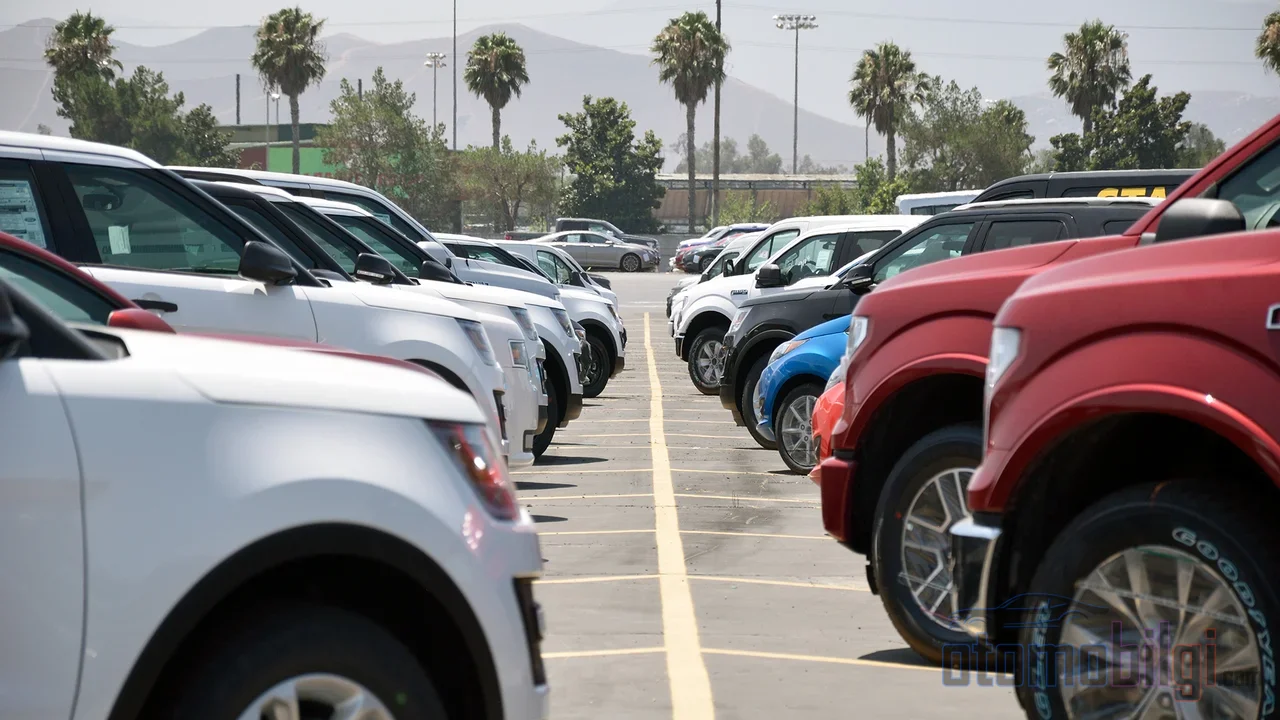
If the transfer after the deposit is to be postponed by a few days, the contract governing that day must be complete. A vehicle sale-promise contract must at the very least clearly include the following elements:
- The seller's and buyer's full name, Turkish ID number, and addresses; if one party is a dealership, the representative's authority,
- A clear description of the vehicle: plate, brand, model, model year, chassis and engine number,
- The sale price and payment terms or payment plan,
- The delivery and transfer date along with delivery conditions,
- The withdrawal fee, penalty clause, and circumstances for rescinding the contract,
- Which party will bear the duty, stamp tax, and notary costs.
I would like to highlight two clauses in particular. First, delivery of the vehicle and transfer of liabilities: the seller must commit to delivering the vehicle free of any legal restrictions; a lien or mortgage inquiry is made before signing. Second, the transfer period. A commitment frequently seen in sample contracts is for the seller to transfer the vehicle within 3 business days after paying off the vehicle's loan and receiving the full sale price. Such a deadline turns an open-ended promise into a measurable obligation.
Payment Security: Who Is Conditional First, Who Delivers First?
The day of the transfer after the deposit is the moment both parties are most on edge. The seller will not sign without receiving the full payment; the buyer does not want to send the money before the registration certificate is issued. To resolve this classic deadlock, two safeguards stand out in practice: payment by bank transfer at the time of sale, and a certified check. A certified check prevents the check from going unpaid if the buyer fails to complete the transfer within a set period; a bank transfer, on the other hand, provides instant proof. In used vehicles, payment security concerns not just the contract but also the moment the contract is executed.
There is also a sample rescission arrangement in the buyer's favor: if the buyer views and inspects the sample vehicle and rescinds the contract in writing the same day, the down payment is refunded within 7 days. Such a clause leaves the buyer a reasonable exit in sales made sight unseen. A sale protocol or contract also protects both parties in cases such as incomplete payment or the vehicle's old debts being passed on to the buyer; these matters, once handled with a handshake, are shifting toward written safeguards as the amounts grow.
Common Mistakes and the Problem of Binding Transfer Procedures
The mistakes I encounter most often in practice are the following:
- Undefined vehicle, unclear price: The contract must make the vehicle and the sale price at least identifiable; writing only the brand without the plate and chassis number is an invitation to future disputes.
- Confusing the deposit with the withdrawal fee: If the contract does not clearly state the nature of the payment, a refund dispute becomes inevitable.
- Signing without checking the restrictions: Failing to check for seizure, mortgage, or lien records on the vehicle before signing leads to surprises on transfer day.
- Quietly glossing over expenses: Which party will bear the stamp duty, notary fees, and similar costs must be stated in the contract.
Then comes the question of whether the contract binds the transfer process. The rights and obligations arising from the sale promise agreement cannot be transferred to third parties unless the parties agree in writing. In other words, even if the owner of the vehicle changes, the contract does not automatically pass to the new person; this is a detail that especially those making trades through dealerships need to know. The agreement can be terminated by the mutual consent of the parties; in case of invalidity, breach of obligation, or the occurrence of the termination or rescission condition stipulated in the agreement, legal remedies can be pursued.
In summary: How Much Does a Sale Promise Agreement Protect You?
A sale promise agreement does not transfer the vehicle to you; it creates the obligation to carry out the transfer in the future and, if well written, makes this obligation measurable for both parties. If the vehicle's license plate, chassis number, sale price, delivery and transfer date, payment plan, and withdrawal clause are in writing, the agreement makes the transfer day predictable for both parties. Knowing whether the money paid is a deposit or a down payment determines who loses what in the event of withdrawal: the deposit is refunded in any case, the down payment is forfeited by the party who backs out, and if the seller backs out, it is paid in double. There is no notary requirement for the vehicle, but for high-value commitments, an agreement drawn up before a notary remains the strongest ground for proof. In a short sentence: this agreement does not make you the owner of the property, but it ensures the ownership process goes smoothly.
Sources
- What Is a Sale Promise Agreement? | Makro Life
- Deposit Refund: What Happens If the Buyer Backs Out? - Ayboga Law
- Deposit Payment and Refund Lawsuit: TCO 177-178 - Proactive Law
- How Much Should a Vehicle Deposit Be? - sahibinden Oto360
- Vehicle Sale Promise Agreement Example - Atty. Kazim Ceylan
- Vehicle Sale Promise Agreement and Example - Atty. Saim Incekas
- Vehicle Sale Promise Agreement - wonder.legal
- Real Estate Sale Promise Agreement - Baran Dogan
- Validity of the Immovable Property Sale Promise Agreement - Ongoren Law Firm
- Sale Promise Agreement - Polat Polat