Habits That Wear Out Your Clutch Early
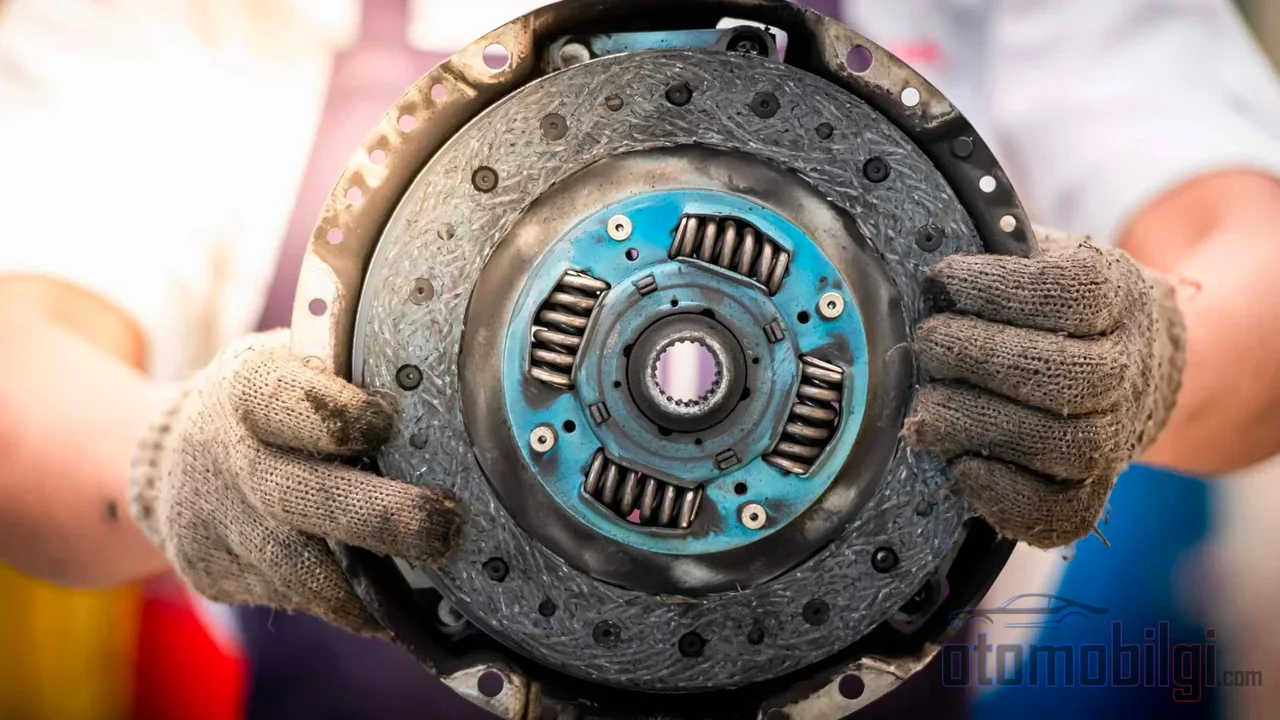
The clutch kit is an item written in your vehicle's maintenance schedule; it is not a part that gets replaced at a fixed mileage, but a direct consequence of driving habits. The same model with the same engine, driven by two different drivers, may pass 200,000 km in one case while breaking down at 100,000 km in the other. The difference is almost never technical, but behavioral: a foot resting on the pedal, holding the car on a hill with the clutch, a half-engaged clutch never fully released in traffic. On this page, we examine one by one the habits that wear out the clutch prematurely, along with the mechanical consequence of each; then we explain how to recognize when replacement is due, what determines the cost, and how to make the right decision when replacing the kit.
First, Let's Understand the Mechanics: Why Does a Clutch Kit Wear Out?
The clutch is an engagement system that temporarily interrupts and re-establishes torque transmission between the engine and the transmission. It consists of three components: the clutch disc with its friction surface, the clutch pressure plate which presses the disc against the flywheel to transmit torque, and the clutch release bearing which contacts the input shaft to disengage the transmission. The enemy of all three is the same thing: uncontrolled friction and heat.
The disc locks between the flywheel and the pressure plate when fully engaged, and as long as it stays locked, it does not wear. Wear occurs in the intermediate position where engagement is incomplete - the moment the disc slips between the two metal surfaces. The longer the slipping lasts, the more the heat builds up; the disc surface carbonizes, the pressure springs fatigue, and the lifespan shortens. A driver who grasps that this slipping time is the single variable determining clutch life no longer needs to read the rest of this page - but since identifying where the damage comes from in daily practice is harder than it seems, going through the habits one by one is still essential.
Highlights
- In commercial vehicles, clutch life under stop-and-go use is around 80,000-120,000 km, and under steady intercity use around 150,000-200,000 km.
- With proper usage habits, clutch life can reportedly be extended twofold.
- The clearest sign of failure is a missed gear: you press the accelerator, the revs rise, but the car does not accelerate.
- When replacing, renewing only the disc is not recommended; the pressure plate, disc, and bearing should be replaced as a complete set.
- An original kit, when used correctly, can offer a lifespan 2-3 times longer than a low-quality aftermarket one.
Habits That Wear Out the Clutch Prematurely: Five Critical Mistakes
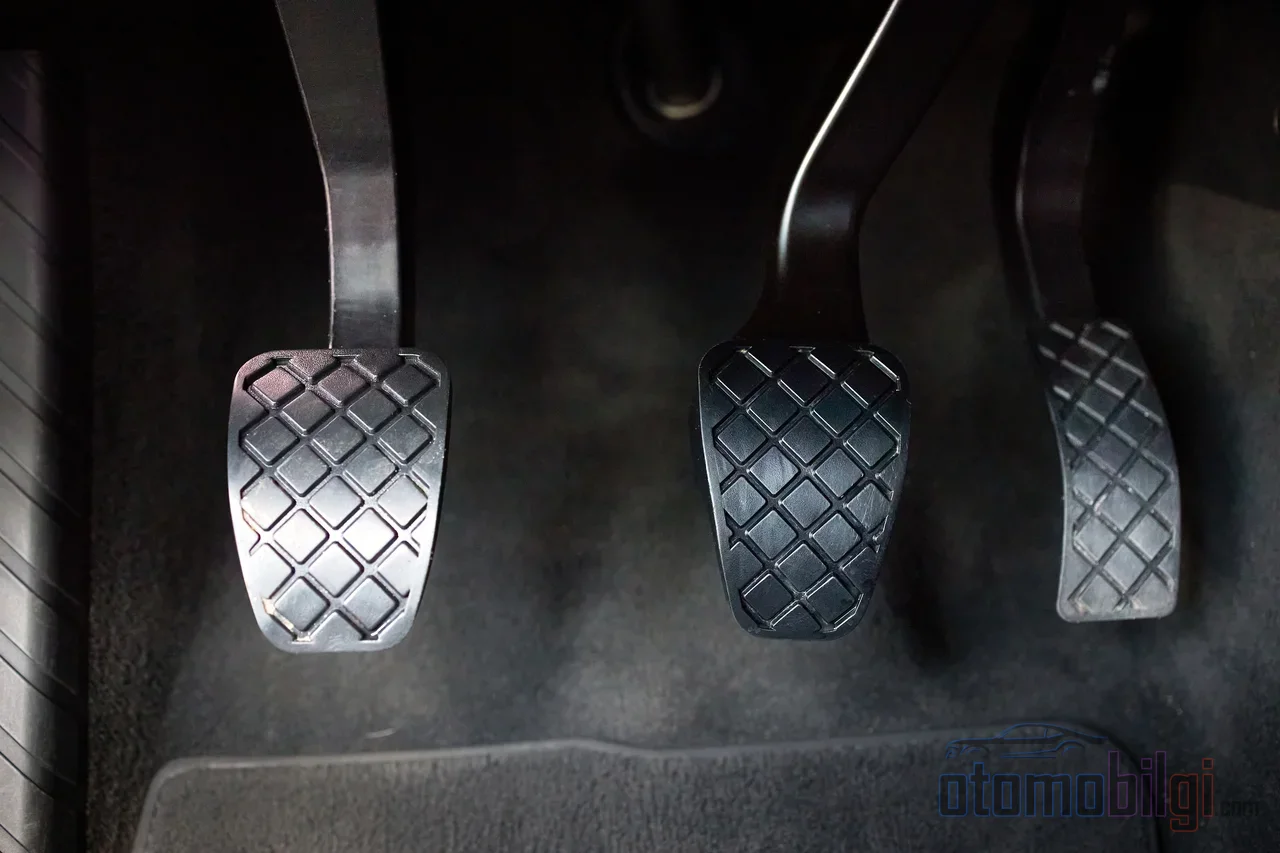
Resting Your Foot on the Pedal
This is the most common and most insidious mistake, because it happens without the driver realizing it. A foot placed on the pedal applies slight pressure during the drive. This pressure is small enough that it does not fully disengage the clutch; but it keeps the release bearing constantly spinning and presses the disc against the flywheel surface with a millimeter-scale friction. The result is that the car spends every second of the day in a half-engaged state. The solution is free: after shifting gears, place your foot on the footrest to the left of the pedal. The pedal is only there for shifting gears; it is not used as a footrest.
Holding the Car on a Hill with the Clutch
Starting off in second gear requires noticeably more friction than in first; During this time the lining overheats, its surface practically melts, burns, and permanently loses its gripping ability. The right tool for waiting on a hill is not the clutch, but the handbrake or foot brake; the clutch is engaged only at the moment of starting off. The rule is simple: brake to stop, clutch to start. Combining the two tasks on a single pedal means burning the lining for a short-term convenience.
Constant Half-Engagement in Heavy Traffic
Stop-and-go traffic is the clutch's natural enemy; yet most drivers choose to manage stop-and-go in exactly that environment with a half-engaged clutch. Every second spent at the bite point slips and wears down the lining. There are methods that cause less wear:
- When traffic comes to a complete stop, press the clutch fully and move your foot to the brake; do not wait in half engagement.
- While waiting in heavy traffic, shift into neutral and take your foot completely off the pedal.
- If the car rolls on a slope, control it in neutral with the brake alone.
Even cars with hill-start assist may need manual half-clutch on some ramps and steep climbs; the system only holds the car for a short time. So completely banning half engagement is unnecessary - but the difference between using it as a temporary launch aid and preferring it for waiting amounts to thousands of kilometers.
Wrong Gear Changes
Starting off in second gear requires noticeably more friction than starting in first; at the moment of engagement the lining slips for a much longer time. The same logic applies to driving in a high gear at low speed: the engine strains, the load on the drivetrain increases, and the clutch absorbs this load by slipping. Dumping the clutch abruptly - to use the driver's slang, slapping the clutch - and giving extra throttle while releasing also strike the lining surface like a blow. There is also one commonly overlooked mistake: changing gears without fully pressing the clutch. This does not hit the lining but the synchromeshes; it directly puts one of the gearbox's most expensive internal components at risk.
Other Harmful Habits
There are three more habits that complete the list: launching at high revs, carrying loads or towing trailers beyond the car's capacity, and resting your hand on the gear lever while driving. The last one seems harmless; but the weight of the hand applies constant contact pressure to the internal components of the gearbox. All three lead to the same point: forcing the clutch to operate beyond its capacity.
When Should the Clutch Be Replaced? Signs of Failure
A clutch set has no clear expiration date; its lifespan depends entirely on the conditions of use. That is why recognizing the symptoms is more valuable than a calendar. The clearest sign is slipping: when you press the throttle the revs rise but the car does not accelerate; especially on hills the engine screams, but the car does not go. Slipping is the direct announcement that the clutch plate can no longer hold the grip. Other signs are:
- The pedal becoming stiffer over time: the pressure plate fingers have reached the end of their life.
- The engagement point moving close to the very top of the pedal: the clutch plate has worn thin.
- Vibration and shuddering when pulling away.
- A burnt smell, especially on hills.
- Difficulty shifting gears, or a soft, vague pedal feel.
If the clutch plate wears out completely, the vehicle stops: engine power is not transmitted to the wheels and the vehicle may need a tow truck. Ignoring the symptoms is a habit just as expensive as waiting on a hill with the clutch half engaged.
Is Clutch Life Dependent on Mileage? Expected Values
The average lifespan table splits clearly between two extremes depending on usage conditions. The range given for commercial vehicles also roughly guides passenger cars used in city traffic:
| Usage Condition | Expected Clutch Life |
|---|---|
| City driving, stop-and-go, heavy load | 80,000-120,000 km |
| Continuous highway, stable road | 150,000-200,000 km |
| Passenger car, foreign average | ≈80,000-160,000 km |
| Frequent traffic, hilly region, trailer | Well below the averages |
The difference comes down to a single variable: slip time per unit distance. One city kilometer consumes at least twice as much clutch as one highway kilometer. It is stated that with correct habits, clutch life can be doubled; meaning the same part fails either at 100,000 km or at 200,000 km depending on the driver's hand. There are also driver observations that small-displacement engines wear out clutches faster; but this remains anecdotal and is not enough to explain the differences in usage.
What Determines the Clutch Replacement Cost?
The price of the clutch kit is affected by three main factors: the vehicle's model and engine type (clutch diameter, input shaft tooth count, clamping force), the parts segment (original or equivalent) and the vehicle's Euro emission standard generation. On the labor side, the difficulty of removing the transmission is as decisive as the kit itself; provided nothing unexpected arises, replacement in a commercial vehicle takes an average of 3-5 hours, and if there are hairline cracks or burn marks on the flywheel surface, the surface is resurfaced or the flywheel is replaced. As an international reference, clutch replacement in the USA ranges between $500-2,500; in the UK, as of June 2026, it starts from £385. In Türkiye, this picture varies across a wide range depending on the vehicle model, kit segment and labor - but the four-part structure is the same everywhere.
Original or Aftermarket?
An original part is manufactured according to the vehicle manufacturer's technical specification and carries no compatibility risk. Poor-quality aftermarket kits, on the other hand, can quickly produce slipping and juddering; worse still, they can damage the flywheel, transmission and synchronizers. It is stated that an original kit, used correctly, offers 2-3 times longer life compared to aftermarket; by contrast, a counterexample shows that on the same vehicle where the original set lasted 100,000 km, a low-quality aftermarket set needed replacement at 40,000 km. The long-term calculation becomes clear between these two numbers: in a high-mileage vehicle or one to be kept for a long time, an original set lowers the total cost of ownership. Aftermarket parts can be economical, but the quality range is very wide and requires an informed choice.
Why Isn't Only the Disc Replaced?
Renewing the disc but leaving the pressure plate and bearing as they are may look like a 30% saving on paper, but it carries two costly risks. The first is technical: fatigued pressure springs cannot press fully on the new disc, the clutch slips, and the job has to be done all over again. The second is logistics: if the bearing or pressure plate fails later, the transmission has to be lowered twice, and labor is paid for twice. That is why the right approach is to replace it as a set: pressure plate, disc, and bearing together.
Conclusion: Driver Decisions That Extend Clutch Life
All the habits that wear the clutch out early serve the same mechanical mistake - unnecessary slipping. Taking your foot off the pedal, stopping with the brake on hills and in traffic, making starts smooth in first gear, driving in a gear suited to the speed, and not releasing the clutch abruptly: each one is free, and together they form a usage package that can double clutch life. When replacement time comes, not missing the signs, replacing as a set, and choosing the parts segment suited to the vehicle's long-term plan is the most sensible way to go through the most expensive labor only once. The clutch is not a maintenance item; it is a usage result the driver signs off on at every start.
Sources
- What Is a Clutch Kit (Pressure Disc)? | Isuzu Spare Parts
- What Is a Clutch? | Continental Tires
- What Is Half-Clutching? What Are Its Harms? | Toyota Blog
- Seven things you should never do in a manual car | RAC
- New Clutch - Replacement and Repair Cost | Mr Clutch
- How Much to Replace a Clutch | AutoZone
- How Often Should You Replace the Clutch? | Carwow
- When and How Is a Clutch Replacement Done? | sahibinden oto360
- How to Tell That the Clutch Disc Is Worn Out? | Pilot Garage
- Original VS Aftermarket | General Opel