Brake Pads or Discs? How to Read the Signs That It's Time for Replacement
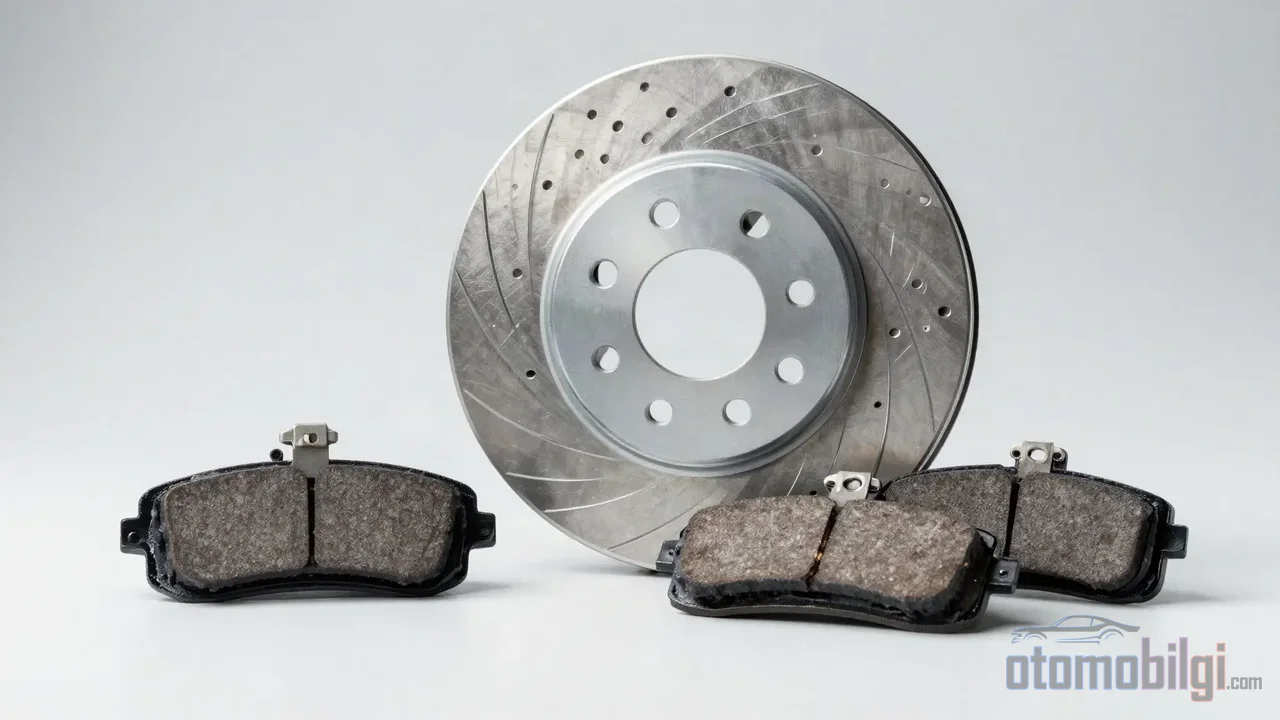
Share This Page
The answer to whether brake pads or discs should be replaced lies not in mileage, but in the measured thickness and the sound you hear: a high-pitched whistle or screech usually points to the pads, while vibration from the pedal and steering wheel during braking points to the disc. Under average conditions, the front pads last 25,000-50,000 km and the rear ones 40,000-70,000 km ; the disc wear limit is determined by the minimum thickness value the manufacturer has marked on the disc itself. A correct diagnosis also prevents unnecessary part replacement.
Highlights
- When pad thickness drops to 3 mm or below, it is time for replacement.
- A disc with a new thickness of 28 mm usually has a minimum limit of around 24-25 mm .
- Brake fluid is hygroscopic and should be renewed approximately every 2 years .
- Slight noises during the first 300-500 km with new pads are normal; this is the break-in period.
- A high-pitched sound points to the pads, while pedal and steering vibration points to the disc.
Pads or discs? Three signals that make the distinction
The braking system slows the vehicle by converting kinetic energy into heat, and two parts share this job: the pads that rub against the disc and the disc that the pads press against. Whichever part has the problem, the signal comes from there. Three things are enough to make the distinction: the character of the sound, the feel of the pedal, and the measured thickness of the parts.
- High-pitched whistle or screech: A high-toned sound when slowing down usually points to the pads. On pads with wear indicators, the indicator plate deliberately produces this sound by touching the disc.
- Vibration and pulsation: Shaking from the pedal or steering wheel during braking is mostly a disc problem. Disc runout and thickness variation are reflected as vibration in the pedal and cause patchy pad wear.
- Metal-on-metal (grinding) sound: A rasping, deep metallic sound indicates that the pads are completely worn out and the metal backing plate is touching the disc. At this stage, the disc is also damaged.
A high-pitched sound points to the pads, vibration to the disc; a grinding sound is the announcement that both are done for. Seeing the symptoms side by side in a table makes diagnosis easier:
| Symptom | Likely culprit | Explanation |
|---|---|---|
| High-pitched whistle / screech | Pads | The wear indicator may be touching the disc |
| Pedal vibration / sponginess | Disc or brake fluid | Disc runout or hydraulic problems |
| Left-right shaking in the steering wheel | Disc | Thickness variation or surface damage |
| Metal-on-metal sound | Pads + disc | Pads completely worn out, disc being scratched |
| Increased braking distance | Pads, disc or fluid | The system wants an overall inspection |
How to tell that brake pads are worn out?
Pad wear begins by giving the vehicle some clues. The most obvious clue is sound: a high-pitched whistle, a deep metallic rasping, or a "clunk" sound when you press the brake are harbingers of wear. The pedal may feel spongy, stopping distance may increase, and a warning light may come on on the dashboard.
Visual check: looking through the wheel gap
Peeking at the pad through the wheel spokes is sufficient for an initial assessment. When the pad thickness 3 mm drops to or below this level, it is time for replacement. Soft pads operate quietly and stably but wear out quickly; hard pads are long-lasting but can increase disc wear. This balance is as important a criterion as material composition when choosing pads.
Is noise after new pads normal?
Yes, partially. During the break-in period of a new pad in the first 300-500 km slight noises are normal. To speed up the break-in, from 60-20 km/h braking 6-8 times with medium firmness can be performed, followed by from 80-30 km/h braking 3-4 times with cooling intervals left in between. The temporary high-pitched noise heard during the first braking maneuvers of the morning in cold and humid weather is also considered normal. If the noise becomes constant or has a metallic tone, expert inspection is essential.
When should the brake disc be replaced? Thickness beats mileage
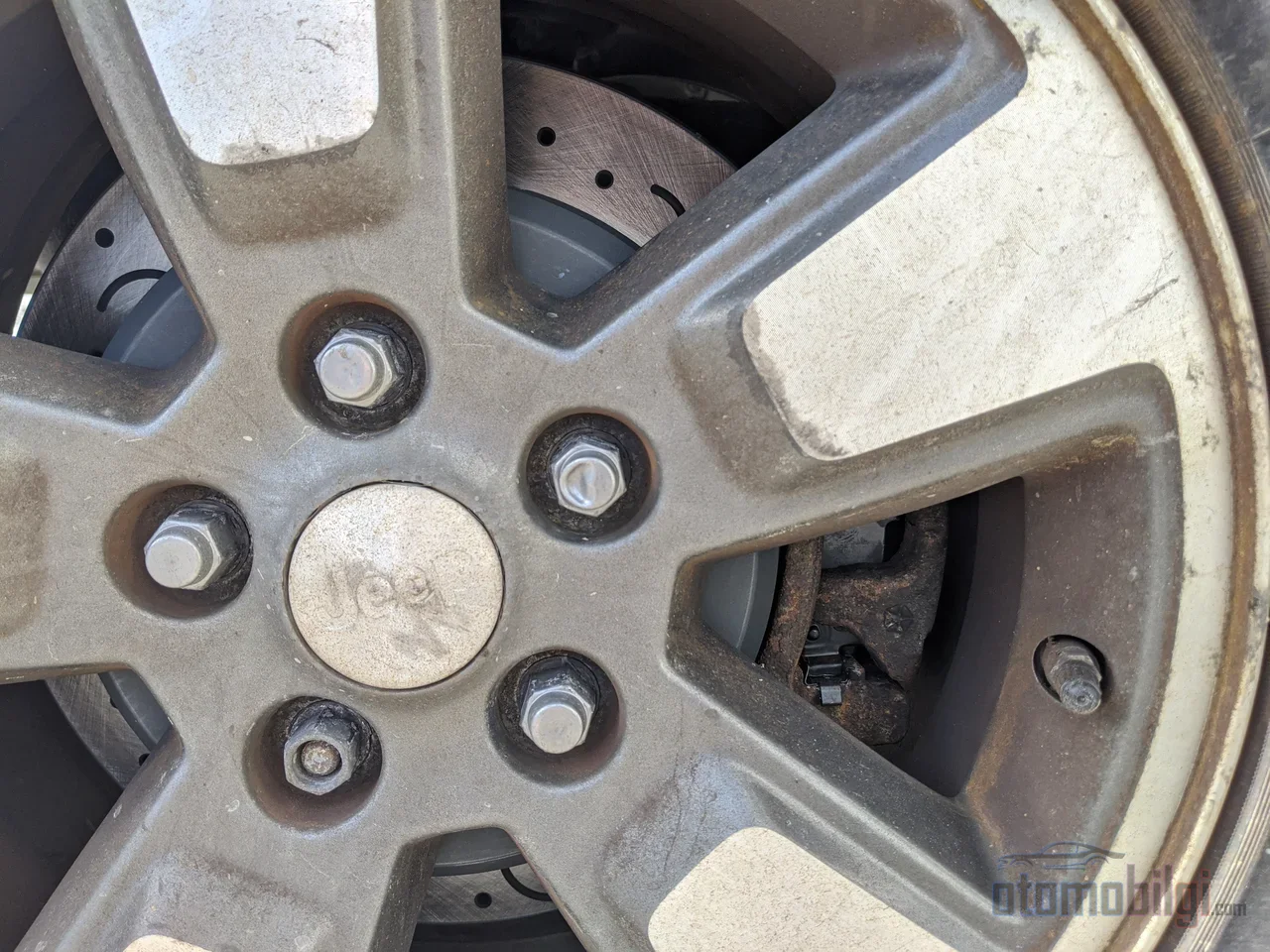
The disc wear limit is defined as the thickness below which proper braking efficiency cannot be guaranteed. New discs are generally manufactured in the 10-30 mm range, and the average wear allowance is about 2-3 mm . The manufacturer's minimum thickness value is marked on most discs; this value typically ranges 20-30 mm between. A concrete example: a disc with a new thickness of 28 mm usually has a minimum limit of around 24-25 mm .
The critical point here is this: the disc replacement decision should be made based on measured wear and physical condition rather than mileage. The surface may look smooth to the eye; but if the thickness has dropped below the minimum, the disc must be replaced. Visual inspection does not definitively show the remaining thickness - a measurement with a caliper is required for this.
What should you look for on the disc surface?
- Grooves and ridges on the surface are evidence of uneven friction.
- Blue-purple heat spots mean the disc has overheated.
- Rhythmic pulsation in the pedal indicates thickness variation.
Can the disc be machined (turned)?
Machining is an option in some cases, but it depends on a single rule: after machining, the disc must remain at least above the wear limit. A disc that has gone below the limit cannot be machined; replacement is the only correct decision. Also, when the brake caliper does not press evenly on the pad, the new disc and pad may experience the same problem - therefore, the brake caliper should also be checked during replacement.
Why isn't the replacement interval the same for every vehicle?
Fixed mileage tables are misleading because pad life depends on driving style, route profile, vehicle weight, pad composition, and the condition of the braking system. Stop-and-go city traffic, hilly routes, and aggressive braking significantly shorten life; long-distance driving, engine braking, and anticipatory driving extend it. Driving style is one of the most important factors affecting pad wear: sudden braking accelerates wear.
Smooth driving habits reduce wear; but no driving style can prevent corrosion, hardware degradation, and brake fluid aging. Therefore the approach should be this: periodic inspection suited to usage conditions rather than a km schedule. As a general framework, pads are consumed in the 30,000–70,000 km range depending on driving style; the front axle typically wears out sooner. Rotors usually last about twice as long as pads, but should be checked at every service.
Brake fluid: the neglected but critical item
Brake fluid is hygroscopic; it absorbs moisture from the air, and this lowers its boiling point. Fluid with a reduced boiling point can vaporize under heavy braking, leading to pedal fade. For this reason, brake fluid should generally be replaced every 2 years or every 40,000 km . When it is delayed, a soft pedal and longer braking distances are inevitable.
Thinking of the brake fluid item under the same roof as the discs and pads is a sound maintenance habit: if the pads continue to be used until they run out, metal-on-metal friction scores the disc, the brake fluid carries a boiling risk, the pedal fades, and ABS/ESP effectiveness weakens. In other words, one neglected item generates a chain of costs.
The right questions when going to the service: how to avoid unnecessary replacement?
The braking system is directly a matter of life safety; chasing savings here is illogical. But unnecessary part replacement is not proper maintenance either. When you go to the service, asking the following questions makes the diagnosis concrete:
- "How many mm was the pad thickness measured at?" - Compare it against the 3 mm limit.
- "Was the disc thickness measured, what is the minimum value and what is the machined-over limit?"
- "Is the vibration caused by disc runout or a brake caliper problem?"
- "Could the brake fluid boiling point be measured, and when was the last replacement?"
- "Is only the pad sufficient, or is the disc also at its limit?"
Original or aftermarket?
The quality difference among aftermarket pads is large. Premium brands such as Brembo, Ferodo, TRW, Mintex, and Textar produce at near-original quality. A low-quality pad, when heated, can extend the braking distance; tests have shown that aftermarket products deform faster and braking distances increase. The clean rule from an engineering standpoint is this: OE or OEM part if possible; an equivalent part only if its quality is proven. A cheap pad that wears out within a few months also creates the necessity of a second purchase in a short time - the cost calculation should be made over this scenario.
Conclusion: decide by measurement, not by numbers alone
Two numbers sum it all up in brake maintenance: 3 mm for the pads, and the manufacturer's minimum thickness machined onto the disc for the rotors. When, along with these two limits, you can read the character of the sound and the feel of the pedal, the question "pad or disc?" turns from guesswork into a measurable diagnosis. Also tie the brake fluid to the calendar with a two-year rhythm; ask for a thickness measurement at the service and replace only the part that has fallen below the limit. This systematic approach protects both your safety and your budget.
Sources
- What Is a Brake Pad? Brake Pad Lifespan
- Minimum brake disc thickness - Maintenance
- What Is Brake Fluid? When and How Should It Be Changed?
- How to Tell When Brake Pads Are Worn Out?
- What Are the Signs of Brake Disc Wear?
- What Should Brake Disc Thickness Be in mm?
- How to Detect Brake Disc Wear?
- How Long Does a Brake Disc Last?
- How to Tell When a Brake Disc Is Worn Out?
- How to Tell When Brake Pads Are Worn Out? 5 Signs
- 6 Signs That It's Time to Change Your Brake Pads
- When Should Brake Discs and Pads Be Replaced?
- Brake Fluid Replacement Guide
- Brake Pad Prices: The Difference Between Original and Aftermarket
- The Differences Between Original and Equivalent Parts