Habits That Preserve Resale Value

Share This Page
Vehicle ownership is shaped not on the day of sale, but on every day leading up to the day of sale. In the used car market, the thing that affects the price most is not that a car has been well maintained, but that its good maintenance can be proven with documentation; therefore, a regular maintenance record, the right choice of parts, and daily usage habits directly determine the figure on the day of sale. In this article, we examine, with concrete intervals and figures, which habits preserve value, which ones quietly reduce it, and how much bargaining power a maintenance file provides during the inspection process.
Highlights
- A full service history can raise used car value by up to 20%.
- The periodic maintenance interval is 10,000-15,000 km or once a year for most passenger cars.
- The timing belt is replaced in the 60,000-120,000 km range; a snapped belt can lead all the way to an engine overhaul.
- Tire rotation should be done approximately every 10,000 km; it can extend tire life by 10-15%. can increase it.
- Having maintenance done at an authorized service center is not mandatory; what matters is documented maintenance.
Does a Maintenance Record Really Affect the Sale Price?
Yes, and the extent of the impact is greater than you think. A vehicle with a regular service record sells at a higher price and finds a buyer faster than an undocumented vehicle of the same model and mileage. The logic of the market is simple: a buyer cannot put a value on maintenance they have not seen. Even if two vehicles are in the same mechanical condition, the one with documentation is priced as the side whose risk has been proven.
The effect works in both directions. An undocumented timing belt replacement counts as not done in the buyer's eyes. The buyer first deducts the cost of the belt from the price, and then adds the cost of the question "what else might have been skipped?" In other words, failing to document a maintenance item means paying for it twice.
The rule that follows is clear: a vehicle's value comes not from being well maintained, but from the fact that its good maintenance can be proven. Keep the date, mileage, and work performed in a single file for every maintenance visit; do not throw away invoices, inspection receipts, or the list of replaced parts. Going to the same service center regularly strengthens the consistency of the file.
The legal framework also supports this understanding. Under the Consumer Protection Law, maintenance performed in accordance with the manufacturer's instructions and documented does not reduce warranty rights; having maintenance done at an authorized service center is not mandatory. Properly performed maintenance at an independent shop does not reduce used car value - what reduces it is the lack of documentation.
Which Part Is Replaced at How Many Kilometers? A Typical Maintenance Schedule
There is no single correct figure; each vehicle's manufacturer manual is what matters. But for the vast majority of passenger cars there are honest typical intervals, and knowing them is useful both for budgeting and for spotting the gaps in your file before a sale.
| Maintenance Item | Typical Interval |
|---|---|
| Engine oil + filter | 10,000-15,000 km / 12 months |
| Air filter | 15,000-30,000 km |
| Fuel filter (gasoline / diesel) | 40,000-60,000 / 20,000-40,000 km |
| Spark plugs (copper / iridium) | 20,000-30,000 / 100,000-120,000 km |
| Brake pads / discs | 30,000-50,000 / 80,000-120,000 km |
| Brake fluid | 40,000 km / 2 years |
| Timing belt | 60,000-120,000 km or 5-6 years |
| Battery | 4-5 years |
| Tires | Tread depth below 4 mm, DOT 6+ years |
The most dangerous row in this table is the timing belt, because it usually gives no warning. If it snaps, the pistons collide with the valves, and the result can be an engine overhaul - costing tens of times more than replacing the belt. That is why a timing belt replaced before the interval is due is one of the strongest pieces of "well maintained" evidence on the used car market.
Severe Use: Why Should Intervals Be Moved Up in Türkiye Traffic?
Manufacturers set maintenance intervals assuming mixed use. Yet the definition of "severe use" includes the following: heavy city traffic, short trips that end before the engine warms up, dusty roads, towing a trailer, and extended idling. Look inside that definition: a vehicle used daily in Türkiye's metropolitan traffic already fits most manufacturers' definition of severe use. In that case, the widely accepted approach is to move maintenance intervals up by roughly one third .
The double-clock rule: mileage alone can lie
Mileage counts the engine's running time; months measure the aging of fluids and rubber. Engine oil oxidizes even when the engine is not running, brake fluid absorbs moisture, and tires harden. A rarely used vehicle is not a "maintenance-free vehicle" - annual maintenance should not be delayed even if the mileage side of the interval has not been reached.
Short-distance driving carries its own cost: in a vehicle that is shut off before the engine fully warms up, moisture and fuel residue in the oil cannot evaporate. The result is striking - the oil in a low-mileage city car can be more worn out than that of a high-mileage highway vehicle. The implication for the buyer is also clear: high mileage alone does not lower the price; how the mileage was accumulated and how the car was maintained determine the price.
Tire Rotation and Wear Management
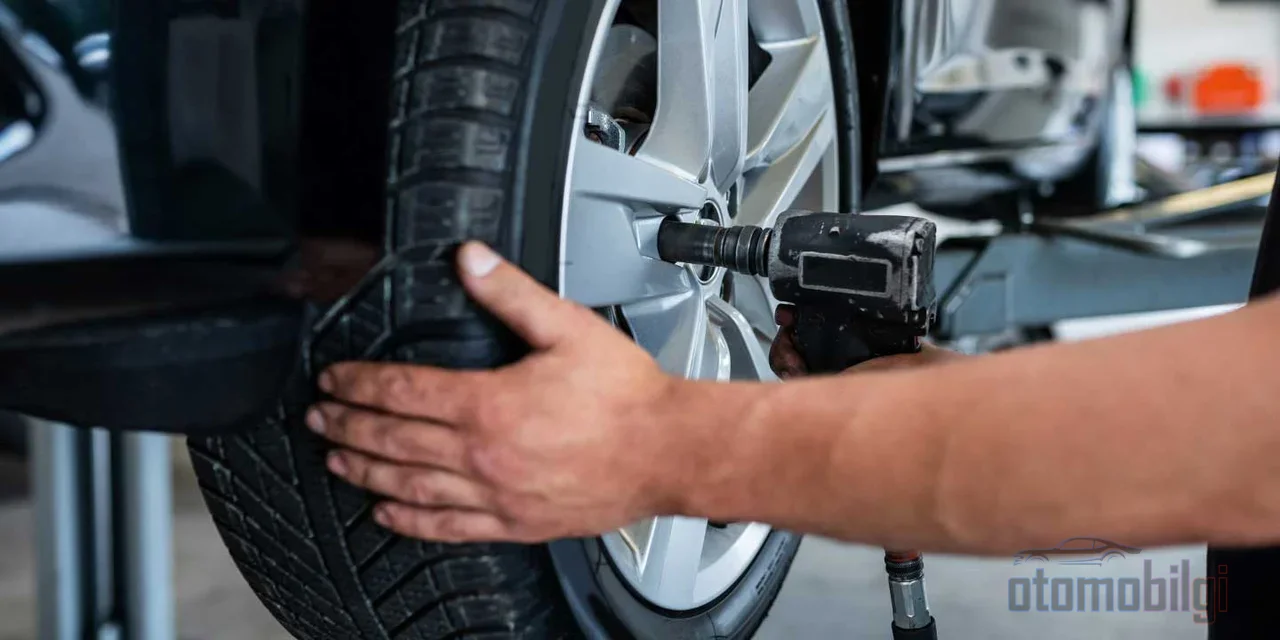
Tires are one of the first maintenance indicators a buyer looks at, because their condition makes maintenance discipline visible. Regular tire rotation is one of the most effective ways to extend tire life: the front and rear tires wear evenly, and the replacement time of all four tires is synchronized. The recommended frequency is roughly every 10,000 km; with regular rotation, tire life can increase by 10-15% . Rather than guessing the rotation pattern, follow the diagram in the vehicle's owner's manual - there are differences in the pattern for front-wheel drive, rear-wheel drive, and all-wheel drive vehicles.
Do not forget the legal aspect either: the minimum tread depth that passes inspection is 1.6 mm, but from a sales perspective, tires below 4 mm are already a point of negotiation. A tire whose DOT code exceeds 6 years is also discounted, even if the tread is good.
Parts Selection: The Balance Between OEM, Equivalent, and Aftermarket
The parts class is a strategic decision both in terms of safety and second-hand value. In post-accident insurance practice, the "original parts price difference" comes into play: it is the financial difference between an equivalent or aftermarket part and the original part, and the vehicle owner has the right to request which part will be installed. The use of non-original parts may void the manufacturer's warranty and creates a measurable loss of value on the used car market; even if they are well repaired, vehicles with damage records remain in the lower group in pricing.
A balanced approach differs depending on the parts class: do not downgrade the class on safety parts such as brakes and suspension; you can show flexibility on comfort parts. In major maintenance, OEM standards are especially important for the timing belt kit, valve cover gasket, and seals. The same logic applies to oil selection: an expensive oil that does not meet the specification is worse than an economical oil that does.
The "lifetime" transmission oil debate
Some manufacturers define transmission oil as "lifetime"; the typical range recommends changes within the 60,000-100,000 km band. In practice, it is safer to read the phrase "lifetime" as "for the duration of the warranty": if you are an owner aiming for high mileage, periodic changes are on the safe side. A similar caution also applies to longlife programs - 20,000-30,000 km oil intervals depend on the correct oil specification and long-distance usage conditions. If these conditions are not met, the program remains on paper; not changing the oil for 30,000 km in Istanbul traffic is a program error, not efficiency.
The myth of "brake pads last 40,000 km"
Although 30,000-50,000 km is the typical range for brake pads, life can drop to 25,000 km under aggressive city use and can exceed 60,000 km on calm highway driving. Take not the kilometer figure but the feel of the brake pedal and the remaining pad thickness on the disc as your measure.
Inspection and Negotiation: How Does Your Maintenance File Make Money?
A vehicle inspection is not mandatory, but it is one of the clearest money-making steps in the sales process. An inspection report obtained from a corporate firm gives the buyer complete information about the vehicle's condition, reveals hidden defects from the start, and brings transparency to the negotiating table. This is already the top recommendation in used car buying: an independent and corporate inspection report along with a mileage check.
The report alone is not enough; when service records, invoices, and maintenance documents are read together with the report, the vehicle's history becomes clear and trust takes shape. The negotiation math is also straightforward: the cost of brake pads, discs, shock absorbers, battery, or tire needs identified during the inspection is deducted directly from the price. Your task is to show with your file that these items have already been done - and if they have not, to honestly make the pricing adjustment yourself from the start.
Consider the alternative picture on the seller's side: a vehicle without a report is open to the buyer pricing in the worst-case scenario. An inspection report eliminates this uncertainty premium; when combined with a documented maintenance history, it not only preserves the vehicle's value but also shortens the sales time.
Daily Habits That Quietly Lower Your Car's Value
Just as important as the maintenance file, daily behaviors that never make it into the file also determine the price. The most common mistakes are concretely as follows:
- Loading a cold engine: High revs before the engine warms up accelerate wear. Waiting at a long idle before setting off is also unnecessary; calm first few kilometers are sufficient.
- Smoking inside the cabin: The odor becomes the first card at the bargaining table; removing it is difficult and costly.
- Postponing minor defects: Small problems such as a cracked windshield or a dent are inexpensive when fixed early; when postponed, they grow in the buyer's eyes.
- Excessive personalization: Custom wheels and modifications mean trying to make the buyer pay for your taste; the value is usually not recovered.
- Underestimating a major damage record: A recorded damage affects the buyer's evaluation even if well repaired; therefore, add the repair documents to the file as well.
Conclusion: Protecting Value Is a File-Keeping Job
Second-hand value does not rise with a single move made on the day of sale; it is the sum of decisions accumulated over kilometers and the calendar. Maintenance performed in line with manufacturer intervals, and brought forward when necessary due to heavy use; a single file containing the date and mileage for every operation; a parts strategy that makes no compromises on safety components, and tire maintenance including rotation - all of these are reflected in the inspection report and your bargaining position on the day of sale. To summarize from an engineering perspective: maintenance is not a cost item, but an equity investment you collect on the day of sale.
Sources
- Vehicle maintenance intervals: at how many kilometers should oil, brakes, tires, and timing belt be serviced?
- What Is Major Maintenance? Its Scope, Timing, and Results
- Does Periodic Maintenance Affect a Car's Second-Hand Value?
- Does Maintenance at an Independent Shop Lower Second-Hand Value?
- Why Is a Regular Maintenance History Important for a Used Car?
- Vehicle Maintenance Tips
- What Advantages Does a Vehicle Inspection Report Provide for the Buyer?
- How to Negotiate a Car Price After an Inspection?
- What Should You Pay Attention to When Buying a Used Car?
- What Is the Original Parts Price Difference? How Is It Covered?
- What Are Equivalent Parts Applications and Their Conditions?
- 9 Habits That Preserve a Car's Second-Hand Value
- What Is the Tire Lifespan of Vehicles?
- Tire Rotation
- Special Lubrication Tips for High-Mileage Vehicles