Hidden Costs That Inflate Your Maintenance Budget
Share This Page
What really inflates a car's annual maintenance budget is not the figure on the invoice; it is the invisible factors that determine that figure: parts availability, transmission type, how you use the car, and which service shop you take it to. The 60,000 km major service bill for two gasoline cars in the same segment can be 12,000 TL for one and exceed 25,000 TL for the other; the difference is no surprise, it is a natural outcome of the system. In this article, we break down that system through concrete cost items.
Key Takeaways
- At an authorized service center, a 10,000 km service costs 4,000-8,000 TL, and a 60,000 km major service costs 12,000-25,000 TL; for premium brands it can exceed 35,000 TL.
- At independent garages, labor is 40-60% cheaper than at authorized service centers.
- There can be a 40-60% price difference between an original part and a TSE-certified quality equivalent.
- A broken timing belt can lead to a 60,000-150,000 TL engine overhaul through valve-piston collision.
- Stop-and-go city traffic significantly shortens brake pad life and counts as "severe use" for oil changes.
What determines car maintenance costs?
The size of a maintenance bill is the product of four variables: the car's brand and parts availability, the technical specifications of the engine and transmission, your driving style, and where you have the service done. On the brand side, the matter is simple: distribution, official sales networks and advertising costs are embedded in the authorized service center's prices; since independent garages do not carry this burden, they can do the same job for less. On the parts side, less obvious details such as oil capacity are decisive: the oil bill for a small engine taking 3.5 liters is not the same as for a large engine requiring 6-7 liters. Viscosity also affects the price; the 0W-20 grade full synthetic oils required by new-generation engines are more expensive than standard semi-synthetics.
Transmission type is also a silent cost item. In an automatic transmission, the oil change is a mandatory item at 60,000 km, whereas in a manual transmission it is checked first and the change is usually planned for around 100,000 km. So driving the automatic version of the same model adds another visible item to your maintenance schedule in the long run. In diesel engines, the fuel filter is more complex and changed more frequently than in gasoline ones, and the oil capacity is higher; therefore diesel maintenance is usually more expensive than gasoline.
Periodic maintenance schedule: which costs come at which mileage?
The general standard periodic maintenance interval is 10,000-15,000 km or 1 year - whichever comes first. In some new-generation vehicles this interval can go up to 20,000 km; but the critical warning here is this: a vehicle driven in heavy city traffic falls into the manufacturer's "severe use" category and an early change is recommended. In gasoline engines, oil is renewed every 10,000-15,000 km, in diesels every 8,000-12,000 km or once a year.
Maintenance cost does not increase linearly with mileage; it jumps at certain thresholds. If we pour these items into a table, budget planning becomes easier:
| Mileage | Scope | Cost level |
|---|---|---|
| 15,000 km | Oil, oil filter, air/pollen filter | Low |
| 30,000 km | Fuel filter and spark plugs are added | Medium |
| 60,000 km | All filters, transmission oil, brake fluid, V-belt, timing belt kit if needed | High |
| 90,000 km | Shock absorber and running gear inspection is added | Very high |
At authorized service prices, these items roughly translate as follows for 2026: 10,000 km maintenance 4,000–8,000 TL, 30,000 km maintenance 7,000–14,000 TL, 60,000 km major maintenance 12,000–25,000 TL; for premium brands, this last figure can exceed 35,000 TL. Also, tires should be added to the annual plan as a per-kilometer cost: for example, a 12,000 TL set of tires with a 45,000 km lifespan means about 0.27 TL per kilometer - the annual tire allowance for someone driving 15,000 km a year is calculated with this logic.
How does city traffic shorten a vehicle's life?
Even if the mileage is the same, kilometers driven in the city and on the open road are not equal in terms of the stress they place on the engine and brakes. Frequent stop-and-go use significantly shortens brake pad life; sudden braking and aggressive driving reduce this lifespan even further. Front pads are generally replaced between 30,000–60,000 km, while rear pads can reach the 60,000–100,000 km range. A vehicle used in the city sits at the lower end of this range, while one driven mostly on the highway sits at the upper end.
On the engine side, the situation is similar. City traffic falls into the "severe use" category for oil changes; meaning that even if the manufacturer interval is 15,000 km, it is right to change the oil earlier in a vehicle constantly stuck in traffic. This is an approach that looks excessive on paper but is entirely rational when you look at the engine: in stop-and-go use, oil wears out faster than under ideal operating conditions.
Small spending done early, versus the big bill postponed
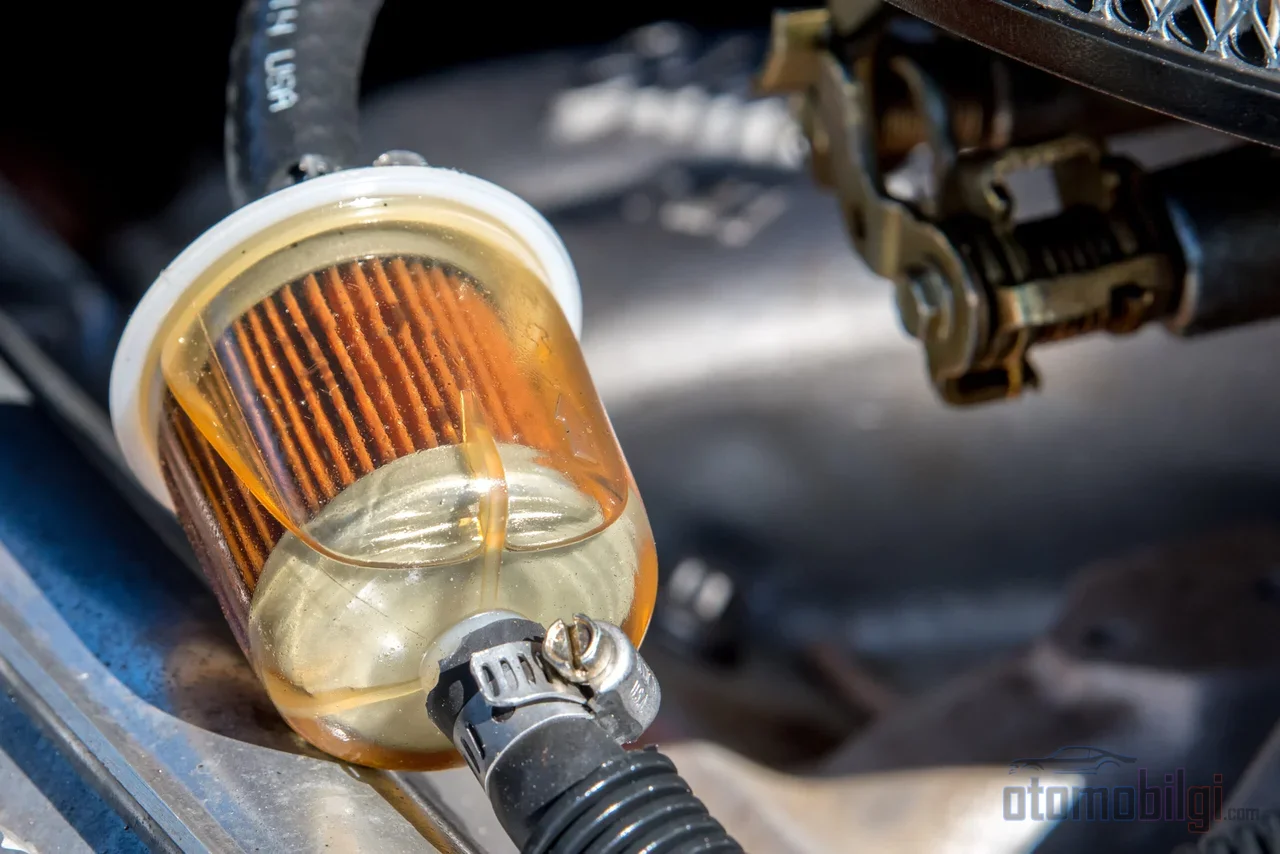
What really inflates the maintenance budget is the chain of costs from maintenance that was not done. Let's look at the numbers:
- A late oil change can lead to early engine replacement: 35,000–80,000 TL.
- On a turbocharged engine, old oil cannot lubricate the turbocharger: instead of a 5,000 TL oil change, you risk a 60,000 TL turbo bill.
- A snapped timing belt causes valve-piston collision and a complete engine overhaul: 60,000–150,000 TL.
- A worn air filter increases fuel consumption by 5–15% - under heavy use that means an annual loss of 8,000–15,000 TL.
- A dirty fuel filter can cause injector clogging: cleaning or replacement 15,000-35,000 TL.
The timing belt is the most instructive item on this list. The kit should generally be replaced every 60,000–120,000 km or at the latest every 4–5 years; Even if the mileage is not reached, the rubber material ages. The replacement cost ranges from approximately 3,000-10,000 TL depending on the set and labor. The math is clear: A timing replacement costing nearly 10,000 TL is insurance against engine damage that can reach 100,000 TL. But here the information also needs to be accurate: some modern engines (for example the Hyundai/Kia 1.6 GDI or VW 1.4 TSI) use a chain instead of a belt, requiring no replacement for the vehicle's lifetime. In such an engine, a belt replacement carried out on incorrect information means more than 8,000 TL wasted.
Authorized service or independent service: the long-term calculation
For a vehicle out of warranty, an independent service is usually the economical choice: labor rates are 40-60% more affordable than at an authorized service. It is also possible to go to an independent shop without voiding the warranty - under the block exemption regulation, a service holding a TSE 12047 service competence certificate maintains the warranty as long as it uses manufacturer-approved (OEM) parts.
However, the total cost of ownership calculation is more complex than the difference on an instant invoice. Two hidden items stand out. First, manufacturers' "goodwill warranty" practice: if a chronic failure occurs in a vehicle whose services were all performed at an authorized service, brands can cover 50-100% of the parts cost. Second, the resale premium: The "Serviced at Authorized Service" label allows the vehicle to sell 5-10% faster and at a higher value. So the authorized service difference is not directly on the invoice; it can also be read as an investment that pays back through warranty coverage and resale value. Do not forget the city factor either: labor costs at authorized services in major cities are higher than at local independent shops in Anatolia.
Original, equivalent, and aftermarket parts: the expensive result of a cheap part
There is usually a 40-60% price difference between an original part and a TSE-approved quality equivalent part. Using a quality equivalent is therefore a legitimate way to save; the risk comes from poor manufacturing - an unregulated part can lead to engine failure. With the bring-your-own-parts method, it is possible to save close to 30% on parts costs with products from reliable brands; in return, you should know that the mechanic cannot provide a parts warranty.
In accident repair, however, the regulation favors the reader: when the insurance company installs an aftermarket or equivalent part, the vehicle owner can claim the difference between the original part price and the equivalent part price. Moreover, the right to choose whether an equivalent part will be installed belongs to the vehicle owner - although the exercise of this right has been taken to court in some disputes, the claim for the price difference is a legally defined right.
How do you know whether the service time has come?
For those who miss the schedule, the vehicle announces itself: a warning light at the service, a change in engine sound, reduced pulling power, increased fuel consumption, and exhaust smoke color are the classic signs that service time has come. Ignoring these signals tends to turn into the chain-of-expenses table above.
Practical ways to plan your budget in 2026
Spare parts inflation is a current problem; the impact of the increase in the additional customs duty attached to imports on car and spare parts prices is being debated. In this environment, there are three concrete ways to protect your budget. First, maintenance packages sold by brands: buying a 3-year maintenance package upfront protects you from future inflationary increases. Second, seasonal campaigns by manufacturers - some brands offer service discounts of up to 30% on passenger cars over 2 years old, depending on the first registration date. Third, creating a km-based maintenance map: if your vehicle is approaching the 60,000 km threshold, write the major service into your budget now.
Planning is changing on the used-car side as well: banks are making the inspection report mandatory for used-car loans, and the report is also used to document depreciation. An inspection you get before purchase is the most reliable way to read not only the risk of hidden faults but also the size of your maintenance budget for the years ahead - even in a vehicle that appears to have low mileage, a time-based timing belt replacement may be on the agenda.
Conclusion: writing silent costs into the budget
The maintenance budget starts before you buy the vehicle, not after the invoice. It is possible to model the annual cost in advance by looking at the brand's parts availability, the extra items brought by the transmission type, the effect of your usage style on the life of brake pads and oil, and the long-term return of your service choice. The rule is simple: small and timely expenses are the cheapest alternative to large and unexpected bills.
Sources
- Periodic Maintenance Cost 2026: An Item-by-Item Planning and Savings Guide
- Volkswagen Periodic Maintenance Prices 2026
- Vehicle Maintenance Guide 2026: Complete KM-Based List
- Periodic Maintenance Prices 2026: What Determines the Maintenance Fee?
- Timing Belt Replacement - Bosch Car Service
- At How Many KM Should the Timing Belt Kit Be Replaced?
- At How Many KM Should Engine Oil Be Changed?
- What Is the Lifespan of Brake Pads?
- When Should Vehicle Brake Pads Be Replaced?
- Authorized Service or Independent Service?
- Authorized Service and Independent Private Service
- What Is the Original Parts Price Difference? How Is It Calculated?
- What Is the Equivalent Parts Application and Its Conditions?
- How Is Vehicle Maintenance Cost Calculated?
- Additional Customs Duty on Imports Increased: Impact on Cars 2026
- Used-Car Loans: Inspection, Value and Bank Process