Original or Aftermarket? The Differences Beyond Price in Parts Selection
Share This Page
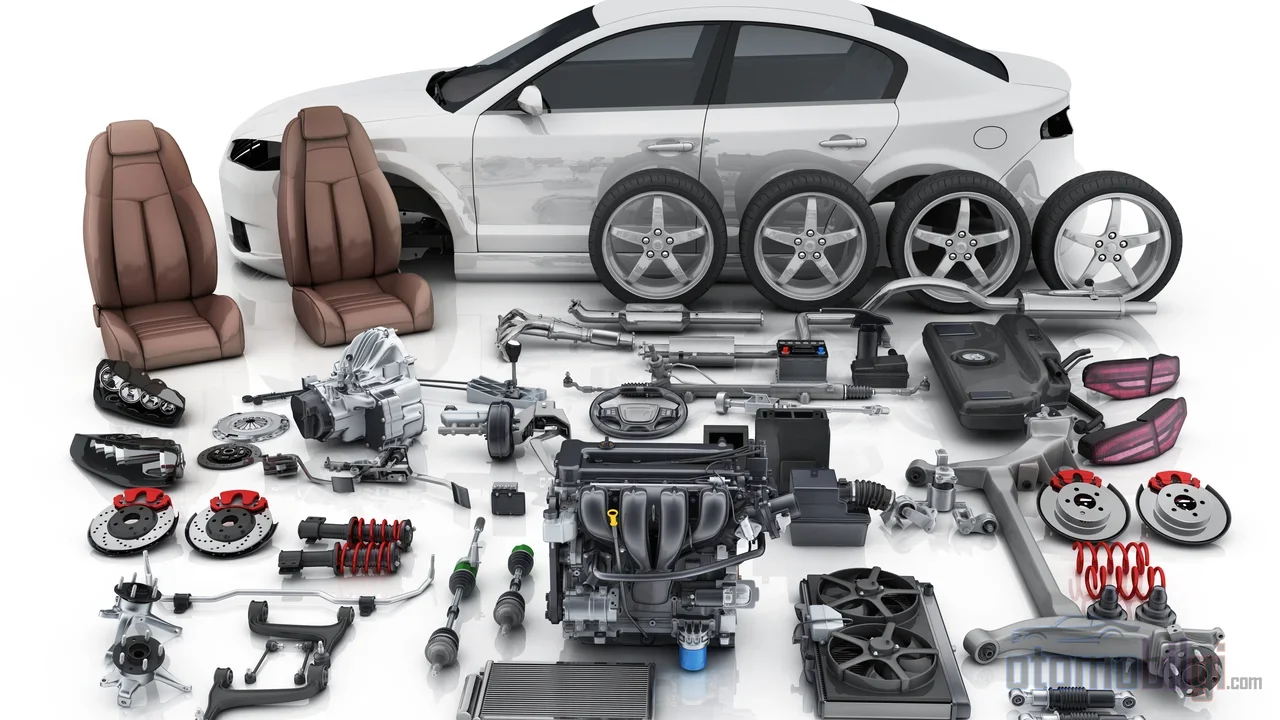
An original part is the exact identical part produced or approved by the vehicle manufacturer and used on the assembly line, whereas an aftermarket part is the product of independent companies not affiliated with these manufacturers. Original parts are typically 40-70% more expensive than aftermarket ones, but in return they offer a manufacturer warranty and 100% fitment. The right choice depends on the part's function: original parts make sense for safety-critical components such as brakes and steering, while certified aftermarket parts can be a sensible option for filters and cosmetic parts.
Key Takeaways
- Original parts are on average 40-70% more expensive than aftermarket parts; in English-language markets this gap is given as 50-65% .
- An original brake pad lasts about 50,000 km while a low-quality aftermarket product can wear out at 15,000-20,000 km.
- The warranty of original and reputable aftermarket manufacturers is usually 1-2 years; cheap products have no warranty or it is difficult to enforce.
- A counterfeit part is not an aftermarket part: it is a separate category and a real safety risk.
Original, OEM, OES and Aftermarket: A Clear Definition of the Four Categories
The most common mistake when choosing parts is squeezing all options into two boxes. In fact, there are four separate categories, and the differences between them directly affect the price.
- Original part (OE): The exact identical part produced by the vehicle manufacturer or coming from an approved supplier, matching the one on the assembly line. It carries the vehicle brand's logo and is sold at authorized service centers.
- OEM part: A product sold by the supplier that manufactures the vehicle's original parts through independent channels, without carrying the vehicle manufacturer's brand. Technical specifications are equivalent to the original; the price is usually more affordable.
- OES part: Very close to OEM. The part comes directly from the manufacturer's supplier and may not carry the vehicle brand's logo; in some cases the warranty may be more limited than OEM.
- Aftermarket part: The product of companies independent of original or OEM manufacturers. Quality and durability vary significantly from brand to brand.
The fifth category that should be added to this quartet is the counterfeit part. A counterfeit product is not an aftermarket part; it is an imitation of a quality aftermarket manufacturer or of the original. As we will discuss in a separate section below, it is a genuine danger and should not be confused with the legitimate aftermarket option.
How Big Are the Price, Warranty and Durability Differences?
The outcome of the decision depends on three variables: the price tag, warranty coverage and the part's lifespan. When you put all three together, the picture becomes clear.
| Feature | Original (OE) | OEM / OES | Aftermarket |
|---|---|---|---|
| Price difference | Most expensive | Usually cheaper than original | Varies by brand |
| Warranty | Usually a 1-2 year authorized service warranty | Sometimes limited compared to OEM | 1-2 years from reputable manufacturers; none on cheap products |
| Fitment | 100%; no vibration, gaps or noises occur | Equivalent to the original | Risk of dimensional deviation and incompatibility |
| Brand logo | Carries the vehicle brand | Does not carry it | Carries the manufacturer's own brand |
| Testing processes | Durability, heat resistance and precision measurement tests | Same line as the original | Highly variable according to the manufacturer |
Durability is not an abstract concept. A concrete example from brake pads: an original pad can last about 50,000 km while a low-quality aftermarket product can wear out at 15,000-20,000 km. So you end up buying the cheapest product two, even three times - plus the labor each time.
There are two separate classes on the aftermarket side. "First-class" products from reputable, Europe- or America-based companies that have proven themselves can be of quality very close to the original. In contrast, cheap products usually of Far Eastern origin can be short-lived and lead to additional labor and time loss due to problems such as weak materials, poor fit of holes, or thread or sensor incompatibility.
For Which Parts Is Buying Original Mandatory?
From an engineering standpoint, the criterion is simple: if a part's failure directly affects life safety, do not compromise. In safety-critical assemblies, original or OEM quality is the only reasonable choice.
- Brake system: Pads, discs, hydraulic components. When a low-quality pad heats up, the braking distance increases; stopping potential is directly affected.
- Steering and suspension: A low-quality shock absorber reduces road holding and steering control.
- Internal engine parts and transmission: A failure causes damage exceeding the cost of a single part.
- Electronics and ignition system: An aftermarket spark plug can cause misfiring, loss of traction, and the warning light coming on; if prolonged, there is a risk of coil and engine damage.
Where Is Aftermarket Reasonable?
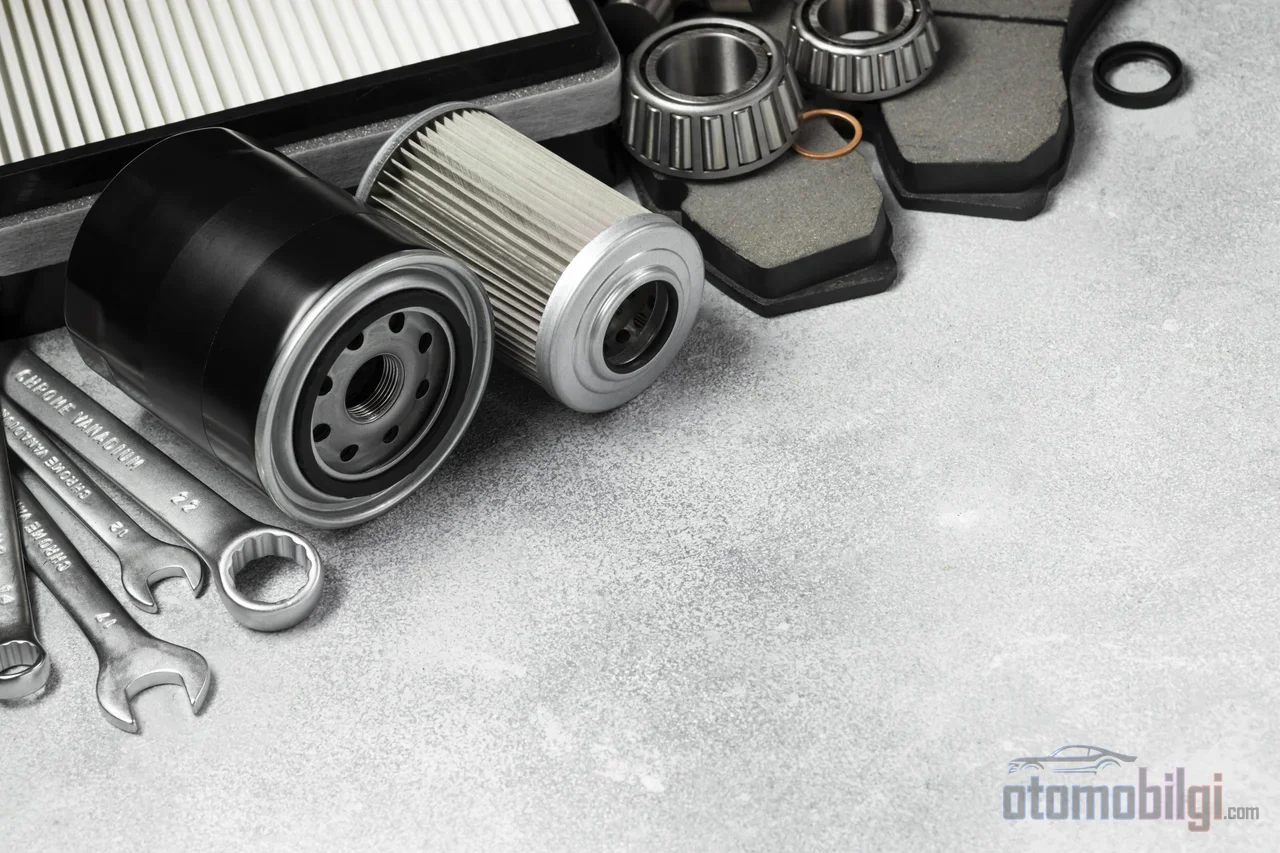
At the opposite end, there are items where the extra safety margin provided by the original makes relatively little difference. Filters and consumables can be purchased as certified aftermarket products; the sticker price difference is the smallest number in the decision, and what really matters is the replacement interval tolerance and durability. Cosmetic parts - mirror covers, wipers, bumpers - along with headlight glass and plastic components also fall into the group where aftermarket use is reasonable.
Looking at it on a per-vehicle basis, quality aftermarket parts offer an economical solution for vehicles whose warranty has expired and whose original parts are expensive. It is also reasonable as a temporary solution in emergency repairs - on the condition that you plan to replace it with a quality product. A pragmatic example: on a motorcycle, if a proven European-made pad can be bought for 1,000-1,500 TL, it can be a sensible alternative to a 9,000 TL original pad. However, the same pragmatism must never extend to low-quality pads when it comes to braking safety; the distinguishing point is the brand's proven performance, not the cheapness of the price tag.
Total Cost of Ownership: How Does the Sticker Price Factor Into the Decision?
The total cost of ownership (TCO) concept covers not only the purchase price but all expenses from acquisition to resale. When applied to part selection, there are four items in the equation: part price, labor, frequency of repeated replacement, and downtime.
When a cheap aftermarket part fails in a short time, the labor you pay for again, along with the cost of a new part, can end up being more expensive overall. A non-automotive example from the elevator industry summarizes this logic well: with a cheap part, the total part cost rises to 4,500 TL while with a quality part it stays at 2,800 TL; service and transportation costs drop from 2,400 TL to 800 TL. The numbers come from outside the automotive world, but the pattern is the same: repeated labor wipes out every advantage of going cheap.
There is another TCO item that often gets overlooked: resale value. A maintenance history done with original parts is seen as a reliable maintenance history during inspection and supports the vehicle's selling price. In other words, even on a car whose warranty has expired, the original investment made in brake and engine components can partially pay you back on the day you sell it.
How to Spot a Fake Part?
Counterfeit parts are a separate category that imitates both the original and legitimate aftermarket. Counterfeit parts cause serious damage, lower resale value, and create repair warranty issues; fake lubricants can cause engine damage, shortening vehicle life and increasing maintenance costs. Packaging quality, barcode, and manufacturer/part code checks are the first line of defense - a box, hologram, or QR code alone may not always be sufficient.
The most reliable ways to verify an original product:
- The part's unique OEM part number and vehicle brand logo
- Material and workmanship quality; perfect fit
- Part matching with the chassis number - a life-saving check
- Seller information and transparent warranty terms
The common principles of purchase come down to three points: correct part matching, reliable supply, and transparent warranty terms. When these three are not met, the transaction is risky no matter how attractive the price is.
Part Selection in the Türkiye Market
Türkiye hosts production facilities of the world's leading automotive brands; Ford Otosan is one of Ford's largest production bases in the world. As a product of this production ecosystem, the supply of authorized original spare parts also has an organized structure: the original part supply for Ford, Peugeot, Citroen, Opel, and DS brands runs through this chain. On the global aftermarket side, the long-established German brand Bosch stands out with quality part production, especially brakes; names like Denso and Magna International are also counted among international aftermarket brands.
The market also has a controversial side: news of raids on counterfeit spare part production regularly makes the headlines. For this reason, when buying parts in Türkiye, the question of a reliable supplier should come before the question of price.
Decision Guide: Which Option for Your Vehicle?
There is no single right answer; the quality level should be chosen according to the part's function. In the industry, two approaches clash: authorized services use only original parts for safety and performance reasons, while wholesalers and high-mileage users argue that the quality level should be selected based on the part's function. Vehicle owners are also divided - some are firmly against using aftermarket parts at all, while others say original for vital parts and aftermarket for the rest. The practical synthesis comes down to three questions:
- Does the part affect life safety? Brakes, steering, suspension, engine internals, transmission, ignition system: original or OEM quality.
- Has the warranty period expired? If it has and the part is not critical, proven aftermarket brands can be of quality very close to original.
- Have you calculated the total cost? Do not look at the sticker price, but at the total of part price + labor + replacement again + downtime; do not forget its effect on resale value either.
A decision that passes these three filters is usually the right one. Saving on high-quality-critical components is paying an invisible insurance premium; while for consumables and cosmetic items, the difference you pay for original is most often an unnecessary expense with no return.
Sources
- Differences Between Original and Aftermarket Spare Parts
- Spare Part Selection for Your Car: Original, OEM, or Aftermarket?
- Differences Between Original and Aftermarket Spare Parts
- What Is the Difference Between Original Parts and Aftermarket Parts?
- OEM vs OES Parts: What's the Difference?
- OEM Parts vs. Aftermarket Parts: Long-Term Reliability Differences
- OEM vs Aftermarket Filters: Total Cost of Ownership
- How to Spot Fake Auto Spare Parts?
- Fighting the Fake Automotive Spare Parts Industry
- Martaş Automotive
- Should You Buy Aftermarket Spare Parts?
- Auto Spare Parts Brands