How Did Zak Brown Win the Culture War at McLaren?
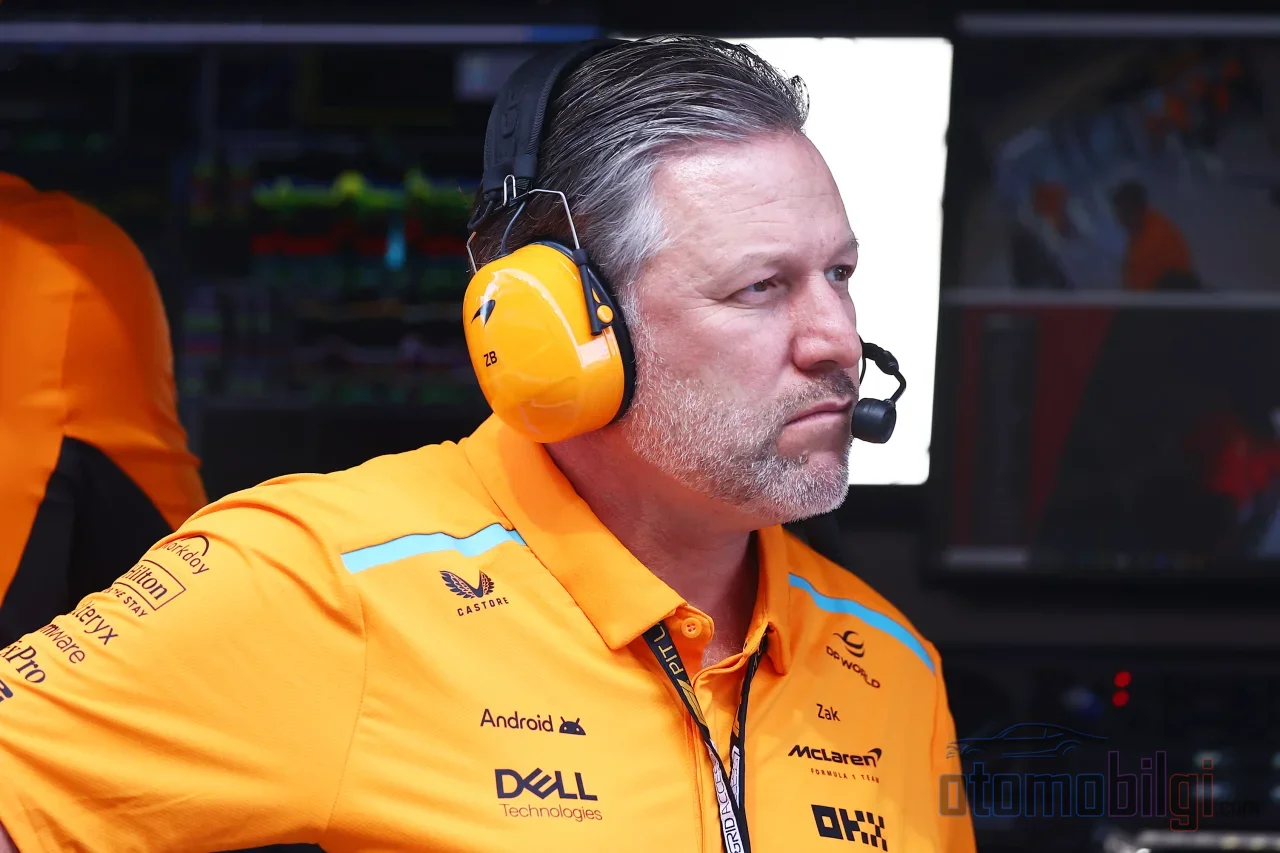
The history of Formula 1 is full of failures bought with huge budgets; money and technology alone do not carry a team to the top. McLaren's story over the last decade is the most current proof of this truth. How did the team go from the back rows of the grid to back-to-back Constructors' Championships, to Lando Norris's 2025 Drivers' Championship, and to a competitive strength that continues into the 2026 season? The answer lies not in gearbox geometry or aerodynamic regulations; it is hidden in a cultural transformation. The difference between the organization Zak Brown took over in 2017 and today's McLaren, as anyone who has been steeped in this business knows, is first about people.
Where Was McLaren When Zak Brown Arrived?
Zakary Challen Brown is an American motorsport executive born in 1971. He grew up in California, raced professionally for ten years, then moved to the business side of the track: he turned JMI, the marketing agency he founded in 1995, into one of the world's largest motorsport marketing companies, and in 2013 the company joined the Chime Communications group. During the same period, he was a co-founder of the United Autosports racing team. So when Brown stepped into McLaren, he was no stranger to the world of motorsport; on the contrary, he was one of the rare figures who knew both its sporting and commercial sides closely.
In 2016, he was offered a role in Formula 1 management, but Brown turned down the offer in favor of the McLaren opportunity. He joined the team in 2017 and today, as CEO, he is responsible for the entirety of strategic direction, operational performance, marketing and commercial development. The McLaren picture of the period when he took office was not encouraging: the team was on a sporting decline, under financial pressure, and within the organization reigned a problem that Brown would later not hesitate to describe openly.
A Toxic Culture of Blame: The Real Rival of the Transformation
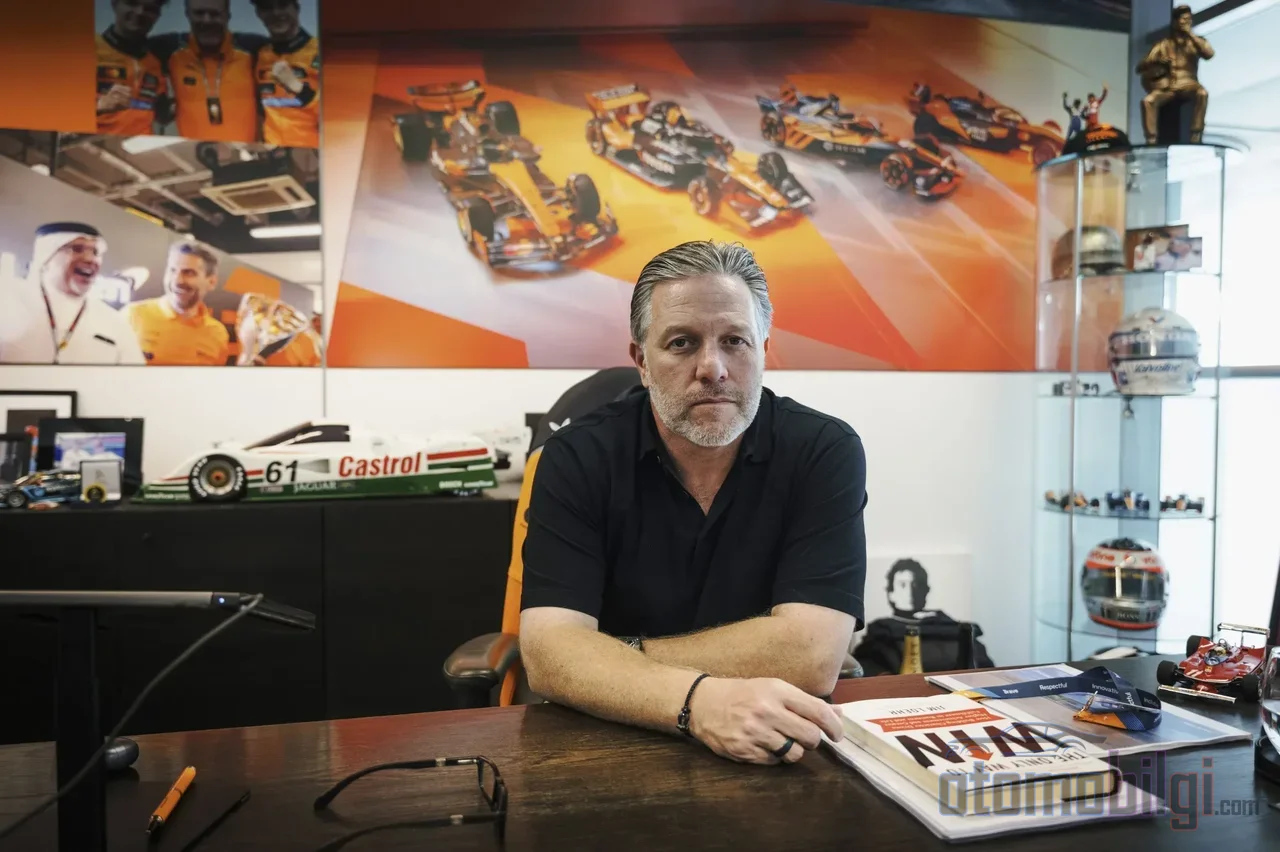
According to Brown, the real problem with the team he inherited was not track performance. The organization was dominated by a climate of mutual blame whenever results went bad. Brown explains this with a concrete example: there is a single car in the team; the person working on the front section may think they have done their job well, but the blame game identifies the problem as the fault of the person in the rear section. The question that emerged was this: could the hundreds of people who produce this single race car learn to work together?
Brown describes this culture as a structure in which everyone is considered guilty until proven innocent. In such an environment, people avoid taking risks so as not to make mistakes; an engineer chooses not the innovative solution, but the solution that will attract the least criticism. The result is one of the slowest cars on the grid. The first step of the transformation was this diagnosis: the problem was not in the people, but in the management and the culture.
Key Highlights
- Zak Brown joined McLaren in 2017 and is responsible for the entire operation as CEO.
- McLaren won back-to-back F1 Constructors' Championships in 2024 and 2025; Lando Norris became the 2025 Drivers' Champion.
- Brown replaced all three senior leaders but kept the workforce of approximately 997 people.
- The formula of the transformation: a blame-free culture, the right leadership and clear delegation of tasks.
- In the 2026 season, third place in the Constructors' Championship.
997 People the Same, the Result Different: Leadership Reset
The most striking aspect of the transformation is that no squad revolution was carried out. Brown replaced the three top leaders and kept the rest of the staff, about 997 people, in place. In his own words, the main idea is clear: the same 997 people who produced what was unquestionably the slowest car at the start of the season are the same 997 people producing a world champion car. The human material has not changed; what has changed is the system and culture in which those people work.
This rests on a principle that is much talked about in management literature but rarely applied in the field: According to Brown, the old leadership approach failed to get the best results from the talented people at hand. The solution was not to purge the staff wholesale, but to put the right leaders in the right places and give everyone a clear job description. Team principal Andrea Stella and the technical leadership structure rebuilt around Stella stand out as one of the key stones of the transformation. In the performance culture Brown describes, there is a dynamic in which the team constantly tries to outdo one another, but does so by improving, not by wearing each other down.
How Does the Blame-Free Culture Work?
The formula is simple but hard to apply: when a problem arises, address the problem, not the person. This approach creates a safe environment for the team; the person who makes a mistake does not hide it, because there is no fear of punishment. The mistake is spoken about openly and incorporated into the system. In Brown's terminology, coming to the office every day is a journey, while flying to the Moon is a mission - a much bigger challenge; McLaren's goal is positioned in that second category.
Servant Leadership and Choosing the Right People
Brown's leadership style is not based on being the best engineer in the garage. He surrounds himself with experts and, from the race engineer to the marketing strategist, gives good people in every field room to put their ideas into practice. This style is, in the literature's term, servant leadership: building an environment where people come first, where the individual is trusted, inspired and able to deliver their best performance. Impact over power, inspiration over titles, listening before directing; humility replaces ego, and investment in the future replaces quick fixes.
The same philosophy is decisive in hiring too: The criterion Brown looks for is people who raise the performance of those around them, solve problems others cannot see, and bring capabilities the team never had before. Not the shiny lines on a resume, but character and impact on the team are what count.
The Chronology of the Transformation on Track
The fruits of the culture work did not come overnight. McLaren lived through the process of moving from the back rows of the grid to the front season by season; while the team gathered sponsors and invested in infrastructure such as the wind tunnel on one hand, it consolidated its managerial structure on the other. Race Director Randeep Singh describes the process, which carries the championships coming since 2024, as a radical cultural change.
Ahead of the 2025 season, McLaren adopted a relatively demanding path in car development and made sweeping changes to the chassis. This bold approach paid off: the team accumulated podiums and wins throughout the season, made a difference in the Constructors' Championship and won the trophy for the second consecutive time. At the Abu Dhabi finale, Lando Norris became World Champion; Norris emphasized that this achievement was not his own but the work of the team. Brown's open letter to fans in early 2026 served as the official confirmation of both championships. The transformation reached such a scale that the 2024 first championship was the team's first major trophy won in 20 years.
Controversial Moments and the Reality of 2026
This journey was not without controversy. An episode at the 2025 Italian Grand Prix was one of the moments when the cultural transformation was put to the test: after a slow pit stop, the team asked Oscar Piastri to hand second place over to Norris. This decision fueled the debate over team orders, and its impact on the championship was widely discussed. Brown's approach, however, favored taking risks: he argued that the best way to keep a rival out of the championship was to play a team one-two; rather than playing it safe with points, he preferred to pursue the chance of winning.
In the 2026 season, McLaren currently sits third in the Constructors' Championship. Brown came to this situation prepared in advance; he accepted from the start that third place could also be an acceptable result. This is a sign that the cultural transformation has reached its maturity stage: a team playing for the top can also manage a bad season without panicking. Meanwhile, Brown is optimistic about a calendar that includes as early a date as 2027, as opposed to 2028, which was projected for the team expected to enter Formula 1 as the optimistic about a calendar that includes an early date such as 2027, in contrast to 2028, which was projected for the squad expected to enter as a team; his assessments on this matter have not yet been placed in an official context.
McLaren's Formula: Culture Is the Engine of Performance
So how did Zak Brown win this culture war? The answer lies not in a single move, but in a series of mutually reinforcing decisions: building a culture that addresses problems rather than people, preserving the trust of the hundred-strong technical staff with a radical but narrow-scope change in upper management, establishing a leadership structure with clearly defined roles under Andrea Stella's leadership, solidifying the financial foundation of sporting power through sponsorship and infrastructure investment, and above all, adopting a management approach that sets ego aside.
The reflection of this formula on the track is concrete: two consecutive Constructors' Championships, Lando Norris's World Championship, and still being in the championship race in 2026. But perhaps even more instructive is the expansion that is as commercial as it is sporting: During the Brown era, McLaren Racing transformed into a global platform by adding IndyCar, Formula E, Extreme E, esports and, joining in 2024, the World Endurance Championship squads alongside Formula 1. Brown also represents the intellectual foundation of this expansion as one of the sport's leading voices on budget caps, sustainability and diversity.
For those who have followed a story of transformation spanning a career of more than thirty years, the lesson is the same: culture changes more slowly than technical regulations, but when it does change, the results are far more lasting. The 2026 season McLaren finds itself in is the test of that lasting change; whether it can hold on to its place at the top will show whether the system Brown built works even without championship pressure. The evidence so far points to the answer to this question being one of reassurance, not regret.
Sources
- How Zak Brown won the culture war at McLaren Racing
- Zak Brown explains how McLaren ended toxic blame culture
- Zak Brown | McLaren Racing
- How a 'no-blame' work culture helped McLaren win its first major championship in 20 years
- McLaren Racing Zak Brown: 'guilty until proven innocent' culture
- Leadership Lessons from Zak Brown, CEO of McLaren
- Lando Norris World Championship reaction | McLaren
- McLaren reveals cultural shift behind rise to double title success
- How McLaren Racing Turns Culture Into a Competitive Advantage
- A letter from Zak Brown | McLaren Racing