How to Get VAT Exemption for a Disability Vehicle?

When it comes to transactions involving a disability vehicle, we have seen the same scene for thirty years: the paperwork is complete, the vehicle has been chosen, the contract is ready at the dealership - and then someone asks, how is it certain that this vehicle can be purchased free of the SCT? Yet the matter is not a piece of paper, but an official process that must be carried out in the correct order. In the past, these matters revolved entirely around the door of the tax office; now there is an application procedure that proceeds partly through e-Government, but the fundamental rules have not changed. This guide explains the entire process step by step, from the report to registration.
Who Can Buy an SCT-Exempt Disability Vehicle?
Let me first correct the terminology, because most guides are misleading here: the legal name of the arrangement is neither an exemption nor a discount, but an SCT exception. Article 7 of the Special Consumption Tax Law No. 4760 paragraph 2, of the Special Consumption Tax Law No. 4760, it applies only to the first acquisition, that is, at the first registration of a brand-new vehicle. There is no such convenience for second-hand vehicles; knowing this detail from the outset saves time at the negotiating table.
Disability Rate of 90 Percent and Above: The Broadest Rights
A person whose health board report shows a disability rate of 90% or above benefits from the exception regardless of the type of disability. No distinction is made between visual, hearing, mental, or orthopedic disability. This group enjoys three important conveniences: the vehicle does not need special adaptations, no driver's license is required, and the vehicle does not need to be driven by the disabled person personally. The vehicle is registered in the name of the disabled person; use proceeds through the annotation system I will explain below.
Between 40 and 89 Percent: Special Adaptation and License Requirement
For holders of reports in this range, matters are handled more rigorously. The disabled person must use the vehicle personally; the special driving adaptation required due to the disability must be clearly stated in the report, the appropriate codes must appear on the driver's license, and this adaptation must actually be fitted to the vehicle. Let me also dispel a common misconception I frequently encounter in practice: the phrase "may use automatic transmission" in the report alone does not create a right. The nature of the special adaptation must appear consistently in both the report and the license.
The April 2026 Expansion: Orthopedically Disabled Persons Who Cannot Obtain a License
The regulation that entered into force on April 17, 2026, remedied an injustice that had been debated for years. Persons whose report states they are orthopedically disabled at 40% or above but who cannot obtain a driver's license due to their disability can now benefit from the exception. For this group, the requirements of personal use and special adaptation do not apply. From a thirty-year perspective, this is a step that was long awaited and could even be called overdue; because the right to a vehicle should have been tied not to the license, but to the disability itself.
Disabled Children Under 18
For disabled children who are minors, the COZGER report must include the phrase "Special Condition Requirement Exists", abbreviated as OKGV. The transactions are carried out through a parent, guardian, or legal representative, and the vehicle is again registered in the name of the disabled person. In these files, the most common paperwork problem is a missing representation document; it should be resolved before applying.
Highlights
- 2026 upper price limit: 2,873,972 TL including taxes
- Localization requirement: at least 40% domestic contribution rate on a per-model basis
- Frequency of benefiting from the exemption: once every 10 years
- If the exempted vehicle is sold before 5 years have passed, the SVMT (special consumption tax) must be paid
- VAT is not affected by the exemption and continues to be paid
2026 Price Limit and Localization Requirement: What Price Range of Vehicle Can Be Purchased?
The most widely discussed limit of the exemption is the sale price including taxes. In 2026 this limit is 2,873,972 TL; the 2,290,200 TL figure from 2025 has been updated with the revaluation rate. Official announcements are based on this figure; don't be surprised if you see the 2,873,900 TL rounding on some dealership and association pages, the essence of the calculation is the same. If the limit is exceeded, there is no option for partial tax payment: the vehicle falls entirely outside the exemption. Options such as a panoramic glass roof or metallic paint are included in the limit; comprehensive and traffic insurance are not included. Since even a small choice in the equipment package can push the total price above the limit, the proforma invoice must show the options one by one.
The second limit is localization. The vehicle must carry at least a 40% domestic contribution rate on a model and version basis; this rate is determined according to the declarations of the Ministry of Industry and Technology. Since it can vary depending on the engine, transmission and equipment level, not every version of a same-named model is automatically eligible. While the RWD versions of the Togg T10X and T10F remain within the limit, the 4More versions exceed the limit with a price of around 3.2 million TL. Among the options within the limit, suitable versions of the Fiat Egea Sedan and Cross, Hyundai i20 and Bayon, Toyota Corolla and C-HR Hybrid, Renault Clio, Duster, Megane Sedan and Boreal can be counted. The price at the date of delivery or invoicing is what counts; a version that looks eligible today may fall outside the limit once the lists are updated.
There is also some price math that will come in handy when talking to dealers. Under the exemption, the SVMT is removed, but VAT continues to be paid. The rough calculation is made by dividing the normal price by the SVMT rate; so when you see the discounted figure on the list, knowing what has been deducted answers the question "is it actually free?"
How to Apply for the SVMT Exemption and What Documents Are Required?
The process proceeds as follows, and the order must not be broken:
- Medical board report: Obtained from a fully equipped hospital; the report must clearly state either a phrase indicating the person can use an SVMT-exempted vehicle or a disability percentage.
- Identity and representation documents: Republic of Türkiye identity card; if necessary, a guardianship decision or a power of representation.
- Driver's license and equipment codes: For the below-90% group, the license and the codes on it are decisive.
- Proforma invoice: Obtained in writing from the dealer; the normal price, SVMT base and rate, exempted price, VAT, options and localization rate must all be stated separately.
- Tax office application: The application is submitted with the documents, approval is obtained, and a letter of commitment is signed.
- Special equipment file: If equipment is required, the technical document, project report and TSE or authorized institution certificates are attached.
- Registration: The annotations on the registration certificate are checked, and the people who will use the vehicle are recorded in the registration file.
A partial application is possible via e-Devlet; however, files involving special equipment or a guardian may still require in-person processing. For import scenarios, the EAIS application with an appointment made through e-Devlet came into use as of September 2026. These are tasks we all used to wait in line for; under today's system, at least they proceed with an appointment; The same logic applies when the disability rate falls below 90%:
The Five-Year and Ten-Year Rules: When Can an Exempted Vehicle Be Sold?
This is the most commonly misunderstood part of the matter. The rule consists of two separate periods. Five-year rule: if the vehicle is sold or transferred to a person who would not be entitled to the exemption before 5 years have passed from its initial purchase, the Special Consumption Tax applies. In other words, the vehicle can be sold; but the Special Consumption Tax must be declared and paid. A sale made after 5 years have passed is free of the Special Consumption Tax. The logic is similar in cases where the disability rate falls below 90%: the sale of the vehicle waits until the 5 years are complete, and then no Special Consumption Tax is paid.
Ten-year rule, on the other hand, concerns the new vehicle: the completion of 5 years does not immediately grant the right to purchase a new exempted vehicle. To benefit from the new exemption, 10 years must have passed since the previous purchase. There is one exception for losses: if the vehicle has been officially written off due to a cause such as flood, earthquake, fire or accident, and this is documented, the exemption for a new vehicle can be applied without waiting 10 years. The importance of keeping the paperwork complete for a vehicle with a write-off record becomes concrete here.
What Happens If a Vehicle With Special Consumption Tax Exemption Is Inherited?
The inheritance scenario is the most delicate end of the process. If an exempted vehicle is inherited before 5 years have passed from the date it was registered in the deceased's name, neither the heirs nor the disabled individual can purchase a new exempted vehicle, and a Special Consumption Tax problem may arise when transferring the vehicle. If the inheritance has been divided, the heirs can sell the vehicle; but a sale before 5 years have passed brings a Special Consumption Tax obligation into play. For this reason, the inheritance matter should be discussed with a tax advisor before compensation and transfer procedures. This detail, which looks minor on paper, means a serious tax difference in practice.
Who Can Use the Vehicle and How Does the Motor Vehicle Tax Exemption Work?
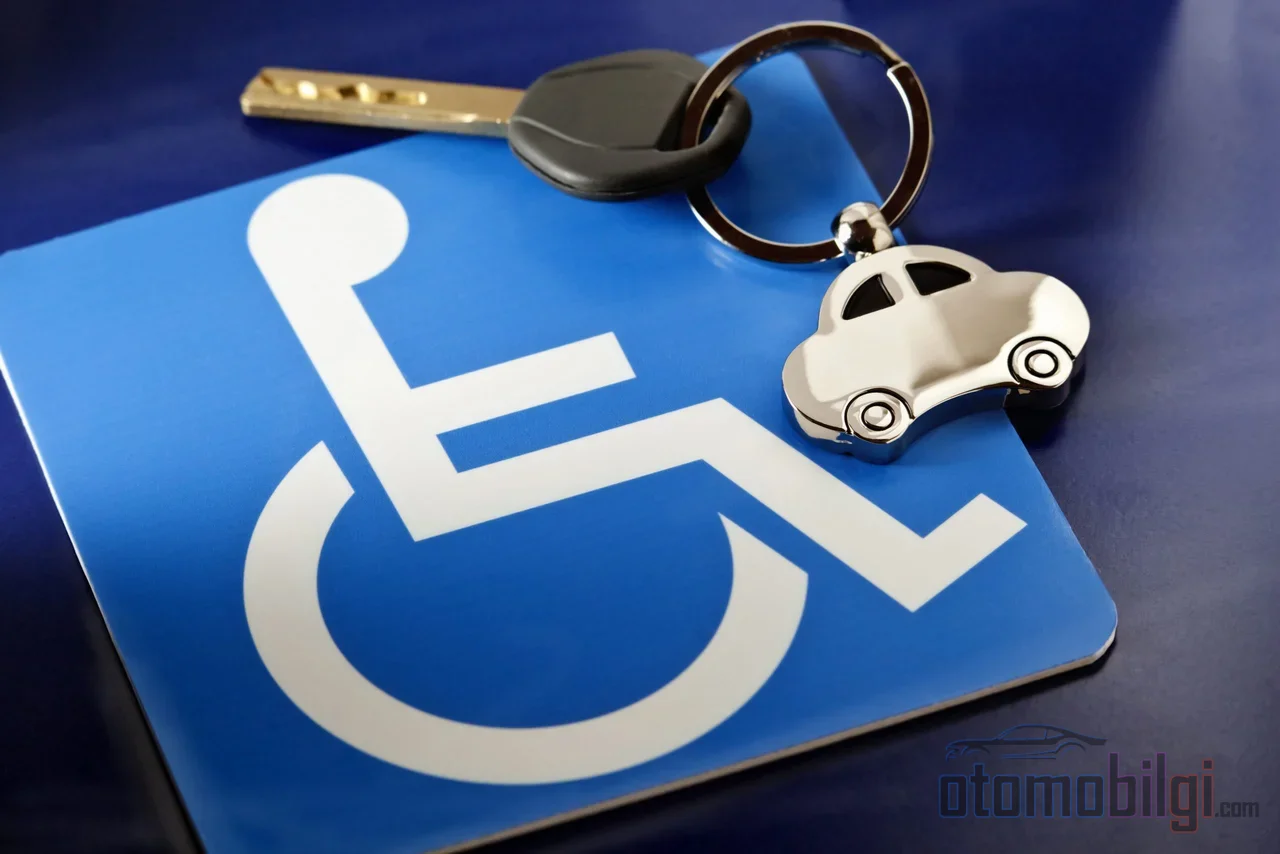
In a vehicle purchased without equipment with a report of 90% or higher, the following people may use it, provided they are recorded in the registration files: spouse, first-degree blood and in-law relatives residing in the same province, siblings, guardian, and a driver under a notarized contract. Under current practice, the number of third parties that can be declared is at most two. Use contrary to the annotation may be considered a violation of the exemption and carries tax consequences; the vehicle should not be used as a shared family car. This is not strictness, but a simple technique that draws the boundary of the right.
On the tax side, there is one more convenience: A special equipment condition is not required for the MTV exemption to be applied to vehicles registered in the name of persons with 90% or higher disability. Those below 90% can benefit from the MTV relief for a specially equipped vehicle registered in their own name by applying with a health report, registration document, technical document, project, and notification form.
The Five Most Common Mistakes
- Thinking the 40% report works for everything: below 90%, special equipment and a driver's license code are required; the report alone is not sufficient.
- Assuming everyone in the family can use it: what determines eligibility is the registration annotation; kinship alone is not enough.
- Believing the five-year new vehicle right: the period for the new exemption is now 10 years.
- Leaving optional features out of the calculation: if the total price limit is exceeded, the exemption is closed off.
- Expecting a second-hand exemption: the exemption applies only to the first acquisition; there is no such right for second-hand vehicles.
Conclusion: The Road from Report to Registration
The essence of this matter is as follows: Holders of a 90% or higher report benefit from the SCT exemption without equipment and license requirements, those between 40% and 89% benefit with personal use, special equipment, and a driver's license code, and as of April 2026, orthopedically disabled persons with over 40% who cannot obtain a driver's license also benefit from the SCT exemption. The vehicle must not exceed the limit of 2,873,972 TL including taxes, must carry at least 40% local contribution rate, and the right must be used once every 10 years. When the report, proforma invoice, and tax office approval are completed in the correct order, the process is not as painful as it is thought to be; the real costs come from mistakes arising from not knowing the annotation and period rules.
Sources
- Services and Exemptions Provided in Motor Vehicle Purchases for the Disabled - Ministry of Family and Social Services
- Tax Guide for the Disabled - Revenue Administration
- Exemptions Granted to Disabled Persons - Ministry of Trade
- Disabled Vehicle Prices 2026: Which Vehicles Can Be Purchased? - Turev
- SCT-Exempt Vehicles and Disabled Vehicle Prices (2026) - Fiat Türkiye
- No Disability, There Is Toyota! SCT-Exempt Disabled Vehicles - Toyota Türkiye
- SCT Exemption in Disabled Vehicle Purchase: 5 Years or 10 Years? - Fatih Aras
- Transfer of an SCT-Exempt Disabled Vehicle to Heirs - OYDER
- SCT and MTV Exemptions for the Disabled - Engelsiz Kariyer
- e-Devlet EAIS Application - Sonmuhur