How to Transfer a Vehicle Digitally via e-Devlet
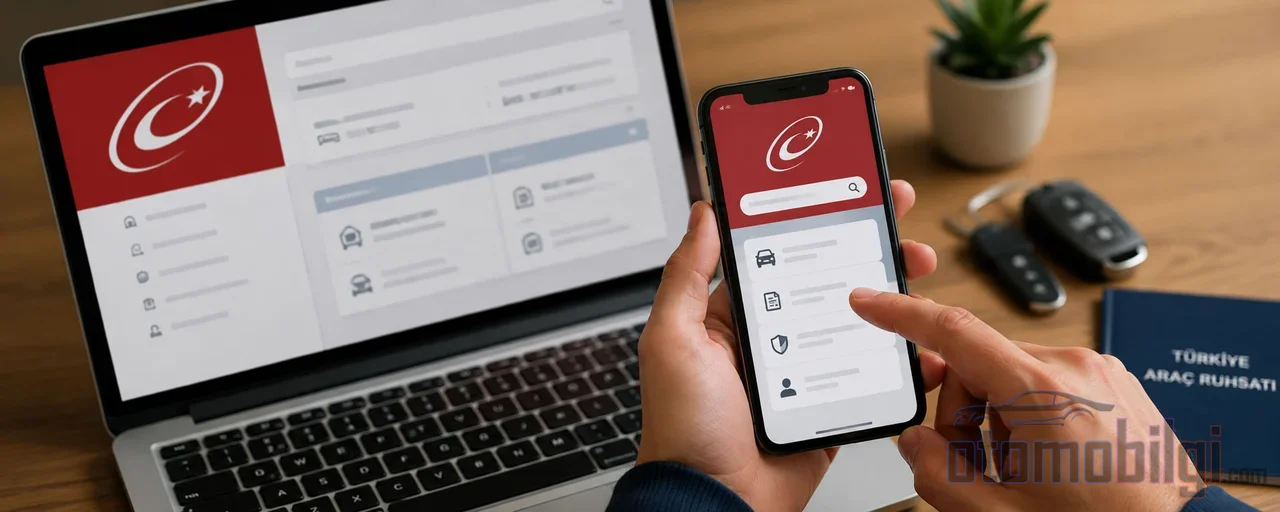
We may have left behind the years of waiting in line at the notary's door for hours, but the truth is a bit more nuanced. In the old days, to learn about a vehicle's debt, lien, or fines, you had to run to the traffic registration office, the tax office, and the bank; now all of these are on a single screen. But has the vehicle transfer itself become fully digital, or is e-Government once again only handling the heavy preparatory work? As someone who has been chasing these procedures for thirty years, let me tell you: the answer is different from what most people think.
What Does the Digital Transfer Actually Cover?
When talking about digitalization, we first need to draw the boundaries. The layers that have been digitalized in the transfer process are querying, debt payment, appointment booking, secure payment, and listing authorization. In contrast, the heart of the transfer process, namely the signing of the sales contract and the registration, is still done before a notary as of 2026. So it is not possible to speak of a vehicle transfer without a notary, entirely online; what is possible is doing every step leading up to the notary visit through e-Government. If this preparation is done well, the process at the notary is completed in half an hour; if not, you will be turned away at the door.
To log into the e-Government Gateway, you can use an e-Government password, mobile signature, electronic signature, a Turkish ID card, or internet banking. Those without a password can obtain one from a PTT branch; even for a single login, mobile signature makes the whole process considerably easier.
Highlights
- The signature and registration stage of the transfer process is still done at the notary; e-Government covers all the preparation steps.
- As of January 1, 2026, the notary fee moved away from a fixed charge to a proportional system calculated according to the sale price.
- Since September 27, 2024, the Secure Payment System has been mandatory for used vehicle sales.
- A vehicle with outstanding debt cannot be transferred at the notary; debts must be paid at least one day before the transaction date.
- All vehicle queries on e-Government are free of charge; payment is only made for debt payments.
Step-by-Step Pre-Transfer Querying via e-Government

The first and most important part of the job is checking what is attached to the vehicle. My former colleagues used to call this gathering paperwork; today it is a fifteen-minute tour of the screen. The My Vehicles service on e-Government gathers the insurance, fines, inspection, HGS toll crossings, accident, tax, and debt information of vehicles registered in your name on a single screen. If you are the seller, you start here; if you are the buyer, the ideal method is to look at these queries together from the seller's e-Government account. Because under personal data protection legislation, it is not possible to query someone else's vehicle by license plate.
What the seller must do themselves
- Vehicles Registered in My Name Query: This shows any loss of rights, that is, restrictions. Since liens and seizure annotations do not appear in the standard registration query, this separate service is essential.
- Electronic seizure query: Also check for any seizure applied to the vehicle through the Revenue Administration.
- Motor vehicle tax (MTV) debt query: If there is a debt, it can be paid digitally.
- Traffic insurance and damage records: The policy's validity and past damage information can be viewed through the Insurance Information Center.
- Inspection report inquiry: The barcode report shows the mileage from the last inspection along with defect rates; valuable evidence for checking odometer consistency.
If you are the buyer, never skip getting an independent, TSE-certified inspection. It shows replaced body parts, engine and transmission condition, and airbag records; moreover, it is useful when the sale price and comprehensive insurance value are compared at the notary.
Debt Clearance: The Only Rule for Not Being Turned Away at the Door
This section can be summarized in one sentence, but throughout my career the most door rejections happened for this reason: a vehicle with outstanding debt cannot have a notary transfer, and its inspection cannot be started. Motor vehicle tax, traffic fines, and HGS debts must be paid at least one day before the transaction date using the recommended application. Since payment records take time to appear in the systems, those who pay on the last night waste their time in vain at the notary in the morning.
There is also the matter of the credit lien. For a vehicle whose debt to the bank is not settled and whose lien has not yet been removed, the bank's approval must be obtained before the sale; either the lien is removed, or it is assumed by the buyer. Sitting down at the sales table with a vehicle that has a seizure or lien on it is a wasted, uncompensated loss of time for both parties.
Payment Security: Secure Payment System and Tasit Takas
In the past, the sale price changed hands directly, and buyer and seller had to trust each other. As of September 27, 2024, this picture changed: the sale price to be paid by wire transfer, EFT, and FAST in second-hand vehicle transactions was secured under the Secure Payment System. The system aims to prevent fraud by collecting the price from the buyer and transferring it to the seller once the conditions are met. The buyer and seller designate an intermediary institution integrated with the system - such as a bank; in transactions above the specified limit, multiple transfers can be made with the same payment reference.
Additionally, there is the Tasit Takas service on e-Devlet, which enables the vehicle sale price to be paid through Takasbank. Digitalization on the payment side has progressed faster than digitalization on the transfer side; and that is no coincidence, because money security is the most critical link from both the state's and the citizen's perspective.
e-Devlet Authorization for Selling to a Dealership
A digital step has also come for those who want to sell their vehicle to a dealership or through a dealership. With the Ministry of Trade's EIDS Vehicle Listing Authorization Transactions service, you can authorize a dealership business through e-Devlet for the sale listing of a vehicle you own. In practice, the seller links the sale to that dealership by entering the authorized vehicle seller's code from their e-Devlet account. It had been announced that this e-Devlet period for second-hand car sales would enter into force on September 15; although the detailed official explanation of the date has not yet been clarified, the authorization service is available for use today. It is also the buyer's right to check under what authority the dealership acting as intermediary posted the listing.
Costs: What Did the Proportional Fee Period Bring?
For many years, the cost of notary transfer was a fixed figure that did not vary from vehicle to vehicle. In 2025, this fee was at a level of approximately 1,489 TL. As of January 1, 2026, the fixed fee period came to an end; the fee is now calculated at a rate of 2 per thousand on the higher of the sale price or the current casco value, with a lower limit of 1,000 TL. In other words, transferring expensive vehicles costs more, while transferring low-value vehicles comes at nearly the same price. Declaring a low value no longer provides any savings; a false declaration can also create legal problems.
| Item | Previous Practice | 2026 Practice |
|---|---|---|
| Notary fee | Fixed fee, independent of the vehicle | 2 per thousand on the higher of the sale price or casco value |
| 2025 fixed fee | Approximately 1,489 TL | - |
| Lower limit | - | 1,000 TL |
| Registration certificate fee | - | 1,511 TL |
| Purchases from dealerships | - | Proportional fee is not applied |
There is no legal obligation regarding how the costs are to be shared between the buyer and the seller; the convention is to share the costs. Notary costs mostly belong to the buyer. One more detail: starting from May 5, 2026, a 2 TL transaction participation fee per query is charged for vehicle information inquiries at notaries, and this amount is updated each year according to the revaluation rate. The Saturday duty notary service continues in metropolitan cities; a note for those in a hurry.
In Which Cases Are You Still Obligated to Go to the Notary?
Here is the clearest answer on this page: the sales contract and registration process cannot be done without notary approval, and vehicle sales not registered by a notary are legally invalid. However far digitalization expands, you still go to the notary for the signature and identity verification stage. That said, a fully prepared transfer usually takes 30-60 minutes at the notary; identity verification, automatic lien and debt checks, comparison of the sale price with the casco value, and contract signing are done there.
Making an appointment is now a desk job too: you can get one through the appointment system's website or via e-Devlet. Those who go without an appointment accept the waiting time. Let's also gather the required documents: for both parties, a T.R. identity card or passport and a tax number; for the seller, the original registration certificate, valid traffic insurance, and a debt-free certificate; for the buyer, an address registration document. If the transaction is to be done by power of attorney, the power of attorney must explicitly cover the authority to sell. For vehicles changing provinces, the license plate is renewed and the old registration certificate is canceled.
Things the seller should not forget after the transfer is complete
- Cancellation or transfer of casco and other insurances with the sales document.
- Cancellation of the HGS and OGS accounts; otherwise, the buyer's toll debts will land on your account.
- Preparing a handover report: hand over the spare key, manual, and equipment in writing.
- Registration updates are usually reflected within a few hours to a day; if there is a delay, contact the notary or traffic registration office.
Conclusion: Digital Transfer Is Not a Button, but a Well-Built Chain
The one-click vehicle handover that comes to mind with "e-Government vehicle transfer" does not exist yet; what exists is that the most burdensome part of the transfer has moved to the desk. Someone who handles the inquiry, debt payment, appointment, payment, and dealership authorization on screen only needs to appear at the notary for the signature. That a process which thirty years ago meant running between two or three institutions now takes half an hour is, in my view, exactly what digitalization should be: unassuming but effective. Go through the links of the chain one by one; the notary already finishes the rest quickly.
Sources
- Electronic Lien Inquiry for Vehicles
- Inquiry for Vehicles Registered in My Name
- EIDS Vehicle Listing Authorization Procedures
- Secure Payment System - Türkiye Notaries Union
- Vehicle Transfer via e-Government and the Notary Process
- E-Government Vehicle Inquiry: How to Retrieve Information? (2026)
- New Regulation on Second-Hand Vehicle Sales
- Notary Procedures and Fees When Selling a Vehicle 2026
- Things to Watch Out for When Selling a Vehicle at the Notary
- How to Verify Your e-Government Account?