Should You Sell Your Car to a Dealership or a Private Buyer?

Share This Page
The basic dilemma in selling a used vehicle in Türkiye is this: if you sell to a dealership you typically receive an offer 10-20% below market value, but you finish the job within 1-7 days ; if you sell to a private buyer you sell at a higher price, but the process can take 2-8 weeks and you carry the risk. There is no single, fixed right answer; it varies depending on your vehicle's condition, the urgency of your need for cash, and your patience for negotiation. This guide examines the balance of price, speed, risk and effort under 2026 conditions.
Highlights
- Dealership offers may be 10-20% below market value; it is normal to receive an offer between 640,000-720,000 TL for a vehicle worth 800,000 TL.
- The total cost of a private sale (listing, inspection, effort) is usually around 2-5% of market value.
- Since September 27, 2024, the Secure Payment System (GOS) has been mandatory for used car sales.
- As of January 1, 2026, the notary fee is 2 per thousand of the sale price, with a minimum of 1,000 TL.
- Never hand over the vehicle or the power of attorney to a dealership before the sale is officially completed at the notary.
Should You Sell Your Car to a Dealership or a Private Buyer?
Looking at this question through three decades of shopping observation, it turns out the answer is actually not a price question, but a question of time and risk. The difference between the amount a dealership pays you and the amount a private buyer will pay is really the price of the work the dealership takes on: inventory cost, operating expenses, advertising spend, profit margin and sales risk. By paying that difference, you free yourself from time and effort. If you choose not to pay it, you swallow the dust of the job yourself: listing, phone traffic, negotiation, test drives, payment security.
Let's go through an example. For a vehicle with a market value of 800,000 TL , a dealership's offer may fall in the 640,000-720,000 TL range. In a private sale, you can list this car at full value, or even a few points above to leave room for negotiation. The 80,000-160,000 TL difference is the price of your time and the risk you are exposed to. In return, a private sale also has its own cost: listing fees, inspection, countless phone calls; in total usually around 2-5% of market value. So the real difference between the two channels is the gap between the 10-20% offer discount and the 2-5% sale cost - and what you are willing to pay for that gap in effort and time.
| Criterion | Selling to a Dealership | Selling to a Private Buyer |
|---|---|---|
| Duration | Usually 1-7 days | Average 2-8 weeks |
| Price | May be 10-20% below market value | Close to market value, negotiable |
| Seller's cost | Usually none; expenses covered by the business | 2-5% of the value (listing, inspection, effort) |
| Payment security | Corporate payment, via GOS | GOS mandatory; risk of fraudulent reporting lies with the seller |
| Effort | One appraisal, one meeting | Numerous meetings and test drives |
What Does the Price Difference Mean as a Percentage?
A dealership buyer is not there to buy your car, but to sell it. That's why it builds its offer by deducting operating costs, profit margin, sales risk, inventory cost, and advertising expenses from the price your buyer would pay. An offer 10-20% below market value is therefore not stinginess, but the natural result of the business model. For a dealer whose stock doesn't turn over quickly, an inflated appraisal is a death sentence; dealers know this too.
It should also be honestly added: this percentage is not applied equally to every vehicle. A well-maintained car with a transparent history and regular service records means fast-moving stock for a dealer, and can receive an offer close to its value. But for a car with damage records, poor maintenance, or below-average mileage for its model, the appraisal drops quickly; because the dealer reflects that risk in the price as well. So the generalization "dealers buy cheap" is partly true, partly an old prejudice. In the past, appraisals were done with two-finger steering-wheel experience; now serious businesses look at market data and realized sales statistics - although it is still possible to see some dealers not disclosing what data their price is based on.
The Practice of Selling Through a Dealership: Commission, Instant Purchase, and Consignment
When selling to a dealership, two different models should come to mind. The first is a direct instant purchase: the dealer appraises the car, pays the amount, the transfer is done, and the deal is over. For a seller with an urgent cash need, this is the cleanest route. The second is consignment, i.e. sale by proxy: you leave the car with the dealership, the dealership tries to sell it on your behalf, and when the car is sold, you receive the payment. In consignment, the dealership usually takes a commission and the price can start a bit higher; but the process takes longer and a payment guarantee problem arises.
Ask for payment security in consignment
If you are entrusting your car, it is a reasonable and common expectation to request a payment guarantee from the dealership - a check, promissory note, or bank letter of guarantee. Moreover, the most critical rule is this: never hand over the car or the power of attorney before the sale is officially done at the notary. Entrustment requests like "leave the car first, money later" are the oldest trap in this business, and the Ministry of Commerce teams' cancellation of a dealership's authorization certificate in Istanbul in September 2025 following a complaint is one of the most recent examples showing the seriousness of oversight in this field.
Define your position against trade-in pressure
When you go to a dealership, a trade-in proposal will come at some point in the conversation - this is the business's natural sales tactic. And to be frank, if you're buying a new car, a trade-in is often genuinely profitable and practical: because the dealership does both buying and selling, it can see the profit of both transactions in one ledger and offer you a more advantageous equation; besides, you won't be left without a car in the meantime. However, if you only need cash, you shouldn't waste time with trade-in tales; a cash sale is the only logical option at that point. Having researched the car's market value before the meeting strengthens your hand in both the trade-in and the instant offer.
Required Documents and Costs When Selling to a Dealership
What to bring with you when taking your vehicle to the dealership is simple: the original registration certificate, valid ID, the spare key, service records if available, and an up-to-date status query showing there are no liens, pledges, or traffic fines. A vehicle with a bank lien or tax debt can also be sold; corporate dealerships can pay off the debt from the sale proceeds and remit the remainder.
On the costs side, 2026 started a new era. As of January 1, 2026 a notary fee is charged on the sale price instead of a fixed fee for vehicle sales and transfers, at a rate of 2 per thousand with a minimum amount of 1,000 TL. Accordingly, the fee on a 1,000,000 TL vehicle is 2,000 TL, and on a 2,000,000 TL vehicle 4,000 TL . In addition, there is a transfer service fee of around 1,870-1,970 TL ; the total cost for a 500,000 TL vehicle comes to around 3,000 TL . As of 2026, notary sales fees average in the range of 3,000-5,000 TL , and the traffic insurance transfer fee is additionally 200-500 TL. By custom, the notary sales fee belongs to the buyer unless otherwise agreed; in a sale to a dealership, the business usually covers this cost. So the change in the fee rule, by indexing the transfer cost to the sale price, increased the cost for high-value vehicles - this item should also be factored into a net comparison of the two channels.
Payment and Transfer Safety in Private Sales
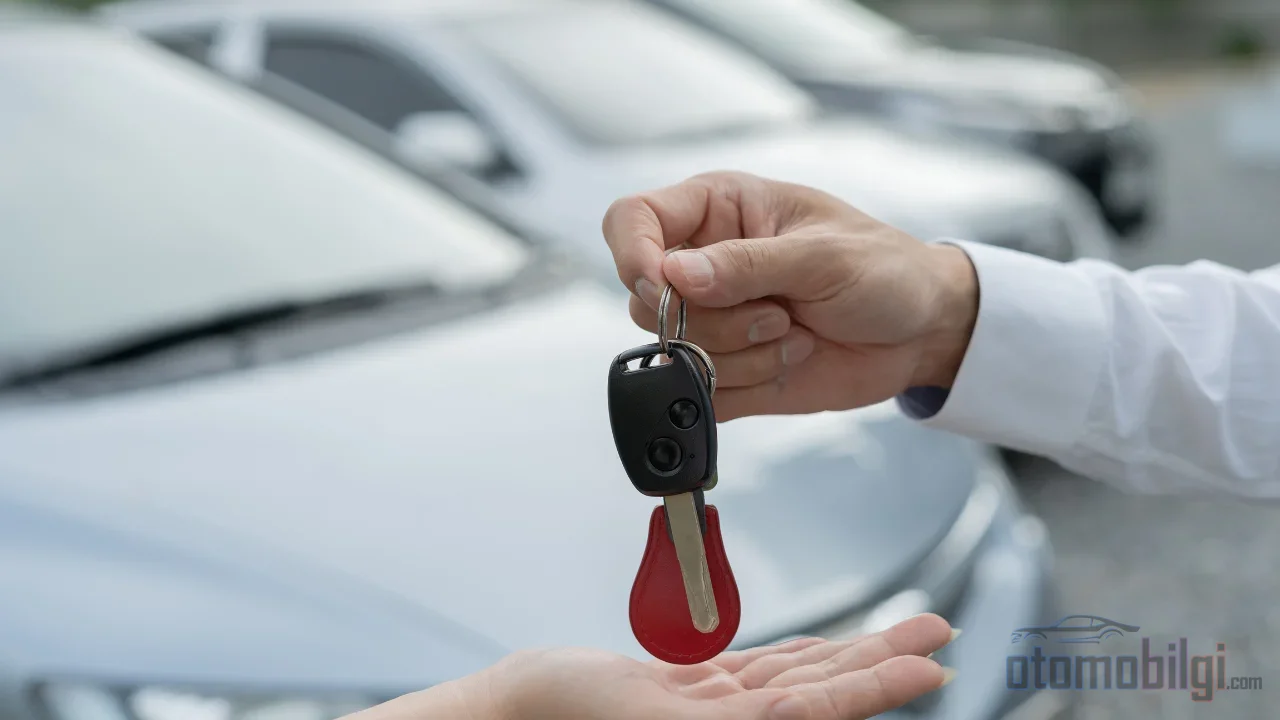
The biggest risk in a private sale is not lost time but the safety issue at the moment of payment and transfer. The good news is that, since September 27, 2024 the Secure Payment System (SPS) is mandatory in used vehicle transactions. Here is how the system works: the buyer transfers the sale price to their Secure Payment System account before the registration transaction at the notary and enters the system with a reference number; the money is held in escrow until the transfer is complete. For sales exceeding the specified limit, multiple transfers can be made with the same reference. It is enough for the buyer and seller to have an account at any bank; no cash payments are made in the system. The Vehicle Swap service via e-Government also offers an alternative safeguard, and the secure vehicle sale applications of major banks protect amounts paid via wire transfer/EFT/FAST.
Nevertheless, there are points to watch out for in practice. Do not trust "money received" notifications via SMS; check the deposit into your account yourself through your bank's app. Do not hand over the keys without seeing the money definitely deposited. Check the buyer's driver's license and photograph it for the test drive, determine the route in advance, have an accompanying person with you; leaving a deposit appropriate to the vehicle's value is also a sensible method long in practice. In blocked money transfers, the order should be as follows: first the transfer at the notary, then the release of the block at the bank.
Setting up the listing correctly shortens the time
The reason a private sale stretches over two to eight weeks is often a mispriced listing. Set the listing price 5-10% above starting slightly above and leaving room for negotiation is a reasonable approach; however, a very high starting price scares buyers off as early as the phone call. Paying attention to the photos and the listing text directly determines the quality of the inquiries you receive - serious buyers come to listings that look serious.
Which Route Suits Which Seller Profile?
The gist of all this can be reduced to three typical scenarios:
- Those with an urgent need for cash: For a seller who needs to pay for work, close a debt, or get rid of the car as quickly as possible, a dealer's instant cash purchase is by far the most suitable route. A turnaround of 1-7 days and a 10-20% drop in value is a reasonable price to pay for this profile.
- Those with time and patience: A seller who is not afraid of being without a car, can manage the listing process, and has the tolerance for meetings and negotiations will reach a price close to market value through the private channel. The total cost of the sale stays within 2-5%; the difference stays in your pocket.
- Those buying a new car: Trade-in is usually the most profitable and practical option for this profile; the fact that two transactions are closed at one table, combined with the assurance of never being without a car, becomes the natural justification for working with a dealer.
Both at once is also possible: running your own listing while negotiating with a dealer. Just be careful; if the contract you sign with the dealer contains an "exclusive sale" clause, selling through another channel would breach the contract. Asking about that clause before signing prevents arguments later on.
Things You Should Know About Dealer Sales in Türkiye
Car dealership trade in this land has its own unique history, and it is neither right nor fair to paint every dealer with the same brush. There are corporate establishments out there - dealerships that carry out transparent valuations and do not delay notary sales; they also buy vehicles with damage records, as long as you honestly share the extent of the damage and the quality of the repair. On the other hand, the incidents that have made industry headlines - license cancellations, allegations about money collected from customers - remind us that this profession also harbors bad-faith actors. As a seller, the strongest protection in your hands is to finalize the deal through official channels.
Be clear on the post-sale responsibility side too: the dealership is not responsible for every fault that arises after the sale; the clause in the notary contract stating "the buyer inspected and accepted the vehicle in its current condition" is at the center of legal debates as to whether it alone prevents the return of a defective vehicle. That is why, even when selling to a dealership, putting the vehicle's condition in writing strengthens your side in a possible dispute. Also worth mentioning are the complaints about trade-ins: dealers failing to keep their word and misleading reservations are common topics in consumer complaints; in a trade-in, always keep the contract and delivery date in writing.
One last observation: the channels are multiplying. For those who feel stuck between two options, platforms that collect competitive offers from multiple authorized buyers have emerged as a middle path offering some competitive advantage without the hassle of listing; online buying channels that emphasize free inspection and same-day payment also respond to the same need. In the past, a sale was either through a dealership's door or a newspaper ad; now in-between forms have multiplied - but the essence of the decision has not changed: price, speed, or the share of hassle you are willing to endure. No one can weigh that balance on your behalf.
Sources
- Should I Sell My Car to a Dealership or Privately? | Trinkoto
- Selling a Car to a Dealership - Barem Cars
- Should You Sell Your Car to a Dealership or an Individual Buyer? | DORCARS
- Is It Sensible to Sell Your Car to a Dealership? - Otoboom
- Secure Payment System - Union of Turkish Notaries
- 2026 Notary Fee Schedule - TNB
- Notary Fees 2026: Vehicle Sales and Power of Attorney | Tahancı Law
- Notary Fees 2026 | Ayboğa
- Second-Hand Vehicle Notary Sales Procedures 2026 | Otomerkezi
- Secure Payment System | Ziraat Bank
- Secure Vehicle Sales System | VakıfBank
- Second-Hand Vehicle Secure Trading System | İş Bank
- How to Transfer Money in a Vehicle Sale? | sahibinden.com Oto360
- Those buying a car from a dealership should watch out for this! | Mynet Finance
- The Legal Liability of Car Dealerships | Tahancı Law
- Trink Sat | Arabam.com