Penske Is Offering Financing for the 2028 IndyCar Chassis
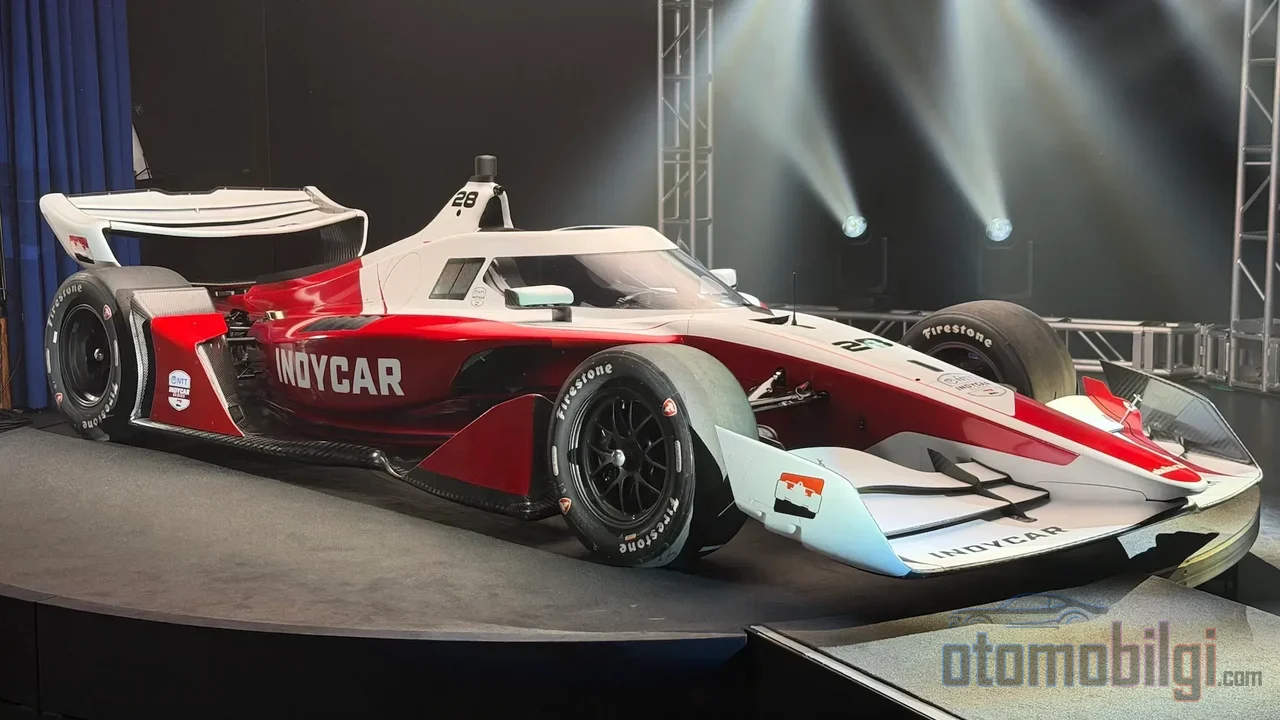
The most concrete development in IndyCar as of November 12, 2026 happened not on the track but at the accounting desk: Series owner Roger Penske is offering direct financing to teams that want to purchase the new Dallara IR-28 chassis that will race in the 2028 season. For teams that want to acquire a spare car, the series is proposing a deal that covers the upfront costs and spreads the payments over time. The interest rate and repayment term have not yet been announced. Behind this offer lies the serious cost reality of moving to the first all-new chassis in over 16 years, which places a heavy burden on the teams' shoulders.
Why Is the New Chassis Such an Expensive Matter?
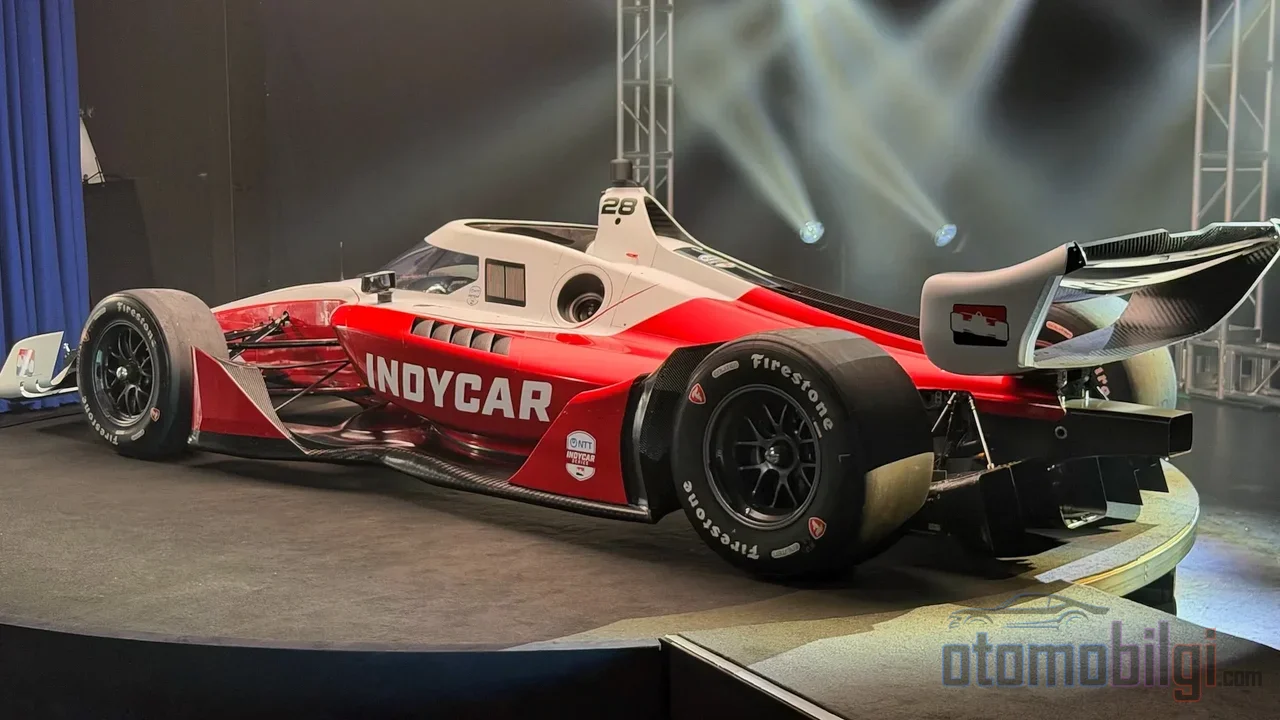
IndyCar has been using the current DW12 chassis since 2012. The IR-28, which will replace it in races for the first time in 2028, will be the series' first "blank slate" design in over 16 years. It is an ambitious project technically: Powered by 2.4-liter twin-turbo V6 engines, the car will be able to produce up to 760 horsepower and will be around 100 pounds (approximately 45 kg) lighter than the current car. On the hybrid side, the battery-based Energy Storage System to be supplied by BOLD Technology will be able to store roughly 14 times more energy than the current supercapacitor setup. Xtrac is handling the gearbox, while UK-based Helix is responsible for the electric drive systems.
Production has already begun at Dallara; six chassis tubs have been completed. The car, officially unveiled by the series in July 2026, is being tested at various tracks including the Indianapolis Motor Speedway's road course and oval, as well as Sebring; Alex Palou and Alexander Rossi are among the first drivers in this process.
However, the other side of this renewal is the bill. Teams are expected to budget more than 1 million dollars per car for the new IR-28. The exact chassis price has not been officially announced; the figure reached teams as a cost confirmation along with the order forms sent to them. While the average annual operating budget per entry has climbed to 8-10 million dollars, and 11-12 million dollars for top-tier programs, this extra burden is no small matter for smaller teams.
Highlights
- The IR-28 will replace the DW12 in the 2028 season; the first all-new design in over 16 years
- The 2.4-liter twin-turbo V6 engine will produce up to 760 horsepower
- Teams plan to budget more than 1 million dollars per car
- The order form requires a 30 percent down payment for each chassis
- The interest rate and repayment term of the financing have not been announced
How Did Penske's Financing Plan Take Shape?
This offer did not appear overnight. In April 2025, there were reports that a "team-friendly" financing plan was being evaluated within the series. The first version of the plan, presented at the team owners' meeting in October 2024, covered only the first chassis purchased by each team; in a later version, the coverage was expanded to multiple cars and, if desired, to all new equipment. Penske Entertainment CEO Mark Miles confirmed that no talks were held with a third-party bank and that financing will be done directly with Penske. It was announced that the goal was to make the new car cost manageable and to put an arrangement in place so teams can spread payments over time.
The most recent step was taken in the first week of November 2026. IR-28 order forms were sent to the teams; the form requests that orders be placed that week and that a 30 percent down payment be made for each chassis. More than 100 IR-28s are expected to be produced by the end of 2028. The first deliveries are expected in the summer months, no later than July 1, or June in an optimistic scenario; every team will receive its cars at exactly the same time. And this is precisely where Penske's financing option comes into play: Teams that cannot cover the down payment or do not want to strain their cash flow will be able to sign an agreement with the series owner.
Chassis Price and Payment Terms: What Is Known, What Is Not?
Some of you who have been following this business for years know: a chassis change used to be a seasonal expense of a few hundred thousand dollars; now the cost figure at the top of the calendar hovers above a million. The DW12 cost around the $349,000 level. For the IR-28, no net price has been announced; there is only an expectation of a total budget exceeding $1 million per car and a cost confirmation conveyed with the order form. The interest rate and repayment term are also not yet known. While teams could take out loans from their own banks, it is assumed that the Penske plan will come with a more favorable interest rate; that assumption cannot be tested until the conditions become clear.
Who can benefit from it is also not finalized. In 2025, while the discussion was ongoing, it was an open question whether the offer would apply only to Penske's 10 charter-holding teams or would also be open to non-charter entrants such as PREMA Racing, Dreyer & Reinbold/Cusick Motorsports and Abel Motorsports. As of November 2026, the financing is known to be offered particularly for the acquisition of backup IR-28s.
Deferral, the Engine Crisis and Leaders Circle: The Cost Chain of the Transition
The new chassis was originally planned for 2027. Development costs reaching the $25-30 million level and incomplete regulations pushed the transition back to 2028. This deferral created a serious side effect: Chevrolet and Honda not committing for 2027 risked creating a "gap year" in engine supply for that season. The problem was solved in February 2026 when both manufacturers signed extensions under the 2028 engine regulations. Penske Entertainment offered manufacturers an incentive of a single charter entry in return for their extensions; it is believed to be a first in the series' history.
Another link in the financial chain is the Leaders Circle program. Roger Penske added $11 million to the program for the 2026-2028 seasons; the annual value of the 22 winning contracts rose from about $1.145 million to $1.645 million, an increase of $500,000 per car. This is the biggest single-year improvement since 2002. On the other hand, engine lease fees, the hybrid technology introduced in 2024, and general inflation had already pushed team budgets upward; the Leaders Circle increase corresponds to roughly 17-20 percent of a typical team budget. In other words, support increased, but expenses increased faster.
What Are the Teams Saying?
Whether the financing creates value for everyone is a separate discussion. Dale Coyne Racing owner Dale Coyne said outright that the plan in question adds no value for him; his reasoning was simple: while three cars could be purchased with a three-year loan, the money ultimately has to be spent. Ed Carpenter Racing co-owner Ed Carpenter also stated that he is waiting for more information before determining the plan's value. Mark Miles, meanwhile, put the matter in a broader context: regardless of well-managed total costs, having two or three cars plus spares is a large sum.
There is no doubt that this closeness between the series and team ownership also feeds a structural debate stemming from Roger Penske holding both IndyCar and Team Penske. Penske had purchased IndyCar along with Indianapolis Motor Speedway in 2019/2020. While concrete support steps like financing ease this debate, the fact that the series' owner is also the owner of a competing team remains an issue that will keep resurfacing with every new financial arrangement.
What Does the Financing Program Mean?
In summary: To lighten the cash burden on teams during the 2028 IR-28 transition, Penske is offering direct financing in which it assumes the upfront payments and spreads repayment over time. The interest rate, term, and scope have not yet been announced. The offer aims to create breathing room for teams struggling with car budgets exceeding $1 million and annual operating costs of $8-12 million; combined with the extra $11 million contribution in the Leaders Circle, the series' owner is trying to balance the transition burden in a single move.
How well this picture works against criticism from small teams will only be seen once conditions become clear. As Dale Coyne also pointed out, a loan makes payment easier but does not eliminate the spending. One thing is certain: On the road to 2028, IndyCar's most critical battle will not be fought on the ovals, but on the teams' balance sheets. As the first car deliveries approach in the summer months, both the details of the financing and the teams' response to this offer will become clear.
Sources
- Penske offers financing for 2028 IndyCar chassis
- IndyCar teams receive order forms for IR-28 chassis
- New NTT INDYCAR SERIES Race Car Introduced for 2028 and Beyond
- Penske considering financing plan for new IndyCar chassis
- IndyCar News: 22 Top Cars to get $0.5 Million more each year
- IndyCar shifts new car to 2028
- Chevrolet, Honda expected to continue as IndyCar engine suppliers beyond 2026