Why Does IndyCar Race With a Single Chassis Manufacturer?
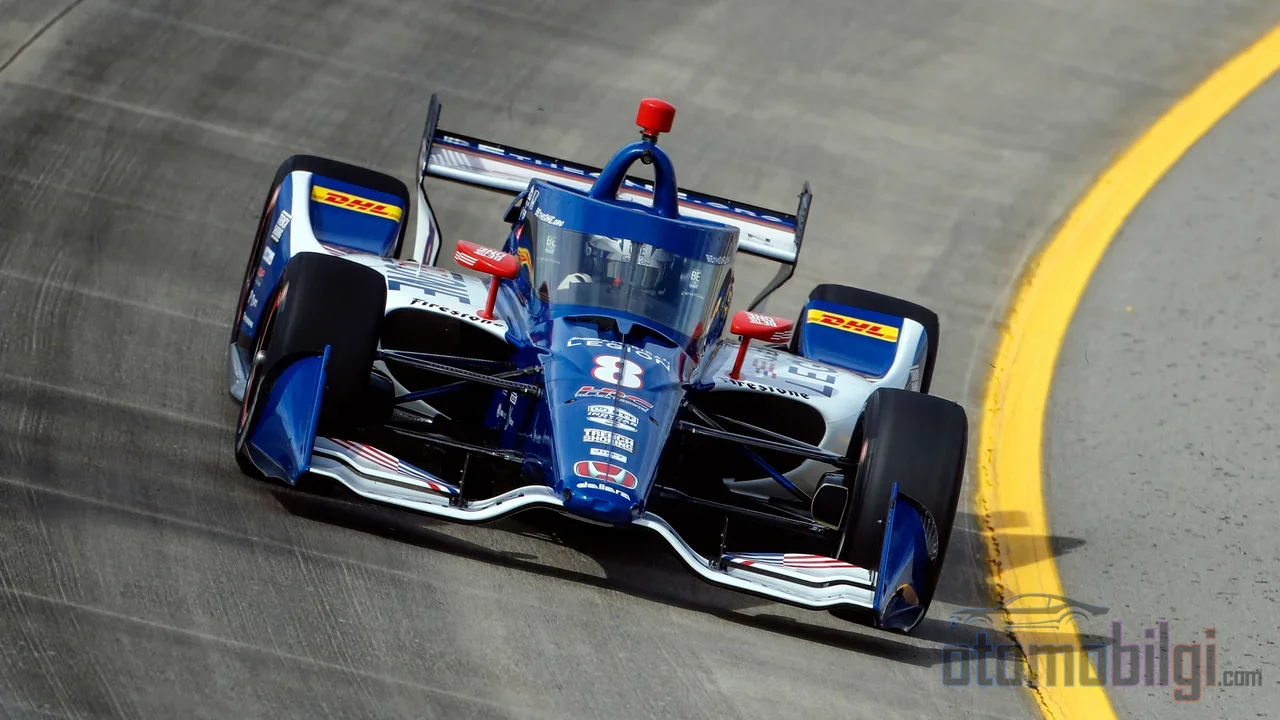
Over a Formula 1 race weekend you see ten teams, ten different car concepts and design philosophies far apart from one another. When you turn to IndyCar and look back, the picture is completely different: every car on track rises from the same skeleton. Yes, you read that right; all the cars on the grid use the DW12 chassis of Italian manufacturer Dallara, and this has been the case since 2012. So why does a racing series tie itself to a single chassis manufacturer? The answer is not as shallow as you might think; there is a very deliberate balance struck between money, safety and competition.
On this page we will break that balance into pieces. First we will look at the old multi-manufacturer days, then Dallara's monopoly, and finally the aspects of this model that have won the series over and those that have been criticized. If you are ready, let's head down to the garage.
Lola, Reynard and Panoz: What Happened in the Multi-Chassis Era
Today's monopoly did not happen overnight. In the CART era, British chassis manufacturers ruled the field: March, Reynard and Lola were dominant enough, from period to period, to leave one another in the shade. Buying a new chassis meant choosing the right manufacturer; a team that made the wrong choice could spend the entire season crawling in the midfield. In other words, the chassis war was both exciting and extremely expensive.
When the IRL entered the scene, the list of options grew. For the series' first-generation cars, G-Force (later Panoz), Dallara, and the existing Lola and Reynard chassis came into play. Reynard and Lola joined the IRL with the introduction of a standard gearbox unit. Panoz, on the other hand, moved to Champ Car as the sole chassis supplier but could not be competitive on the IRL side on ovals; despite having won an Indianapolis 500, it failed to hold on within the series. In 2003 the IRL moved to restrict the number of manufacturers, and among the candidates were those using Dallara, G-Force, Lola, Penske and Reynard equipment. Which way the wind was blowing was becoming increasingly clear.
The Dallara DW12: The Birth of the Single Chassis
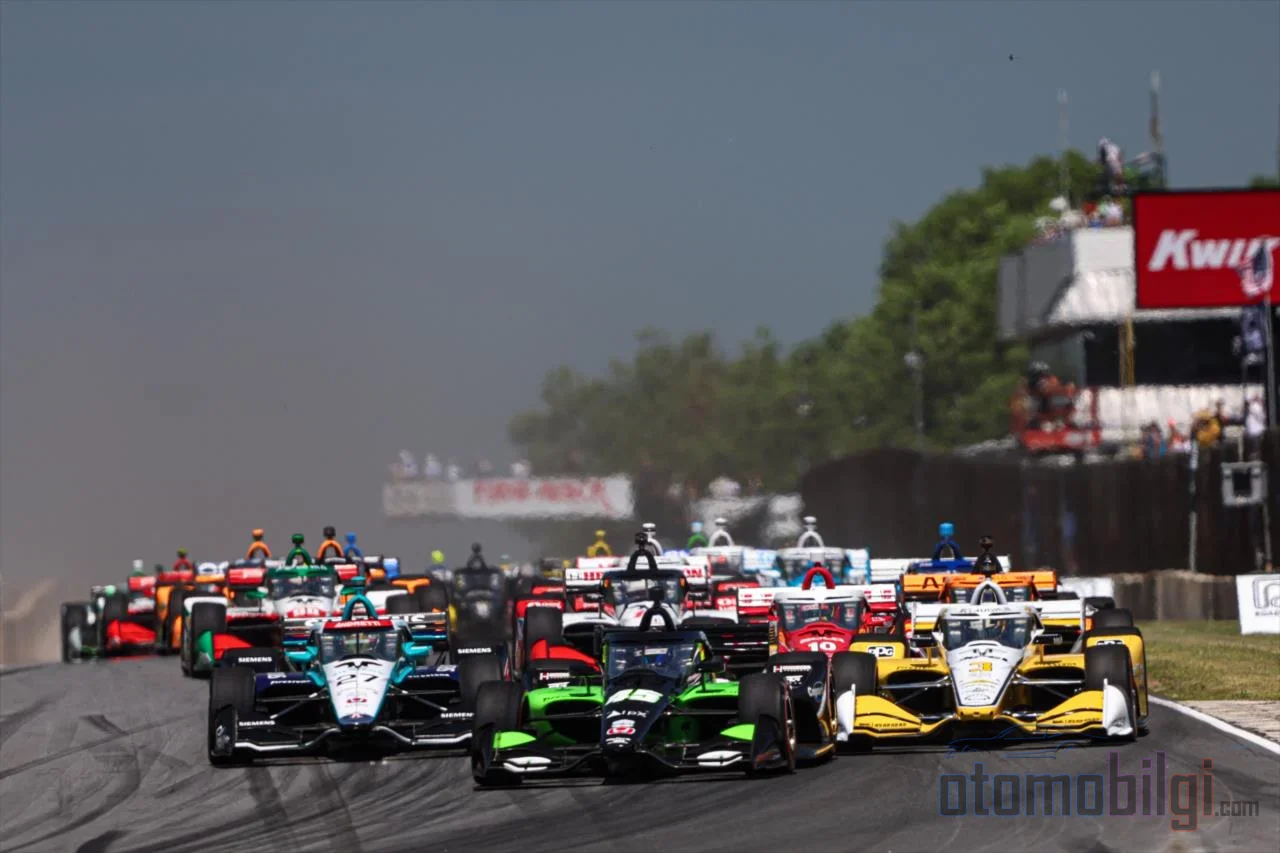
The turning point came in 2008, with the merger of the Indy Racing League and the Champ Car World Series. After this merger, Dallara settled into the position of the series' sole chassis supplier; the company had already been building cars for the top category of American open-wheel racing since 1997. Then in 2012 came the DW12, the product of a research program called ICONIC, and it became mandatory as the single chassis. The car's name also carries an emotional story: it was given in honor of Dan Wheldon, who served as its test driver and lost his life.
Highlights
- Dallara has been building Indy cars since 1997 and has been the sole chassis supplier since 2008
- The DW12 has been the series' standard chassis since 2012; its name was given in honor of Dan Wheldon
- A 14 percent discount and a price freeze agreement were made on DW12 spare parts
- Downforce in the 2018 universal aero kit was reduced by approximately 20 percent
- A new IR-28 chassis was introduced for 2028; the DW12 will stay on track until the end of 2027
The DW12's technical structure is also a reflection of the single-supplier logic. The car features a mid-mounted, longitudinally installed turbocharged engine fed by a BorgWarner turbo; In the 2012-2013 seasons, only Honda supplied engines. The evolution of the chassis also followed an interesting course: Between 2012-2014 the original body was used, between 2015-2017 Chevrolet and Honda produced their own aero kits, from 2018 everyone returned to the same universal aero kit, and in 2020 the Aeroscreen safety canopy was added.
The Aero Kit Experiment: Why Did It Fall Short?
The aero kit expansion of 2015 was an attempt to add a small dose of multi-manufacturer variety to the single-chassis formula. But it did not work out as expected. Potential suppliers other than Chevrolet and Honda backed out due to the mismatch between development costs and series-wide cost volumes. In the end, the aero kit war turned into a two-brand battle, and with the freezing of kit development, Honda teams were left at a disadvantage with weaker packages. In 2018, the series completely withdrew from this path: It switched to the universal aero kit and downforce was reduced by about 20 percent. In other words, the aero kit experiment became living proof of why the multi-manufacturer era was abandoned.
Money Talks: How Does a Single Chassis Lower the Budget?
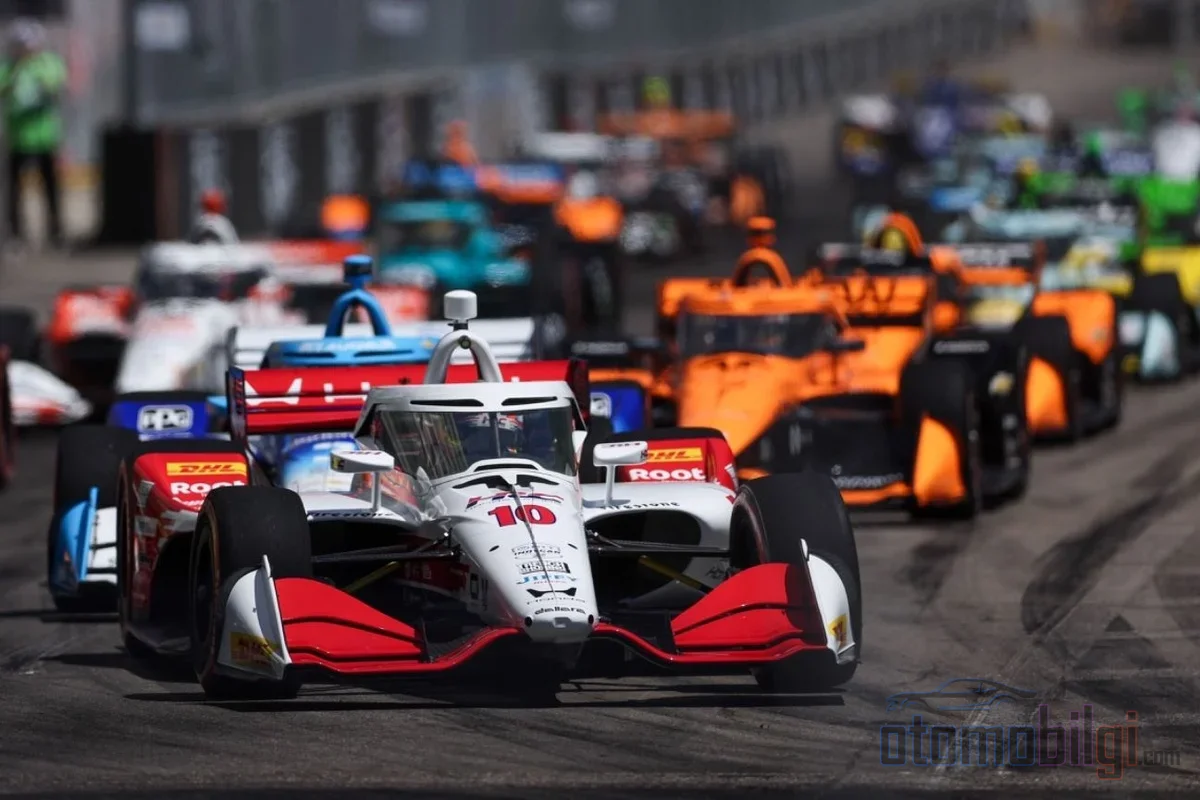
The most concrete side of the matter is the budget. One of the most expensive items for a racing team is the chassis renewed every season and the never-ending spare parts bill. The single-supplier model makes these items predictable.
Let me give concrete examples. Thanks to the spare parts agreement made between IndyCar and Dallara, a 14 percent discount was achieved on DW12 parts, and prices were frozen at that level until March 15, 2014; Officials projected savings of around $50,000 per full-season entry. That means roughly one percent of a $5 million budget. Still, it was not enough; Team owners united to demand a 40 percent reduction in costs, but the solution progressed slowly. In the 2018 body conversion, the body update package for each DW12 was priced at $2,720. As for current figures: As of 2026, the new IR-28 chassis costs the same as the DW12, $1.1 million; with suspension it comes to about $650,000. In full-season costs, engine leases hover around the $1.6 million level, while chassis and parts items range between $0.8 and $1.5 million.
Let's relate these figures to everyday life: The multi-chassis era was like every team collecting price quotes from different markets each year. The single-chassis model is more like the discount catalog of the chain supermarket where we all shop; the price is fixed, the quality is fixed, no surprises. For teams with limited budget planning, this difference is a matter of survival.
Where Did the Engineering Go? The Aerodynamics, Engine, and Setup Game
So if everyone uses the same car, where does the difference lie? This is the series' most frequently asked question, and the answer lies in the change of engineering's address. When the chassis and body are identical, the path to gaining an edge goes through setup, race strategy, and pit wall engineering. In other words, the chef who cooks the same ingredients better wins the race.
Of course, competition hasn't entirely ended. On the engine side, a real manufacturer battle continues between Honda and Chevrolet; engine competition had returned in 2012 with the same basic Dallara chassis. The same logic makes things easier for new engine manufacturers: a brand entering the series doesn't have to develop a chassis from scratch, it just focuses on its engine. The view that a single chassis encourages new team entries was also voiced by Lola; the Dallara factory opened in Indianapolis in 2012 has also been producing the IL-15 chassis of Indy Lights since 2015.
The series' own official approach is clear: a standard chassis levels the field and shifts the focus to race strategy and the driver. The long period of minimal changes brought the teams closer together; thanks to the single-chassis formula and the Indianapolis 500, parity is breathing, and the DW12 is cited as one of the reasons for tight competition.
The Safety Side: The Unknown Gains of a Single Chassis
The less-talked-about advantage of the single-chassis model is safety. Because there is a single chassis, lessons learned from accidents can be applied to the entire grid at once; when Dallara makes an update, 33 cars become safer simultaneously.
The DW12's history explains this process very well. Following the serious accidents in the 2012 season, the car was updated. Before the 2013 Indianapolis 500, every DW12 was modified: three cuts each were opened in the lower wing supports to reduce lateral stiffness, ensuring that while vertical stiffness was maintained, the lower wing would crumble more gradually in side impacts and reduce the load transmitted to the driver. The same year, crush structures were mounted on both sides of the cockpit, and for 2014 approximately 20 pounds of plating was added to the cockpit sides along with reinforcement of the cockpit ring. After a serious accident in 2015, the front wishbone structure was revisited, in 2018 crushable structures serving the same function as the rear attenuator were added to the cockpit sides, and in 2020 the Aeroscreen safety canopy came into play. Such rapid and collective updates would have been unthinkable in a structure requiring separate design updates from four different manufacturers.
The Tire Parallel: The Firestone Model
The single-supplier logic applies not only to the chassis. On the tire side, Firestone is the series' sole supplier, and this partnership goes back many years. In 2019, as it entered its 20th consecutive season, more than 26,000 Firehawk racing tires were delivered to the teams that year. The agreement was first extended until 2025, and in September 2024 a long-term extension covering all races including the Indianapolis 500 and INDY NXT was announced. In other words, the series applies the same philosophy with Dallara on the chassis and Firestone on the tires, while keeping the Honda-Chevrolet rivalry alive on engines.
Criticism and the Future: IR-28 at the Door
Of course, the model has its critics. Views have been circulating for years that a spec chassis drives away those who love the technology race and makes the series feel like F2 or Super Formula. The other side argues for the cost advantage, preventing an arms race driven by dirty air, and the fact that wing and tunnel optimization is still possible. So the debate continues between technical richness and cost control.
On the calendar side, though, we are at a major threshold. A new chassis and powertrain package has been introduced for 2028 and beyond; IR-28 order forms reached the teams in November 2026 and testing of the new chassis has begun. Thus, as the DW12 approaches its 15th season, its successor is being prepared; the current chassis will remain in use until the end of 2027. On the engine side, the 2.4-liter engine plan has been postponed indefinitely, and a hybrid unit will be added to the current 2.2-liter engines.
Short Answer: Why a Single Chassis?
Since we asked the question up front, let's give a clear answer. IndyCar races with a single chassis manufacturer because this model lowers teams' costs, ensures that safety updates are applied to the entire grid instantly, moves competition from chassis budgets to driver skill and strategy, and lowers the entry barrier for new teams joining the series. The cost spiral of the multi-manufacturer era was the main force that pushed the series toward this decision. Moreover, this is no coincidence; the DW12 era that has run since 2012 and the IR-28, which comes at the same price as its predecessor, are a continuation of the series' deliberate choice.
What do you think? Does racing identical cars kill competition, or does it truly put the drivers in the spotlight? In my view, the answer is given on track every season, in the final corner.
Sources
- Dallara DW12
- IndyCar extends deal with chassis supplier Dallara
- The long evolution of Dallara's Indy 500 winner
- Dallara DW12 to remain spec IndyCar chassis till 2021
- Dallara extends deal to supply IndyCar chassis
- Dallara modifies IndyCar DW12 chassis to improve safety
- British chassis makers prepare for IRL
- IndyCar teams receive order forms for IR-28 chassis
- Inside INDYCAR Racing: What Makes the Race Car Unique
- Firestone Extends Long Term as Exclusive Tire Supplier