Engine Wars in IndyCar: Honda, Chevrolet and the Hybrid Era
Share This Page
The engine wars in IndyCar tell the story of the years-long manufacturer rivalry between Honda and Chevrolet and how the hybrid era that began in 2024 has changed race strategy: cars running the same chassis battle over power and reliability with different engines, while the hybrid system opens up different tactical doors depending on the track type. If you're curious, you'll find the story of this rivalry and the 2.4-liter hybrid engine awaiting us in the future on this page.
Highlights
- Current engines: 2.2-liter twin-turbo V6, with approximately 700 horsepower of power
- When hybrid boost + Push to Pass are used together over 120 horsepower of extra power
- Honda, an uninterrupted IndyCar engine supplier since 1994
- Chevrolet, since its 2012 return, has won 9 championships
- In 2028, a 2.4-liter twin-turbo V6 + hybrid power unit and the new Dallara IR-28 chassis are coming
How Does the Rivalry Between Honda and Chevrolet Work?
First, let's clarify the rules, because IndyCar's beauty lies precisely in this balance. The series has a single chassis manufacturer: Dallara. That means everyone runs the same body, and nobody has the luxury of spending wildly on aerodynamics. But the engine is a completely different story. Engine supply is handled by Honda and Chevrolet, and both can develop their own engines. The chassis is shared, the engine is the battlefield - think of it as the same bread, different filling!
This system doesn't mean massive factory teams like in Formula 1. Teams choose one of the engine suppliers and race with that engine throughout the season. That's why the manufacturers' championship is a separate trophy: whichever brand's engines accumulate the most points over the season, that brand becomes the manufacturers' champion. The battle between Honda and Chevrolet is played out exactly on this scoreboard.
The numbers show how heated the rivalry has become. Honda entered this series in 1994 and has been an uninterrupted engine supplier for over 30 years ; six of those seasons (2006-2011) were entirely a single-supplier era - and fans don't really like that period, calling it the "dark era." Chevrolet, after its 2012 return, collected 9 championships in 14 seasons and holds a total of 16 manufacturers' championships . Let's not forget that Honda won its 11th manufacturers' championship in the 2025 season, its fifth in the last eight years - so the scales keep tipping one way and then the other.
| Manufacturer | When did it join / return? | Notable figures |
|---|---|---|
| Honda | 1994 (uninterrupted) | 30+ years as a supplier, 11 manufacturers' championships (multi-manufacturer era) |
| Chevrolet | 2012 return | 9 championships in 14 seasons, 16 manufacturers' championships in total |
Are the Engines Really Different?
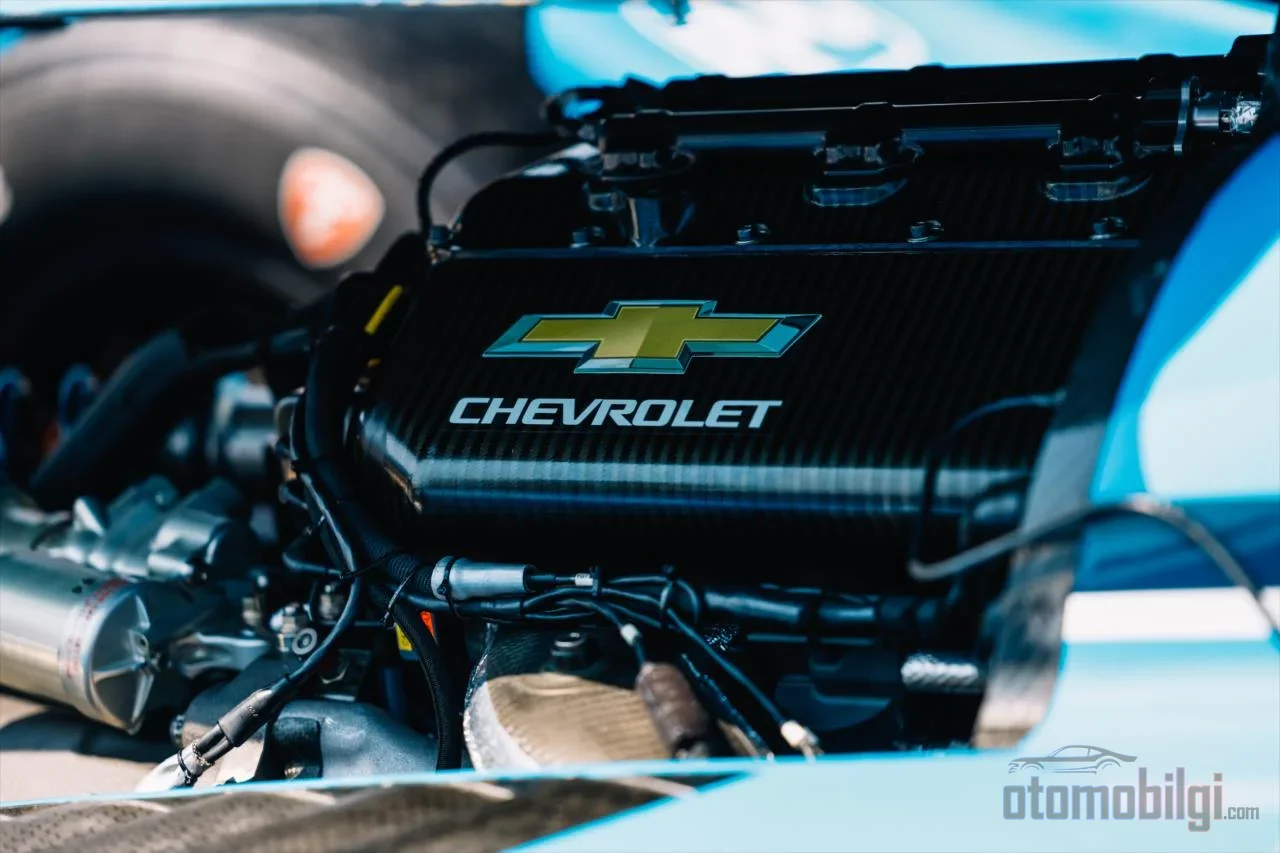
Short answer: by rule they're nearly identical, but by feel it's debated. Both manufacturers' engines run in a 2.2-liter twin-turbo V6 configuration with approximately 700 horsepower around in power. The engines are heavily regulated; that is, nobody can build an out-of-the-rules monster. Still, there's serious talk in fan discussions that there are performance differences. The picture voiced in driver circles goes like this: Honda engines look strong in acceleration and torque delivery, which gives them an advantage on street circuits; Chevrolet engines, on the other hand, are optimized for top speed. It's not hard to present this as a certain fact, but it's worth noting as a narrative circulating among all of us.
The Ilmor Factor
Behind Chevrolet's engine program there is not just the company itself, but a partnership with Ilmor. Ilmor developed the 2.2-liter twin-turbo V6 together with Chevrolet Racing in 2012, and since then this engine has taken 64 IndyCar victories and four driver championships . In other words, the engineering power behind Chevy is one of the most experienced engine workshops in the sport. The Honda side runs everything in-house - two different schools, a single track.
The Lesson of the AeroKit Wars
Competition did not always progress healthily. Between 2015 and 2017, manufacturers were allowed to develop their own AeroKits, and Chevrolet's kit came out clearly dominant. Honda could only stay afloat thanks to its power advantage on ovals. The result? The kits were frozen in 2017, and from 2018 onward a single-spec body package (UAK18/IR-18) was adopted. The lesson is this: IndyCar wants to keep competition in the engines, not in the body design. The chassis is common ground for everyone - engine wars are the soul of the series.
What Did the Hybrid System Bring in 2024?
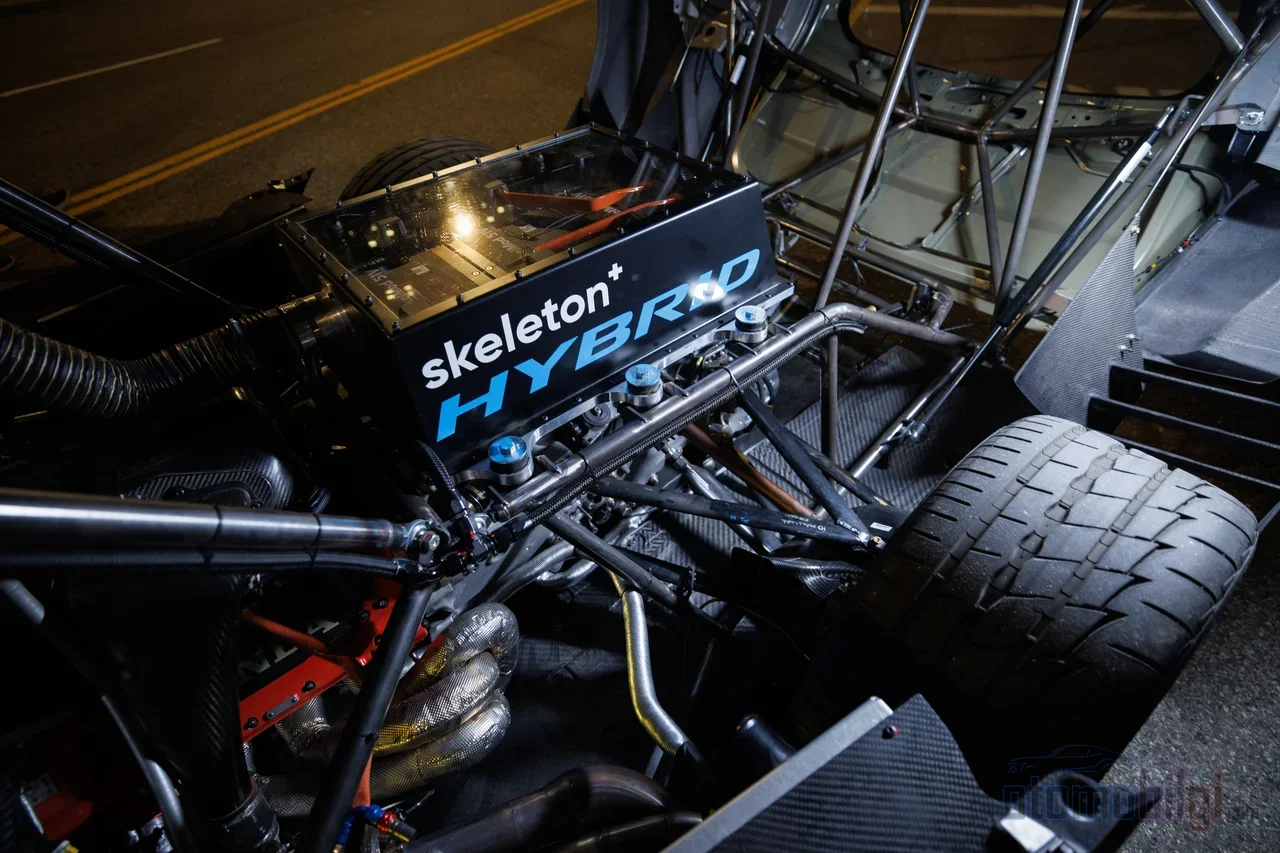
Here is the start of a new era: In 2024 a hybrid system entered IndyCar. The system adds an Energy Recovery Unit (ERU) alongside the existing 2.2-liter twin-turbo V6. A simple analogy: while braking, that is, at those moments when energy is lost as heat, the system collects this energy and stores it in its battery. Then, when the driver presses the button, this energy is converted back into power via the electric motor to the crankshaft and the gearbox input shaft. The electric motor sits in the empty space inside the gearbox housing between the engine and the transmission - not a separate box, but a component embedded in the heart of the machine.
The most critical detail is this: the hybrid unit operates completely independently of the engine and only provides extra power. If the engine fails, the hybrid cannot step in and save it; it only produces bonus power. Power deployment is done via a lockable button similar to the Push to Pass we know. While the hybrid alone adds around 60 horsepower at the start, when the hybrid and Push to Pass are used at the same time, more than 120 horsepower of extra power emerges. Two buttons, one straight, 120+ horsepower - it's not hard to guess where overtakes will happen!
The real beauty is in the strategy. Hybrid added an entirely new layer to racing: it gave drivers and engineers tools to manage performance and increased efficiency. There is no more "just go straight and press a button"; the team that calculates when to harvest energy and when to deploy it wins. Take a note in the survey book: this is like the energy bar in a video game - but in real life and with real risks.
Chevrolet's number one motivation on track is to beat Honda, and Honda's is Chevrolet. But the hybrid engine brought the two rivals together.
How Did Hybrid Change Race Strategy?
The most interesting aspect of the hybrid is that it behaves differently depending on the track type. On street circuits, road courses and short ovals, regeneration - that is, harvesting energy under braking - is easier to manage. Because on these tracks the driver brakes constantly, performing a dance of alternating poles; every corner is a charging opportunity. On long, fast ovals, however, braking is a rare luxury, so harvesting energy is much harder.
The rules also differ by track type: while hybrid boost is available on all tracks, Push to Pass is free to use only on road and street courses. So while a driver on a street circuit has two power sources at hand, on an oval there is only the hybrid. Tactical depth changes shape from track to track.
But the system is still in its infancy - and the organization itself knows it. For the remainder of the 2026 season hybrid power output has been reduced per track by 10-25 percent. In other words, we clearly see the series fine-tuning the system's impact on race dynamics in real time. The rule change regarding hybrid use at the Indy 500 also drew major backlash from the 33-car field. Engineering is a process, that's all there is to it.
What's Happening in 2026 and What Awaits Us in the Future?
In February 2026, good news arrived: IndyCar announced multi-year extension agreements with both Honda and Chevrolet. The agreements begin in 2027 and will last for multiple years. The Honda side also officially confirmed a multi-year engine supply agreement for 2027 and beyond. In short, the two rivals will keep fighting in the same arena in the years ahead - and as spectators, what more could we want?
The real excitement of the future lies hidden in 2028. Both manufacturers are involved in developing the engines and race rules that are planned to arrive with the new car expected to start racing that season. The new power unit is planned as a 2.4-liter twin-turbo V6 + hybrid ; details will be explained later. The car itself is coming too: initial tests of the new Dallara IR-28 chassis began in 2026 and the car will enter full use in 2028 . Let's add that this chassis was originally announced for 2027, was delayed by one year in June 2025, and took the IR-28 name. Honda's 2026 engine, meanwhile, officially carries the name HI22TT .
There is also the question of a third manufacturer knocking on the series' door. There are strong opinions that IndyCar needs another engine manufacturer - it is said that both Ilmor and Honda are warm to this idea; Toyota, Ferrari and Hyundai do not share the same view. Those who remember what single-manufacturer eras were like in the past know very well the value of a second rival. The 2026 season, started on March 1 in St. Petersburg and the calendar features the famous 2.5-mile Indianapolis oval, short ovals, six road courses and six street circuits - in other words, a program where engines are tested in every character. The drivers' champion was celebrated as Álex Palou.
Why Is This Rivalry the Heart of the Series?
IndyCar's philosophy is clear: keep costs low, limit the technological difference to the engine, and put the race on the driver's shoulders. In this equation, Honda and Chevrolet fill the series' only true technological battlefield. If we recall that in history the engine with 27 victories, the most wins in the Indianapolis 500, was the Offenhauser, we see how deep a mark engine manufacturers have left in this series. Today's story is a continuation of the same tradition: two brands, two philosophies, one points table.
The early years of the hybrid era seem to have deepened the competition rather than divided it. Engine superiority is now measured not only in horsepower but also in when you harvest and deploy energy. When we move to the 2.4-liter hybrid era in 2028, this picture will become even more complex. Here is my question to you: which brand will press the button earlier in the next Indy 500? My money is ready.
Sources
- Chevrolet, Honda Make Historic, Multiyear Commitment to INDYCAR
- Honda Secures New Multi-Year Engine Supply Agreement with NTT INDYCAR SERIES
- Ilmor Racing - IndyCar
- Chevrolet Racing & Motorsports: IndyCar
- From Hybrid Power to the Aeroscreen - INDYCAR 101 Technology
- Hybrid Gives Drivers More Options, Mental Challenges
- How the IndyCar Hybrid System Will Work - Racecar Engineering
- IndyCar to reduce hybrid power output for remainder of season - RACER
- IndyCar Series - Wikipedia
- Arrow McLaren's 2026 Fan Guide to the NTT INDYCAR Series
- How IndyCar Rivals Honda And Chevrolet Joined Forces on IndyCar Hybrid - Forbes
- HI22TT Series | Honda.Racing
- Winning Engine Manufacturers | Indianapolis 500 Stats