How Does a Race Weekend Work in IndyCar?
Share This Page
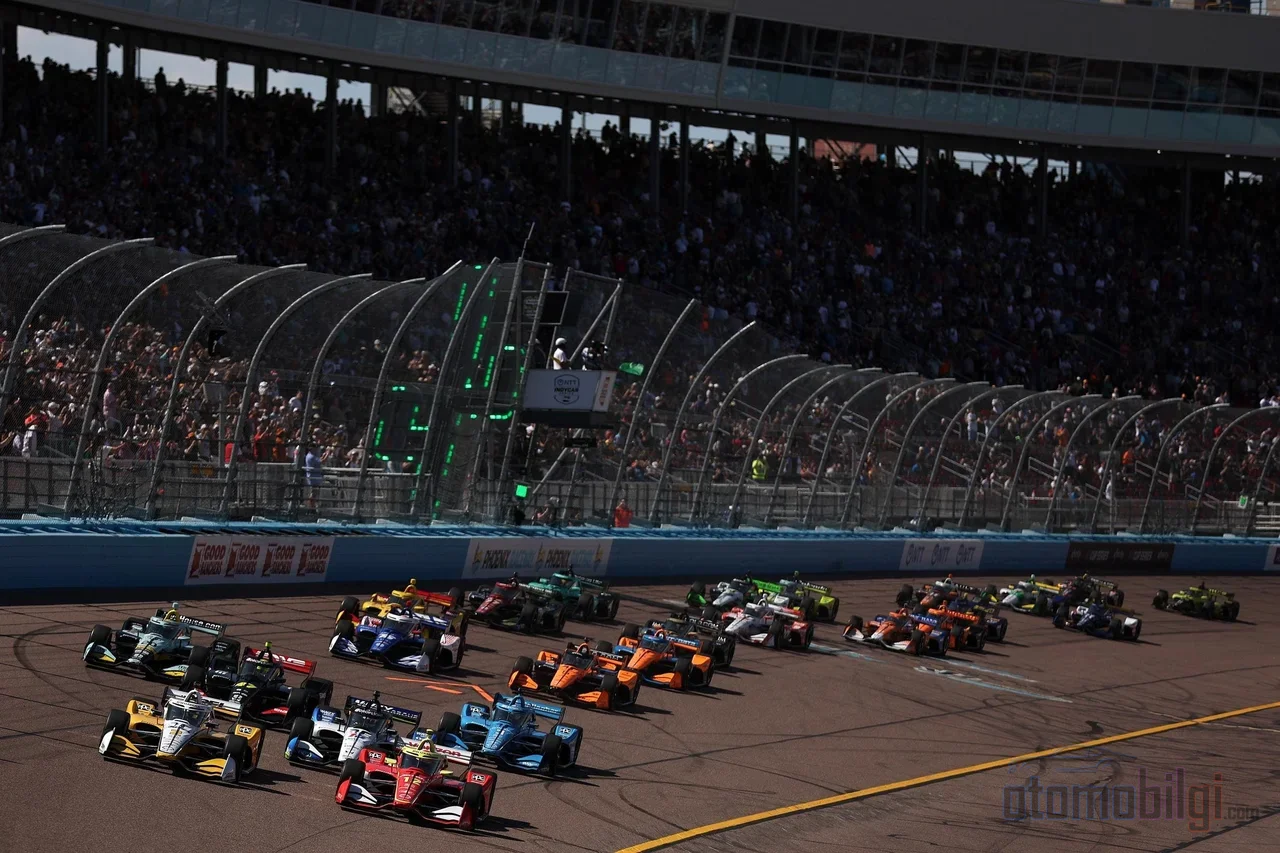
An IndyCar race weekend is a three-day rhythm that starts with practice on Friday morning and ends with the checkered flag on Sunday, changing shape depending on the track type: drivers first learn the track, then battle for positions in qualifying, and finally share out the points on race day. In this guide, I walk you through a race weekend step by step, from practice to flag rules, from push-to-pass to tire strategy - so that first-time viewers don't get confused.
Highlights
- There are three track types on an IndyCar weekend: street circuit, road course and oval.
- Oval qualifying uses a two-lap run, while road and street courses use a three-segment knockout format.
- Push-to-pass delivers about 60 extra horsepower with a button held down; each use lasts 20 seconds, with a total of 200 seconds.
- Firestone tires come in two compounds: hard with black sidewalls, soft with red sidewalls.
- Unlike F1, IndyCar has no playoffs; a season-long points championship is run.
Thursday and Friday: Warming Up with Practice Sessions
The race weekend starts much earlier than viewers realize. Teams first get to know the track: every city's street circuit is different, road courses each have their own character, and on ovals even the smallest setup difference determines the distance between the bottom and the top. The main job of practice sessions is this: to collect data for the engineers, to help drivers memorize the track, and to find the right setup for the race and qualifying.
Think of it this way: there's nothing like solving a practice exam before the real one, right? Practice is exactly that. The driver does a simulated qualifying lap, changes the fuel load, tests tire temperatures. On road and street courses, each driver has 4 sets of alternate (soft) tires for the weekend; one goes to the qualifying simulation in practice, and one is saved for the race. So the tire budget is calculated even in practice - the team that spends it like a drunkard has a hard day on Saturday.
How Qualifying Works: Three Different Games Depending on Track Type
Here's the point that surprises new viewers the most: there isn't one qualifying format in IndyCar - there are three. Whatever track the race is on, that format kicks in.
Two Laps, One Chance on Ovals
On ovals (except the Indy 500), each car gets a single attempt. Two warm-up laps are followed by the two-lap run, and the combined time of those two laps makes up the qualifying time. So the margin for error is almost zero - touch the wall on the first lap, and your day is over. The qualifying order is also interesting: it's set in reverse order of team standings before the event, and teams without points are moved up by draw. A brief explanation: this system gives the slowest team the cleanest track so that everyone can put in a competitive lap.
Then there's the atmosphere factor. A single cloud blocking the sun during the two laps on an oval can seriously affect the car's balance. When the air is cooler, the air is denser, the engine produces less power, and downforce changes. Yes, even clouds are a real factor that affects qualifying here - crazy, I know.
Three-Segment Elimination on Road and Street Circuits
On road and street circuits, qualifying works like a tournament. The field is split into two groups based on their most recent practice times; each group runs for 10 minutes, and the fastest 6 cars from each group advance. The rest line up from 13th place backward, with one group's drivers taking odd numbers and the other's taking even numbers. Then 12 cars battle for another 10 minutes, and the fastest 6 move on to the famous Firestone Fast Six. In the final, the 6 cars fight for pole by setting the fastest lap within 6 minutes of green flag time.
There is a change for street circuits in 2026: the Fast Six has been reduced from unlimited laps to a single timed run, and the fastest driver earns the right to choose their run order. Also, this run ends on the alternative start/finish line located right in front of the circuit's entrance gate. There is one warning about the rule of the sequence: a car that causes or is involved in a red flag in a segment loses its two best laps in that segment; two red flags void all laps. So a single mistake in the Fast Six can waste the entire day.
Indy 500: The Most Intimidating Four Laps of Motorsport
Qualifying for the biggest race of the season is unlike anything else. In the Indy 500, the combined time of a single car's 4-lap run counts - four consecutive laps at speeds of over 230 mph. the 110th in 2026 race in 2026, the format has also been expanded: on the first day, positions from 16th to 33rd are determined, with the fastest 9 cars advancing to the Top 12. The next day, the Final 15 and then the Top 12 are run, with the fastest 6 cars dueling for pole in the Firestone Fast Six. The pole sitter receives a $100,000 prize and the NTT P1 Award; in addition, ranking bonuses are distributed, with 12 points for pole and 11 points for 2nd position 11 points, ranking bonuses are distributed.
Push-to-Pass: The Secret Turbo Button on the Steering Wheel
Now we come to the series' most fun button. Push-to-pass is a software-based system that the driver activates by holding down a button on the steering wheel: it raises the turbo boost of the twin-turbo V6 and delivers about 60 extra horsepower. Normally, turbo boost is around 1.300-1.500 mbar depending on the track type; in push-to-pass mode it rises to 1.650 mbar. A simple analogy: it's like someone pushing you from behind while you pedal a bicycle - except the thing pushing is your own engine.
The rules are clear: each use lasts 20 seconds, with a total of 200 seconds per race. From 2026 onward, the system can be used at any time throughout the race after the start, meaning the overtaking restriction has been removed. It is constantly confused with DRS in Formula 1, but the logic is completely different: DRS moves the rear wing to reduce drag, while push-to-pass directly increases engine power. One opens up the air, the other adds muscle. My favorite moment when watching is this: two drivers side by side on the straight, both pressing the button, and one of them is about to run out of time. That final half second is like the last Championship in your pocket.
Tire Strategy: Black or Red?
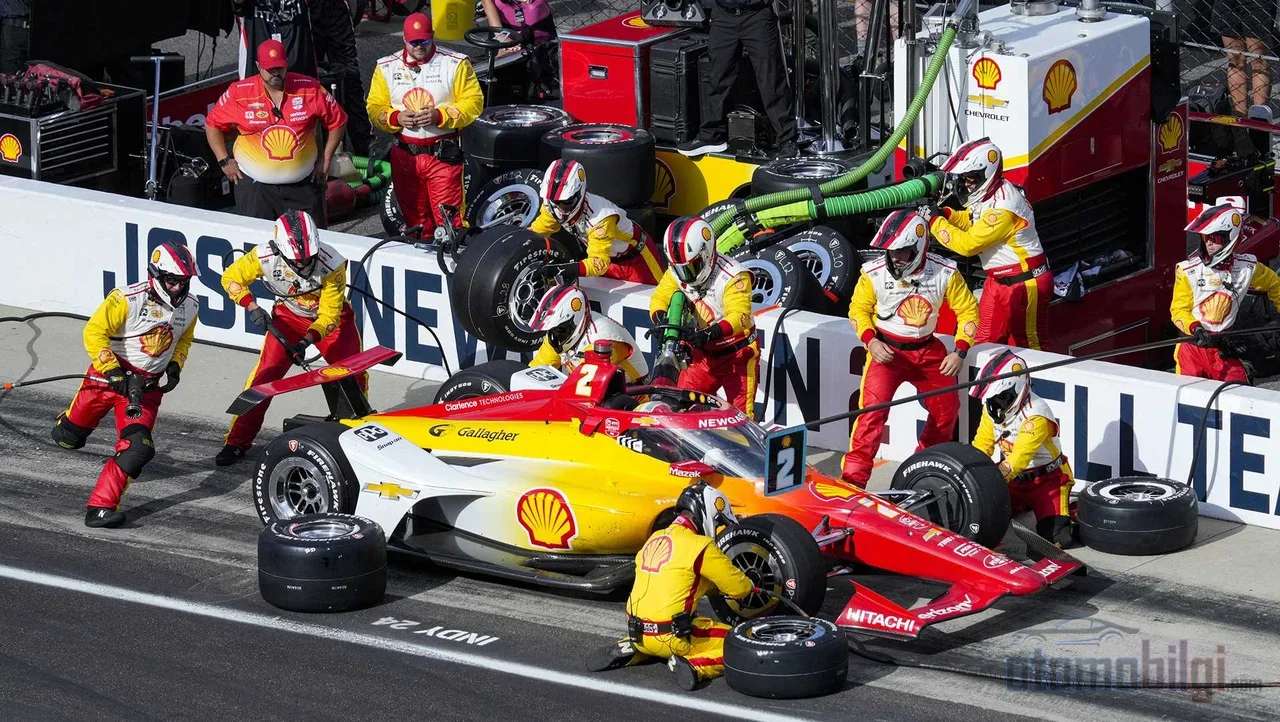
Firestone has two compounds, and this is the backbone of race day. The primary hard compound with black sidewalls: sacrifices grip but lasts longer. The alternate soft compound with red sidewalls: when fresh, the car practically sticks to the track and lap times drop, but it wears out just as fast. The new alternate compound introduced in 2025 widened this gap even further - more grip, faster wear. For the teams, this is a beautiful headache: do you start on the reds and pit early, or start on the blacks, wait patiently, and attack at the end?
| Feature | Black Primary | Red Alternate |
|---|---|---|
| Compound | Hard | Soft |
| Lap time | Slower | Faster when fresh |
| Wear | Durable | Fast |
| Best scenario | Long stint, few pits | Short aggressive stint, attack |
In some events, the organizers can make things harder by requiring every team to use at least two sets each of primary and alternate; effectively forcing a strategy with at least three pit stops. So tire choice isn't a commitment, it's a chess move - and speaking as a 15-year-old, let me tell you, what makes watching the race truly exciting is exactly this invisible chess game.
What Do the Flags Mean? A Dictionary of Colors
When watching a race for the first time, the flags may seem confusing, but the logic is actually as simple as child's play. Let's go through them one by one:
- Green: The race is starting or continuing at full speed. Full throttle, go free.
- Yellow: Danger ahead; all cars must proceed below full speed, no overtaking.
- Red: The session or race stops immediately, regardless of position on track - usually for unsafe conditions or a major accident.
- Black: An individual penalty for a driver; they're called to the pits on the next lap.
- Blue: Signals that a faster car is approaching - but careful, in IndyCar this isn't always a mandatory move-over command.
- White: Final lap! The moment excitement hits the ceiling.
The frequent use of the red flag can also be a topic of debate among fans: the excessive enforcement of the rules in order to finish the race under green draws criticism from some quarters. So flags aren't just a technical matter, they're also part of the strategy and the debates.
Race Day Flow and the Points System: What's the Difference from F1?
Race morning opens with technical inspection; a total of 5 inspections are carried out over the weekend (first, pre-qualifying, post-qualifying, pre-race and post-race), and roughly 15 inspectors measure the cars with close to 60 molds and templates. Then the grid is set, a short run to the grid, warm-up laps and the green flag. In race control, the race director and two stewards review incidents with video, radio and timing data; penalties can range from a warning to disqualification. The timing system records lap times with ten-thousandth-of-a-second precision - at 2008 Chicagoland, a high-speed camera showed one driver beating his rival by 0.0033 seconds. A difference you couldn't see with the naked eye is, quite literally, decided by a photo finish.
Here's the biggest difference between IndyCar's points system and F1's: In F1 only the top 10 get points, while in IndyCar all drivers up to 33rd place score points in a race. Plus, a classic points championship runs throughout the season, with no playoffs. There are up to 3 bonus points for laps led in a race, and pole position also brings a bonus. Driver, team and engine manufacturer championships are tracked separately; in a tie, the first tiebreaker is the number of wins. From 2026 onward, officiating is run by the independent, non-profit INDYCAR Officiating: two members of the three-person board are appointed by charter team owners, the third by the FIA.
There are also doubleheader race weekends: At tracks like Iowa Speedway and Milwaukee Mile, separate races are run on Saturday and Sunday; in the short qualifying format, two groups each get 15 minutes of runs, with the first group taking odd numbers and the other even numbers. So one weekend, double the points battle.
What to Do While Watching: A Quick Checklist for Your First Race
- Check the session times, and don't miss practice and qualifying: understanding the race starts there.
- Learn the track type - the qualifying format and tire strategy change accordingly.
- Follow when the push-to-pass button is pressed: that's the cause of those sudden bursts of speed on the straights.
- Check the color of the tire sidewalls: when you see red, that driver is taking a risk.
- Don't forget the points table: here, every corner affects the championship at the end of the season.
An IndyCar race weekend may look complicated at first glance, but once you catch its rhythm, you realize you're facing one of the most layered formats in motorsport. The next time you open a race, you'll be reading the flags, the tires and the button yourself. If you're ready, the green flag is about to wave.
Sources
- From Race Control to Championship Points
- Qualifying Procedure Expanded for 110th Indianapolis 500
- How does qualifying work in IndyCar?
- Indianapolis 500 Qualifying Format
- What Makes the NTT INDYCAR SERIES Race Car Unique?
- INDYCAR Expands Push to Pass Opportunities
- What is INDYCAR's push-to-pass rule?
- Paddock Buzz: New Firestone Alternate Creates Tricky Tire Decision
- Flag Colors
- IndyCar points system explained
- IndyCar announces tire allocation rule update for IMS road course