Why Do Races in IndyCar Finish So Close?
Share This Page
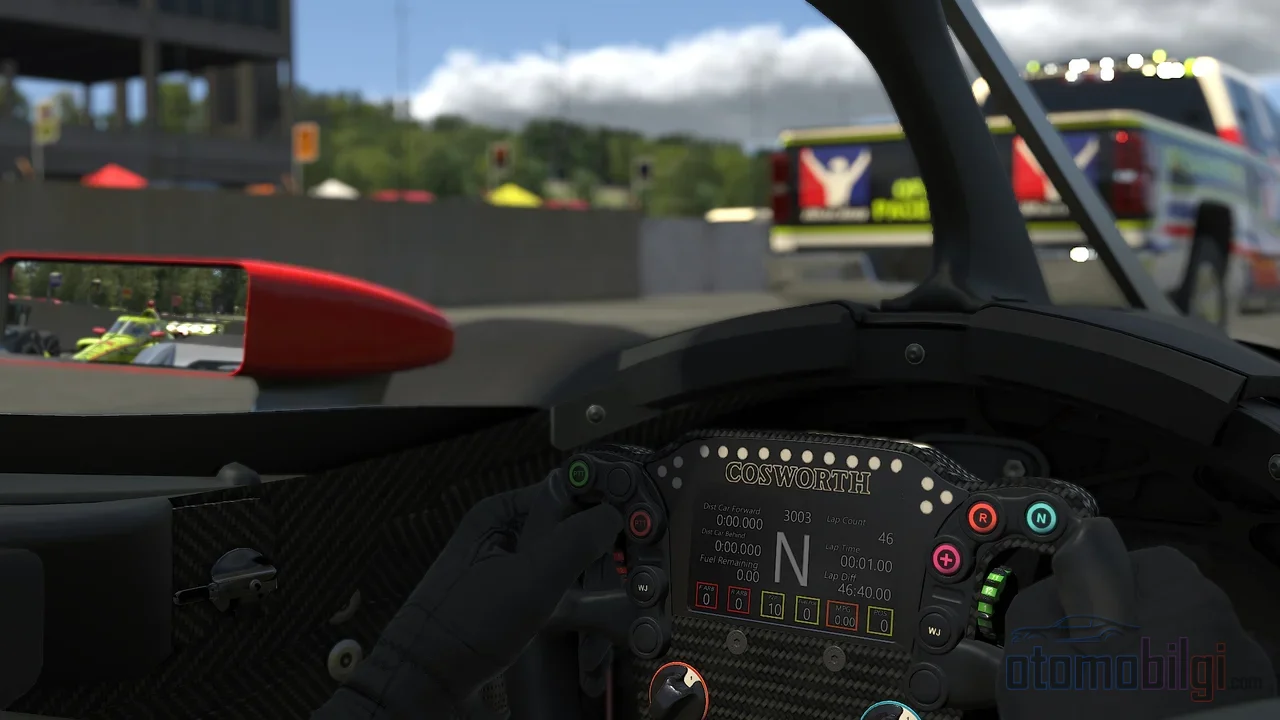
IndyCar races finish this close because the series deliberately makes everyone race with the same equipment: all teams use the same chassis, engine power is limited to two manufacturers, and the remaining differences are determined by driver skill, setup quality, strategy, and pit work. Add track variety and overtaking aids like push-to-pass, and photo finishes have become something of a signature for the series.
Highlights
- All vehicles Use the Dallara IR-18 chassis; one body, one true balance formula
- 2.2-liter twin-turbo V6, 700+ horsepower of power
- Push-to-pass briefly provides ~60 extra horsepower providing
- On ovals, 5-6G of lateral force, no hydraulic steering and no traction control
- In 2028, the lighter IR-28 chassis takes to the tracks
Spec Chassis: Why Does the Same Car Make for More Competitive Racing?
Imagine if everyone at your school's sports day ran in the same brand of shoes - who would win? Only the best runner. IndyCar does exactly this, but in car form. Introduced in 2018, the Dallara IR-18 chassis forms the foundation of every car in the series, and it has a single purpose: to make the person behind the wheel stand out, not the machine. It also keeps costs under control.
In this sense, the series is a "mostly spec" structure: a single chassis manufacturer, only two engine options (Honda or Chevrolet), and limited aerodynamic changes. The budget per car is roughly 10-15 million dollars in range. I know it still sounds astronomical. But in the open-wheel world, that's a comparatively modest figure - the budgets other teams spend on development elsewhere flow here not into the chassis, but into people.
So if everything is the same, what do teams change? Actually, quite a lot, because spec hardware cannot be changed but can be adjusted:
- Tire pressure and brake balance
- Wing angles and aerodynamic setup
- Suspension settings, ride height, camber and toe
- Gear ratios at specified intervals
In other words, teams still have to demonstrate technical excellence; they just devote innovation not to manufacturing parts, but to perfectly tuning the existing ones. The budget goes not into the chassis, but into setup quality, engineers, strategy, and the pit crew. That's where the real difference lies.
The Engine Side: Two Manufacturers, Firm Limits
Under the hood of every car is a 2.2-liter twin-turbo V6 and these engines come from either Honda or Chevrolet. Both produce around 700+ horsepower of power, and the two manufacturers jointly developed the hybrid energy recovery unit. This was something seen once, not collaboration: In February 2026, Chevrolet and Honda signed a historic, multi-year engine supply commitment with IndyCar. So both engine options are secured for the long term; Chevrolet is currently enjoying one of the most successful periods in its history with 16 manufacturer championships to its name.
The strict inspection of the engine's single unit is the critical point here. Power difference cannot be the main factor determining the race result, because both manufacturers are working in almost the same window. The same question remains: if the engines are equal, who braked better in that final corner? The answer is always the driver.
Push-to-Pass: The Overtaking Weapon at Your Fingertip
Now let's come to the series' most fun toy. Push-to-pass is a system where the driver increases turbocharger boost pressure with a button to temporarily gain about 60 extra horsepower . It is used on road and street circuits, and the sweet part is this: every driver receives a fixed allocation of usage time per race. For each circuit, there is both a maximum single-use duration and a total limit. So even when you open the game is strategy - will you overtake the car ahead, or fend off the one behind? Managing the resource is a serious art.
The 2026 Rule Change and the Long Beach Chaos
In May 2026 the rule was expanded: push-to-pass can now be used at any moment except the section from the race start to the alternate start-finish line. Sounds great, right? But the result was more chaotic than expected. In April at Long Beach, exactly 12 cars were found to have used the system before the alternate start-finish line, and INDYCAR officiating had to issue an official statement. The automotive press wrote that "the new rules are creating chaos." The good side of this debate is this: the system works so well that everyone notices whenever anyone uses it. Not an equalizer, but a game-changer.
Three Different Circuit Types: How Does It Erase Team Differences?
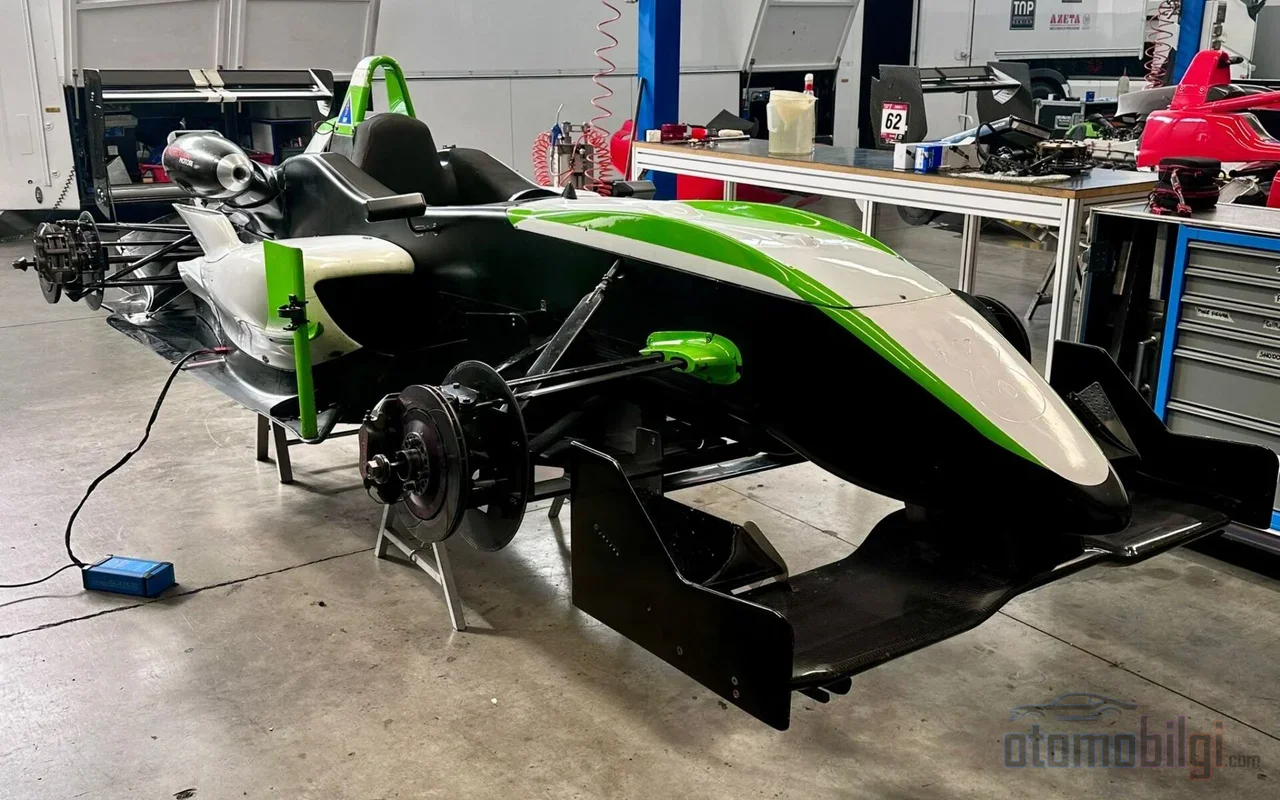
The calendar combines superspeedways, short ovals, road courses and street circuits. A separate aero package is used for each type:
- Road and street circuits: large front and rear wings, high downforce, cornering grip prioritized
- Short ovals: enough downforce for corners, low drag on straights, a balance of stability in traffic
- Superspeedways: small wings, low downforce, 230 mph and above speeds
The role of this diversity in the balance is enormous. Whichever team masters one circuit type sees its advantage melt away on the other; no one shines with the same ease across the entire calendar. The lap time examples are also striking: lap times are around ~23 seconds on short ovals, while on road courses they go up to 1 minute 45 seconds . It is a structure that tests a team's engineering crew from scratch every week.
Slipstream and the Slingshot Pass
The classic physics that works on ovals and fast circuits: a driver who tucks in behind the car ahead escapes the drag, speeds up, and suddenly pulls out alongside to make the pass - they call it the "slingshot." Thanks to this dynamic, the number of on-track passes stays high and races keep getting shuffled throughout the laps. No one is circulating with a safe buffer distance.
Where the Driver Truly Shines: Unassisted Driving
Here is my favorite part. IndyCar cars have no power steering, no traction control, no ABS either. The driver does everything with their own strength and precision. And consider turning a non-hydraulic steering wheel while enduring 5-6G of lateral force on an oval - this series is physically brutal. Vehicle weight, without fuel and driver, 730 kg, meaning every kilo and every corner is felt.
In a typical road course race, 27 cars are on the grid; the crowded field also increases passing opportunities. In an environment where machine differences fade and aids are removed, it is not the car but driver skill, strategy, and pit work that determine the fate of the races. In May 2026, the single-lap finish between Felix Rosenqvist and David Malukas went into the record books as the closest finish in Indianapolis 500 history - this is no coincidence, but the natural result of the system.
Of course, there are critics of this balance: When everyone uses the same chassis and only two engine manufacturers, the space for innovation narrows significantly. Spec parts deliberately close the door on technical development. This is the price the series pays - in return, the most competitive races of the year arrive.
The Future: Even Closer with the IR-28?
The IR-28 chassis announced in July 2026 will hit the tracks in the 2028 season. The new car, developed in collaboration with Dallara, is approximately 100 pounds lighter than the current version. The new wing designs and airflow management aim to allow cars to follow each other more closely through corners - in other words, designed to further strengthen the series' already famous tradition of close racing.
There is innovation on the power side too: Honda and Chevrolet's 2.4-liter twin-turbo V6 engines will produce up to 760 hp of power, and the hybrid system's energy storage capacity will increase to roughly 14 times that of the current unit. Xtrac's new gearbox is also 25 pounds lighter; the company has been the series' gearbox supplier since 2000. Testing began in 2026, and names like Alexander Rossi confirmed they have tried the new chassis on track. So even the future is focused on perfecting the existing competition rather than creating imbalance.
Is This Balance Sustainable?
I think the real answer to the question lies here: IndyCar has established balance not as a coincidence, but as a design choice. The same chassis, regulated engine power, track variety, and all the advantages left to the driver combine to make photo finishes the rule, not the exception. In return, space for innovation is given up - but everyone in the grandstands sees that there is no untouchable favorite in any lap. Don't you think that if no one can know who will win every race, there is anything more enjoyable than watching that race?
Sources
- What Makes the NTT INDYCAR SERIES Race Car Unique?
- From Street Circuits to High-Speed Ovals
- INDYCAR Expands Push to Pass Opportunities
- INDYCAR Officiating Statement Following the Streets of Long Beach
- Must-See: Closest Finish in Indy 500 History
- Chevrolet, Honda Make Historic, Multiyear Commitment to IndyCar
- Honda Secures New Multi-Year Engine Supply Agreement with NTT INDYCAR SERIES
- 'It's A Deal,' Honda And Chevrolet Extend IndyCar Engine Agreement - Forbes
- Chevy Racing & Motorsports: IndyCar
- What is INDYCAR's push-to-pass rule - Fox Sports
- IndyCar's New Push-to-Pass Rules Already Causing Chaos - Autoweek
- Inside The Indy 500's Dramatic Finish - Fox Sports
- How are IndyCar and Formula 1 different? - Racer
- Mastering the art of IndyCar strategy - Racecar Engineering
- The INSANE differences between F1 and INDYCAR - Kym Illman