The Anatomy of IndyCar Cars
Share This Page
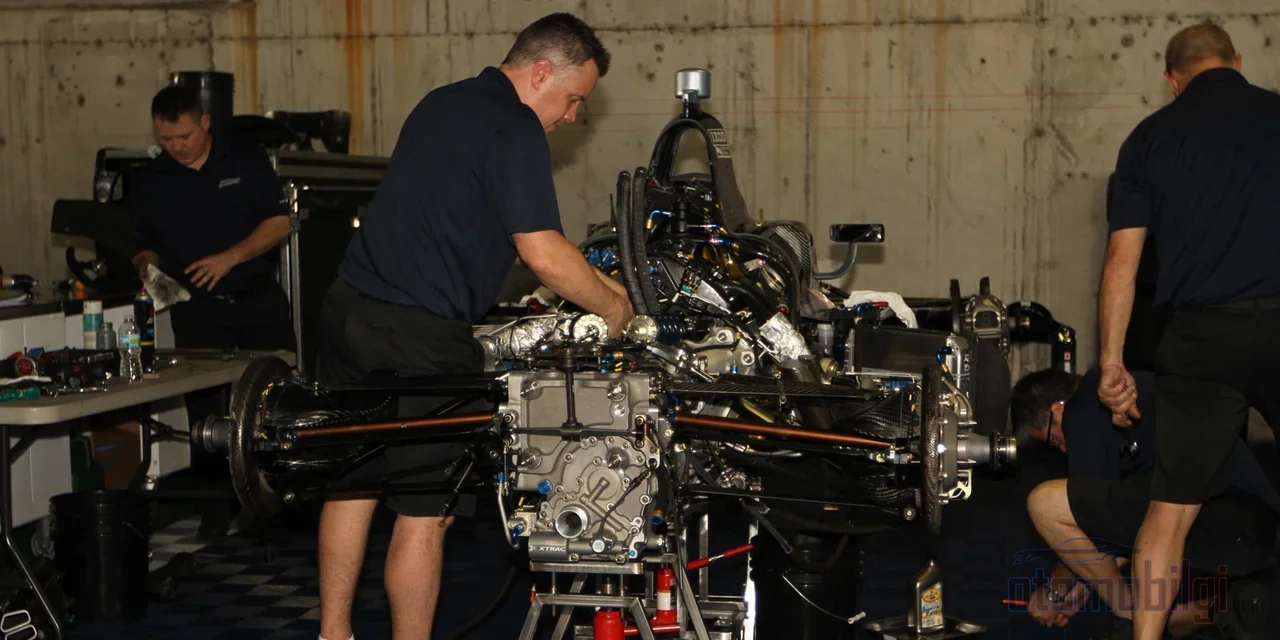
A modern IndyCar is a hybrid open-wheel race car built on a single Dallara chassis used by every team, carrying a 2.2-liter twin-turbo V6 engine from Chevrolet or Honda, with wings and settings completely changed depending on the track type. The same body slices through superspeedway ovals like a bullet; on street circuits it opens its wings and turns into a corner monster. Here is the anatomy of this transformation, piece by piece.
Highlights
- The same chassis has been on track since 2012: Dallara DW12 broke the long-term usage record, and it will be replaced in 2028 by the IR-28 .
- Chevrolet and Honda's 2.2-liter twin-turbo V6s deliver up to 700 horsepower of power.
- Since 2018 everyone has used the same UAK-18 aero kit; road and oval setups are solved with a single chassis.
- The aeroscreen protecting the cockpit since 2020 aeroscreen consists of a titanium frame and polycarbonate glass.
- The hybrid system arrived in 2024: 60 hp of extra power is stored in a capacitor.
Dallara DW12: The Same Skeleton for Sixteen Seasons
Everything comes from Italy. Dallara introduced the chassis named DW12 to IndyCar teams in the 2012 season, and this car has been on track ever since. Its name comes from Dan Wheldon, the test driver who lost his life in Las Vegas in October 2011; he was the one who first tried the car. Today its official name is IR-18, but the underlying idea is exactly the same: the core chassis has not changed since 2012.
The heart of the chassis is the carbon fiber monocoque called the "IndyCar Safety Cell." Reinforced with a honeycomb kevlar structure, this safety cell is assembled at the Dallara facility in Speedway, Indiana. Teams add their own aero kits on top of this cell: front wing, rear wing, sidepods, engine cover. Even the wheelbase is adjustable - it can be varied between 2,984 and 3,086 mm. Weight? 748 kg on fast ovals, around 1,690 pounds including the aeroscreen on road and street circuits.
So why does it last so long? The answer lies in cost. The project was launched in 2010 under the name "ICONIC Plan" (Innovative, Competitive, Open-wheel, New, Industry-relevant, Cost-effective) and the chassis price was fixed at $349,000. The aim was for teams to spend their money on engineering, not on the chassis. One more interesting detail: an Arrow McLaren DW12 recently found a buyer at an auction for a full $848,750. Even more expensive than a new car - because it is now a piece of history.
Universal Aero Kit: How Wings Change the Character?
Before 2018, things were more complicated. Honda and Chevrolet produced their own aero kits, and the flip crashes at the 2015 Indy 500 clearly showed the cost of this headline-grabbing design race. Then IndyCar made its move: since 2018 everyone uses the same UAK-18 (Universal Aero Kit 2018) package. The airbox and rear wheel protectors were removed, and most of the downforce began to come from ground effect rather than the wings. The visual result? A return to the classic Indy cars of the 80s and 90s - a great decision in my opinion.
Here's where the real magic lies: the same chassis can accommodate road course, short oval, and superspeedway configurations. Teams no longer have to buy a separate sub-floor chassis for superspeedways. The most visible difference is in the wings: the road course wing is much larger, because downforce is essential for grip in corners. On ovals, the wings shrink, because the goal is not drag but speed.
So IndyCar has two faces, and seeing the difference between these two faces in a table is much more meaningful:
| Feature | Road / Street Course | Superspeedway Oval |
|---|---|---|
| Aero wing size | Large wings, high downforce | Small wings, minimum drag |
| Length | 5,123 mm | 5,012 mm |
| Weight | 1,690 lb (748 kg) | 1,650 lb (under 748 kg) |
| Push-to-pass | Available | Not available |
| Brake calipers | 6-piston | 4-piston |
Engine: Two Manufacturers, One Formula
Here's the critical detail that sets IndyCar apart from single-brand series like F2: even though the chassis is one, the engine race continues. Chevrolet and Honda, with their 2.2-liter twin-turbo V6 units, deliver up to 700 horsepower of power. So teams make a major strategic decision by choosing their engine - even driver transfers can involve the engine side. The transmission job is handled by Xtrac's 6-speed sequential semi-automatic gearbox; gears are changed via paddles on the steering wheel.
The fuel side is also a nice story: until 2022, E85 (85% ethanol) was used, and since 2023 the fuel has been entirely renewable Shell V-Power Nitro+ E100. Brakes work with 6-piston calipers on road courses and 4-piston calipers on ovals - because on ovals, the less you use the brakes, the faster you are. The tires, in one word, are Firestone Firehawk.
Hybrid and Push-to-Pass: The Secret Reserve of Power
In 2024, the hybrid system took the stage at Mid-Ohio. An electric motor producing 60 hp and 45 N·m was added on top of the existing V6, along with a capacitor with a capacity of 320 kJ. Not a battery but a capacitor - because the energy needs to be discharged quickly and recovered just as fast. Think of it like the bicycle analogy: you're pedaling uphill, but there's a friend pushing you with his hand for a moment, right beside you.
The tactical layer of the game is push-to-pass. When you press the button on the steering wheel, you get extra power and try to overtake the car ahead. But be careful: this feature is only available on road and street courses, not on ovals. The closest equivalent on ovals is the boost setting in Indy 500 qualifying.
Aeroscreen: The Glass Armor of the Cockpit
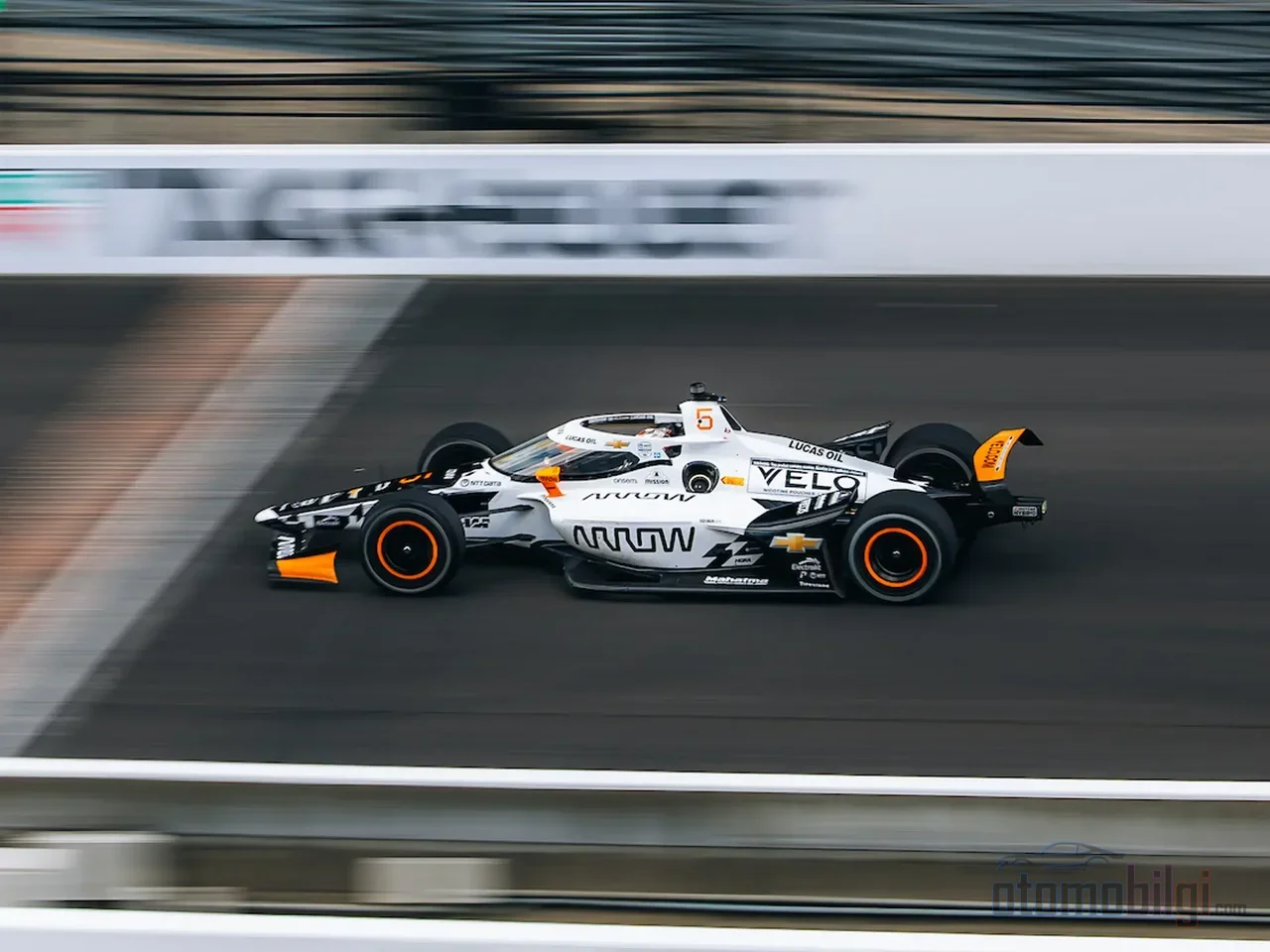
Now let's move on to the most emotional part of the series. Justin Wilson losing his life in 2015 after being struck by debris was a painful reminder of the greatest weakness of open-cockpit cars. IndyCar first deployed the intermediate step called "Advanced Frontal Protection" at the 2019 Indianapolis 500, then dropped the real bomb: developed with Red Bull Advanced Technologies, the aeroscreen was introduced in the 2020 season.
The structure has two layers: a titanium frame and a PPG laminate polycarbonate windshield mounted inside it. The inner surface has an anti-reflective coating so the driver cannot see themselves in the sun. Scott Dixon conducted the first track test in February 2018, followed by Josef Newgarden getting behind the wheel at Indianapolis Motor Speedway. Although there have been debates about temperature and visibility in terms of the driving experience, the system has saved the lives of many drivers to date. Another detail that caught my interest is that it was tested simultaneously with F1's halo - IndyCar chose a full screen instead of a halo.
Suspension and Setup: One Car, Two Different Souls
The suspension follows classic formula logic: double A-arms front and rear, pushrod actuation, third spring and anti-roll bar. It looks simple but the setup is diabolical. On ovals the world is completely different: the right side of the car sticks to the asphalt while the left side hangs free; camber angles are set accordingly - negative on the right, positive on the left. Ride height is the first setting, and balance is found with the front wing. On a street circuit, a classic setup is used that seeks a different balance for every corner.
That is why an IndyCar race week shifts between two different characters. One week you are glued to the wall in Texas at 300 km/h, the next week you are measuring brake points at Long Beach down to the millimeter. The same car, the same engine, completely different engineering.
IR-28: The Next Chapter Begins in 2028
After sixteen seasons, the winds of change are blowing. The new chassis, IR-28, will debut in 2028; its arrival was originally planned for 2027 but was delayed by one year due to engine production delays, supply chain issues and financial reasons. The new car is being designed for faster lap times and better racing quality. The road and short oval package adds fences behind the underbody and incorporates a windshield into the cockpit design - meaning the aeroscreen legacy continues.
There is clarity on the engine front too: Chevrolet and Honda will continue as suppliers beyond 2026, and the current 2.2-liter twin-turbo hybrid V6s will also cover the transition year 2027. Honda will power the new chassis in 2028 with an all-new V6 to be developed in the US by HRC. Under the new engine formula, the target is up to 760 hp from a 2.4-liter twin-turbo V6 - with a hybrid unit coming along with it.
So the car you see on track in 2026 is both the closing story of an era and the very essence of IndyCar's engineering philosophy: a standard skeleton, open competition, unlimited setup. In my opinion, the balance of this trio is what makes this series so watchable. Which face of it do you like more - the polish master of street circuits without ovals, or the missile of the superspeedway?
Sources
- Dallara DW12
- What Makes the NTT INDYCAR SERIES Race Car Unique?
- INDYCAR announces plan for cockpit protection innovation
- IndyCar Aeroscreen
- IndyCar's long-awaited new chassis for 2028 begins testing
- HI22TT Series
- Chevy Racing & Motorsports: IndyCar
- Chevrolet, Honda expected to continue as IndyCar engine suppliers beyond 2026
- Honda Secures New Multi-Year Engine Supply Agreement
- IndyCar finally shows off its 2018 universal aero kits
- Dallara DW12 Specifications
- 2026 Arrow McLaren IndyCar Team Dallara-Chevrolet DW12
- Dallara IR18 Manual