How Different Are IndyCar and F1 Cars Really?
Share This Page
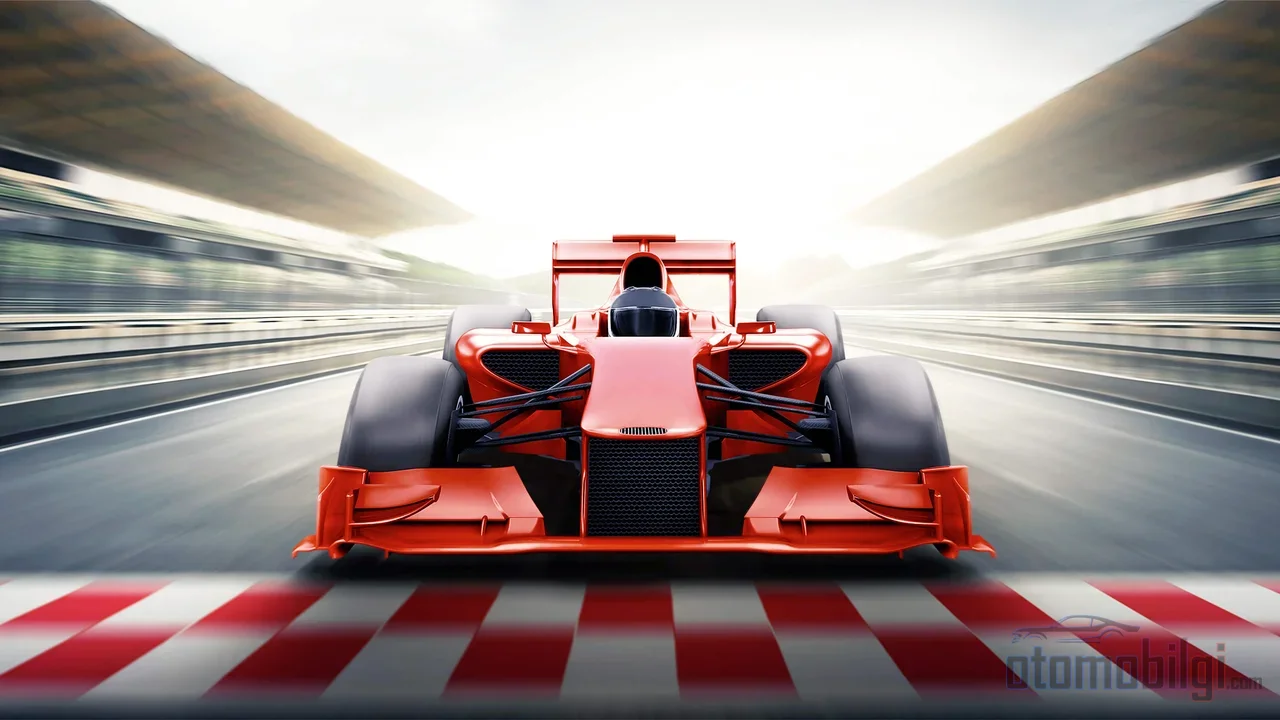
Short answer: Very different. Both are open-wheel, both hit the track on weekends, but an IndyCar and a Formula 1 car are products of two separate design philosophies. F1 is an engineering contest where ten teams design their own cars and push the technical limits; IndyCar, on the other hand, is a series where everyone races with the same chassis and the outcome depends far more on the driver. F1 is roughly 10-14 seconds faster per lap on a road course, while IndyCar can run at over 240 mph on ovals. So if one is a sharp blade climbing to the summit, the other is a boxer built on toughness and close racing.
Highlights
- The official weight of an F1 car (including the driver) is 768 kg; an IndyCar weighs 771 kg without a driver on road courses, and over 850 kg with one
- F1 will produce over 1,000 hp in 2026, while IndyCar makes do with about 850 hp
- IndyCar uses a single chassis (Dallara) and two engine manufacturers: Chevrolet and Honda
- COTA 2019: The gap between the pole times of the two series was 13.989 seconds
- Annual team budget: In IndyCar it is 7-14 million dollars, in F1 well over 70 million
Design Philosophy: A Championship of Engineers, or a Championship of Drivers?
In my view, this question is the key to understanding the two cars. Formula 1 is a constructors' championship: Each of the ten teams designs and builds its own car. Mercedes, Ferrari, Red Bull, Renault and Honda supply the power units; every team's machine is a little different. The bigger the budget, the more the wind tunnel turns, the faster the car gets. The only limit on design is the technical regulations.
IndyCar, however, has chosen the exact opposite model: spec-racing. All cars use the same chassis and the same aerodynamic kit; the engine line-up is limited to Chevrolet and Honda only. The visible aero parts are standard, and the room teams have to develop is very narrow. So who closes the gap? The driver. If you consider that a large share of the development budget goes to dampers, i.e. suspension settings, you can guess how much care goes into the underside of the car. Think of it as one person racing with the latest phone, and the other with a phone that has a case on it: the difference lies in the person using it.
Chassis, Dimensions and Weight: Why Is IndyCar Heavier?
The difference here may sound strange. Even though IndyCar produces less power, it is heavier than F1! The reason is safety: A car approaching a wall at over 200 mph on an oval needs a much stronger survival cell. Moreover, the Aeroscreen that protects the cockpit adds extra weight to the scales. In F1, the Halo takes on the protection duty; as Red Bull put it, IndyCar uses a mix of both systems.
| Feature | IndyCar | Formula 1 |
|---|---|---|
| Chassis | Dallara IR-12 + IR-18 aero kit | Team's own design |
| Weight | 771 kg (without driver, road/track) | 768 kg (including driver) |
| Length | 526 cm | 510-550 cm |
| Width | 192-195 cm | Max. 190 cm |
| Height | 102 cm | 95 cm |
| Gears | 6 forward + 1 reverse | 8 forward + 1 reverse |
| Fuel tank | 70 liters | 113 liters |
| Cockpit protection | Aeroscreen | Halo |
The most painful detail is hidden in the steering: F1 cars have power steering, IndyCars don't. Have you ever tried wrestling with an unassisted hydraulic-free steering wheel for 500 miles? That's why driving an IndyCar is a physically far more exhausting experience. This is a series where championship titles are decided not just by clutch control, but by arm muscles too.
Engines: Durability or Peak Performance?
Both series use a V6 turbo hybrid, but their approaches are as different as night and day. IndyCar's 2.2-liter twin-turbo V6 produces 650-700 hp depending on the track type; including the electric motor that adds about 150 hp, the ceiling stretches to around 850 hp. Maximum rpm is 12,000, and turbo pressure is limited to 19-24 PSI (1.5 bar) depending on the track type. The engine is deliberately restricted: When you consider that full throttle is held for 500 miles on ovals, you understand why durability comes before speed. The fuel is also a mix of 85% ethanol + 15% gasoline. The hybrid system has been in use since 2024, working with limited energy per lap, resetting each lap.
The F1 side, meanwhile, is at a completely different point in 2026: The 1.6-liter turbo V6 delivers about 540 hp, the electric part adds about 470 hp, and total power climbs above 1,000 hp. The rev ceiling is around 15,000 rpm, turbo pressure is 69 PSI (4.8 bar) - almost three times that of IndyCar - and the fuel is 100% sustainable. F1's philosophy is clear: Unlimited performance meets hybrid efficiency. While IndyCar says "finish the season in one piece with the same engine," F1 asks "how high can you push the ceiling?"
Aerodynamics: Where Does Downforce Come From?
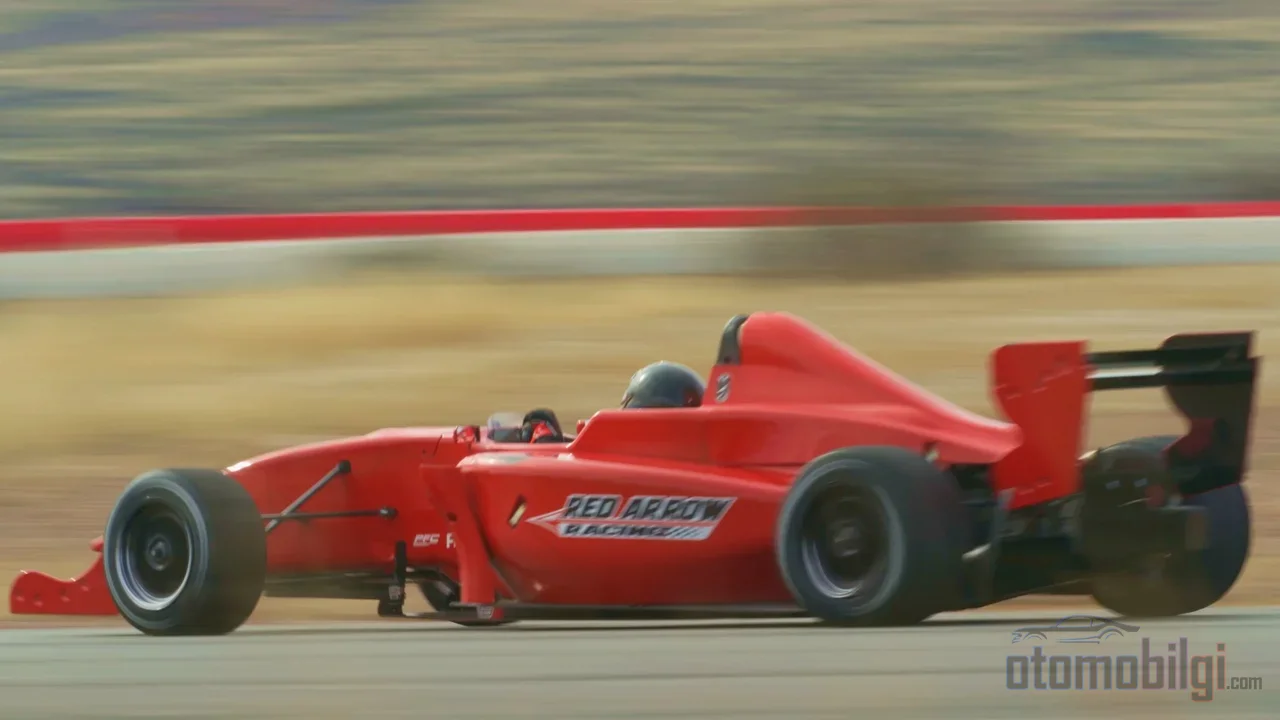
This is where the two philosophies diverge most clearly. IndyCar's current generation generates most of its downforce from under the car; it doesn't need huge wings and winglets. That means less "dirty air"; so a driver stuck behind another car isn't caught in the middle of a wind turbine, and close racing becomes easier. But there's a price: as downforce decreases, controlling the car gets harder and the job falls more to driver skill.
F1 cars produce significantly more downforce, sit much closer to the ground, and are incredibly fast in fast corners. But the cost is dirty air: The car behind loses efficiency while following the one ahead, and overtaking remains F1's biggest headache. So there's no single answer to which approach produces "better racing"; both are right in their own way. The history is interesting too: Indy cars never used ground effect as aggressively as F1; skirts that sealed the underbody had already been banned in IndyCar back in 1983.
And then there's the Aeroscreen factor: That big screen affects the airflow going to the engine and rear wing, and required serious aerodynamic rework. It's a good example of how everything in an IndyCar is interconnected.
Tires and Brakes: The Set That Lasts All Season
Firestone Firehawk vs Pirelli P Zero in the tire world. Pirelli is softer and faster; Firestone is stiffer and wears less. Why? Durability comes first because a tire blowout on ovals can have catastrophic consequences. The strategy logic is similar: In IndyCar, race results use two compounds (standard white + red alternative), while F1 applies the same principle with three compounds. The soft compound can provide up to 1 second of advantage compared to the standard tire.
Brakes in both series are aluminum calipers + carbon discs/pads, but their service life is incredibly different. In IndyCar, a set of brakes lasts a third of the season, i.e. 5-6 races. In F1, however, the brakes are designed to work continuously at the limit, and multiple sets are needed over a race weekend. In short, this tells us: F1 is aggressive enough to consume every part completely, while IndyCar is economical enough to carry every part through.
Which One Is Faster on Track?
Good thing you asked, because in the last 25 years the two series raced at the same track in the same year only 6 times. The differences between pole times speak for themselves: Montreal 2002: 6.123 s; 2003: 4.136 s; 2004: 7.622 s; 2005: 5.179 s; 2006: 4.655 s. The most striking example is COTA 2019: The Dallara IR-18 pole lap was 1:46.018, while the Mercedes W10 was 1:32.029. The difference is a full 13.989 seconds.
But wait, the story doesn't end there. On road and street circuits, F1 is noticeably faster; the downforce difference is felt in fast corners. On the other hand, in pure oval speed and in-race maximum speed, IndyCar is ahead: IndyCar can exceed 240 mph in a race, while F1's limit is around 220 mph. The 2.5-mile oval at Indianapolis means 200 laps of uninterrupted full throttle, something no other race in the world has. Max Verstappen has said he doesn't like ovals; "I love watching them, I respect the drivers, but I'm happy where I am," he said. When you consider the distance between 200 mph and the wall, his thinking is understandable.
The cars' setups also differ completely depending on the track: Superspeedway front/rear wing setups are entirely separate from road and street circuits; the oval car is designed and adjusted almost just to "turn left." One chassis, two distinct characters.
Cost: The Difference Is Not on Paper, It's in Wallets
The price tag of the philosophical difference is huge too. IndyCar teams spend 7-14 million dollars a year. In F1, team budgets start at 70 million and can exceed 140 million dollars; the 2026 cost cap has risen to 215 million. So an F1 team can spend more than 10 times what an IndyCar team spends for a season. In the late 2010s, a competitive IndyCar entry could be set up for 3-6 million dollars per car; in the same period, an F1 team ran a two-car operation. The difference shows itself everywhere, from engineering to the kitchen table. And this is exactly where the beauty of the spec chassis lies: Even if your money is limited, you can stay on the grid, and you can even win.
2026 and Beyond: A Fork in the Road
F1 2026 is in the middle of a major regulation change: a revised power unit and new active aerodynamics are in play. On the engine front there are Audi, Ferrari, Ford, Honda and Mercedes-Benz; it is said that the new rules favor the team that interprets the constructor battle best. On the IndyCar side, the new chassis that will replace the Dallara DW12 is being prepared for testing in 2028; the end of a long and safe era is approaching. Dallara has already cut three slots into the underbody supports of the DW12 to reduce lateral stiffness and improve its safety.
Driver traffic is also a topic: Colton Herta has moved from IndyCar to Cadillac's F1 team as the first American test driver. Álex Palou won his third championship in four years, and since his contract runs almost until he turns 30, his F1 window may be narrowing. The door swings both ways: from Nigel Mansell to Emerson Fittipaldi, from Romain Grosjean to Juan Pablo Montoya, countless names have tasted both worlds. As for which car Kimi is better suited to, that is entirely a question of philosophy. So if it were you, which one would you want to race in: the engineering marvel that pushes the limits alone, or that sturdy American machine where the driver gambles with his life? I cannot decide; I need to drive both.
Sources
- IndyCar vs F1: Key Differences in Technology & Performance
- IndyCar vs F1: Key Differences Explained
- How are IndyCar and Formula 1 different?
- Dallara DW12
- Dallara modifies IndyCar DW12 chassis to improve safety
- 2026 Formula One World Championship
- F1 2026: Cost Cap Explained & Why It Increased to $215 Million
- The INSANE differences between F1 and INDYCAR!
- Ground effect (cars)
- The F1 drivers who conquered Indy
- Is IndyCar's once-promising pathway to F1 now a road closed?
- Colton Herta joins Cadillac F1 as first American test driver
- How Teams Prep Oval vs. Road & Street Wings