The Technology That Makes IndyCar So Safe
Share This Page
What makes IndyCar cars so safe is not a single component but a layered safety ecosystem: the titanium-framed aeroscreen in front of the cockpit, the non-deforming carbon fiber survival cell, crushable impact zones and the energy-absorbing SAFER barriers along the track all work together. At speeds exceeding 340 km/h, there is now a real shield between a flying piece of debris and the driver.
Highlights
- The aeroscreen has been standard on all IndyCar cars since the 2020 season.
- Titanium frame 150 kilonewtons of load capacity - the same load value as the Halo in F1.
- In tests, the windscreen was able to withstand objects launched at 234 mph (approximately 377 km/h).
- The SAFER barrier is a "soft wall" technology developed in 1998 alongside Indianapolis.
- In 2024, a lighter, ventilated new aeroscreen was introduced; and for 2028 the IR-28 was unveiled.
While watching open-wheel racing, the same thought always comes to mind: the driver's head is out in the open, as if there is no protection at all. Yet in recent years this picture has changed radically. Now there is a transparent wall in front of that cockpit, standing between a flying piece of debris and the driver, and around it dozens of hidden layers waiting to absorb a crash await you. Let's break this ecosystem down piece by piece.
How Did the Aeroscreen Come About and Why Was It Necessary?
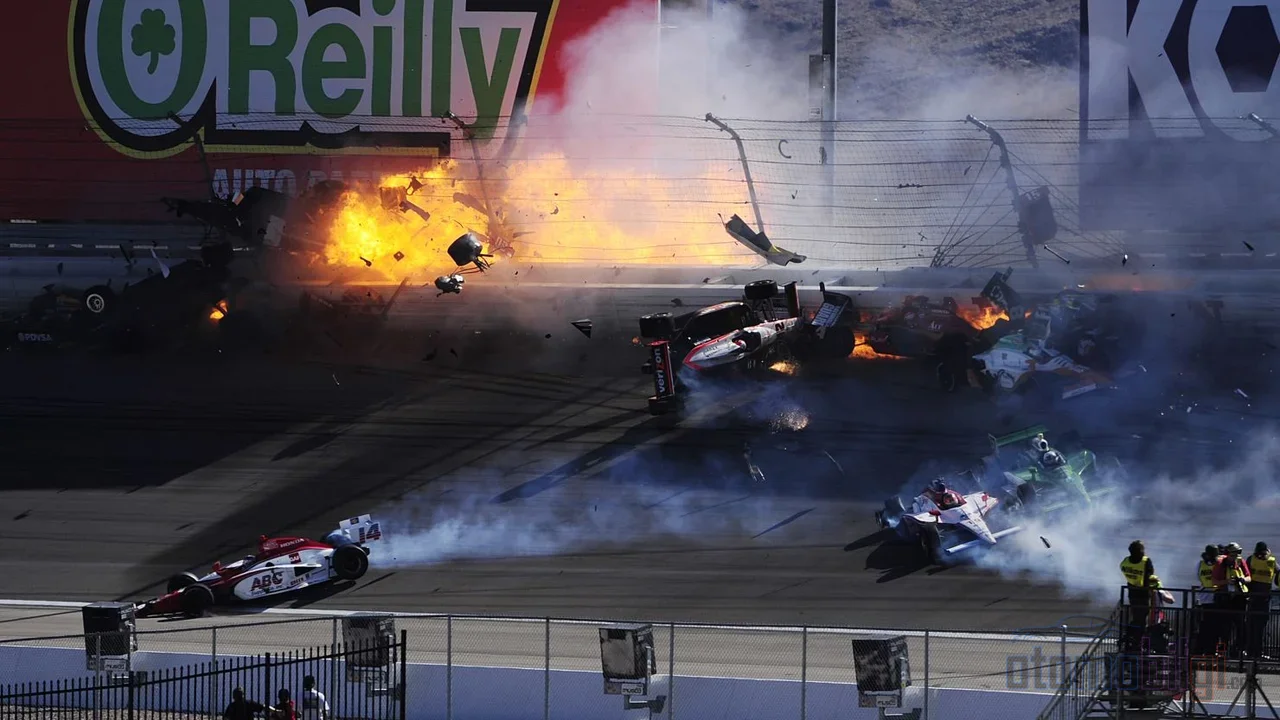
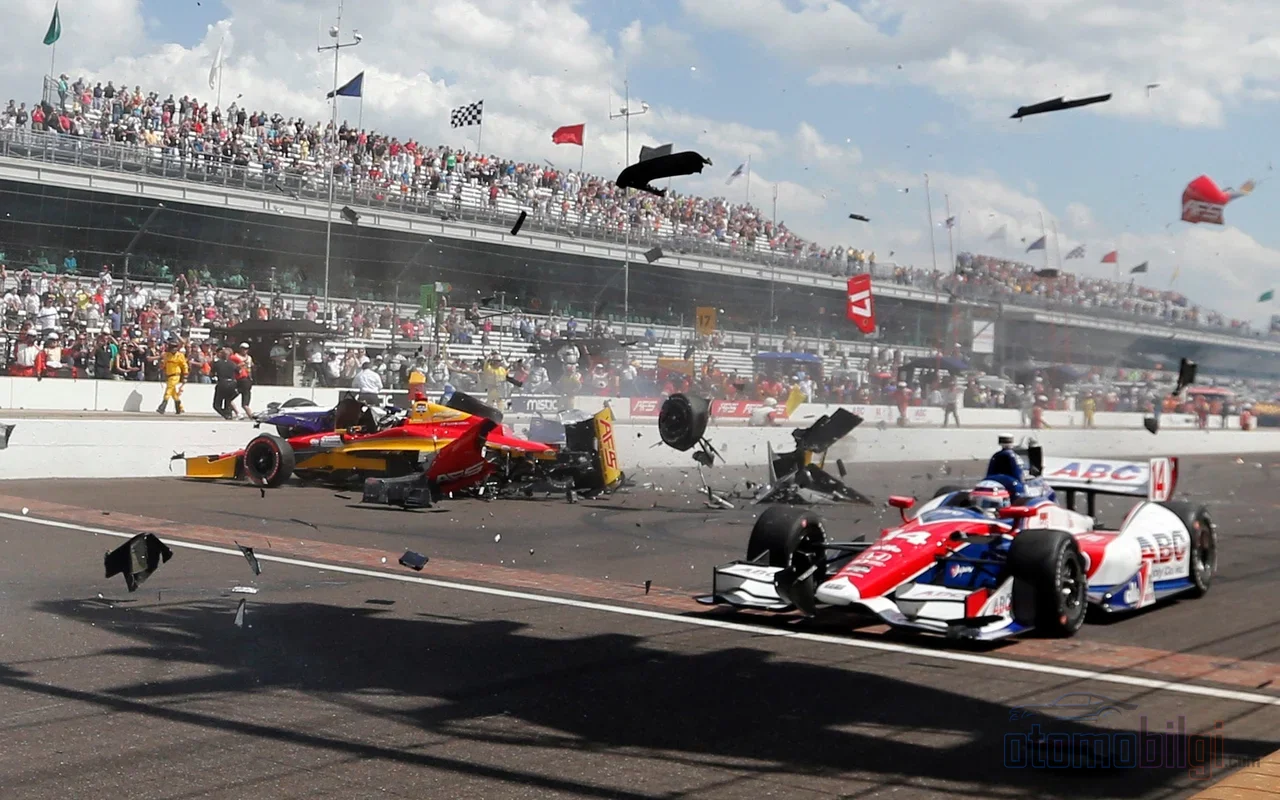
The biggest risk of open-cockpit racing is debris that bounces from under the car and goes into free flight through the air - that is, parts that break off from a damaged car. The driver had almost no defense against an object coming down on the helmet, and unfortunately this risk was not just theoretical; Justin Wilson losing his life in 2015 after being struck by debris changed the open-cockpit debate forever.
INDYCAR took the first step in 2019: in May, a joint cockpit protection project with Red Bull Advanced Technologies was announced at Indianapolis Motor Speedway. In fact, the process went back further - the first prototypes were designed and displayed in 2016, and the first track test was conducted at Phoenix in February 2018. That same year, a windscreen concept developed with PPG Aerospace was also tested at Indianapolis Motor Speedway; the drivers reported no problems, but extensive laboratory testing in Alabama showed that additional work was needed before implementation.
The transition was actually a two-stage process. The first stage was the 3-inch-tall titanium Advanced Frontal Protection device introduced in May 2019, designed to deflect debris before it reached the cockpit. The second and main stage was the aeroscreen: it became standard on all cars at the start of the 2020 season and saw its first real race use at Texas Motor Speedway in June 2020. It faced its first real test in the following weeks of the season at Iowa, and its success was talked about immediately.
What Is Inside the Aeroscreen?
From the outside it looks like a simple windscreen, but the design was conceived like a war machine. The skeleton is a titanium a halo-shaped frame. This frame attaches to the chassis at three points: the chassis centerline, two rear side mounting points, and roll hoop integration. Load capacity is 150 kilonewtons - exactly the same as the FIA load rating of the Halo in F1. So that stylish frame is not just decoration; even if a house roof's worth of weight pressed on it, it would hold its shape.
On the glass side, the job belongs to PPG. Two layers of aircraft-grade impact-resistant polycarbonate, with special polyurethane interlayers between them. Except for the U-shaped, single-piece glass tear-offs 3/8 inch that is, 0.95 cm thick, 50 inches long, and weighing at most 18 pounds (8.16 kg). The heating system on the inner surface is adapted directly from PPG's aircraft anti-ice system: filament wires heat 650 square inches of the glass's 980-square-inch surface, preventing fog and condensation. No wipers, no marshals - at pit stops the dirty outer tear-off layer is pulled off; teams prepare 2-3 sets, that is 8-12 tear-offs, for each race.
| Feature | Value |
|---|---|
| Frame material | Titanium halo-shaped structure |
| Load capacity | 150 kilonewtons (equivalent to the F1 Halo) |
| Glass weight | Maximum 8.16 kg (18 lb) |
| Glass thickness | 0.95 cm (excluding tear-off) |
| Heated surface | 650 square inches / 980 square inches total |
| Mounting | 25 bolts at the bottom, 20 bolts at the top |
| First race use | June 2020, Texas Motor Speedway |
How Was the Glass Tested? Gelatin Projectiles Fired at Up to 332 mph
The test in Huntsville, Alabama closely resembles the "bird strike" test for aircraft glass: gelatin packets weighing 4 pounds (1.8 kg) are fired at the glass at increasing speeds. The failure criterion is clear - the gelatin breaking through both polycarbonate layers. PPG's glass 167, 203 and 234 mph passed all shots at these speeds; it failed all three shots at 332 mph. So the upper limit lies somewhere between these two speeds, and 234 mph is not far below the peak speeds approaching 240 mph seen at Indianapolis. A competitor's glass was eliminated with a single shot at 167 mph - that's how they make the difference.
Just the Glass? Chassis and Survival Cell
The Aeroscreen alone is nothing; the real magic lies in the structure around it. Dallara has been the sole chassis supplier for all IndyCar vehicles since 2008, and the heart of the car is a rigid carbon fiber box called the "survival cell." This box is reinforced with honeycomb and energy-absorbing materials, and its mission is clear: deformation is forbidden. In a crash, everything around it can be crushed, but the cell where the driver sits resists to the end. Think of it like a vehicle cabin: the outside crumples, the inside remains unharmed.
In front of and behind this cell there are crushable structures that absorb impact energy. Behind the cockpit there is EPP, expanded polypropylene foam, used as headrest material. There is a 3-inch foam layer around the seat and a 1-inch layer beneath it - these are the product of safety rules introduced in 2012. And the measurement side is serious too: MEMS sensors are placed in the driver's earplugs to record the forces at the moment of a crash, so after every accident the team knows exactly how much load the driver endured. The HANS system, which protects the head and spine, is also part of this chain as one of the greatest safety breakthroughs of recent years.
The Hidden Hero at the Edge of the Track: The SAFER Barrier
No matter how safe a car is, hitting a wall at 200 miles per hour is still a catastrophe. That's why in 1998 the SAFER (Steel and Foam Energy Reduction) barrier, developed through a collaboration between INDYCAR and Indianapolis, was mounted on the walls of ovals. It is considered one of the most important safety innovations in the history of motorsport, and its logic is very clever: a shell made of high-strength steel tubes distributes the impact, while the foam blocks behind it absorb the kinetic energy. So instead of hitting a hard concrete wall, you hit a wall that gives way - part of the energy is destroyed before it reaches the driver.
The technology didn't stop there: the second version used five equal 8-inch steel tubes and foam blocks shaped differently from the original. Converting a track's barrier to this system costs about 500 dollars per foot, and it takes 2-3 months from ordering the materials to installation - those are figures from that era, but the design philosophy is the same today.
Aeroscreen or Halo?
The F1 fan immediately asks this question: why did Formula 1 choose the Halo instead of the aeroscreen like IndyCar? The Halo is lighter - about 20 pounds versus the aeroscreen's total weight of around 40 pounds - and was considered less problematic in terms of visibility. F1 had rejected the screen-based solution; in ESPN's comparison in early 2018, the Halo was "race-ready" while the aeroscreen was still in development. IndyCar made a more radical choice: a full glass canopy covering the cockpit from head to toe against anything flying through the air. An interesting detail is that in IndyCar, the halo serves as the structural frame of the aeroscreen; in other words, F1's invention became the skeleton of the shield here. If you ask why it took so long: the open-cockpit tradition and the "gladiator" feel of racing resisted change for years, and F1's earlier adoption of the halo was also one of the factors influencing the transition.
What Changed After the Big Crashes?
Safety in IndyCar is not static; every crash is treated like a lesson. In the 2020 Iowa race, the Aeroscreen's first real test, the screen played a life-saving role, and Marcus Ericsson's protection from freely flying debris was counted among the examples demonstrating the system's value. The institutional side is not idle either: after incidents where the full-course caution flag was delayed, IndyCar updated the yellow flag rules so they would not be based on ranking or the pit window, and the full yellow rules had already been changed after the Alexander Rossi incident. In the 2026 Indy 500, Ed Carpenter's hard crash after contact with Takuma Sato caused the wheels to fly into the grandstands, and it was announced that the race owner was considering a possible investigation - in other words, the cycle keeps turning the same way: crash, review, rule.
The hardware is also constantly evolving. In April 2024, a lighter aeroscreen debuted at Long Beach: it includes a 14.5-pound upper front channel that contributes to the total weight and vents for driver cooling. On the horizon there is also the IR-28 - the new-generation IndyCar introduced for 2028, promising improved internal airflow and cooling alongside stronger side-impact structures that absorb energy more efficiently.
So Is There Really a Difference for the Drivers?
In my opinion, the most striking answer is this: drivers now walk away from 200 mph crashes on their own two feet. From the testing period onward, drivers expressed their satisfaction with the basic design and offered suggestions for improvement. That is the strength of the ecosystem: the glass catches debris, the halo frame carries the load, the survival cell is not crushed, crushable structures swallow the energy, the SAFER barrier softens the wall, and the sensors record the data. None of them is a hero on its own, but together they seriously shrink open-wheel racing's oldest nightmare. In my opinion, next time you watch an IndyCar race, take another look at that transparent wall in front of the cockpit - now you know how much engineering it holds.
Sources
- INDYCAR announces plan for cockpit protection innovation
- IndyCar Aeroscreen - Racecar Engineering
- Improved, Lighter Aeroscreen To Debut at Long Beach
- INDYCAR celebrates 15 years pioneering use of SAFER
- What Makes the NTT INDYCAR SERIES Race Car Unique? - INDYCAR 101
- The SAFER Barrier - University of Nebraska-Lincoln MWRSF
- SAFER barrier - Wikipedia
- Halo (safety device) - Wikipedia
- Aeroscreen: How technology rejected by F1 is saving lives
- IndyCar Aeroscreen Targets Improved Driver Safety - Design News
- IndyCar Structure Is the Ultimate Safety Enclosure - Design News
- Inside an IndyCar Survival Cell - Happy Hour Racing
- Behind the INDYCAR Aeroscreen #TechTuesday - Rahal Letterman Lanigan
- IndyCar safety harnesses MEMS - EE Times
- IndyCar Driver Safety Technology - Racecar Engineering
- New IndyCar rules target safety - Augusta Chronicle
- Comparing F1's Halo to IndyCar's windshield - ESPN
- IndyCar's Aeroscreen gets first real test, saves lives at Iowa - Ars Technica
- Delayed full-course caution flag prompts IndyCar rule change - ESPN
- IndyCar changes full course yellow guidelines - Yahoo Sports
- IndyCar Reveals the IR-28 for 2028 - Yahoo Sports
- SAFER Barriers at NASCAR - Smithsonian