What Makes the Indianapolis 500 the Fastest Race in the World?
Share This Page
What makes the Indy 500 the fastest race in the world is not a single number; it is a chain of speed built on the 2.5-mile oval, qualifying laps measured to a thousandth of a mph, and the uninterrupted sustainment of speeds above 220 mph across 200 laps. In no other 500-mile race do cars compete at such close speeds for so long with such a small margin for error; and according to Guinness World Records, the highest average race speed also comes from here, from Hélio Castroneves' 190.690 mph performance in 2021. In short, this is a test of the speed of the track, the rules, and the human being alike.
Highlights
- Track 2.5 miles (approximately 4 km) in length, with the banking of the four corners at 9 degrees 12 minutes; the race 200 laps and lasts approximately 3 hours.
- Highest average race speed: 190.690 mph - Hélio Castroneves, 2021.
- Fastest pole record: Scott Dixon, four-lap average of 234.046 mph.
- Arie Luyendyk's 236.986 mph four-lap qualifying average (1996) still stands as the reference point.
- In the 2026 qualifying sessions, Alex Palou 225.937 mph won pole for the second time.
The Track Itself Is a Speed Machine: Anatomy of the 2.5-Mile Oval
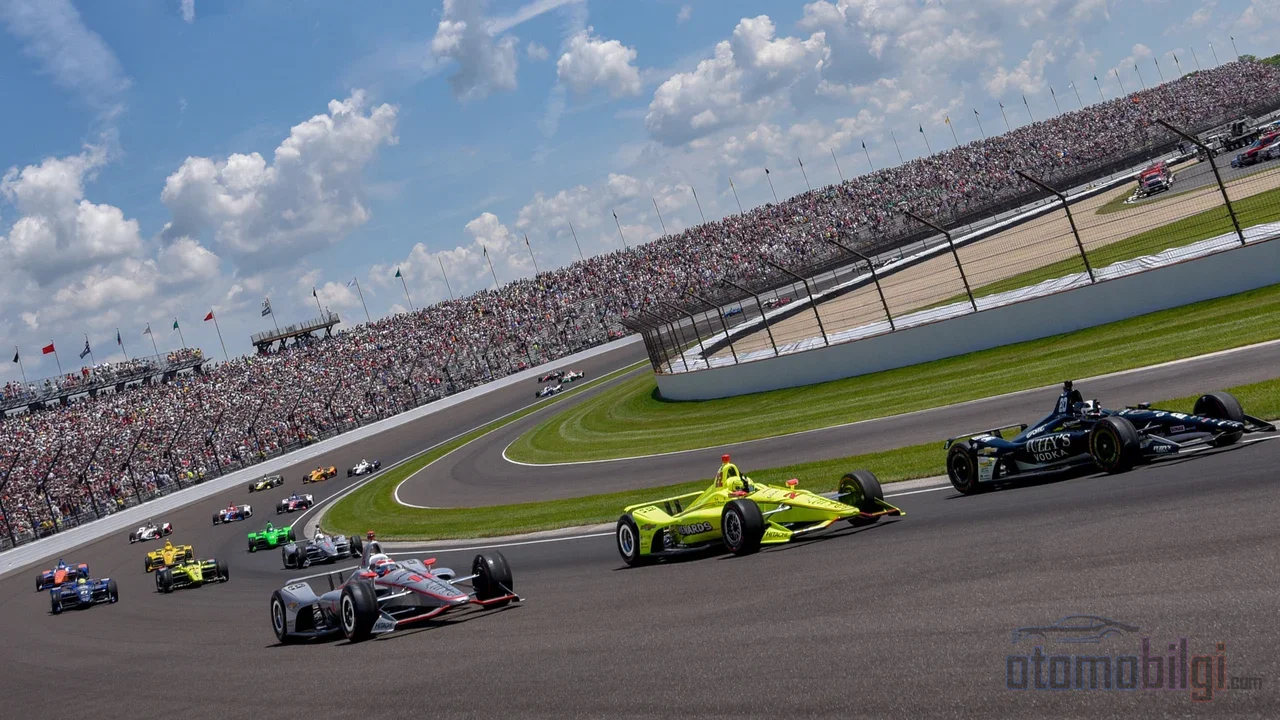
When thinking of the Indianapolis Motor Speedway, you should picture not a classic track but a colossal speed laboratory. Since its construction in 1909, its dimensions have barely changed; it is a rounded rectangle shape with four corners. The banking of each corner is exactly 9 degrees 12 minutes - meaning that when entering a corner, the car feels as if it is leaning against a wall. This banking allows drivers to complete laps with almost never lifting off the throttle.
The sheer size of the track is another spectacle in itself: it is so vast that it is impossible to see the entire track from any point in the grandstands. The race is also famous for an interesting detail; it is officially run not in Indianapolis but in its own town called Speedway, about 5 miles northwest of the city. Considering that a race founded its own city, it is clear how special this place is.
Now let me tell you the most striking part: in the first Indy 500 in 1911, cars only needed to reach 75 mph on the straights to enter the race. Ray Harroun celebrated victory with the Marmon Wasp in just over six hours. Today, the same distance is covered in about 3 hours, and 15 different races have finished under three hours. The same track, with speeds nearly tripling in a century - this is the joint work of engineering and courage.
Qualifying Laps: 16 Corners Decided by a Thousandth of a mph
Indy 500 qualifying produces a unique type of tension in motorsport. The driver is alone on the track; they complete four laps isolated from their teammates, rivals, and the roar of the crowd. Position is determined by the average speed of these four laps, and the driver must complete a total of 16 corners as flawlessly as possible. You have only one attempt - it is not reset, there is no retry. This is the very essence of the classic format: four intense laps, 16 perfect corners, speeds above 230 mph.
Imagine speed being measured to a thousandth of an mph. That's like measuring the distance between two cities in Türkiye with centimeter precision. But those thousandths sometimes decide who takes pole position. That's also why it's measured as an average: a single fast lap can be a matter of luck, but consistent speed over four consecutive laps shows real form.
The Fast Nine Shootout and the New Format in 2026
The hottest part of qualifying weekend is the format where the pole battle is run as a separate stage. The traditional setup worked like this: the first qualifying session determined positions 13-33, the top 12 competed in a separate stage, and pole and the front row were decided in the final run. In other words, for pole you had to prove your performance on track multiple times - meaning an endurance test lasting all day, where a single brilliant lap isn't enough.
For the 110th Indy 500, the qualifying procedure was expanded even further: some drivers playing for pole could have to go through four different qualifying runs. The pole winner receives 12 points in the championship standings, the second fastest starts with 11 points, and the points decrease one by one. So qualifying is no longer just the starting order, it's part of the championship. In 2026, qualifying was spread over two days on May 16-17 and determined all 33 positions. The result? Despite the heat, Alex Palou won the second Indy 500 pole of his career with a 225,937 mph(363,610 km/h) lap set late in the session.
There's also the darling of qualifying debates: tow and no-tow speeds. Tow means the car goes faster with less drag by pulling in the slipstream behind a car ahead. The lap you set in clean air during qualifying is the lap without this air advantage, and that's your true speed. That's why which driver recorded which speeds where is debated in the garage area throughout every May. If you don't know this distinction when comparing pole speeds, the numbers can mislead you.
The Century-Long Journey of Speed Records
The best way to tell the story of Indy's speed evolution is to put some numbers side by side. While the winner's average in 1911 was 74,602 mph in 1964 A.J. Foyt finished with an average of 147,35 mph and broke the record - moreover, as the first driver to complete the race on a single set of tires. In 2013, Tony Kanaan claimed the fastest 500 record in 23 years with an average of 187,433 mph. The peak came in 2021: Hélio Castroneves' 190,690 mph average entered the record books as the highest average speed ever recorded for this race.
On the qualifying side, the numbers are even crazier. Scott Dixon broke the fastest pole record in history with a four-lap average speed of 234,046 mph, surpassing Scott Brayton's record of 233,718 mph. One step beyond is Arie Luyendyk: the four-lap average of 236,986 mph he recorded on May 12, 1996 is still categorized in a separate class. Don't get confused, they measure two different things - Dixon's is a pole record, while Luyendyk's is a four-lap qualifying average in the context of race week. In the record books, each lives on its own line.
| Record | Driver | Value |
|---|---|---|
| Highest average race speed | Hélio Castroneves (2021) | 190,690 mph |
| Fastest pole (four-lap average) | Scott Dixon | 234,046 mph |
| Fastest four-lap qualifying average | Arie Luyendyk (1996) | 236,986 mph |
| Highest trap speed (practice) | Conor Daly | 243,724 mph |
| Highest trap speed (race week) | Marcus Ericsson | 242,496 mph |
| Sample qualifying average | Ryan Briscoe | 226,484 mph |
Let's also talk about trap speed, because it's one of the favorite details in Indy speed conversations. Trap means the instantaneous speed read as the car passes a designated measurement point on the straightaway. Average speed shows the overall pulse of the race, while trap speed reveals the machine's peak power. During a Fast Friday practice session, Conor Daly recorded 243,724 mph at the entrance to the corner, setting the highest trap speed in race history; Scott Dixon also saw 240,005 mph in a similar session. So in a race where averages around 190 mph are discussed, there are cars reaching and exceeding 240 on the straightaways. The difference between the two tells you just how much work the brakes and aerodynamics do on the rest of the track.
Same Car, Different Setup: How Wings Are Adjusted on the Oval
The IndyCar season stretches from street circuits to road courses and giant ovals, and while the driver races the same type of car at every track, the car is never prepared the same way. High-downforce configurations are used on street and road courses; for the oval, wing angles and configuration are set differently. Think of downforce like this: an invisible weight that presses down on the car as it speeds up, pushing it into the road. The more downforce, the more grip - but also the more drag and the lower the top speed. On the oval, the scenario reverses; to maximize speed, you minimize drag and compensate for grip in the corners with the banking.
The suspension is also designed for oval mode; since turning left through banked corners becomes easier, the geometry is set up accordingly. And let's not forget the human side: these cars have no power steering, traction control, or ABS. Whatever you see, the driver's hands and reflexes manage it. And over a 500-mile distance, you need to think of it not as a sprint but as a game of strategy. The first stint lasts about 30 laps and gives the first signals about how the car is set up; the crew makes adjustments during pit stops. The pit window calculation is so critical that the race unfolds like a chess match where no one shows their cards until race day.
For those curious about the speed comparison: on race weekends, IndyCar cars can reach speeds above 240 mph on this oval, while the top speed of Formula 1 cars stays around 220 mph. But let's keep it fair - on road courses, F1 typically turns faster laps. So when you ask about straight-line speed, the answer is usually IndyCar; when you ask about the overall speed of twisty tracks, the answer is F1. They are two engineering marvels that give different answers to different questions.
500 Miles: Adding Endurance to Speed
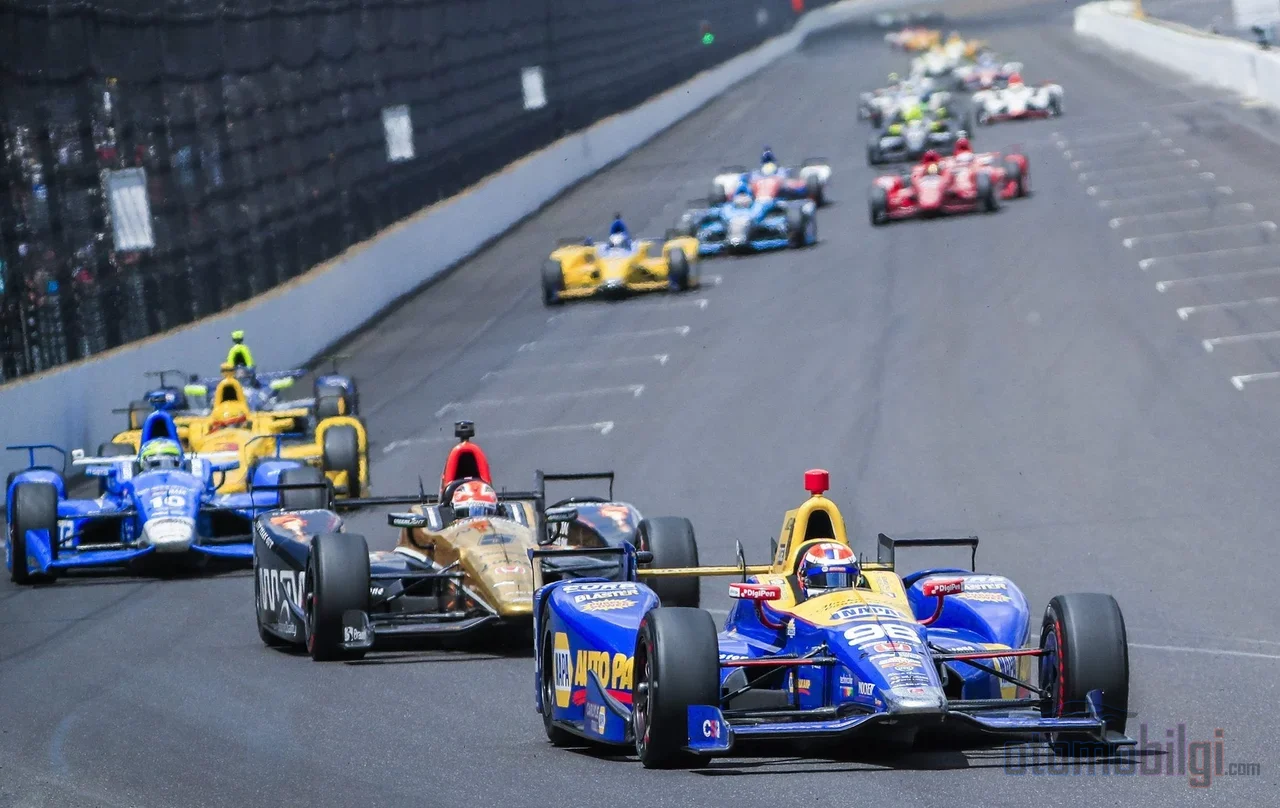
Up to this point we have only talked about speed, but what truly makes the Indy 500 special is sustaining that speed over 500 miles. Drivers frequently hold speeds above 220 mph lap after lap, and they do it for roughly three hours without a break. Each car takes on 130 US gallons of Sunoco E85R fuel for the race; each entrant uses 36 sets of tires across practice, qualifying and the race, and the race organization supplies approximately 5,000 tires for the track every year. The sheer scale of these numbers speaks for itself about the magnitude of the undertaking.
The character of the driving also changes with distance. Road races are considered more physically exhausting, while a 500-miler imposes a mental strain that demands constant precision: the margin for error is extremely narrow, and the longer the race goes on, the greater the likelihood of mistakes. The driver who can minimize their errors ends up on the lucky side in the closing laps. Adaptation is a key component of a 500-mile day - it means continuous adjustment to the car setup, tire strategy and pit plan. And there is a strict side to the rules: there is no such thing as an extra lap in this race. When 200 laps are complete, the flag drops and the books are closed.
The story of the tires is also the silent hero of speed's evolution. The tires used in 1911 had a diameter of about 34 inches and a width of just 4.5 inches. Today's tires are 27 inches in diameter but a full 15 inches wide. Mario Andretti was the first driver to use treadless, i.e. slick, tires, and by 1972 grooved tires had largely disappeared from the tracks. A wider contact patch, more grip, higher speed - that is the summary of the chain reaction.
What Sets This Race Apart from Other 500-Mile Races?
Many series have 500-mile races, so why is Indy's different? The answer comes in three parts. First, the track: the 2.5-mile oval has remained nearly unchanged for over a century, and its banking imposes a rhythm in which the throttle is almost never lifted. Second, the qualifying culture: chasing the four-lap average for pole with tenth-of-a-mph precision is more dramatic than anywhere else. Third, the scale: 130 gallons of fuel, 36 sets of tires, 200 laps and about 3 hours - it is a sprint and a marathon at the same time.
If 75 mph was enough in 1911 and today we're talking about 230 mph qualifying averages, the road between them was paved not just by engine power, but by the joint evolution of aerodynamics, tires, setup, and driver physics. Perhaps that's why the Indy 500 asks the same question every May: how much faster can human and machine go this year? And to get the answer, all you have to do is turn on the counter and watch 200 laps.
Sources
- Reigning Winner Alex Palou Beats Heat To Earn Second Indy 500 Pole
- Qualifying Procedure Expanded for 110th Indianapolis 500
- Indianapolis 500 Qualifying Format
- Broken Speed Barriers
- Highest average speed at the Indianapolis 500
- Indianapolis 500 records
- 2026 Indianapolis 500
- Indy 500 race set-up: Details, details, details
- 9 Fast Facts You Didn't Know About the Indianapolis 500
- IndyCar vs F1: Key Differences Explained
- Inside The Isolating But Thrilling Pressure Of Indy 500 Qualifying
- Indianapolis 500 FAQ
- How Does Indy 500 Qualifying Work?