Where Do the Indianapolis 500's Brick Track and Milk Traditions Come From?
Share This Page
The most famous rituals of the Indianapolis 500 - the brick finish line, the winner's milk drinking, the faces engraved on the Borg-Warner Trophy and the legendary start command - come from traditions that have grown intertwined with the track's history since 1909. This page tells, one by one, the origins and present-day meaning of these four iconic traditions.
Highlights
- The track was covered with 3.2 million bricks in 1909; today only one yard (0.91 m) of brick remains at the start-finish line.
- The milk tradition began in 1936 with Louis Meyer's craving for buttermilk; it has been a permanent ritual since 1956.
- The face of every winner since 1936 has been embossed onto the Borg-Warner Trophy.
- The "kissing the bricks" tradition was born in 1996 on the NASCAR side with Dale Jarrett.
- With a total capacity of around 400,000 people, the track is the world's largest sports venue.
What is the Yard of Bricks and why is the track called the "Brickyard"?
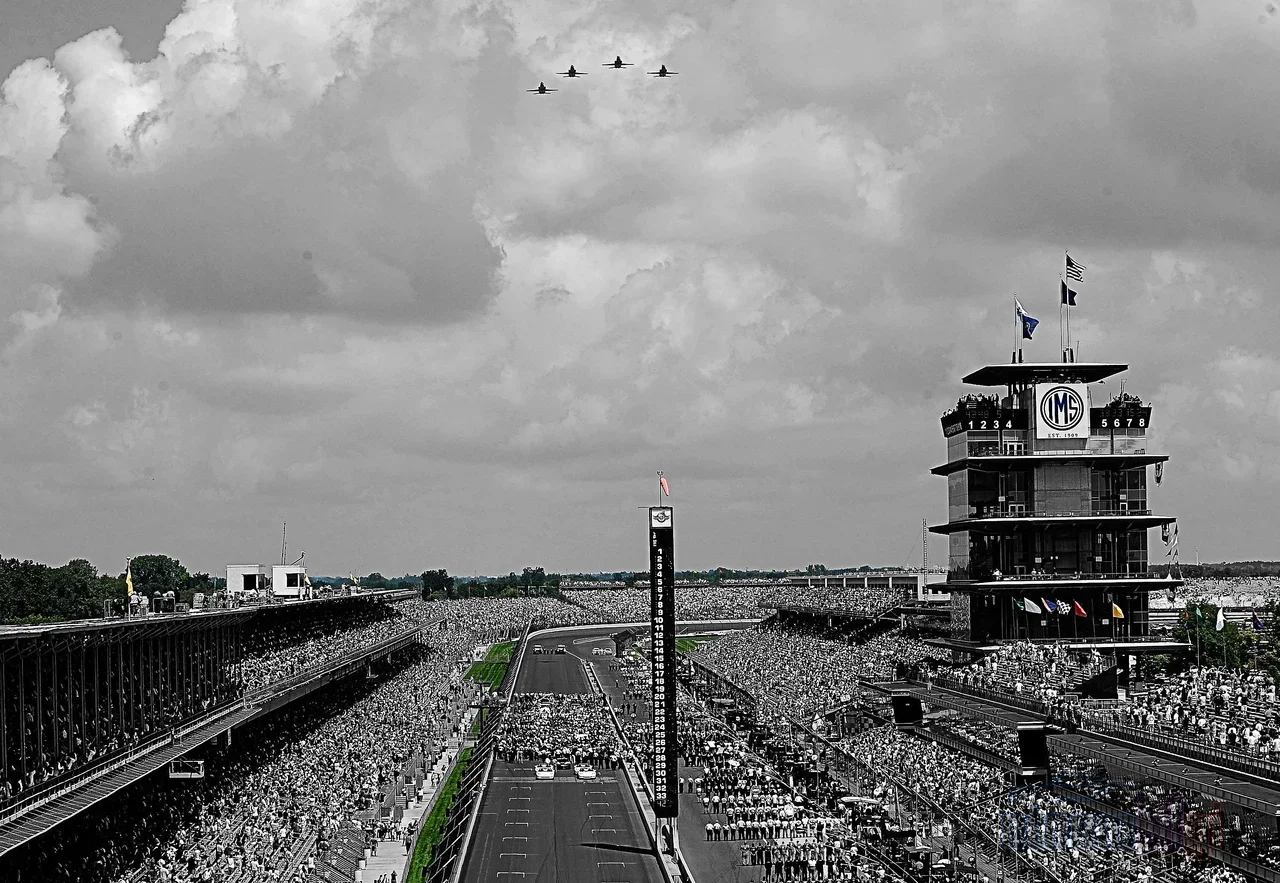
Indianapolis Motor Speedway is located in Speedway, Indiana, a suburb of Indianapolis. Its foundation was laid on March 15, 1909, and it opened its doors on August 14, 1909. Carl G. Fisher, James A. Allison, Frank H. Wheeler and Arthur C. Newby - the founding quartet's dream was to give America a massive European-style speed testing track. This is the second purpose-built banked oval track after Brooklands - and the first track to take the name "speedway." It is also worth noting that it is the third oldest permanent automobile racing track in the world.
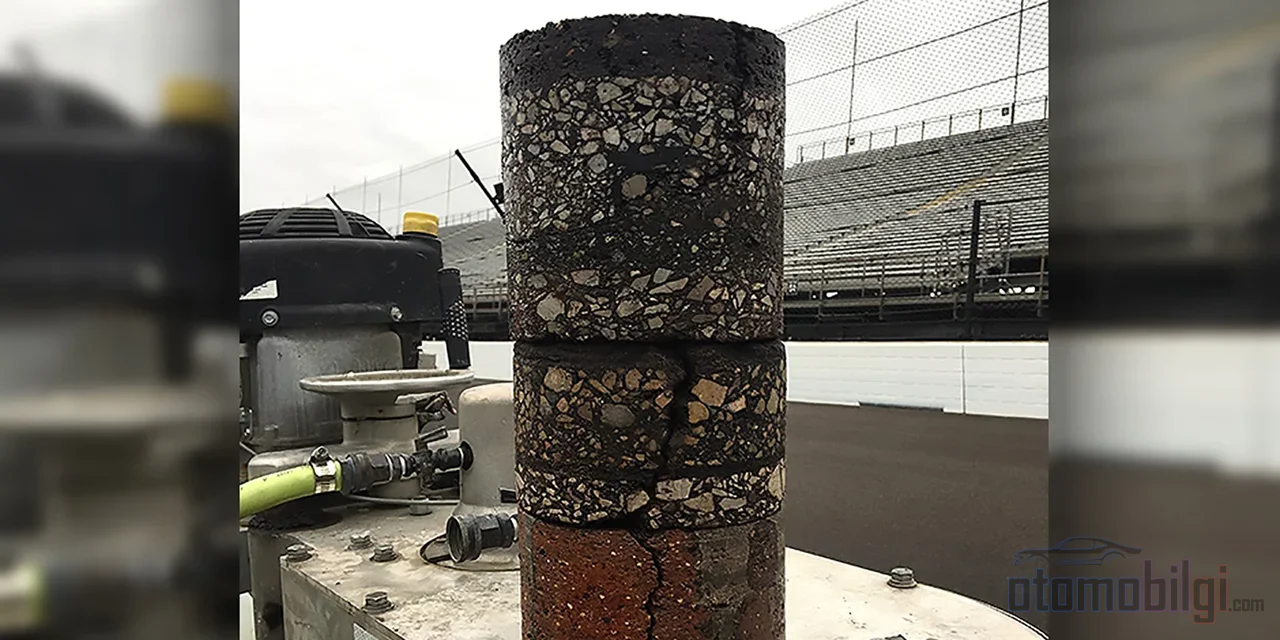
But things did not go very well at first. After fatal accidents during the first race weekend, the Grand National Commission decided on a boycott, and the track surface had to be urgently renewed. The solution was brick: Five Indiana manufacturers supplied a total of 3.2 million bricks, each weighing 10 pounds (4.5 kg). The bricks were laid by hand onto a sand bed 2 inches (51 mm) thick, with mortar filled between them. The final "gold brick" - made of gold-plated brass - was placed in a special ceremony by the then Governor of Indiana, Thomas R. was placed by Marshall in a special ceremony. That is why the track is still called "The Brickyard." It sounds strange at first, but when you think about it, it makes perfect sense: at that time, no one could think of another material that would cover such a large track so solidly.
Why were the bricks covered with asphalt?
The brick surface was fast but merciless. 15 deaths at the track between 1931 and 1935 made the resurfacing debate inevitable. First, asphalt was applied to the corners in the 1930s; in 1939, the entire track switched to asphalt. In October 1961, the remaining brick sections were covered too - but not completely. At the start-finish line, an original brick strip 3 feet long - exactly one yard (0.91 m) - was deliberately left exposed. The name "Yard of Bricks" comes precisely from this: The Yard of Bricks.
Why do Indy 500 winners drink milk?
The answer to this question is one of the sweetest (and milkiest!) stories in motorsport. The tradition dates back to 1936: After his third Indy 500 victory, Louis Meyer asked for a glass of buttermilk after the race. In fact, Meyer's habit goes back a bit further; he is known to have preferred buttermilk after his 1933 victory as well. But the point where it became institutionalized and turned into a ritual in everyone's eyes was 1936. Even today, whenever the winner raises the milk, you are sending a salute to the place where the story began.
In 1956, the American Dairy Association stepped in and the milk-drinking ceremony was made permanent. The first official milk-drinking winner was Pat Flaherty - for those curious: It is said that Flaherty had a special fondness for milk due to a mild calcium deficiency. In the modern era, as of the 2025 race, the winner's milk has been drunk for the 69th consecutive time, and 76 times in total. And here is the interesting part: Today, the winning driver is paid a $10,000 prize in return for drinking the milk. $10,000 for a glass of milk - that's what brand value means in motorsport!
The Borg-Warner Trophy: The winners, with their faces
The Borg-Warner Trophy, awarded to the Indy 500 winner, was commissioned by BorgWarner in 1935; the design was undertaken by Robert J. Hill and Chicago-based Spaulding-Gotham, Inc. took on the duty. The trophy was introduced in 1936 and has carried an original idea since day one: The face of every winner is engraved onto the trophy using the three-dimensional bas-relief technique. When it debuted, it appeared with the faces of the previous 24 winners up to that day; So in the year you win, you are driving a car, but your permanent portrait is also being made. I do not know if there is another trophy like this in the world, but I think the idea is magnificent. The trophy's current address is a story in itself:
The trophy is permanently displayed at the Indianapolis Motor Speedway Museum. The winning driver cannot take it home - instead, they receive a replica trophy. The driver who wins the race cannot take it home - instead, they receive a replica trophy. Having the faces of all the legends in one place, at the heart of the track, turns the trophy into a true motorsport portrait gallery.
The story of the starting command The story of the start command
Perhaps the three most famous words in the world. The term first appeared in print on the morning of a race in 1953, in a "countdown" program. The name of the person who made the announcement later became legendary: Tony Hulman's call of "Gentlemen, start your engines" is documented in a photograph taken by the Indianapolis Star in 1968. This command was like a kind of musical overture that instantly quickened the heartbeats of millions.
But times changed, and the command had to change too. After Janet Guthrie qualified to race in 1977, the command was updated to "Lady and gentlemen, start your engines" in 1978–1979. "Drivers, start your engines." At the 110th "Drivers, start your engines." The 110th At the Indy 500, Roger Penske took on this honor. Though it may look like a simple sentence, it is actually a small mirror of how the sport has evolved - tradition is preserved but renewed to include everyone.
Kissing the bricks and other pre-race rituals
The most emotional tradition related to the Yard of Bricks is kissing the bricks - "Kissing the Bricks". An interesting detail: This tradition actually began not at the Indy 500, but at the 1996 Brickyard 400, that is, on the NASCAR side. The first driver to kiss the brick was Dale Jarrett. Since that day, the winner of any race run at the Speedway kisses the bricks to seal their victory. It is as if touching that one-yard strip of brick is like shaking hands with everyone who has raced here since 1909.
What happens before the race starts
While waiting for the start of the Indy 500, a series of ceremonies takes place one after another: first the invocation, that is, a prayer, followed by "Taps", "America the Beautiful" and "God Bless America", and then the national anthem. Alongside these, the most enduring pre-race tradition is the performance of the song "Back Home Again in Indiana". The race itself is also full of ritual: The Pace Car is used at the start of the race to pace the field and rides during pace/parade laps with flashing lights - you can think of it like the lead vehicle activating its hazard lights in everyday traffic. Another charming tradition is the Historic Car Lap: Under the auspices of the IMS Museum, historic vehicles are driven for a lap by former drivers.
It would not be right not to briefly touch on the origins of the race: The first Indy 500 was run on May 30, 1911, and Ray Harroun won with an average speed of 74,602 mph. There is another interesting detail about Harroun: Driving alone, he saved weight and fitted the first rearview mirror ever used on an automobile. So this track is not only where traditions live, but also where innovations are born.
The track's dimensions at a glance
Let's take a slightly closer look at the place where the traditions live. The figures clearly show why the Speedway is so legendary:
| Feature | Value |
|---|---|
| Track length | 2,500 miles (4,023 km) |
| Number of turns | 4 |
| Turn banking | 9°12' |
| Permanent seating | 257,325 |
| Total capacity | Approximately 400,000 |
| Year the bricks were laid | 1909 (3.2 million bricks) |
Why do the traditions still live on?
I think the answer is simple: The Indianapolis 500 is not just a race; it is a way of coming together. The bricks were buried under the asphalt in 1961, but that one-yard strip reminds us how it all began. The milk has turned from one driver's simple request in 1936 into a ceremony watched by millions. The Borg-Warner Trophy grows each year with a new face, and the starting command is updated to embrace everyone. Kiss the Bricks events are still held on the IMS Museum's calendar - meaning these rituals are not a museum of the past, but living traditions of today. If it were you, which tradition would you love the most? My heart is in the yard of bricks.
Sources
- Indianapolis Motor Speedway - Wikipedia
- Indianapolis 500 traditions - Wikipedia
- Milk | Where Tradition Never Stops - Indianapolis Motor Speedway
- Gentlemen, Start Your Engines traces back to 1940s Indy 500 - Indianapolis Motor Speedway
- Milk Tradition | American Dairy Association Indiana
- Why does the winner of the Indy 500 drink milk? - Britannica
- 6 Things To Know About The Borg-Warner Trophy | FOX Sports
- The Indianapolis 500 - BorgWarner
- Borg-Warner Trophy
- Indy 500: The Long, Brick-Filled History of the Indianapolis Motor Speedway - Road & Track
- Indy 500 2000 - Indianapolis Motor Speedway facts - ESPN
- IHB: Indianapolis 500 - Indiana Historical Bureau
- Why Do Indy 500 Winners Drink Milk? - Children's Museum of Indianapolis
- How NASCAR started kissing the bricks tradition at IMS - Yahoo Sports
- Why does Indy 500 winner drink milk in victory lane - USA Today