Oval or Street? The Two Faces of the IndyCar Calendar
Share This Page
The short answer to the question of ovals vs. street circuits in IndyCar is this: the same car, two completely different sports. On ovals, wings shrink, drag decreases, and the race turns into a momentum game played at full throttle; on street circuits, huge wings and grip dominate, and the race lives on a braking-corner-acceleration rhythm. This duality in the calendar is the biggest variable determining the road to the championship.
Highlights
- An IndyCar at maximum downforce settings 200 mph at a speed of 6,500-7,000 pounds of pressure
- The 2026 season with its 17-race calendar includes both ovals and street circuits
- The season opener took place on March 1 on the streets of St. Petersburg
- Alternative (red) tires became mandatory for the first time on short ovals in 2023
- The car has no power steering, traction control, or ABS
Same Car, Two Different Characters: Where Exactly Is the Difference?
One of the things that sets IndyCar apart from other series is that with a single chassis it runs both ovals exceeding 370 km/h and street corridors surrounded by concrete walls. But "same car" does not mean "same setup." Teams completely re-tune the car for each type of track, and this setup difference changes the entire character of the race.
The most visible difference is in the wings. On road and street circuits, the rear wing is much larger and steeper; the high downforce that presses the car into the ground in corners comes from there. On ovals, the wings shrink and shift to a wider design, because the goal there is not to generate pressure but to minimize air resistance (drag) and reach maximum speed on the straights. Front and rear wing angles are treated almost like two separate car setups depending on the track type.
The second difference is the camber setting on the tires, that is, the tilt of the angle where the tire contacts the road. When IndyCar enters an oval, since the car turns left continuously and the track is banked, the camber of the left front tire is specially adjusted. On a street circuit, there is no such asymmetry because corners are taken in both directions. It is also worth remembering: these cars have no power steering, traction control, or ABS braking system. Whatever the track, the driver's foot, hands, and reflexes do the work.
Downforce: Press Down or Avoid It?
Downforce is the aerodynamic pressure a car generates toward the ground as speed increases; the more of it, the more grip in corners, but the more resistance on the straights. This is exactly the equation where the oval and street circuit philosophies intersect and diverge.
An IndyCar at maximum downforce settings generates around 6,500-7,000 pounds of pressure at 200 mph - a force many times the car's own weight. On street and road circuits, near-maximum settings are used, because grip in corners is everything. On ovals, the formula reverses: downforce is sacrificed, drag is reduced, and straight-line speed takes priority.
Short ovals take an interesting middle path. Teams mostly use the wing package from road/street courses there; but this package is optimized not only for cornering grip, but also for providing stability in traffic and reducing the effect of the turbulence created by the car ahead. Running side by side at over 200 mph at ovals, surrounded by many other cars, turns aerodynamics from a performance issue into a safety issue.
Tires and Strategy: Two Different Chess Games on Two Course Types
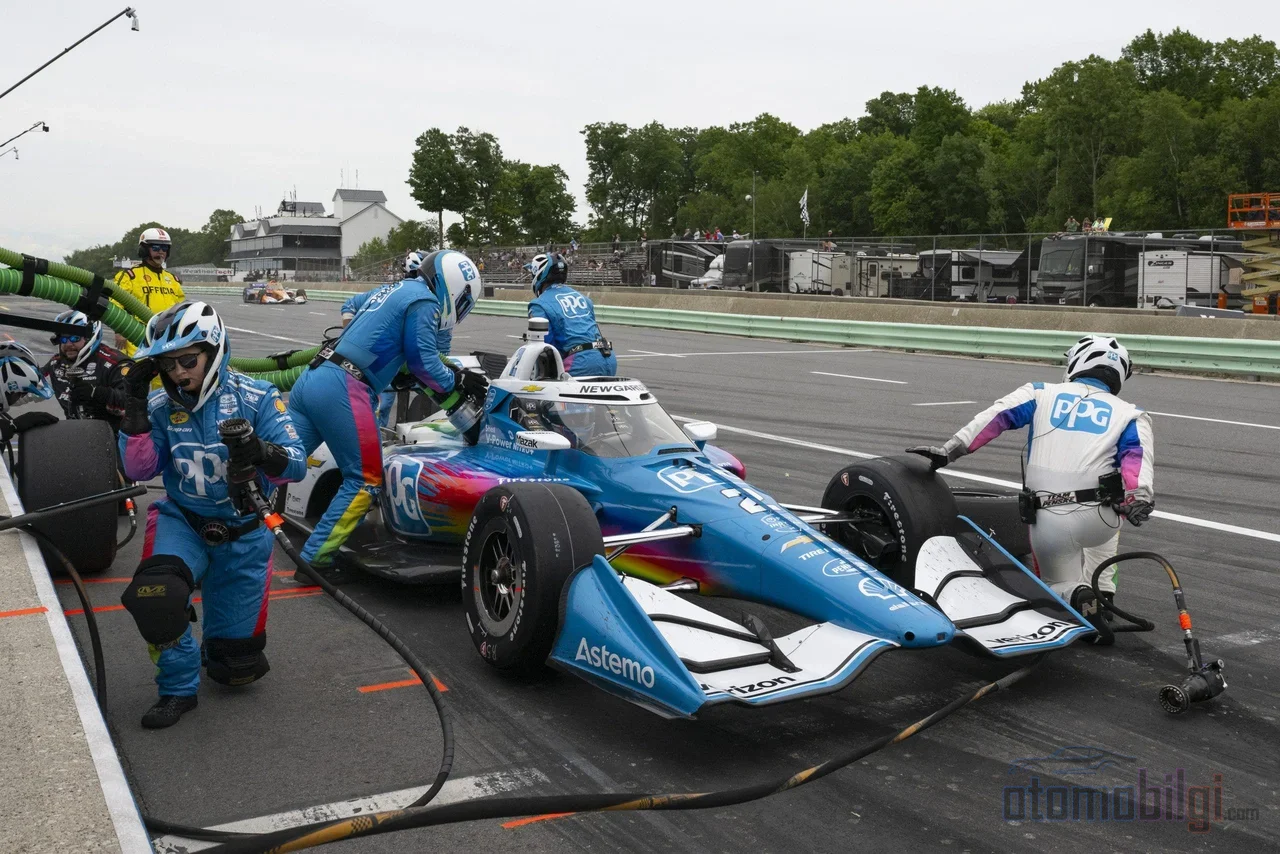
On street circuits, tire strategy is the heart of the race. Long Beach is the classic example of this: because tires wear out quickly, how many stops will be made, which lap the tire change will happen on, and where the safety cars will come out shape the race from start to finish. It is perfectly normal for different drivers in the same race to run with different tire plans; sets of different compounds are used to test them against each other.
On ovals, the picture changes. Firestone offers a special "primary" tire for oval races. In 2023, a first took place and the alternative - that is, the softer, faster but shorter-lasting "red" tire - was made mandatory at short ovals; teams were obliged to use a new alternative set during the race, just as at street circuits. This rule added a strategic dimension to short oval races, and the return of the alternative oval tire in 2026 diversified the strategic options once again, especially at the Nashville race moved to July.
But the most surprising aspect of IndyCar strategy is this: fuel consumption and safety cars are more decisive than tires. Since refueling is possible during the race and yellow flags come out frequently, a plan that looks perfect can be turned upside down by a single safety car. Compared with Formula 1's strategic logic, it should not be forgotten that in IndyCar the optimal plan is completely different depending on the course type, and the fuel window is always a matter of negotiation.
Driving Technique: Full-Throttle Rhythm or Traction Battle?
The Momentum Game on Ovals
Those who see an oval for the first time think it is "just turning left"; in reality, it is one of the most intense concentration tests in motorsport. Running side by side at high speed in a large group (pack racing), the turbulence created by the cars ahead, and restricted visibility all come together. Speeds at which mistakes cannot be tolerated put reflexes and split-second decision-making to the test; that is why great oval drivers are known for their extremely smooth and precise driving and controlled steering inputs.
Drafting - that is, pulling up close behind the low-pressure zone left by the car ahead to reduce drag - is the fundamental skill of oval racing. A well-timed "slingshot" - launching out of the slipstream to make a pass - is the ovalest effective attack weapon. But passing is not a rushed affair: drivers often prepare for 5-10 laps for an attack, gathering position without disrupting rhythm and momentum. On short ovals, it is said that even finishing is valuable; Josef Newgarden, who showcased his short oval mastery at Gateway, is a name who managed to win there twice in one season.
Grip and Precision on Street Circuits
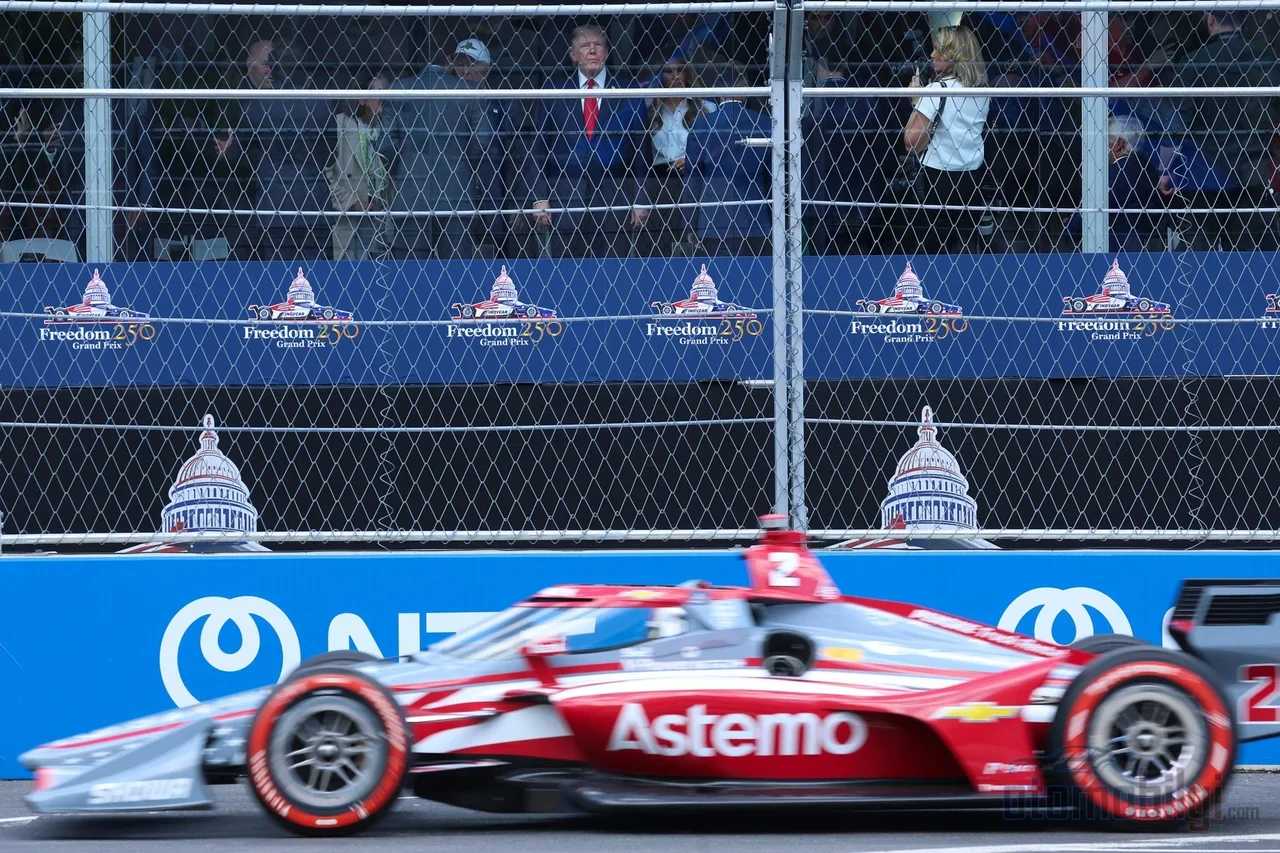
On street circuits, a completely different rhythm prevails: there is no constant full throttle; instead there are brake-corner-throttle transitions, tight 90-degree corridors, bumpy asphalt and zero margin against the walls. The St. Petersburg circuit is the textbook example of this: 1.8 miles long, with 14 corners - 5 left, 9 right - and a temporary layout stretching from city streets to the airport runway. Long Beach, on the other hand, is the series' most classic street stop; the race run on April 19, 2026, has settled into a calendar that has not changed the circuit's aggressive character for years.
This duality highlights different driver profiles. Street circuits that demand grip mastery and millimetric precision between the walls, and ovals that demand constant full throttle and traffic management, rarely appeal to the same strengths. That is why drivers who master both sides always start a step ahead in the championship battle. Alex Palou is the most striking current example: he transformed a career that began as a road course specialist into that of a proven oval racer and claimed his fourth consecutive, and fifth overall, championship in Milwaukee.
Key Stops on the Calendar: What Does Each Circuit Tell Us?
IndyCar's character is hidden in the calendar itself. Comparing the standout circuits in two columns is the most practical way to clarify the difference:
| Circuit | Type | Race Character |
|---|---|---|
| Texas Motor Speedway | Oval (1.5 miles) | High speed, close pack racing, drafting battles |
| Gateway (World Wide Technology Raceway) | Short oval | Bunched-up passing opportunities, alternate tire strategy |
| Phoenix Raceway | Oval | The season's first oval race in 2026 (March 7) |
| St. Petersburg | Street circuit (1.8 miles, 14 corners) | Grip and precision, season opener |
| Long Beach | Street circuit | Classic stop where tire strategy is decisive |
| Arlington / Markham | Street circuits (new) | New street stops added to the calendar in 2026 |
As can be seen from this table, the calendar is designed like an exam program that tests everything about the driver and the team. Changes such as shortening the race run for many years at 600 miles at Texas to 375 miles are part of the balancing done to reward close racing and to safeguard safety. There is also a sobering note from history: the 2001 Texas Champ Car race was cancelled because the G-forces sustained per lap brought drivers to the brink of blacking out - an event that sums up the seriousness of ovals in a single sentence.
How Is the Hybrid Calendar Shaping the Championship?
The 17-race 2026 season is spread across 16 race weekends, with only the Milwaukee Mile weekend featuring a double-header. The season opens on a street circuit (St. Petersburg, March 1), the first oval race is run in Phoenix in mid-March, and the schedule alternates between the summer months, where the oval emphasis stands out, and a spring block dense with street circuits. 2026 is also the 115th official championship season of American open-wheel racing - that is how deep the roots of this hybrid structure run.
This structure turns the championship into the sum of two different skill sets. A driver who stands out with road course form has to recover what is lost on the ovals; Christian Lundgaard seeing road-course-heavy corners as critical for the championship is a concrete example of this calculation. The inclusion of four new events on the calendar has also reignited debate over the balance of circuit types: as the series grows, the question of whether street circuits are gaining weight is turning into a lively debate still ongoing within the fan base.
The reservations that alternative tires could shake up race dynamics on short ovals fall into the same category: every change is a new version of the balance question inherent in the hybrid calendar. But it is precisely this balance problem that makes following the series so enjoyable. One week it's brake-disc management in concrete corridors, the next week it's the patience of drafting on the straights - the champion becomes the driver who loves both and delivers in both.
Conclusion: Where the Two Faces Meet
The difference between ovals and street circuits permeates every layer of racing, from wing sizes to tire strategy, from driving technique to driver profile. And this is exactly where IndyCar's strength lies: a single car, a single driver, and a single team seeking success in two fundamentally opposite disciplines within the same season. Over the course of the season, the calendar's back-and-forth between these two faces turns the championship battle into a story not only of speed, but also of the ability to adapt.
Sources
- Why INDYCAR Is Different: From Street Circuits to High-Speed Ovals
- What Makes the NTT INDYCAR SERIES Race Car Unique?
- INDYCAR Voices: Getting the lowdown on downforce
- 2014 Grand Prix of Indianapolis 101: Oval vs Road Course Configurations
- Firestone Racing – Get Ready for Race Day with IndyCar Basics
- IndyCar Competition Update Includes Alternate Tires On A Short Oval – Forbes
- Return of alternate oval tires spices up strategy options for Nashville – Racer
- Tire strategy again likely to set the tone for IndyCar at Long Beach – Racer
- 4 Takeaways From Josef Newgarden's Victory At Gateway – Fox Sports
- INDYCAR Announces 17-Race 2026 NTT INDYCAR SERIES Schedule
- Firestone Grand Prix of St. Petersburg – A-Z Info Guide
- Grand Prix of Long Beach – Wikipedia
- 2026 IndyCar Series – Wikipedia
- How Alex Palou MASTERED Oval Racing | INDYCAR
- Road Course Prowess Could Lift Christian Lundgaard
- What's the difference between a good oval racer and a great one? – Speed Secrets
- Video: Jimmie Johnson Tests Indy Car at Texas – Autoweek