The Fight That Split IndyCar in Two: CART, IRL and the Unification Years
Share This Page
American open-wheel racing split in two between 1996 and 2008: the IRL, founded by Indianapolis Motor Speedway owner Tony George, and the road course-focused CART tried to rule the same sport from two different umbrellas for 12 years. The split weakened both the Indianapolis 500 and the entire series; with the unification agreement signed on February 22, 2008, the two sides came back together under one roof. Here is the story of the most painful period in IndyCar history.
Highlights
- The Split Lasted from 1996 to 2008; CART officially used the IndyCar name between 1992 and 1996.
- The IRL's 25/8 rule reserved 25 of the Indy 500's 33 grid spots for IRL teams and pushed CART into the U.S. 500, held on the same day.
- The 1996 Indy 500 was won by Buddy Lazier; nearly all the major CART teams, including Penske and Ganassi, boycotted the race.
- The unification agreement was signed on February 22, 2008 in Chicago; the final Champ Car race was run on April 20, 2008 in Long Beach.
- The IRL became the IndyCar brand in 2011, and the series races under one roof today.
Why Did the Split Happen? The Ovals vs. Road Courses Fight
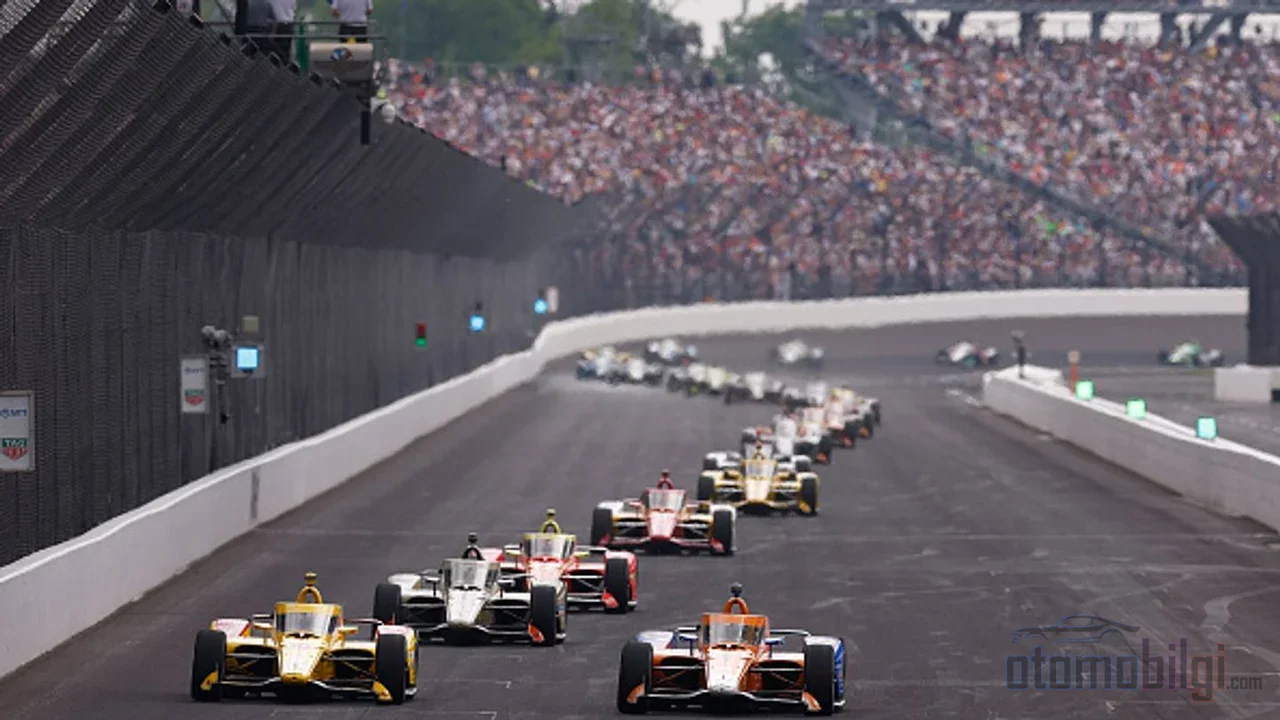
The question was simple but the answer turned into a fight that lasted years: where should the heart of American open-wheel racing beat? The CART side prioritized road courses and street circuits; Tony George, at the helm of Indianapolis Motor Speedway, wanted to put ovals, especially his own track's 500-mile classic, at the center of the sport. The difference was entirely ideological, and the visions of the two sides could never find common ground.
George took control of the Speedway in January 1990. In January 1994, citing his dissatisfaction with CART's decision-making mechanism, he resigned from the IndyCar board of directors, and on July 8, 1994, the Indy Racing League was officially announced. The IRL began racing in 1996 and positioned the Indianapolis 500 as the cornerstone of its own series. One of George's motivations was to reduce costs; another was that American drivers with sprint and midget backgrounds were unable to get a chance at the Indy 500 due to the road course-focused structure.
In fact, this was not the first fight either. In 1979 there had also been a break between USAC and CART: Tony Hulman's death in 1977 and the death of eight USAC officials in April 1978 threw the management into crisis, and when Dan Gurney's proposal asking for team owners to have a say in management was rejected, Gurney and his friends founded CART. So open-wheel racing had learned long before George that the governing body and the teams did not truly trust each other.
The Peak Before the Split: How Powerful Was CART?
Just before the split, CART was truly at its peak. In the 1980s, Indianapolis 500 tickets sold out months in advance, and by 1989 the Indy Car World Series' average attendance had surpassed Formula 1. F1 champion Nigel Mansell joining the series in 1993 pushed its popularity even higher. In short, the point at which George chose to found a rival series coincided with the sport's brightest era - and that is why the risk was so great.
The 25/8 Rule: Locking Down the Indy 500
On July 3, 1995, IRL director Jack Long announced the split's most explosive move: in all future IRL 500-mile races, 25 of the 33 starting positions would be reserved for the top 25 cars in IRL team standings. The remaining 8 spots went to outsiders - that is, CART teams. George guaranteed a minimum purse of $1,000,000 per race and at least $22,000 per car for IRL teams, but the cards were clearly stacked in the IRL's favor.
The point here is this: the tradition of the Indy 500 rests on the 33 fastest cars being able to race. The 25/8 rule broke that tradition, and CART owners saw it as the de facto lockdown of the 1996 race. In response, on December 18, 1995, CART announced the U.S. 500, an alternative 500-mile race at Michigan International Speedway on the same day and hour - May 26, 1996. The duel was complete, but the outcome was not sweet: the U.S. 500 was overshadowed by a major chain of crashes before the start.
At the 1996 Indy 500, meanwhile, nearly all the major CART teams - Penske, Ganassi, Newman/Haas, Rahal and others - boycotted the race, citing the perceived lockdown. Buddy Lazier won the race, and that same weekend tragedy also struck: Scott Brayton lost his life in practice. Penske's reaction to the rules, meanwhile, had begun even earlier; the team, which won 1994 with Al Unser Jr. and the Mercedes-Benz pushrod engine, found the subsequent boost restrictions politically motivated, and in 1995 Al Unser Jr. and Emerson Fittipaldi failed to qualify. I think this story alone is enough to understand how valuable a unified field is.
The Wilderness Years: Two Wounded Series and a Weakening Indy 500
This is where the real price of the split was paid. Despite the U.S. 500 fiasco, CART initially maintained its prestige and success, but in the following years financial mistakes, calendar decisions, departures of top executives, and internal conflicts gnawed away at the series. On the IRL side, there was no star power; the most prestigious race, the Indy 500, could not see its legendary names. Neither side could recapture its former brilliance on its own, and there is a widespread assessment that the split contributed to NASCAR's 1990-2000 popularity boom - the spotlight of American racing shifted elsewhere.
How Did CART Collapse?
The prestige of the Indy 500 was too great for teams to ignore, and after the 25/8 rule was lifted, Chip Ganassi Racing became the first major CART team to enter the race in 2000 after the split began. The 2001 season was a disaster for CART: the first race at Texas Motor Speedway was cancelled due to dangerously high speeds, and the controversial rule regarding the turbocharger pop-off valve led two engine manufacturers to leave the series. By 2003, most of the top teams and drivers had moved to the IRL IndyCar Series; in December 2003, CART went bankrupt, its assets were purchased by three team owners, and the series was restructured as the Champ Car World Series for 2004.
Things were also shifting on the engine front: Honda raced in CART between 1994 and 2002, won four championships, and then moved to the IRL. A manufacturer choosing one series over the other created a domino effect that weakened the other; to me, this is the clearest evidence of how the split finished everyone off.
Star of the Void: How Did Danica Patrick Emerge?
One of the most interesting side effects of the split years was that the void gave new stars an opportunity. Danica Patrick raced in the IndyCar Series for Rahal Letterman Racing and Andretti Green Racing between 2005 and 2007. At the 2005 Indianapolis 500, she became the first woman to lead a lap: in her rookie season, her very first Indy 500, she led a full 19 laps and finished fourth. That same year, at age 23, she set records among female drivers for laps led and top-5 finishes.
Pole position also came: Patrick took her first IndyCar pole on July 2, 2005 at Kansas Speedway, a date that came shortly after Sarah Fisher's first pole among female drivers. She even put her signature on the closing of the split - in April 2008, at Twin Ring Motegi in Japan, Patrick won the IRL's last separate race and never won a race again in the unified field. In other words, her career can be read as both a product of the split era and its closing chapter.
The 2008 Unification: How Did It Happen, Who Crossed Over?
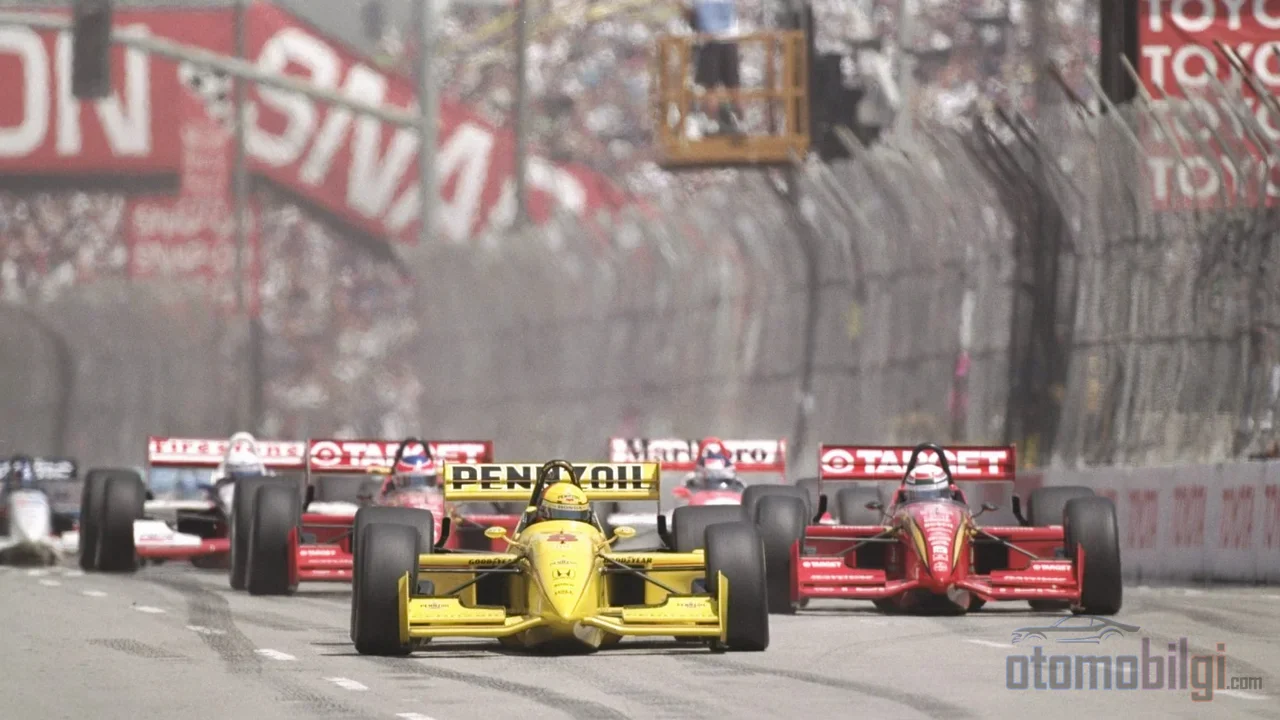
On February 22, 2008 - considered by many the most important day for the sport since 1945 - Champ Car's ownership group, led mainly by Kevin Kalkhoven and Gerald Forsythe, reached a basic agreement with Tony George to fold the core elements of the Champ Car World Series into the IndyCar Series. The deal was signed in Chicago, and the 2008 Champ Car season was cancelled. The series' final race was the Toyota Grand Prix of Long Beach on April 20, 2008; its results counted toward the IndyCar championship.
What made the transition easier was the incentive package: George committed to providing free cars, engine leases, and $1.2 million per car to all Champ Car teams that switched. The package included two Dallara chassis, one new and one used, plus a standard Honda engine lease. Five teams - Newman/Haas/Lanigan, Dale Coyne, HVM, Conquest, and KV Racing - made the switch. The IRL also took over Champ Car's pioneering Mobile Medical Center, its intellectual property, and its historical records dating back to 1909. So the unification was less a handshake and more one side absorbing everything the other had left.
Who Won the War?
On paper, George won: the rival series disappeared, and the Indy 500 once again became the single venue where everyone competed. But the price deserves scrutiny. Hindered by the effects of this 15-year civil war, the sport never reached its potential, and in the meantime NASCAR became synonymous with American racing. George was criticized by fans and journalists for undermining the sport's star power; CART team owners were also blamed for needlessly prolonging the split. Even in the post-unification era, the necessary investment could not be made because the family was not in a strong financial position. In short, there was a winner, but a happy winner is hard to find.
How Does Today's IndyCar Carry This Legacy?
The IRL was rebranded as the IndyCar brand in 2011, and the series is organized today by IndyCar, LLC itself. The sweetest irony is this: today's calendar features ovals, road courses, and street circuits together - meaning both sides of the original dispute now sit under the same roof. But the other side of the coin is real: the series is still not as popular as CART at its peak, and the sport is not far from where it stood on unification day in terms of popularity and awareness. While TV ratings have declined, the one bright development has been the strong recovery of the Indy 500 crowd over the past decade.
Still, this legacy is not entirely dark. Today's field typically sees 22-24 cars racing, and the series is still run by one of the giants of the post-split generation: Scott Dixon, with 58 wins, ranks second in series history behind A.J. Foyt (67) and just behind Foyt (7) with his 6 championships; he also holds the all-time record with 142 podiums. Dario Franchitti, meanwhile, with 31 wins, 4 championships, and 3 Indy 500 victories, became one of the faces of the post-unification era. Do you think these statistics would have been even higher in a world without 12 years of fighting? I believe so - and that is precisely why the story of the split can still be heard in the background of every new IndyCar season.
Sources
- CART–IRL split
- Looking Back on Reunification
- 1996 Indianapolis 500
- After 12 years of conflict, IRL and Champ Car merge - ESPN
- IRL, Champ Car Unite for 2008 Season - Honda News
- Honda Unveils IRL IndyCar '04 Lineup - Honda News
- Danica Patrick
- As Patrick nears close of fabled career, Rahal recalls 2005 - IndyCar.com
- Danica Patrick: 10 Most Telling Statistics - Bleacher Report
- IndyCar Series
- 2008 IndyCar Series
- CART vs. IRL: Who Won the War? - Car and Driver
- 1996 Indy 500 destroys CART Memorial Day weekend attendance - Autoweek
- Scott Dixon - Long Beach Motorsports Walk of Fame
- Dario Franchitti - Motorsports Hall of Fame