Who Are the Title Contenders in the 2026 IndyCar Season?
Share This Page
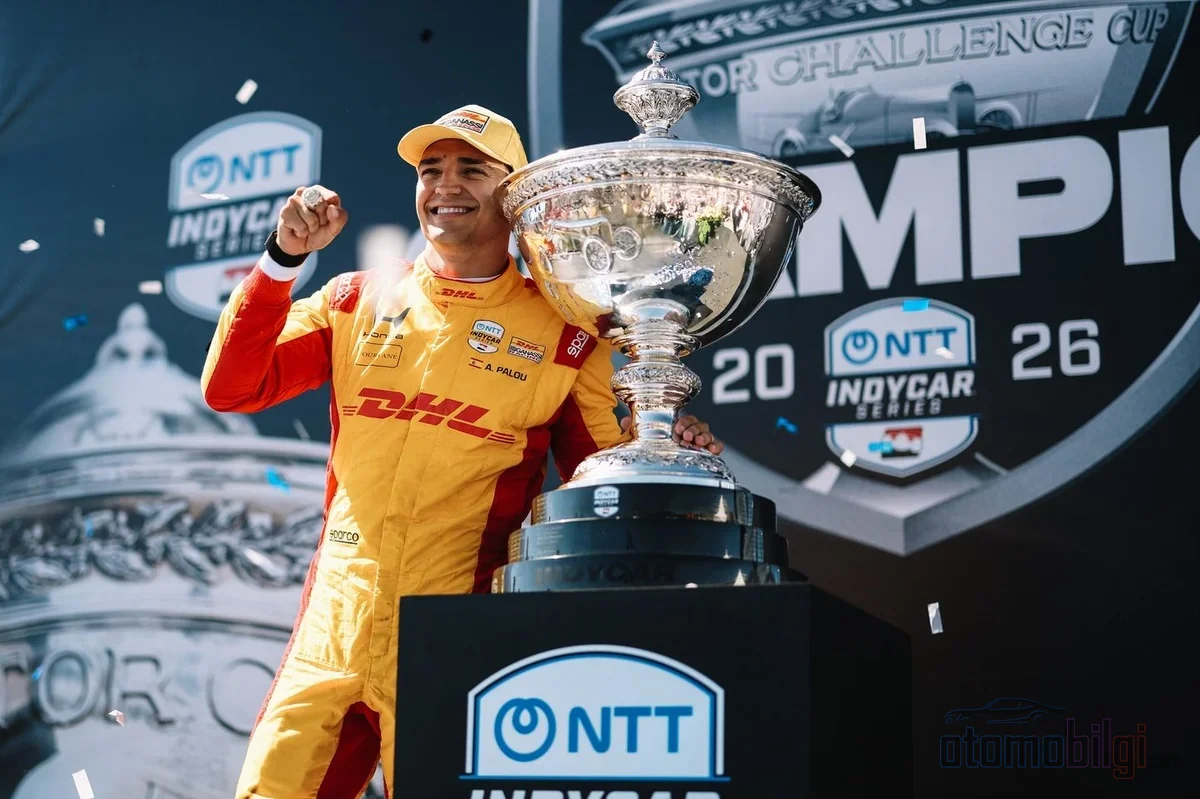
The one who really made the championship fight difficult in the 2026 IndyCar season was Álex Palou; The Spanish driver secured his fourth consecutive, fifth overall championship before the season ended, with just one race remaining. Kyle Kirkwood, Christian Lundgaard, Pato O'Ward and David Malukas carried the fight at different points of the season, but no one could answer Palou's 6 wins, 8 poles and 673 laps led. Here is the entire story of this season, from start to finish with karting and race pace.
Highlights
- Álex Palou secured his 4th consecutive, 5th overall championship with one race to spare
- Palou finished the season with 631 points: 6 wins, 8 poles, 12 podiums, 673 laps led
- Felix Rosenqvist won the Indianapolis 500 by a margin of 0.0233 seconds - the closest finish in race history
- IndyCar reduced hybrid power output by 10-25% on a track-by-track basis on June 16
- Dennis Hauger was named 2026 Rookie of the Year
How did the 2026 IndyCar season go, and who challenged for the championship?
If you're curious, the answer is clear: it was a season no one could truly challenge. Starting March 1 in St. Petersburg and concluding September 6 at Laguna Seca, the 18-race calendar saw Chip Ganassi Racing's Spanish driver slow down hardly at all. This was the series' 115th official championship season and the 31st under the IndyCar Series banner - in other words, a year destined for the history books.
Palou's final tally is incredible: 631 points at the top, followed by Kyle Kirkwood with 545, and right behind him Christian Lundgaard with 535. Pato O'Ward collected 522 points and David Malukas 514. The 86-point gap in second place shows just how far ahead the Spanish driver ran on his own. You might think "so what kind of dominance was that?" - consider this: after Iowa (race 13), Palou was a full 90 points ahead of Kirkwood, meaning the season was all but decided by the halfway point.
So much so that with this championship, the Spanish driver moved into third place on the all-time list, behind A.J. Foyt's 7 and his teammate Scott Dixon's 6 championships. Four consecutive championships was quite a feat too.
Palou's dominant form: 6 wins, 8 poles, 673 laps led
The championship shouldn't be pinned on a single race; Palou left his mark all over the season. At the opener in St. Petersburg, Scott McLaughlin took pole, but Palou used an overcut strategy - staying out on track for a few more laps while his rivals pitted - to move ahead and win by roughly a 13-second margin. At Long Beach, it was the pit stop duel that made the headlines: his 7.3-second pit stop against his rival's 8.4 seconds carried him to the top and brought his first career Long Beach victory. Palou took his fourth win in Detroit, stretching his gap to Kirkwood to 62 points.
When the series moved to the ovals, the picture didn't change. In Nashville, the fourth oval race of the season, he announced his fifth victory by passing Newgarden and Malukas on hard tires, taking the gap to 83 points. At Road America, taking his fifth consecutive pole, he became only the fifth driver in the series to do so. A flawless season, as if without a defect; you would have driven the same way if it were you, but let's push our luck.
Where the rivals stood: Kirkwood, Lundgaard, O'Ward and Malukas
Every championship also has an "what if" story. Kirkwood won at the new street circuit in Arlington by passing Palou in the final 16 laps and took over the championship lead - yes, he was even the leader for a period. But that gap didn't last long. Lundgaard ended a 47-race winless streak at the Sonsio GP and added a second celebration, while Malukas took the best finish of his career with a second place.
O'Ward's season breakthrough came at Mid-Ohio: the first victory of the season and Arrow McLaren's first 1-2 on the same day. Malukas adapted quickly to his new seat at Penske - he took the first pole of his career at Phoenix and closed out the season inside the top five. On the Penske front, Josef Newgarden wasn't forgotten, of course: he won at Phoenix while leader Palou crashed into the wall and rose to the top of the points; at Gateway too, he traded the lead four times with Rasmussen before leaving with the win. But when the individual bursts didn't turn into a single consistent pace, the championship race became a one-man affair.
And for those interested in what didn't show up on the points table: the end-of-season review counted five names who ran better than their standings showed - David Malukas, Felix Rosenqvist, Will Power, Marcus Armstrong and Graham Rahal. Marcus Ericsson, meanwhile, was highlighted mid-season as the "most improved driver" and closed the year in seventh place with 429 points. If it were you, which one would you have followed? My favorite was Rosenqvist, and I'll tell you why right away.
Indianapolis 500: the closest finish in history, by 0.0233 seconds
110. The Indianapolis 500 was run on May 24 and was etched into memories. The pole was Palou's, but the winner was not him. Felix Rosenqvist passed David Malukas, racing for Meyer Shank Racing, by a margin of 0.0233 seconds to take the victory - the closest photo finish in the race's history. A moment as short as a single photograph changed an entire career.
On the championship front, there was an interesting detail: Palou finished the race seventh and lost 5 points due to a technical infraction - but the standings did not turn against him; he extended his gap to 32 points. So even at the Indy 500, there was a day when the champion laughed from afar.
How did the hybrid era affect the season?
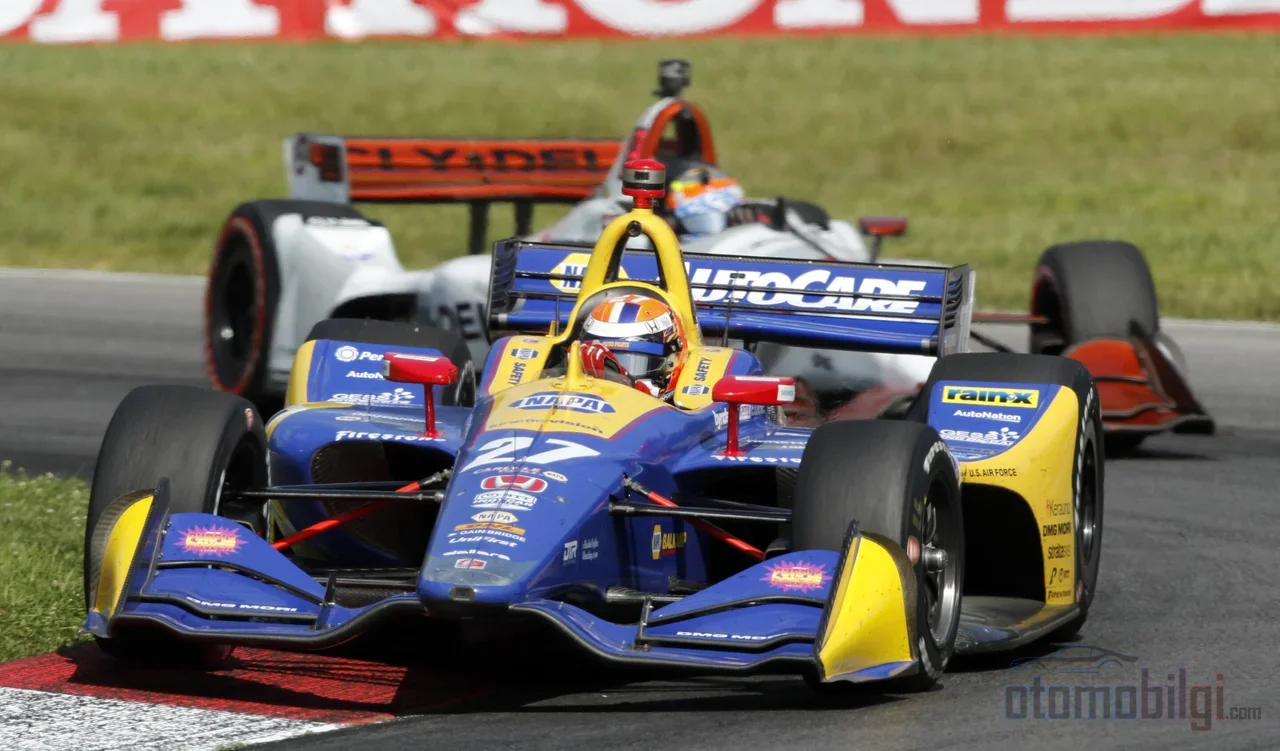
If the technical side is useful to you too, let me explain: IndyCar's hybrid system provides approximately 120 extra horsepower when engaged on road and street circuits, pushing total output above 800 horsepower. So it's somewhat like charging your phone and switching from daily use to turbo mode - but on track and at 250 km/h.
The problem is that this extra power didn't bring equal joy to everyone. Mid-season, on June 16, IndyCar announced that the power output of the hybrid units would be reduced by 10-25% on a track-by-track basis in the remaining races. The rule change regarding the use of the system in the Indy 500 drew major backlash from the 33-car field. Fans are still debating whether the system actually improves the racing quality. The move to 2.4-liter twin-turbo hybrid V6 engines in 2028 is the most concrete sign that this tension will never end. In my opinion, the real story of the hybrid will be written year by year.
New tracks, lost names, and the storm of the driver market
The 2026 calendar wasn't just about races; it was also a story of change. While returning to Phoenix Raceway after an 8-year hiatus, a new street circuit in Arlington, Texas, was run for the first time. The Freedom 250 in Washington D.C. was added to the calendar in January and made its debut in August. Toronto, meanwhile, moved from Exhibition Place to Markham under a 5-year deal; Milwaukee Mile stayed as a doubleheader weekend, while Thermal Club and Iowa Speedway were dropped from the calendar. The season also included two prime-time night races at Nashville and Gateway - the night race aesthetic is truly something else, be sure to watch.
On the roster side, there were shake-up moves:
- After 7 seasons, Colton Herta left IndyCar to become the 2026 test driver for the Cadillac F1 team
- Will Power moved to Andretti in his place; Malukas moved to Penske's No. 12 seat
- Mick Schumacher raced with the No. 47 at RLL, while Romain Grosjean returned from IMSA to race with Dale Coyne
- PREMA Racing couldn't enter a single race due to financial problems
- Marco Andretti had announced his retirement in October 2025
On the rookie front, one bright name stood out: 2025 Indy NXT champion Dennis Hauger moved up to IndyCar with Dale Coyne Racing and closed the season as Rookie of the Year. And there was an emotional farewell, too: Scott Dixon ended a long era with Ganassi that included his 28th and final poles - all 28 poles and the 12 wins earned from the top came with this team. Legends are gradually giving way to newcomers.
What we learned for 2027: the hybrid debate and the championship math
The 2026 season showed us two things clearly. The first is that beating Palou can't be done with a single win; Names like Kirkwood, Lundgaard, O'Ward, and Malukas need to maintain consistent pace throughout the season. The second is that the hybrid era is still searching for its identity - even reducing the power output mid-season didn't settle the debate. If it were up to you, would you remove the hybrid entirely, or wait for it to find the right setting?
Still, it would be unfair to find the overall mood of the season harsh. Rosenqvist's 0.0233-second Indy 500 victory, the first street circuit race in Arlington, Newgarden's two oval explosions, and Hauger's rookie championship made 2026 unforgettable. If you're new to open-wheel racing, this season was a great starting point to watch - and as long as Palou's chronicle continues, seeing who might stop him is the biggest question of the next season.
Sources
- 2026 IndyCar Series
- NTT INDYCAR SERIES Championship Standings
- Final 2026 IndyCar championship standings after Laguna Seca
- Complete IndyCar championship standings after 2026
- IndyCar to reduce hybrid power output for remainder of season
- From Hybrid Power to the Aeroscreen
- Five Drivers Who Were Better Than the 2026 Standings Indicated
- Scott Dixon's Legendary Ganassi Tenure Comes to an End
- Indianapolis 500 – Official Event Page
- INDYCAR Announces 2026 Schedule